The Ascent of Assur: How a Local Deity Became the Supreme God of the Assyrian Empire
In the annals of ancient Mesopotamia, few deities underwent a transformation as profound as Assur. From a humble local protector of the city bearing his name, Assur ascended to become the supreme god of the mighty Assyrian Empire, a powerful symbol of its military might, imperial ambition, and cultural adaptability. His story is not merely that of a god, but a testament to how shifting political landscapes and strategic cultural assimilation could reshape divine identity, ultimately impacting everything from religious practice to social structure.
Main Facts: The Multifaceted God of Assyria
Assur (also known as Ashur or Anshar) was the paramount deity of the ancient Assyrians, a figure whose divine portfolio was remarkably broad, reflecting the complex needs and aspirations of his people. Initially revered as a local patron of the city of Ashur, his influence expanded dramatically in tandem with the burgeoning power of the Assyrian state. By the zenith of the empire, Assur had absorbed attributes from earlier, well-established Sumerian and Babylonian pantheons, becoming, at once, a god of war, wisdom, justice, agriculture, and kingship. This syncretic nature meant Assur was not a deity defined by a single, narrow domain, but a universal force capable of overseeing all aspects of imperial life.
The Assyrian Empire, much like the later Roman Empire, possessed an unparalleled talent for borrowing and integrating elements from other cultures. This pragmatic approach was vividly illustrated in the construction of Assur’s divine persona. His character, family, and even his mythological history were not organically developed within a singular Assyrian tradition but were meticulously drawn from the rich tapestry of Mesopotamian religious thought. For instance, Assur’s family structure was modeled on revered figures such as the Sumerian sky-god Anu and the wind-god Enlil, as well as the Babylonian patron deity Marduk. Consequently, Assur’s wife was identified as Ninlil (Enlil’s consort), and his son as Nabu (Marduk’s son). This deliberate mirroring served to legitimize Assur’s supremacy by linking him to the most potent and ancient divine lineages of the region, effectively placing him at the apex of an already recognized divine hierarchy.
Despite this strategic appropriation, or perhaps precisely because of it, Assur often lacked a distinct, self-contained mythology. Scholar Jeremy Black noted this phenomenon, observing: "In spite of (or possibly because of) the tendencies to transfer to him the attributes and mythology of other gods, Assur remains an indistinct deity with no clear character or tradition (or iconography) of his own." This perceived "indistinctness," however, did not diminish his power; rather, it allowed for immense flexibility, enabling him to embody whatever qualities the Assyrian state required at any given moment. His worship, at its peak, bordered on monotheism, a singular focus on a supreme deity that overshadowed all others.
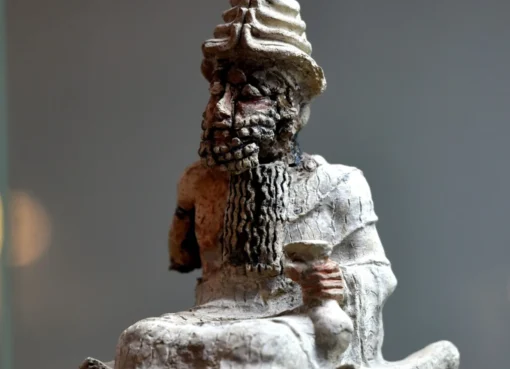
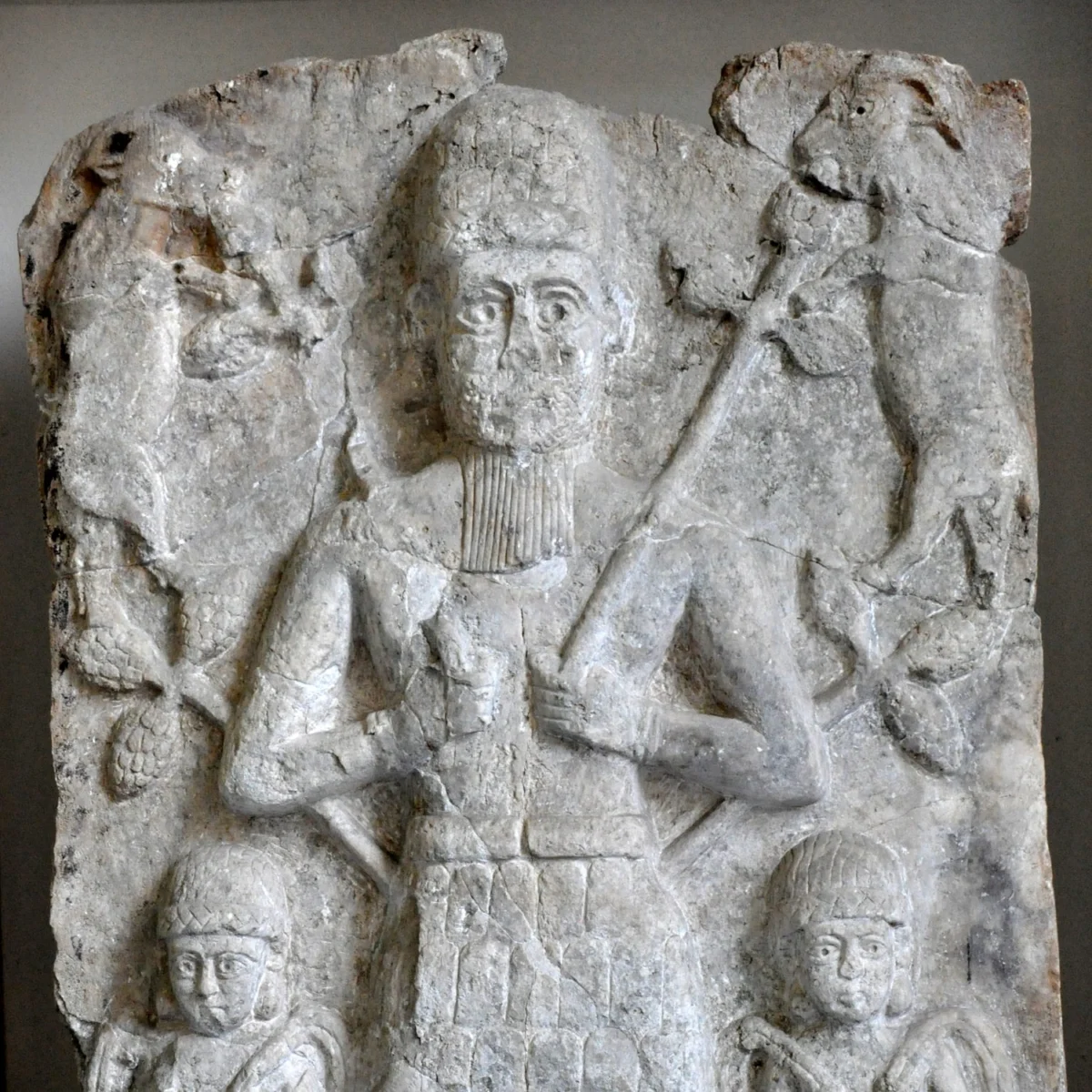
Assur’s iconography, too, reflected this composite nature. While sometimes depicted with the crown or enthroned crown of the Sumerian god An/Anu, he was more frequently represented as a formidable warrior-god. Adorned with a horned helmet – a common symbol of divinity in Mesopotamia – and armed with a bow and quiver of arrows, he epitomized the martial prowess of the Assyrian army. Other representations showed him wearing a short skirt of feathers, and he was often encased within a winged disk, a powerful solar symbol, though its direct association with Assur is debated by some modern scholars. Further demonstrating the cultural borrowing, Assur was occasionally depicted standing atop a snake-dragon, an image directly adopted from the Babylonian Marduk, underscoring his assimilation of rival deities’ power and prestige.
Chronology: From Regional Patron to Imperial Deity
The trajectory of Assur’s worship is inextricably linked to the geopolitical ascent of the Assyrian Empire itself, a journey from a minor regional power to the dominant force in the Near East.

Early Foundations (c. 2112-1750 BCE)
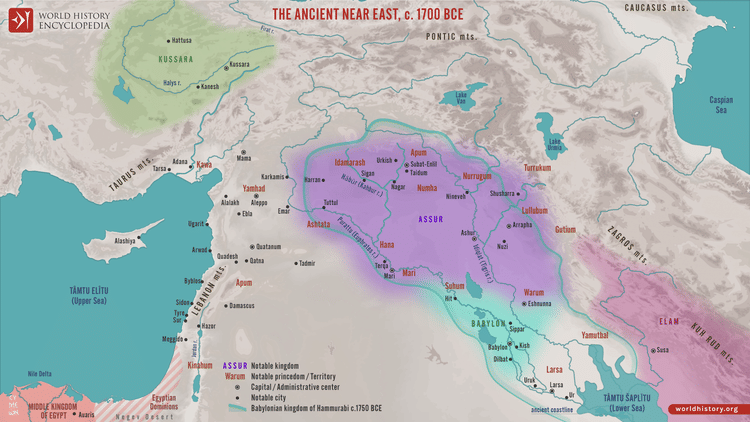
Assur’s earliest positive attestations date back to the Ur III period (circa 2112 to circa 2004 BCE), a time when Mesopotamia was largely unified under the Neo-Sumerian empire. By approximately 1900 BCE, he was firmly established as the patron god of the city of Ashur, which not only bore his name but also gave its name to the Assyrian people themselves. In these nascent stages, Assur was likely an agricultural deity, personifying the fertile lands and the well-being of the city he protected. His evolution mirrored the growth of Ashur, which began as a small trading outpost. This settlement, built on the foundations of an earlier community established by Sargon of Akkad (reign 2334-2279 BCE), flourished through extensive trade networks with Anatolia and other regions of Mesopotamia. By the reign of Assyrian king Shamashi Adad I (1813-1791 BCE), Ashur had become the capital of a burgeoning Assyrian state.
Shamashi Adad I, a pivotal figure in early Assyrian history, expanded his dominion, driving out the Amorites in Assur’s name and securing the empire’s early boundaries. However, this early period of Assyrian assertiveness was curtailed by the formidable Amorite king Hammurabi of Babylon (reign 1792-1750 BCE). Hammurabi’s conquests brought much of Mesopotamia under Babylonian control, and with it, the supremacy of Babylon’s patron deity, Marduk. During this time, Assur’s worship was largely confined to the city of Ashur and its immediate environs, while Marduk was venerated as the supreme god, and the Babylonian epic Enuma Elish was widely accepted as the authoritative account of creation.
Forging an Empire (c. 1307-705 BCE)
The regional power vacuum that followed Hammurabi’s death ushered in a period of flux, during which various powers vied for control, each promoting their own patron deities. For a time, Ashur and the Assyrian territories were reduced to vassal states under the Mitanni and later the Hittites. This subjugation continued until the reign of Adad Nirari I (1307-1275 BCE), who decisively defeated these overlords, uniting the lands under what is considered the first true semblance of an Assyrian Empire.
Adad Nirari I credited Assur with his victories, but the god, at this point, still lacked a comprehensive mythological narrative to glorify him on a par with older Mesopotamian deities. This deficiency spurred a deliberate effort to integrate Assur into existing divine frameworks. Jeremy Black elucidates this, stating: "Eventually, with the growth of Assyria and the increase in cultural contacts with southern Mesopotamia, there was a tendency to assimilate Assur to certain of the major deities of the Sumerian and Babylonian pantheons. From about 1300 BCE we can trace some attempts to identify him with Sumerian Enlil… Then, under Sargon II of Assyria (reigned 722-705 BCE), Assur tended to be identified with Anshar, the father of Anu (An) in the Babylonian Epic of Creation. The process thus represented Assur as a god of long-standing, present from the creation of the universe." This strategic re-contextualization was crucial for solidifying Assur’s divine legitimacy and elevating him to the status of an ancient, foundational deity.
From Adad Nirari I’s reign through the flourishing of the Neo-Assyrian Empire under Sargon II, Assur’s prominence continued to soar. In a bold act of theological revisionism, the Assyrians even altered the Enuma Elish, replacing Marduk with Assur (under the name Anshar) as the epic’s heroic creator. Kings like Tiglath-Pileser I (1115-1076 BCE) regularly invoked Assur as the ultimate source of imperial power, crediting him with empowering the army, leading them to victory, and even dictating the very laws of the empire. Adad Nirari II (912-891 BCE) further expanded the empire in all directions, explicitly operating under Assur’s personal patronage. As the Assyrian army marched, conquering new territories, Assur marched with them, and his worship spread throughout Mesopotamia. As E. A. Wallis Budge observed, "As the power of Marduk became predominant when Babylon grew into a great city, so the power of Assur waxed great when the Assyrians became a strong and warlike nation." To both the Assyrian soldiers and the peoples they subjugated, Assur’s manifest power, evidenced by the empire’s relentless expansion, cemented his status as a supreme god, ultimately eclipsing many of the older regional deities.
Supporting Data: The Architecture of Divine Power
The rise of Assur was not a spontaneous religious evolution but a carefully orchestrated process, supported by specific cultural and textual manipulations. The Assyrians’ "genius for borrowing" was less about mere imitation and more about strategic assimilation. By drawing parallels between Assur and established Sumerian and Babylonian deities like Anu, Enlil, and Marduk, Assyrian theologians and rulers tapped into a pre-existing religious vocabulary that lent immediate weight and authority to their national god. For instance, granting Assur the wife Ninlil and son Nabu was a clear move to integrate him into the Mesopotamian divine "royal family," familiarizing him to conquered populations and asserting his equivalence to, or even superiority over, their own gods.
Jeremy Black’s observation regarding Assur’s "indistinct deity" status highlights the paradoxical strength of his composite nature. Without a deeply entrenched, unique mythological cycle, Assur could more easily absorb and reflect the changing needs of the empire. He could be simultaneously a fierce warrior for the military, a wise judge for the legal system, a benevolent provider for farmers, and the divine guarantor of kingship. This adaptability made him the perfect theological anchor for an expanding, diverse empire.
The scholar E. A. Wallis Budge’s general progression of gods – from spirits, to local deities, to supreme gods – perfectly describes Assur’s trajectory. He writes: "The oldest of such spirits was the ‘house spirit’ or household-god. When men formed themselves into village communities, the idea of the ‘spirit of the village’ was evolved and later came the ‘god of the town or city’ and the ‘god of the country.’ Each of the elements, earth, air, fire, and water had its spirit or ‘god’… As time went on, men began to think that certain spirits were more powerful than others and these they selected for special reverence or worship." Assur embodied this evolutionary path, beginning as the spirit of Ashur city and progressively accruing greater attributes as the city, and then the nation, grew in power.
Iconographic elements further underscore this intentional blending. The use of a crown or a crown on a throne, echoing the Sumerian sky-god An/Anu, immediately placed Assur within the highest echelon of divine authority. His frequent depiction as a warrior-god in a horned helmet, wielding a bow and arrows, directly communicated the martial ethos of the Assyrian state. Even the contested association with the winged solar disk, a powerful symbol of divine authority and cosmic order, served to imbue Assur with universal dominion. Most strikingly, the image of Assur standing on a snake-dragon, directly borrowed from Marduk, was a powerful visual assertion of Assyrian triumph over Babylonian religious and political supremacy. This visual appropriation was not subtle; it was a clear statement that Assur had superseded Marduk.
The most compelling textual evidence of Assur’s deliberate elevation is the Assyrian recension of the Enuma Elish. Originally, this epic detailed Marduk’s heroic victory over the primordial chaos monster Tiamat, establishing him as the creator god and supreme ruler of the pantheon. The Assyrians, however, rewrote this foundational myth, substituting Assur (often as Anshar, an older primeval deity from whom Anu and Enlil descended) for Marduk. This literary manipulation effectively retroactively endowed Assur with a venerable origin story, positioning him as the ancient, pre-eminent deity responsible for creation itself, thus legitimizing his imperial dominion over all other gods and peoples. This re-writing was a masterstroke of religious propaganda, solidifying Assur’s place as the unchallenged head of the cosmic order.
Official Responses: The State-Sanctioned Deity
The Assyrian state’s endorsement and promotion of Assur were fundamental to his rise and the empire’s cohesion. Kings were not just secular rulers; they were Assur’s chief priests, directly connecting temporal power to divine authority. This symbiotic relationship meant that the king’s legitimacy derived directly from Assur, and in turn, the king’s military successes and administrative decrees glorified the god. This divine mandate was explicitly demonstrated through royal nomenclature; many Assyrian kings proudly incorporated Assur’s name into their own, such as Ashurbanipal ("Assur is creator of an heir"), Ashurnasirpal I, and Ashurnasirpal II ("Assur is guardian of the heir"). This practice served as a constant public declaration of their devotion and Assur’s omnipresence in imperial affairs.
Military victories were invariably attributed to Assur, cementing his image as a powerful war god. Kings like Adad Nirari I and Tiglath-Pileser I consistently invoked Assur’s name in their annals, crediting him for leading their armies, ensuring triumph, and establishing the laws of the empire. This narrative not only boosted troop morale but also presented Assyrian conquests as divinely ordained, making resistance against the empire seem like defiance against the gods themselves.
Even strategic administrative decisions reflected Assur’s centrality. When Ashurnasirpal II (884-859 BCE) moved the capital from the ancient city of Ashur to the newly built Kalhu (Nimrud), it was not a sign of Assur’s waning power. Rather, it might have been a calculated move to centralize power away from the fiercely proud and potentially independent populace of Ashur, placing the capital in a more controllable environment while still maintaining Assur as the supreme deity. The king’s name itself, Ashurnasirpal, reiterated Assur’s enduring guardianship.
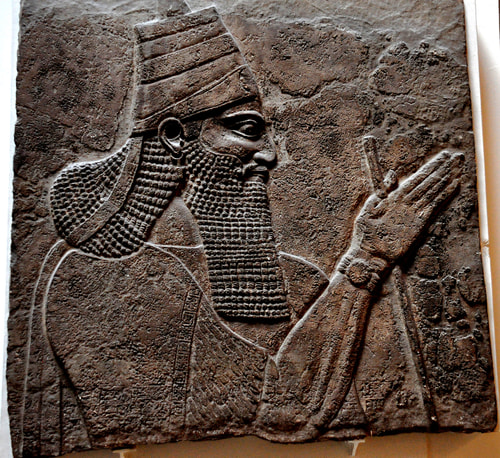
Tiglath-Pileser III (745-727 BCE) further elevated Assur’s status through unprecedented military reforms. He created the world’s first professional standing army, equipped with iron weapons and utilizing advanced siege engines. These innovations led to stunning victories and dramatically expanded the empire. Each conquest, each fortified city taken, was presented as a direct manifestation of Assur’s favor and strength, reinforcing his image as an invincible deity.
As the empire expanded, encompassing vast and diverse territories, a critical challenge arose: how to maintain a unified religious identity when Assur’s worship was traditionally tied to his temple in the city of Ashur. The state’s "official response" was to redefine the very nature of the god. Paul Kriwaczek explains this ingenious adaptation: "One might pray to Assur not only in his own temple in his own city, but anywhere. As the Assyrian empire expanded its borders, Assur was encountered in even the most distant places. From faith in an omnipresent god to belief in a single god is not a long step. Since He was everywhere, people came to understand that, in some sense, local divinities were just different manifestations of the same Assur." This theological innovation was a brilliant stroke of imperial policy, transforming Assur from a localized patron into a universal, omnipresent deity. This re-conception allowed for the absorption of conquered peoples’ local divinities into the overarching worship of Assur, fostering religious cohesion across a sprawling, multi-ethnic empire. The various gods of subject peoples were not necessarily abolished but reinterpreted as mere facets or lesser manifestations of the one true Assur, thus subtly undermining their independent authority while integrating them into the imperial cult.
Implications: Society, Religion, and Legacy
The elevation of Assur had profound and far-reaching implications, shaping Assyrian society, religious thought, and leaving an enduring, if sometimes controversial, legacy.
The Socio-Religious Transformation
The conceptual shift from an immanent deity (one present within nature and specific places) to a transcendent, omnipresent deity (one existing outside and above the natural world) was a momentous development. As Paul Kriwaczek argues, this belief had significant consequences: "Nature came to be desacralized, deconsecrated. Since the gods were outside and above nature, humanity – according to Mesopotamian belief created in the likeness of the gods and as servant to the gods – must be outside and above nature too. Rather than an integral part of the natural earth, the human race was now her superior and her ruler." This perspective finds a striking parallel in the biblical Genesis 1:26, which states: "And God said, Let us make man in our image, after our likeness: and let him have dominion over the fish of the sea, and over the fowl of the air, and over the cattle, and over all the earth, and over every creeping thing that creepeth upon the earth." This shared emphasis on humanity’s dominion over nature, rooted in a transcendent divine image, represents a significant philosophical shift in ancient thought.
However, this socio-religious transformation also carried less equitable implications, particularly for women. Kriwaczek further notes the correlation between this transcendent view of divinity and the relegation of women to a lower societal rung: "While males can delude themselves and each other that they are outside, above, and superior to nature, women cannot so distance themselves, for their physiology makes them clearly and obviously part of the natural world… It is no accident that even today those religions that put most emphasis on God’s utter transcendence and the impossibility even to imagine His reality should relegate women to a lower rung of existence, their participation in public religious worship only grudgingly permitted, if at all." Indeed, women in Mesopotamia had enjoyed considerable civil rights prior to the rise of Hammurabi and Marduk, but these rights diminished significantly under the patriarchal ascendancy of Assur as the supreme god. Cultures accustomed to respecting women, such as the Phoenicians, were compelled to adopt the more restrictive customs and beliefs of their Assyrian conquerors, leading to a palpable decline in female status across the empire.
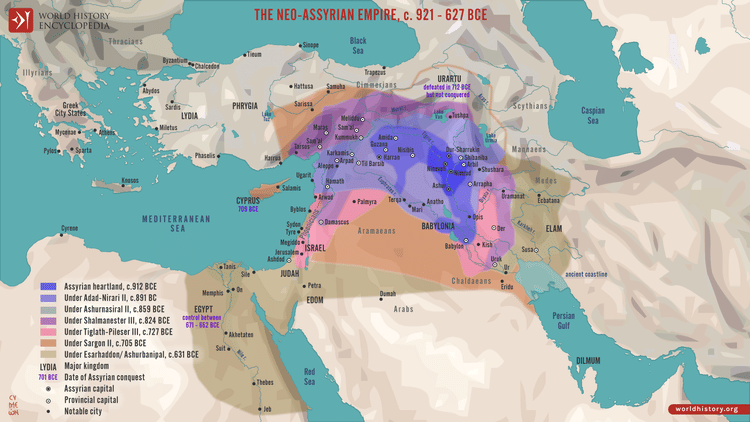
This unified vision of a supreme, transcendent deity, coupled with the imposition of Assyrian customs, significantly contributed to the cultural cohesion of the empire. Shalmaneser III (859-824 BCE), for example, expanded the empire to the Mediterranean coast, extracting tribute from wealthy Phoenician cities like Tyre and Sidon. Assur was no longer just the god of Assyrians, but the supreme deity of all peoples under their rule, a theological justification for imperial dominance.
The Shadow of Imperial Rule and Enduring Echoes
The Neo-Assyrian Empire (912-612 BCE) is indelibly etched in history with a reputation for ruthlessness and cruelty, frequently mentioned in the Bible and remembered for its terrifying rulers. Kriwaczek starkly summarizes this perception: "Assyria must surely have among the worst press notices of any state in history. Babylon may be a byname for corruption, decadence, and sin but the Assyrians and their famous rulers, with terrifying names like Shalmaneser, Tiglath-Pileser, Sennacherib, Esarhaddon, and Ashurbanipal, rate in the popular imagination just below Adolf Hitler and Genghis Khan for cruelty, violence, and sheer murderous savagery." While Assyrian methods were undoubtedly brutal by modern standards, they were not necessarily more savage than other ancient civilizations. Their efficiency in warfare and administration simply made their campaigns more impactful and their punitive actions more memorable.
To the conquered, however, the Assyrians were indeed hated overlords. The empire, under its last great king, Ashurbanipal (668-627 BCE), grew too vast and unwieldy, eventually succumbing to internal strife and external pressure. In 612 BCE, a formidable coalition of Babylonians, Medes, Persians, and other resentful peoples rose up, utterly destroying the major Assyrian cities. This onslaught included the symbolic razing of the city of Ashur and the temple of the god, as well as the destruction of Assur’s statues across the empire. The destruction of these symbols was a deliberate act, signaling the definitive end of Assyrian political and religious hegemony, as Assur had come to personify their military victories and political power.
Despite the empire’s catastrophic collapse, the worship of Assur did not immediately vanish. It persisted in scattered Assyrian communities, albeit without the widespread imperial backing or grand temples. In a fascinating twist of history, the established concept of Assur as an omnipotent, singular deity proved advantageous for early Christian missionaries entering the region. Assyrians, accustomed to the idea of a supreme, transcendent god, were reportedly receptive to the Christian message of a single God and the concept of His son’s incarnation for humanity’s benefit. While Assur’s son, Nabu, never took human form or offered self-sacrifice, he was revered for gifting humanity the written word, and his veneration continued after the empire’s fall. Although Assur’s stature eventually declined, his memory endures, often as "Ashur," in personal and family names to this day, a subtle echo of a deity who once presided over one of the ancient world’s most formidable empires. The story of Assur remains a powerful illustration of the intricate interplay between religion, politics, and culture in shaping human civilization.