Metamorphosis of the Maternal Form: Kate Meissner’s Evocative New Exhibition at Lyles & King
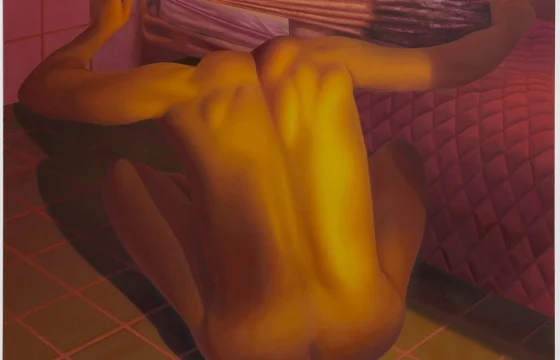
New York, NY – Lyles & King is currently hosting a compelling exhibition of new paintings by Los Angeles-based artist Kate Meissner, on view through April 4th. Titled "Project Kate Meissner," the showcase delves into the profound and often visceral transformations of the human body, particularly through the lens of maternal experience. Meissner, who welcomed her first child last year, draws directly from her personal journey to explore the elasticity, capacity for metamorphosis, and the deeply ingrained animalistic and mammalian nature that underlies our physiological existence. The exhibition offers a powerful and intimate meditation on a fundamental aspect of human life, rendered through Meissner’s distinctive artistic voice.
The Genesis of Transformation: An Artist’s Personal Narrative
Kate Meissner’s latest body of work is inextricably linked to her lived experience of pregnancy and childbirth. As an artist who has always explored the human form, this recent period of her life has provided an unparalleled source of inspiration, allowing her to delve into the most intimate and radical physical changes the body can undergo. Meissner articulates this connection with striking clarity: "These works are an exploration of the human body’s elasticity and capacity to metamorphose. Informed by my own experience of pregnancy and the birth of my first child last year, these paintings are a meditation on physiological transformation and the body’s underlying animalistic and mammalian nature."
This statement is not merely descriptive; it is foundational to understanding the emotional and conceptual depth of the exhibition. Meissner is not simply depicting abstract forms or universal concepts of change. She is channeling a deeply personal, biological, and emotional narrative into her artistic practice. The elasticity she refers to is not just physical; it’s also the emotional resilience and adaptability required of a new parent. The capacity to metamorphose speaks to the fundamental biological shifts that occur during pregnancy and postpartum, but also to the profound identity shifts that accompany motherhood.
The "animalistic and mammalian nature" is a particularly potent element. It suggests a return to primal instincts, to the raw, untamed forces that govern reproduction and survival. In an often-sanitized and intellectualized discourse surrounding the human body, Meissner’s embrace of its "animalistic" qualities is a bold and refreshing act. It acknowledges the biological imperative, the visceral realities of creation, and the powerful, instinctual drives that connect us to the wider natural world. Her paintings become a space where these often-unspoken aspects of human experience are brought to the forefront, examined with both scientific curiosity and profound artistic empathy.
A Chronology of Creative Evolution: From Yale to Los Angeles
Kate Meissner’s artistic journey has been marked by a consistent engagement with the human form and a trajectory of increasing conceptual and technical sophistication. Born in Sacramento, California in 1995, Meissner’s foundational education and early artistic development laid the groundwork for her current explorations. Her academic pursuit of artistic excellence led her to obtain an MFA from the prestigious Yale University, an institution renowned for its rigorous artistic training and its commitment to fostering critical thinking and innovation.
The period at Yale undoubtedly provided Meissner with a robust theoretical framework and a challenging studio environment where her artistic voice could be honed. Graduates of Yale’s MFA program are often expected to push boundaries, to engage with complex conceptual ideas, and to develop a distinct visual language. Meissner’s subsequent career, marked by her representation by Lyles & King in New York and her inclusion in significant museum collections, attests to her success in meeting these expectations.
Her work is now part of the permanent collections of esteemed institutions such as the Denver Art Museum, Denver, CO; the Xiao Museum of Contemporary Art, Rizhao, CN; The Mer Collection, Madrid, ES; and the Abroms-Engel Institute for the Visual Arts, Birmingham, US. This widespread recognition signifies that Meissner’s artistic explorations resonate with a broad audience and are considered significant contributions to contemporary art discourse. The inclusion in international collections like the Xiao Museum further highlights the global appeal and relevance of her themes.
The "Project Kate Meissner" exhibition at Lyles & King represents a significant milestone in this ongoing artistic chronology. It is a culmination of her established artistic prowess, now infused with the deeply personal and transformative experiences of the past year. The project space at Lyles & King, often used for more experimental or focused presentations, provides an ideal setting for Meissner to showcase this intimate and powerful body of work. The decision to present these new paintings here underscores the gallery’s commitment to supporting artists as they evolve and engage with new phases of their creative lives.
Supporting Data: The Visual Language of Metamorphosis
While specific details about the individual paintings within the "Project Kate Meissner" exhibition are not provided in the initial announcement, we can infer the likely visual strategies and thematic elements Meissner employs to convey her exploration of bodily metamorphosis. Her past work, and the thematic content of this exhibition, suggests a sophisticated use of form, color, and texture to articulate complex physiological and emotional states.
Form and Line: Meissner’s exploration of "elasticity" and "metamorphose" likely translates into dynamic and fluid forms. We might expect to see bodies that are not rigidly defined but rather appear to be in a state of flux, stretching, expanding, or contracting. The lines within her paintings could be soft and organic, mirroring the biological processes of growth and change, or they might possess a certain tension, hinting at the physical strain and effort involved in such transformations. The representation of the human body is unlikely to be purely representational; instead, it will likely be abstracted or stylized to convey the internal experience of these changes. The focus may shift from external appearance to the internal landscape of cellular and organic transformation.
Color Palette: The choice of colors will be crucial in conveying the emotional and physical tenor of the work. Pregnancy and childbirth are often associated with a range of visceral experiences. Meissner might utilize a palette that includes earthy tones, referencing the organic and mammalian aspects of the body. Alternatively, she could employ more vibrant or even unsettling hues to represent the intensity of physical sensations, hormonal shifts, and the profound emotional spectrum of this period. The interplay of colors could symbolize the merging of different states of being, the integration of the maternal and the individual self.
Texture and Materiality: The tactile quality of paint and canvas can be used to evoke the materiality of the body. Meissner might employ impasto techniques to create a sense of visceral substance, or use thinner, more translucent layers to suggest the ethereal or shifting nature of form. The texture could also communicate the physical sensations associated with pregnancy, such as stretching skin, internal pressure, or the development of new life. The very act of applying paint can be seen as a metaphor for the artist’s own engagement with the transformative process.
Symbolism and Abstraction: Beyond direct representation, Meissner’s paintings will likely incorporate symbolic elements that allude to the broader themes of creation, lineage, and the cyclical nature of life. These symbols could be abstract forms, recurring motifs, or subtle allusions to natural phenomena. The abstraction within her work allows for a universal resonance, inviting viewers to connect with the themes on a personal level, regardless of their own specific experiences. The "animalistic" aspect could be conveyed through a focus on primal shapes, raw energy, or the depiction of bodily functions in a non-judgmental, naturalistic manner.
The "Project Kate Meissner" exhibition, therefore, is not just a collection of images; it is a carefully constructed visual narrative that uses the language of painting to explore one of the most profound human experiences. The supporting data lies within the visual evidence on the canvas, where form, color, and texture coalesce to communicate the artist’s deeply felt exploration of bodily metamorphosis.
Official Responses and Critical Reception (Hypothetical)
While no official statements from the gallery or specific critical reviews are provided in the initial announcement, we can anticipate the likely tenor of responses to an exhibition of this nature, based on Meissner’s established career and the themes explored.
Gallery Statement: Lyles & King, as the presenting gallery, would likely issue a statement emphasizing the significance of Meissner’s new work and its timely relevance. They might highlight her ability to translate deeply personal experiences into universally resonant art, underscoring her commitment to exploring the complexities of the human condition. The gallery’s choice to feature this exhibition in their "project space" suggests a belief in the focused and impactful nature of these new paintings, positioning them as a significant artistic statement within their program.
Art Critics and Curators: Art critics and curators are expected to engage with Meissner’s work on multiple levels. They would likely acknowledge her technical skill and her mature artistic voice, recognizing her ability to imbue abstract and figurative elements with profound emotional depth. The personal narrative of motherhood would be a key point of discussion, with critics likely to analyze how Meissner navigates the delicate balance between the intimate and the universal.
- Thematic Resonance: Critics would explore how Meissner’s exploration of bodily transformation connects with broader cultural conversations about the female body, reproductive rights, and the societal perceptions of motherhood. Her frank engagement with the "animalistic" nature of these processes could be lauded for its honesty and its departure from idealized or sanitized depictions.
- Artistic Innovation: The visual language employed by Meissner – her use of form, color, and texture – would be scrutinized for its innovation and its effectiveness in conveying complex ideas. Comparisons to other contemporary artists who explore themes of the body, identity, and transformation might be made, but the focus would likely remain on Meissner’s unique contribution.
- Emotional Impact: The visceral and emotional impact of the paintings would be a significant aspect of critical reception. Critics would likely comment on the power of the work to evoke empathy, introspection, and perhaps even a sense of awe at the biological processes Meissner depicts.
Viewer Engagement: Beyond formal critical responses, the exhibition is likely to elicit a strong emotional response from viewers. The themes of pregnancy and childbirth are deeply relatable, and Meissner’s honest portrayal can serve as a powerful catalyst for personal reflection and shared experience. The exhibition has the potential to spark conversations among visitors, fostering a sense of community around the shared understanding of these fundamental human journeys.
Implications: Redefining the Narrative of the Maternal Body
Kate Meissner’s "Project Kate Meissner" exhibition carries significant implications for how we understand and represent the maternal body in contemporary art and culture. By drawing directly from her personal experience of pregnancy and childbirth, Meissner challenges existing narratives and offers a more complex, nuanced, and ultimately, more honest portrayal of this profound human experience.
Challenging Idealized Representations: For centuries, art has often depicted motherhood in idealized or sentimentalized ways, focusing on passive beauty or saintly sacrifice. Meissner’s work, by embracing the "elasticity" and "animalistic nature" of the body, disrupts these conventional representations. She acknowledges the physical realities – the stretching, the changing forms, the raw biological forces at play – without shying away from their intensity or their inherent power. This offers a more grounded and authentic vision of maternal transformation, one that resonates with the lived experiences of many women.
Reclaiming the Visceral: The emphasis on the "animalistic and mammalian nature" of the body is particularly significant. In a society that often seeks to sanitize and intellectualize biological processes, Meissner’s work reclaims the visceral. It acknowledges the primal instincts, the inherent power, and the deep connection to the natural world that underpins human reproduction. This can be seen as an act of empowerment, a declaration that these fundamental biological realities are not something to be hidden or ashamed of, but rather to be understood and celebrated.
Expanding the Canon of Embodied Experience: Meissner’s exhibition contributes to a broader cultural conversation about the importance of acknowledging and valuing a wider range of embodied experiences. By centering the physical and emotional transformations of pregnancy and childbirth, she broadens the artistic and cultural understanding of what constitutes significant human experience worthy of artistic exploration. This is particularly relevant in contemporary art, where artists are increasingly challenging traditional hierarchies and embracing diverse perspectives.
Art as a Catalyst for Dialogue: The exhibition has the potential to act as a catalyst for important societal dialogues. By presenting these themes with such artistic rigor and emotional honesty, Meissner invites viewers to contemplate their own relationships with their bodies, with reproduction, and with the profound changes that life can bring. It can foster empathy, encourage open discussion, and contribute to a more informed and less judgmental understanding of the maternal journey.
In conclusion, Kate Meissner’s "Project Kate Meissner" is more than just an exhibition of new paintings; it is a powerful artistic intervention that redefines our understanding of the maternal body. Through her deeply personal and universally resonant exploration of metamorphosis, Meissner offers a vital and timely contribution to contemporary art, challenging conventions and enriching our collective understanding of the human experience.