David C. Smith: A Torchbearer of Robert E. Howard’s Heroic Legacy
FOR IMMEDIATE RELEASE
[City, State] – [Date] – In the vast and often turbulent seas of heroic fantasy, certain authors emerge not only as creators of their own worlds but also as dedicated custodians and expanders of the universes forged by their predecessors. David C. Smith (b. 1952) stands as a prominent figure in this tradition, particularly renowned for his insightful and action-packed continuations of characters originally conceived by the legendary Robert E. Howard. This article delves into Smith’s early career, examining two pivotal works – The Witch of the Indies and For the Witch of the Mists – which cemented his reputation as a formidable voice in the sword-and-sorcery genre.
The Unseen Bond: David C. Smith and the Spirit of Howard
The connection between authors and their influences often transcends mere literary appreciation, sometimes evolving into a profound creative dialogue. For David C. Smith, this relationship with Robert E. Howard was foundational. As noted by reviewer Charles Gramlich, a contemporary and acquaintance of Smith, the introduction to Smith’s work came directly through the lens of Howard’s enduring legacy. Gramlich, deeply embedded in the Robert E. Howard United Press Association (REHupa) – a vibrant fan community dedicated to the study and promotion of Howard’s oeuvre – routinely reviewed pastiches, making him uniquely positioned to identify authors who genuinely captured Howard’s distinctive spirit.
It was within this context that Smith’s name first registered, marking him as a significant inheritor of the heroic fantasy mantle. This period, the mid-to-late 1970s, was a fertile time for the genre, with paperback publishers eager to capitalize on the burgeoning interest in sword-and-sorcery, often by expanding the worlds of its progenitors. Smith’s entry into this arena was therefore both timely and essential, offering new adventures for beloved characters and introducing his own unique narrative flair.
Chronology of Expansion: From Pulp to Pastiche
David C. Smith’s foundational works in the Robert E. Howard tradition emerged during a fascinating period for heroic fantasy, where fan dedication intertwined with commercial publishing to resurrect and expand classic characters. To understand Smith’s contributions, one must first appreciate the intricate publishing history of Howard’s original creations and the landscape of pastiche fiction.
The Genesis of Black Vulmea
Robert E. Howard, a prolific writer who tragically died young, left behind a treasure trove of stories, many of which remained unpublished during his lifetime. Among these were two adventures featuring the Irish pirate Black Terence Vulmea: "Black Vulmea’s Vengeance" and "Swords of the Red Brotherhood." Vulmea, a character embodying the swashbuckling ferocity and grim morality characteristic of Howard’s heroes, offered a compelling blend of historical buccaneering with hints of darker, supernatural undercurrents.
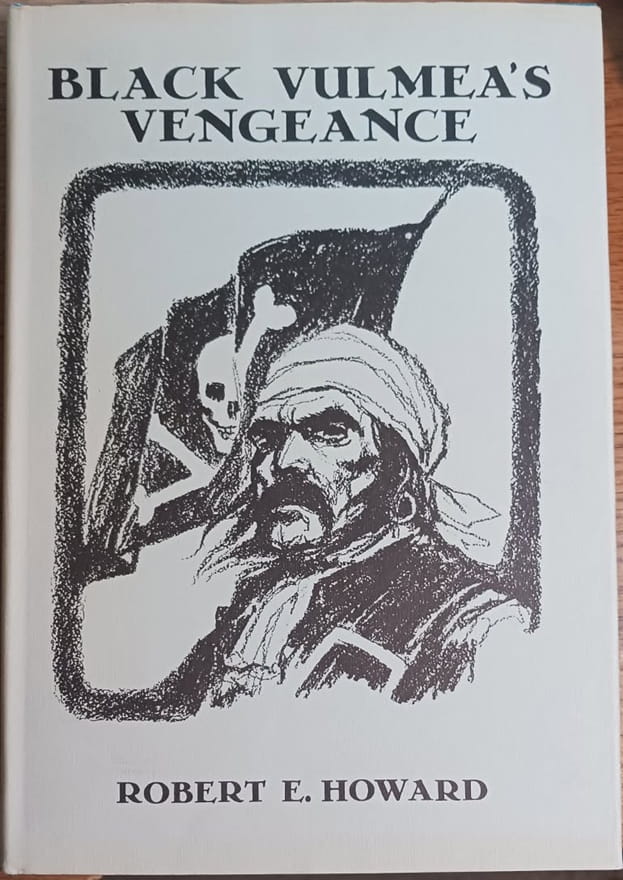
These two foundational stories saw their first significant publication in 1976 through Donald M. Grant, a specialized publisher known for producing high-quality, collectible editions of fantasy and horror. The Grant hardback, titled Black Vulmea’s Vengeance & Other Tales of Pirates, was a landmark release, featuring not only the two Vulmea tales but also "The Isle of Pirate’s Doom," an unrelated pirate story. The book was further enhanced by the evocative cover and interior illustrations of Robert James Pailthorpe, whose artwork helped to define the visual aesthetic of Howard’s piratical world for a new generation of readers.
A particularly intriguing aspect of "Swords of the Red Brotherhood" is its origin as a rewrite of an unsold Conan story, "The Black Stranger." This editorial decision by Howard himself highlights the fluidity of his creative process and the interchangeability of certain heroic archetypes within his universe. It also underscores the appeal of strong, independent characters like Vulmea, capable of carrying narratives originally intended for the Cimmerian barbarian.
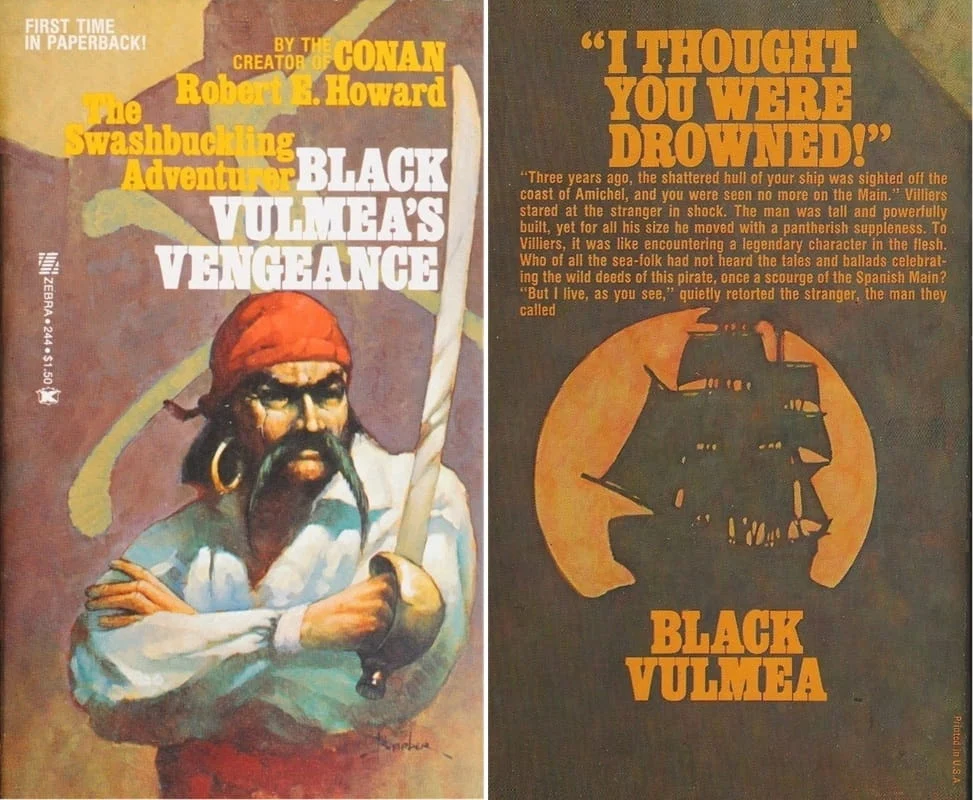
The wider accessibility of these stories came in 1977 when Zebra Books reissued them in paperback, simply titled Black Vulmea’s Vengeance, featuring a dynamic cover by Tom Barber. This paperback release brought Vulmea to a mass market audience, setting the stage for authors like David C. Smith to continue his saga.
Smith’s Dive into the "Indies"
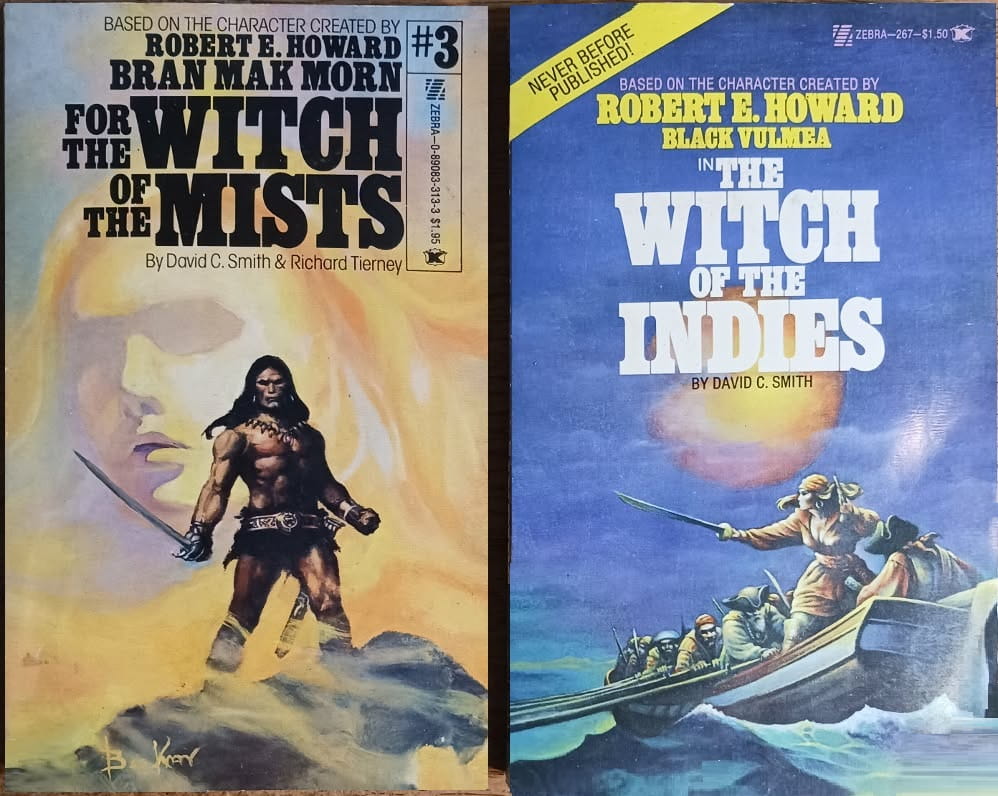
It was into this carefully laid groundwork that David C. Smith launched The Witch of the Indies in 1977 (Zebra, cover by Stephen Fabian). Smith’s novel picked up the narrative thread of Black Terence Vulmea, demonstrating a keen understanding of Howard’s character and milieu. He didn’t merely mimic; he expanded, introducing compelling new elements such as the formidable female pirate, Kate O’Donnell, a character who brought depth and complexity to Vulmea’s world, challenging traditional genre tropes and reflecting a growing demand for more nuanced female characters in heroic fantasy.
Unearthing Bran Mak Morn
Smith’s engagement with Howard’s characters was not limited to pirates. In 1978, he collaborated with Richard Tierney on For the Witch of the Mists (Zebra, Cover by Doug Beekman), a pastiche centered on Bran Mak Morn. Bran, the King of the Picts, is one of Howard’s most distinctive characters, representing a more ancient, primal form of heroism rooted in the historical struggles of indigenous peoples against imperial Rome, imbued with elements of dark fantasy and Cthulhu Mythos influences (especially in his collaborations with H.P. Lovecraft).
Smith and Tierney’s tale plunged Bran into a quest to find Aeysla, a witch queen of ancient Atlantis, whose reincarnation in Rome threatened to unleash ancient powers. The narrative, as noted by Gramlich, delivered abundant action, capturing the visceral energy of Howard’s original stories. Bran’s journey, which included a stint in the gladiatorial arena before his escape with the reincarnated Aeysla, showcased the authors’ ability to craft a fast-paced, adventurous plot.
Supporting Data: A Deep Dive into Smith’s Craft
David C. Smith’s works are not merely imitations but thoughtful extensions, characterized by a deep appreciation for the source material combined with his own distinctive literary voice.
Mastering Howard’s Action-Oriented Prose
One of Smith’s most lauded qualities is his ability to channel Robert E. Howard’s signature "action-oriented prose." Howard was a master of immersive, visceral storytelling, plunging readers directly into the heart of battle, danger, and primal emotion. Smith demonstrates this aptitude from the very first pages of The Witch of the Indies, as highlighted by Gramlich’s observation of the opening cannonade:
"With a roar and a deafening crash, the first of the cannon shot struck broadside, and flame and debris and blood flew up from the decks of the British merchanter."
This sentence is a microcosm of Howardian style: immediate, sensory, and impactful. The use of onomatopoeia ("roar," "crash"), vivid imagery ("flame and debris and blood"), and direct action verbs ("struck broadside," "flew up") throws the reader directly into the chaos of naval warfare. It’s a declaration that this is not a tale for the faint of heart, but one that promises relentless excitement. Smith sustains this momentum throughout his narratives, ensuring that the pace rarely slackens, a crucial element for capturing the essence of heroic fantasy. His evident "emotional involvement" in the storytelling, as Gramlich noted, translates directly into the energy and conviction that permeate his prose, distinguishing his work from mere contractual obligation.
Expanding Characters and Worlds
Beyond prose style, Smith demonstrated an astute understanding of character and world-building within the constraints of pastiche. In The Witch of the Indies, he didn’t just continue Vulmea’s story; he enriched it. The introduction of Kate O’Donnell, a formidable female pirate, was a significant addition. O’Donnell was not a damsel in distress but an active, capable participant in the high-seas adventures, reflecting a more modern sensibility while remaining true to the adventurous spirit of the genre. Her presence added layers of intrigue and partnership to Vulmea’s solitary existence, offering new dynamics to explore.
Similarly, in For the Witch of the Mists, Smith and Tierney navigated the complex world of Bran Mak Morn. Howard’s Bran stories are often tinged with a melancholic, almost fatalistic tone, exploring themes of fading cultures and ancient magic. Smith and Tierney embraced these elements, crafting a narrative that was both action-packed and steeped in the mystical lore of ancient Atlantis and Pictish heritage. The concept of a witch queen’s reincarnation offered a grand canvas for adventure, even if, as Gramlich suggests, the narrative might have benefited from a greater length to fully explore its ambitious premise.
The Art of the Cover
The visual appeal of these books was also paramount to their success. The covers by Stephen Fabian (The Witch of the Indies), Doug Beekman (For the Witch of the Mists), and Tom Barber (Black Vulmea’s Vengeance paperback) were instrumental in attracting readers. These artists were stalwarts of the fantasy art scene, known for their ability to depict heroic figures, fantastical creatures, and dynamic action. Fabian’s intricate, often ethereal style; Beekman’s muscular, dramatic compositions; and Barber’s bold, adventurous palettes each contributed significantly to the genre’s aesthetic, making these paperbacks instantly recognizable and desirable on bookstore shelves. The art was not just decorative; it was an integral part of the storytelling, promising the adventures contained within.
Official Responses and Critical Reception
The "official responses" to works like Smith’s, particularly within the context of 1970s paperback heroic fantasy, are often found more in the enthusiastic reception of fan communities and the commercial success of the titles than in formal academic reviews.
Fan Acclaim and Community Support
Within groups like REHupa and the broader fanzine culture, Smith’s pastiches were generally well-received. Readers appreciated his faithfulness to Howard’s voice and the imaginative expansion of beloved characters. The fact that an author like Charles Gramlich, deeply entrenched in the Howard fandom, would review and commend Smith’s work speaks volumes about its standing among purists and enthusiasts. These books filled a void, providing new adventures for characters whose original creators were no longer writing. This organic, grassroots approval from the core readership was, in many ways, the most important "official response" for authors working in this niche.
The Editorial Oversight Challenge
However, not all "responses" were positive. Gramlich explicitly notes a significant drawback with both Zebra publications: "the poor, poor editing job, with numerous typos and occasional sentence repetitions, which was not the fault of these authors certainly." This was a common lament for many mass-market paperbacks of the era. Publishers, driven by tight deadlines and budget constraints, often skimped on editorial rigor. While the authors bore no blame for these production issues, such flaws could detract from the reader experience and, in some cases, unfairly color the perception of the literary quality of the work. It highlights the challenges faced by writers in the paperback industry, where the raw energy of the story often had to compensate for production imperfections. This widespread issue also underscores the often-unseen labor of editors and proofreaders in shaping a final, polished product.
Implications: Legacy, Influence, and Enduring Appeal
David C. Smith’s early work on Robert E. Howard’s characters had significant implications for his career, the heroic fantasy genre, and the enduring legacy of Howard himself.
A Stepping Stone to Originality
For David C. Smith, these pastiches served as a powerful springboard. His ability to convincingly emulate Howard’s style while injecting his own creative elements demonstrated his versatility and skill. This success allowed him to build a loyal readership and subsequently launch his own original fantasy series, such as the epic Oron series (beginning with Oron in 1978) and later, The Fall of the First World series (starting with The Sorcerer’s Shadow in 2005). He also ventured into horror and collaborated with other notable authors like Adrian Cole. His career trajectory exemplifies how honoring literary predecessors can pave the way for an author’s unique voice to flourish.
Reinforcing Howard’s Legacy
Smith’s pastiches, alongside those of contemporaries like Karl Edward Wagner and Andrew J. Offutt, played a crucial role in keeping Robert E. Howard’s characters alive and relevant for new generations of readers. By expanding the adventures of Black Vulmea and Bran Mak Morn, Smith ensured that these characters remained active participants in the heroic fantasy landscape, inspiring further works and cementing Howard’s status as a foundational figure in the genre. This continuous flow of new stories helps to maintain a character’s vitality, preventing them from fading into mere historical curiosities.
The Enduring Appeal of Archetypes
The success of these pastiches also speaks to the enduring power of Robert E. Howard’s character archetypes. Vulmea, the daring pirate, and Bran Mak Morn, the stoic king fighting for his people, tap into universal themes of courage, loyalty, and the struggle against overwhelming odds. These are themes that resonate across cultures and generations, ensuring that stories featuring such heroes will always find an audience. Smith understood this intrinsic appeal and crafted narratives that honored these timeless elements while adding his own narrative flourishes.
The Evolution of Heroic Fantasy
Finally, Smith’s early contributions, situated within the publishing ecosystem of the 1970s, illustrate a vital phase in the evolution of heroic fantasy. It was a period where the foundational myths laid by pulp pioneers were being actively reinterpreted and expanded, bridging the gap between the original serialized stories and the more expansive, multi-volume sagas that would dominate later decades. These books, despite their occasional editorial flaws, were instrumental in sustaining a vibrant subgenre and fostering a community of writers and readers deeply passionate about heroic adventure.
In conclusion, David C. Smith’s The Witch of the Indies and For the Witch of the Mists are more than just footnotes in the history of Robert E. Howard pastiches. They represent a dedicated author’s successful endeavor to honor and expand a beloved literary legacy, demonstrating a masterful grasp of prose, character, and genre. Through these works, Smith not only solidified his own standing as a significant voice in heroic fantasy but also contributed meaningfully to the ongoing saga of Robert E. Howard’s immortal heroes.