"The Divine Gardener’s Handbook": Eli Snow Unearths a Sapphic Dystopian Romantasy of Ambition, Deception, and Verdant Secrets
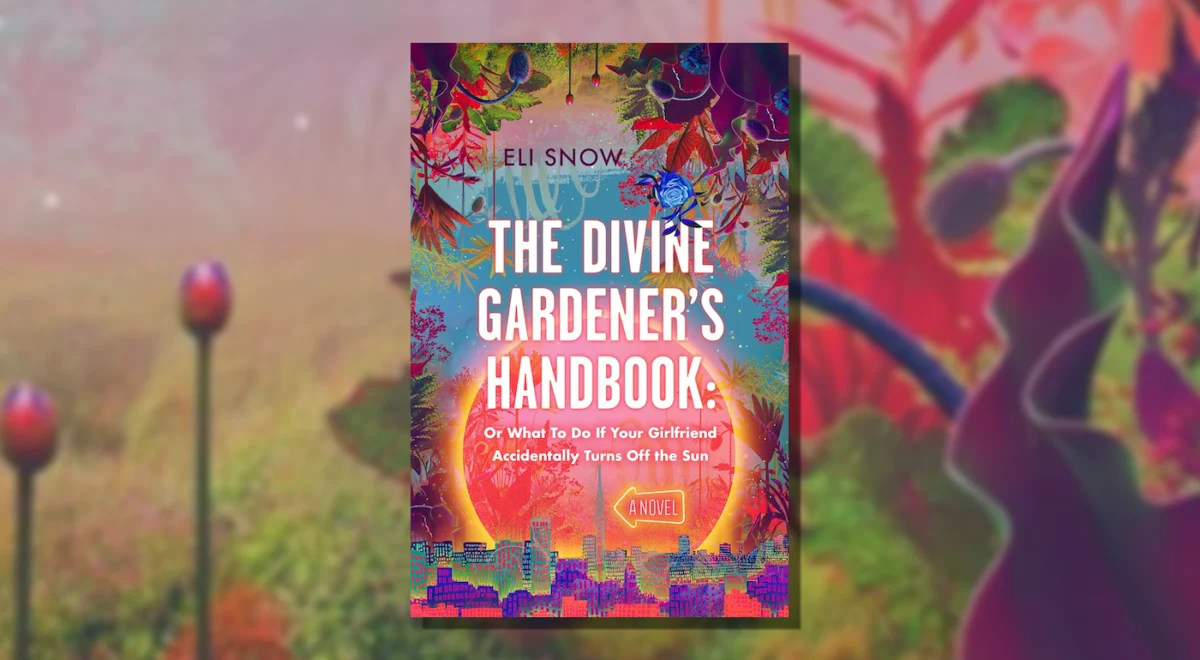
New York, NY – [Current Date] – Readers are poised to delve into a meticulously crafted world of botanical intrigue, cutthroat ambition, and simmering romantic tension with the upcoming release of The Divine Gardener’s Handbook by Eli Snow. Published by Saturday Books, an imprint of Macmillan, this highly anticipated novel, described as a "sapphic dystopian romantasy," is set to bloom on August 18th. Offering a fresh take on beloved genre tropes, Snow’s debut promises a thrilling journey through a society built on verdant illusion and contested power, centering on a rivalry that threatens to uproot everything.
The publisher has generously shared an exclusive excerpt, providing a tantalizing glimpse into the intricate world and the compelling characters at its heart. The excerpt introduces Cyprin, a determined outsider, and Purcell, the formidable head gardener, whose immediate, visceral clash sets the stage for a narrative brimming with high stakes and profound personal discoveries.
Unearthing the Main Facts: A Seed of Rebellion
The Divine Gardener’s Handbook transports readers to a fantastical yet chillingly familiar megacity, a "Jenga-stacked" urban sprawl where glowing blue flowers are not merely decorative but hum with an unseen energy. In this world, the pinnacle of aspiration is a coveted position within the Divine Gardens, a seemingly paradisiacal realm accessible only through immense privilege or extraordinary, often desperate, measures.
At the narrative’s core is Cyprin, whose lifelong ambition has been to secure a role within these hallowed grounds. Her only perceived path to entry is victory in the annual flower pageant, an event long dominated by Purcell, the brilliant—and utterly unbearable—head gardener. Purcell, however, is more than just a rival; she is a constant presence in Cyprin’s thoughts, embodying both her greatest obstacle and an undeniable, perplexing allure.
The plot takes an immediate dramatic turn when Cyprin, driven by desperation, cheats her way to victory. This act of deception thrusts her into a world far more complex and dangerous than she ever imagined. She discovers sentient plants, ancient secrets hidden beneath the pristine facade, and a shocking revelation about the deity at its heart: a "God who turns out to be just some exhausted man with a very good garden."
What begins as a fierce professional rivalry between Cyprin and Purcell quickly escalates, moving from "heated glaring" and "increasingly personal acts of warfare" to something far more dangerous. As a rebellion stirs within the city and the truth underpinning the Divine Gardens unravels, the two women find themselves entangled in a web of ambition, obsession, and the terrifying prospect of truly understanding each other—even if their journey leads to the destruction of their entire world.
A Chronology of Intrigue: From Orchard to Oasis
Eli Snow masterfully constructs a world of stark contrasts, immediately evident in the novel’s opening. The "Jenga-stacked megacity" is a landscape of oppressive density and deprivation, where Cyprin toils in one of "twelve hundred apple orchards." Her existence is characterized by the monotonous sight of "apples undulat[ing] like ocean waves," "stale light," and the "hot-sick smell of full trash cans and close bodies." It’s a life devoid of the beauty and promise she yearns for, a stark antithesis to the Divine Gardens.
The Gardens themselves are described with breathtaking detail: "leaves so lustrous they could have been polished," "petals had peeked out in saturated hues that put Cyprin in mind of fresh paints," and "grass—even the damned grass looked like it had been laser cut. Planed rather than trimmed." This perfection, however, hints at an artificiality, a managed beauty that conceals deeper truths.
Cyprin’s desire to join this elite horticultural society is not merely professional aspiration; it is a desperate quest for escape and belonging. She understands the near impossibility of her goal, likening it to "being plucked from obscurity by a carnival claw machine." The Divine Gardens represent the "pinnacle of horticultural research and practice," a domain occupied by only ten thousand individuals within a kingdom of seven billion. Positions are rarely vacated, making entry akin to joining an "elite family"—or, as Cyprin shrewdly observes, "a cult." Her unwavering commitment to this dream underscores her fierce ambition and willingness to do whatever it takes.
The excerpt then plunges into Cyprin’s immediate, high-stakes attempt to gain entry: her interview. Despite her meticulous preparation—waxed hair, precision-lined lips, scrubbed skin, and "impractical but showy all-white coveralls"—the city’s harsh realities leave her "sweat-soaked" upon arrival. The garden admin center offers a momentary respite, "cool and damp," yet also subtly chaotic with its "grow lights strung up in lines at ankle height" and "seedlings littered the floor." This environment subtly foreshadows the underlying disorder beneath the Gardens’ perfect exterior.

It is here that Cyprin’s path irrevocably crosses with Purcell’s. Their first encounter is a masterclass in establishing immediate animosity and undeniable chemistry. Cyprin, desperate for her interview, attempts to interrupt two palace staff members—one tall, blond, and sympathetic (Amanda Anstan), the other short, curly-haired, and dismissive. This second woman, later revealed to be Purcell Whitlock, the very "head gardener" Cyprin is meant to meet, is preoccupied with trivial concerns about "petal-mail fitting" and God’s complexion. Purcell’s rudeness ("Be quiet for a moment, will you? Wait your turn.") immediately ignites Cyprin’s "hate at first sight." Cyprin notes Purcell’s "manic corkscrew curls," "cheeks the pink of rat tails," and an "emotionally off-kilter" watering can.
The revelation that this annoying, self-absorbed woman is the formidable Purcell Whitlock, the object of both Cyprin’s professional rivalry and her unspoken fascination, cements their complex dynamic. Purcell’s dismissive exit, jostling Cyprin and leaving a scent "sweet and cloying like a candy shop," further fuels Cyprin’s internal conflict, sparking a "predatory city rat" instinct. Despite her disdain, the desire to "get in" and "finally see him" (God) remains paramount, setting the stage for the dramatic unraveling of secrets and the deepening of their intertwined fates. The blurb’s mention of Cyprin cheating to win the pageant, and thus earning her place, suggests this interview scene is merely the first, fiery spark in a larger, dangerous game.
Supporting Data: A Tapestry of Genre and Theme
The Divine Gardener’s Handbook stands out for its ambitious blending of genres, offering readers a unique narrative experience. As a "sapphic dystopian romantasy," it taps into several compelling literary trends:
- Dystopian Critique: The novel immediately establishes a stark class divide and societal control, evident in the contrast between Cyprin’s harsh city life and the exclusive Divine Gardens. The revelation of "God" as merely an "exhausted man" hints at a profound critique of power structures, manufactured divinity, and the illusions maintained to control populations. This subversion of religious authority is a potent dystopian element, challenging the very foundations of the Verdure Kingdom.
- Romantasy Appeal: The "romantasy" label signifies a story where romance is central to the plot, often intertwined with fantastical elements. The "enemies-to-lovers" trope, vividly introduced through Cyprin and Purcell’s immediate animosity, promises intense emotional conflict and eventual, perhaps reluctant, intimacy. The description of Purcell as "the one person Cyprin can’t stop thinking about" even before their formal introduction sets up a powerful undercurrent of attraction beneath the rivalry.
- Sapphic Representation: The explicit "sapphic" designation is crucial, signaling a central queer romance. This provides vital representation within the popular romantasy genre, offering readers diverse relationships and narratives that reflect a broader spectrum of human experience. It allows for exploration of love, power, and identity through a queer lens, adding depth and relevance.
- Environmental Undertones: The focus on gardens, plants, and horticulture is more than mere setting. The idea of "sentient plants" and the contrast between the city’s decay and the Gardens’ artificial perfection suggest a thematic engagement with nature, environmental control, and perhaps the consequences of human manipulation of the natural world.
- Authorial Voice: Eli Snow’s writing, as evidenced in the excerpt, is characterized by vivid, sensory details ("glowing blue flowers," "apples undulated like ocean waves," "sweet and cloying like a candy shop") and sharp, often humorous, character observations ("dorkus," "terrier that had suffered too many pats on the head"). This engaging style promises to draw readers deep into Cyprin’s internal world and the external conflicts she faces. The internal monologue of Cyprin, imagining Purcell as a piñata spilling pink musk sticks, reveals a protagonist who is complex, driven, and slightly unhinged – a perfect fit for a morally ambiguous journey.
Anticipated Reception: The Promise of a Biting Blossom
While official reviews are yet to emerge, the synopsis and excerpt from The Divine Gardener’s Handbook suggest a book poised for significant reader engagement and critical discussion. Eli Snow appears to be charting a course that challenges conventional narratives, particularly through the subversive portrayal of divinity and the complex motivations of its protagonists.
The authorial vision seems to be one that dissects ambition and morality. Cyprin’s decision to cheat immediately positions her as a morally gray character, making her journey of discovery and rebellion all the more compelling. This refusal to present a flawless hero is a hallmark of compelling dystopian fiction and allows for a more nuanced exploration of themes.
The immediate, almost cartoonish, "hate at first sight" between Cyprin and Purcell is a classic setup for a passionate romance. However, the dystopian context—with rebellion spreading and ancient secrets unraveling—elevates this personal conflict into something far grander. The "terrifying possibility of understanding each other completely" suggests that their eventual connection will not be an easy one, but rather a profound journey of self-discovery and mutual challenge, potentially forcing them to confront their own ingrained beliefs and roles within the rigid society. Readers are likely to appreciate the depth promised by this intricate character work.
The excerpt’s ability to swiftly establish the world’s beauty and brutality, Cyprin’s fierce drive, and the explosive chemistry with her rival, positions The Divine Gardener’s Handbook as a strong contender in the contemporary genre fiction landscape. It successfully introduces a compelling premise that hints at large-scale societal upheaval alongside deeply personal stakes.
Implications: Burning Down the Garden of Eden
The implications of The Divine Gardener’s Handbook extend beyond its immediate narrative. Its blend of genres and themes positions it as a significant contribution to the evolving landscape of popular fiction. The growing demand for diverse narratives, particularly those featuring queer relationships and challenging established power structures, makes this novel highly relevant. It offers a fresh voice and perspective within the romantasy subgenre, potentially inspiring new creative directions.
The central conceit—a beautiful, divine garden masking a disillusioned "God" and ancient secrets—carries profound metaphorical weight. It speaks to the illusions societies often construct, the fragility of established orders, and the power of individuals to expose and dismantle them. Cyprin and Purcell’s journey, from bitter rivals to potential allies, could serve as a microcosm for the larger rebellion brewing in the Divine Kingdom of Verdure. Their personal "warfare" might mirror the societal uprising, suggesting that understanding and connection, even if forged through conflict, are essential catalysts for change.
The ominous concluding line of the blurb, "Even if they burn the whole world down in the process," hints at a cataclysmic climax. This raises questions about the cost of truth, the price of rebellion, and whether the destruction of an oppressive system is worth the chaos it might unleash. The Divine Gardener’s Handbook promises not just a love story, but a profound examination of ambition, power, and the terrifying beauty of a world on the brink of profound transformation. As readers await its release, the anticipation for Eli Snow’s verdant dystopia continues to grow, promising a story that will take root in the imagination long after the final page.