
Epic Korean Fantasy "The Heart of the Nhaga" Unveils a World Divided and a Mission to Save It All
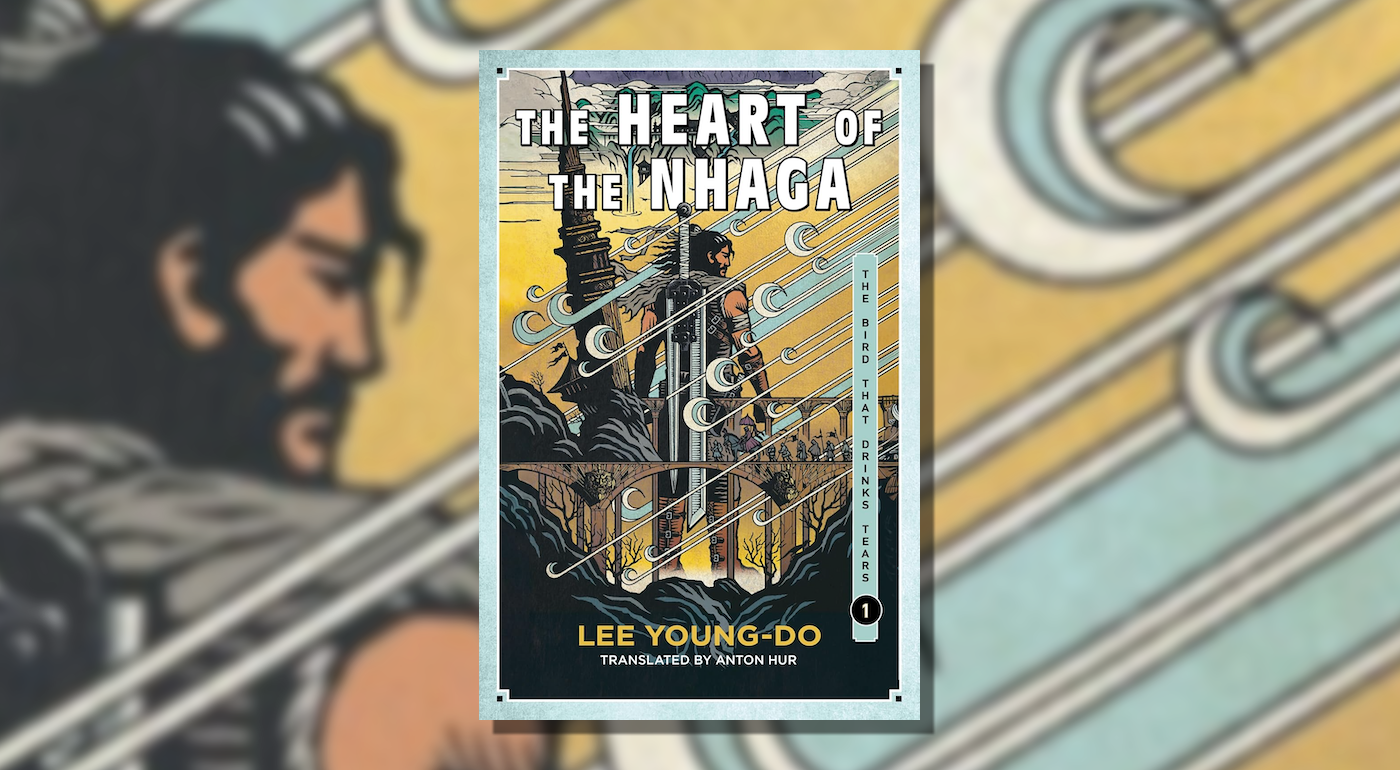
NEW YORK, NY – May 15, 2026 – Harper Voyager is set to unleash a groundbreaking work of Korean epic fantasy onto the global stage with the highly anticipated release of Lee Young-do’s The Heart of the Nhaga, translated by the acclaimed Anton Hur. Publishing on June 2nd, this sprawling narrative plunges readers into a richly imagined world teetering on the brink of unprecedented change, where ancient prejudices clash with a desperate mission that could determine the fate of all races.
The novel introduces a world bisected by the mystical Line of Limit, a centuries-old boundary that has historically kept distinct civilizations apart. To the north reside the volatile Tokkebi, fire manipulators renowned for their illusions and whimsical, often mischievous, nature; the formidable Rekon, giant birdmen celebrated for their immense strength and warrior prowess; and the Humans, a race as fragmented and diverse as the others are unified. South of the Line, in stark contrast, live the enigmatic Nhaga, a reptilian people who achieve immortality by voluntarily relinquishing their hearts, rendering them seemingly impervious to death.
For generations, the Line of Limit has served as an inviolable demarcation, a silent agreement of non-interference. However, the delicate balance of this world is about to be shattered. A radical shift is underway: a Nhaga is to be sent North, an act previously unimaginable. To ensure this southern agent’s survival through the perilous journey, an extraordinary trio is dispatched to escort him—a Tokkebi, a Rekon, and a Human. This unprecedented alliance, mandated by an old saying, "Three handles one," forms the fragile fulcrum upon which the world’s future will hinge.
An Alliance Forged in Improbability
The premise of the escort mission is fraught with inherent contradictions and deep-seated animosities. The chosen Tokkebi, rather than being a seasoned adventurer, is merely a scholar, ill-equipped for the dangers lurking beyond the Line. The Rekon, a member of a species known for its aerial dominance, harbors a debilitating fear of water, a significant handicap in the often-aquatic environments of the South. Most alarmingly, the Human assigned to the task is a notorious hunter and devourer of Nhaga, making him an unlikely, if not outright dangerous, companion for the very individual they are sworn to protect.
The mission’s complexities are compounded almost immediately. The initial Nhaga agent, whose unprecedented journey sparked this fragile alliance, is brutally murdered within the treacherous Kiboren forest. His replacement, however, introduces a twist of monumental significance: this new Nhaga possesses a heart. This biological anomaly makes him acutely vulnerable to the dangers of the journey, transforming what was already a high-stakes escort into an even more desperate rescue. The four disparate individuals must swiftly overcome their profound distrust and ingrained prejudices to forge a cohesive alliance, their survival—and perhaps the fate of the world—contingent upon their ability to function as a unit. Crucially, they must also decipher the true, hidden purpose of their mission, as the implications extend far beyond the mere safe passage of one individual.
Jumunuri: A Fortress Born of Night’s Daughters
The novel’s excerpt introduces readers to Jumunuri, a castle unlike any other, serving as a testament to the Tokkebi’s unique blend of power and caprice. Built in defiance of natural law, Jumunuri was conceived when the Tokkebi, drawing "a fragment of the night" into "artificial day" with their torches and lamps, harnessed the power of the night’s five daughters: Chaos, Seduction, Imprisonment, Concealment, and Dreams.
Each daughter contributed to the castle’s bewildering architecture: Chaos dictated the interior’s unpredictable layout, Seduction designed its alluring yet treacherous exterior. Imprisonment crafted an intricate network of dead ends, mazes, and traps, while Concealment wove in secret tunnels, hidden doors, and cryptic passwords. The contribution of Dreams, the fifth daughter, remains a mystery, hinting at a deeper, perhaps more unsettling, layer to Jumunuri’s design. Unlike her sisters, who embraced concealment, Dreams sought to uncover and discover, blurring the lines between night and day, making her influence subtly pervasive.
Navigating Jumunuri is an exercise in futility for the uninitiated. Only the current lord possesses a complete understanding of its true dimensions. Anecdotal lore abounds among frequent visitors: the fourth floor is only accessible via the seventh; three consecutive turns from any point lead to the great hall; and a specific sequence of turns from the eastern tower guarantees a tumble into the lord’s library. The landing spot, a reflection of the current lord’s temperament, could be a soft cushion, a bed of iron nails (a rumor too harsh even for Tokkebi playfulness), or merely a few lit candles, leaving a playful singed posterior. This blend of architectural genius and mischievous design perfectly encapsulates the Tokkebi ethos.
The Eccentric Lord and a Fateful Mandate
The unfolding of the rescue mission begins within the chaotic confines of Jumunuri, specifically in the library of its eleventh lord, Bao Moridol. Lord Bao, a figure of eccentric whims, is discovered by his head of sentries, Sabin Hasu’un, engaged in the peculiar act of carrying a pail of beetle feces, ostensibly for his plants. This oddity sets the tone for their interaction, a blend of formal respect and playful banter that belies the gravity of the message Sabin carries.
Sabin, tasked with delivering a highly sensitive message from the "Kims" (a monastic human order), finds himself navigating not only the castle’s labyrinthine design but also his lord’s unpredictable humor. He anticipates a painful landing in the library, only to find the "landing spot" cleared, a subtle change that hints at Lord Bao’s shifting moods. The Kims, known for their extreme secrecy, especially regarding "important business," have bypassed the usual channels, indicating the extraordinary nature of their request.
The message is clear: the Kims require a Tokkebi to join a rescue mission below the Line of Limit, an endeavor to bring a Nhaga north. The payment offered—two hundred in gold—is astonishing, even tempting Lord Bao to consider going himself, a thought that prompts a comically dubious expression from Sabin, who feigns pondering the next lord of the castle. Despite the apparent impossibility and danger of such a venture, Lord Bao, perhaps sensing a deeper game or simply amused by the audacity, agrees to dispatch a Tokkebi.
Kagan Draca: The Predator as Protector
The true gravity of the mission begins to dawn when Lord Bao identifies the human member of the escort: Kagan Draca. A name that resonates with legendary prowess, Kagan is a wrestler famous for an improbable victory against a phalanx of Tokkebi champions. But Lord Bao reveals a darker, more unsettling truth: Kagan Draca is not just a warrior, he is a Nhaga hunter who "hunts them for breakfast at the Line of Limit," consuming his reptilian prey.

Sabin’s shock is palpable, questioning Kagan’s sanity. Lord Bao, however, offers a chilling justification. He explains Kagan’s methods, born of a deep-seated hatred and a practical understanding of Nhaga biology. As Nhaga are difficult to kill due to their heartlessness, Kagan "chops them up" to prevent regeneration and then "eats them" to prevent waste. This pragmatism, juxtaposed with the visceral act, paints a picture of a man driven to the edge.
To further illustrate Kagan’s profound motivations, Lord Bao shares an old parchment letter from Kagan, penned six years prior. The letter is a raw confession of unyielding vengeance. Kagan identifies himself as "the son that survived," drawing a parallel to the ancient Kitaljer tiger hunters who would feed the liver of a slain tiger to the son of a hunter devoured by one, thus passing on the spirit of vengeance. Kagan reveals that the Nhaga "swallowed everything that was precious and meaningful" to him, leaving him only his "worthless body." He acknowledges his descent into what others might deem madness, perpetually crossing the Line of Limit in pursuit of his prey, knowing that one day he too might be consumed. His signature is not a name, but the insignia of the Kitaljer hunters: a black lion ("Kagan") and a dragon ("Draca"), representing the beings killed by the Nhaga from whom he draws his new identity.
Lord Bao insists that despite, or perhaps because of, his singular rage, Kagan is the safest companion for anyone who isn’t a Nhaga. His hatred is so absolute and exclusively directed at the Nhaga that he is incapable of anger or harm towards others. This tragic state, as Lord Bao describes it, makes him an unparalleled, albeit terrifying, expert on the Kiboren jungle and its inhabitants—a predator who intimately knows his prey.
Byong Srabble: The Valet’s Unexpected Destiny
With the human member’s identity confirmed and the mission’s dire nature established, the question of which Tokkebi to send remains. Lord Bao, with characteristic Tokkebi capriciousness, decides that since "no one has the qualifications for this sort of thing," he will simply send "whichever Tokkebi enters this room next." Sabin, aware of Jumunuri’s unpredictable portals, immediately voices concern that he himself might inadvertently become the chosen one if he leaves.
Their wait is short. In a flash of light and a comical tumble, Lord Bao’s own valet, Byong Srabble, appears, having accidentally activated one of Jumunuri’s portal traps. Byong, a diligent and possessive servant, immediately confronts Sabin, accusing him of attempting to steal his work and comically challenging him for the title of head of sentries. Lord Bao, with a grin, informs a bewildered Byong that his services are required elsewhere.
"You, Byong, are to be dispatched on a rescue mission," Lord Bao declares, outlining the impossibility of the task: venturing into a place untouched for centuries to rescue someone. Byong’s initial confusion quickly gives way to the realization of his new, extraordinary, and likely terrifying, destiny. The fate of the world now rests on the shoulders of an eccentric lord, a deeply prejudiced Nhaga-hunter, an aquaphobic birdman, a scholarly Tokkebi, and a vulnerable, heart-bearing Nhaga, all guided by a valet thrust into an epic quest.
Implications for a Divided World
The Heart of the Nhaga promises a narrative rich in thematic depth. The central mission, born of necessity, forces characters to confront deeply ingrained prejudices and forge alliances across racial divides. The initial misfits—the scholar Tokkebi, the aquaphobic Rekon, and the Nhaga-hunting Human—represent the very divisions that have kept their world in a precarious balance. Their transformation into a cohesive unit, driven by the immediate threat and the unknown true purpose of their quest, will explore themes of unity, empathy, and the possibility of overcoming historical animosities.
The introduction of a Nhaga with a heart is a profound challenge to the established understanding of their species, introducing vulnerability where immortality once reigned. This element not only heightens the stakes of the rescue mission but also prompts a re-examination of identity, sacrifice, and what it truly means to be alive. Kagan Draca’s arc, fueled by an all-consuming, justified rage, raises questions about revenge, trauma, and whether such a singular focus can ever lead to peace or merely to a different form of madness.
Lee Young-do, through Anton Hur’s evocative translation, invites readers into a world where fantasy tropes are reimagined with a distinct Korean cultural flavor. The whimsical yet dangerous nature of the Tokkebi, the stark contrast between North and South, and the complex motivations of its characters promise a truly immersive and thought-provoking experience. As the release date approaches, fantasy enthusiasts worldwide eagerly await the opportunity to delve into this epic saga, where the fate of a world hangs by the thread of an unlikely alliance and a perilous journey into the unknown.
The Heart of the Nhaga by Lee Young-do, translated by Anton Hur, will be available from Harper Voyager on June 2nd.
[Link to purchase the book: https://www.harpercollins.com/products/the-heart-of-the-nhaga-lee-young-do?variant=43731317325858]

Leave a Comment