Fenris Creations Unleashes Carbon Engine: A Glimpse into the Powerhouse Behind Eve Online Now Open Source
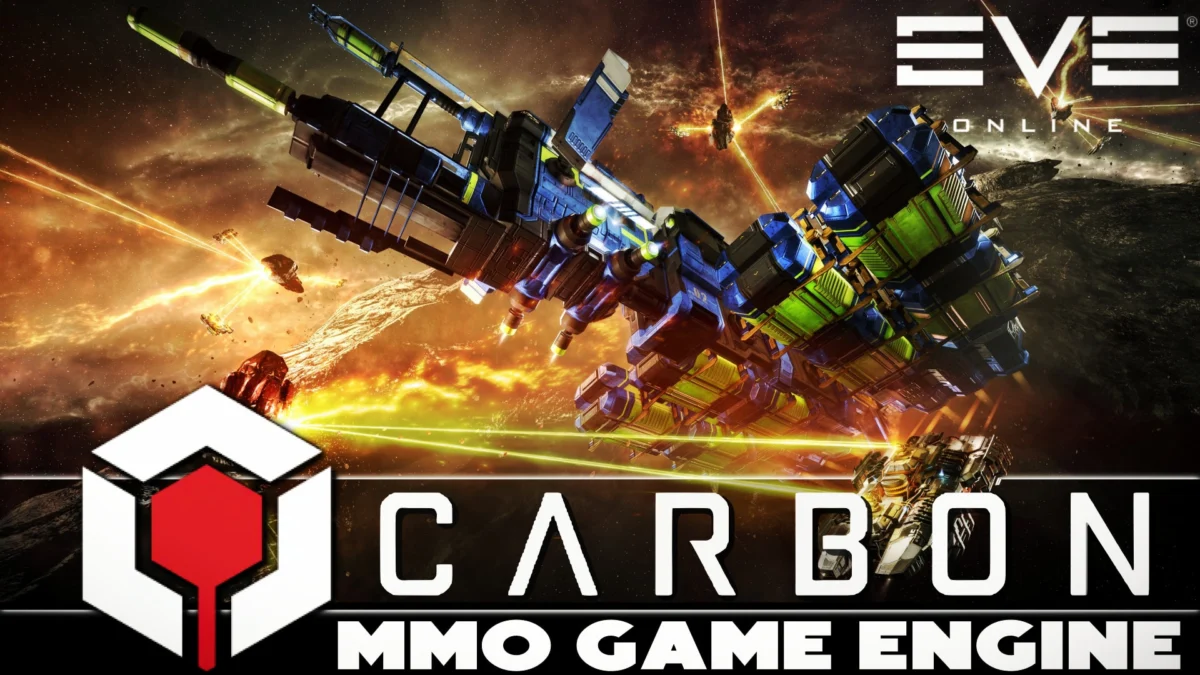
Reykjavik, Iceland – [Date of Publication] – In a significant move for the game development community, Fenris Creations, the studio formerly known as CCP Games, has officially open-sourced its proprietary Carbon Game Engine Framework. This groundbreaking decision grants developers worldwide access to the robust and battle-tested technology that has powered the enduringly popular MMORPG, Eve Online, and its spin-off, Eve Frontier, for years. The majority of the engine’s source code is now available under the permissive MIT license, with remaining components released under other open-source licenses that permit commercial use, signaling a new era of accessibility and innovation for game creation.
For over two decades, Eve Online has captivated millions of players with its unparalleled depth, complex player-driven economy, and epic-scale space combat. The Carbon engine has been the silent architect of these vast virtual universes, meticulously crafting the experiences that have fostered deep emotional connections and driven players to forge their own destinies amongst the stars. Now, this sophisticated toolset, refined through years of demanding real-world application, is being made available to a broader audience, promising to empower a new generation of game developers.
A Legacy Forged in the Stars: The Genesis of Carbon
The story of the Carbon engine is intrinsically linked to the ambitious vision of CCP Games, the Icelandic studio that dared to create a persistent, player-driven universe in space. Launched in 2003, Eve Online quickly distinguished itself from its contemporaries. Its success was not merely a testament to its innovative design and engaging gameplay, but also to the underlying technological prowess that enabled such a complex and expansive world to function.
CCP Games, recognizing the need for a custom-built solution to realize their unique vision, began developing the Carbon engine internally. This was not a matter of adopting off-the-shelf technology, but of forging a tool that could meet the extraordinary demands of a constantly evolving, massively multiplayer online experience. The engine was designed from the ground up to handle the intricate web of player interactions, the vastness of its simulated galaxy, and the demanding real-time simulations required for its legendary PvP battles.
Over the years, Carbon underwent continuous refinement and expansion. Its capabilities grew in parallel with Eve Online’s ambitions. From rendering the breathtaking cosmic vistas of New Eden to managing the intricate data streams of a million player actions, Carbon proved itself to be a highly adaptable and resilient framework. This iterative development process, driven by the demands of one of the most complex online games ever created, imbued Carbon with a level of maturity and robustness that few other engines can boast.
The transition from CCP Games to Fenris Creations marked a strategic pivot for the company, allowing them to focus on the core technologies that defined their success. The decision to open-source Carbon is a natural evolution of this strategy, reflecting a belief in the power of community-driven development and a desire to see their technological innovations foster creativity beyond their own studio walls.
Deconstructing Carbon: A Modular Powerhouse for Virtual Worlds
Fenris Creations has described Carbon not as a monolithic, turn-key solution, but as a sophisticated collection of interconnected frameworks, each designed to excel in its specific domain. This modular approach offers developers the flexibility to leverage specific components or the entire suite, adapting the engine to their unique project needs.
-
Trinity (Rendering Engine): At the visual core of Carbon lies Trinity, the rendering engine responsible for bringing the expansive and often awe-inspiring environments of New Eden to life. Engineered to handle massive-scale visual rendering, Trinity is instrumental in crafting the breathtaking cosmic vistas that have become a hallmark of Eve Online. Its ability to manage complex scenes and deliver high-fidelity graphics ensures that players are immersed in visually stunning virtual worlds, pushing the boundaries of what is achievable in game aesthetics.
-
Core (Core Framework): Providing the foundational bedrock for the entire engine, the Core framework is a C++ library that offers essential low-level systems and platform-independent functionality. This robust foundation standardizes how Carbon interacts directly with the underlying hardware and operating systems, ensuring a consistent and reliable performance across various platforms. It’s the unseen workhorse that enables the higher-level components to function seamlessly.
-
Scheduler: Developed as a Python extension, the Scheduler component is crucial for managing the complex asynchronous operations inherent in large-scale online games. It provides deterministic scheduling and efficient channel messaging for Greenlet coroutines, enabling predictable tasklet scheduling even on vanilla CPython builds. This is vital for maintaining the responsiveness and stability of the engine, especially under heavy load.
-
Spatial Audio Object Clustering: This Wwise plugin addresses the challenges of rendering complex audio environments. It dynamically groups and manages spatial audio objects based on their physical proximity, optimizing performance by reducing overall system audio object consumption. In games with thousands of concurrent players and intricate soundscapes, this component is critical for delivering deep, unbroken acoustic immersion without compromising performance.
-
Resources: The Resources module is a dedicated suite of tools designed to streamline the management, manipulation, and efficient delivery of all in-game asset files. This simplifies the asset pipeline workflow for Carbon-based titles, allowing developers to more effectively manage textures, models, audio, and other crucial game data.
-
Destiny: Handling the critical physics and pathfinding simulations, Destiny is a testament to Carbon’s ability to manage large-scale, real-time events. Its high-scale efficiency has been directly responsible for facilitating historic, Guinness World Record-breaking multiplayer PvP battles, featuring thousands of concurrent players. This component ensures that the complex interactions within the game world are simulated with accuracy and responsiveness, even under extreme conditions.
-
CarbonUI: This intuitive User Interface Framework is purpose-built to guide players through complex gameplay systems with clarity and ease. CarbonUI empowers developers to construct dynamic and engaging interfaces that are essential for bringing millions of players together and facilitating their navigation within massive virtual worlds. Its design prioritizes user experience and accessibility.
-
CarbonIO: As the networking backbone of the engine, CarbonIO is responsible for ensuring reliable data transmission and synchronization across online games. It works tirelessly to maintain the connectivity and the vibrant pulse of persistent, living universes, guaranteeing that player actions are reflected accurately and instantaneously across the network.
-
CarbonAudio: This component provides the intricate logic and rules necessary to handle dense and complicated soundscapes flawlessly. CarbonAudio ensures that even when thousands of players gather in a single massive scene, the audio experience remains deep, immersive, and unbroken, contributing significantly to the overall atmosphere and player engagement.
-
Scripting: Carbon’s scripting system is built upon the widely adopted and versatile Python programming language. This choice offers developers a flexible, stable, and familiar environment for rapidly building and iterating on in-game experiences. Python’s readability and extensive libraries empower creators to bring their visions to life with efficiency and creative freedom.
A Shift in Strategy: Towards Community and Accessibility
The open-sourcing of Carbon represents a significant philosophical shift for Fenris Creations and a strategic move to foster a more collaborative and innovative game development ecosystem. Historically, sophisticated game engines have often been proprietary, with licensing fees and restricted access creating barriers for independent developers and smaller studios. By releasing Carbon under permissive open-source licenses, Fenris Creations is democratizing access to a powerful, proven technology.
This move is not without precedent. Other major game engines have seen success in leveraging open-source principles or offering more accessible licensing models. However, Carbon’s unique lineage, directly tied to the development of one of the most enduring and complex MMOs, gives it a distinct advantage. Developers gain access to an engine that has been battle-tested in the most demanding of conditions, replete with solutions for challenges that many aspiring game creators will inevitably face.
While Carbon is not a "turn-key" engine in the vein of Unity, Unreal, or Godot, which often provide more out-of-the-box solutions for common game development tasks, its modular nature offers a different kind of power. Developers have the opportunity to select and integrate the components they need, building highly customized experiences without the bloat of unnecessary features. This granular control can lead to more optimized and specialized games.
To address the potential learning curve associated with a framework of this complexity, Fenris Creations has acknowledged the need for better onboarding resources. As stated in an interview with GamesIndustry.biz, the company is actively working on developing a "test project" – not necessarily a full game, but an example application designed to showcase the engine’s architecture and facilitate quicker understanding and integration for new users. This initiative is crucial for unlocking the full potential of the open-sourced Carbon engine.
The Road Ahead: Implications for the Game Development Landscape
The open-sourcing of the Carbon engine has profound implications for the future of game development.
-
Empowering Independent Developers: The most immediate impact will be felt by independent game developers and smaller studios. Access to a powerful, mature engine that has powered a AAA MMO significantly lowers the barrier to entry for creating ambitious projects. This could lead to a surge in innovative and diverse game titles emerging from unexpected corners of the industry.
-
Fostering Innovation and Specialization: The modular nature of Carbon encourages developers to experiment and innovate. By picking and choosing specific frameworks, developers can tailor the engine to their precise needs, potentially leading to more specialized and performant games. This contrasts with more monolithic engines where developers might be forced to work around or disable features they don’t require.
-
Building a Community Ecosystem: Open-source projects thrive on community contributions. The release of Carbon opens the door for developers to contribute code, report bugs, develop new tools and plugins, and share their knowledge. This collaborative environment can accelerate the engine’s development and expand its capabilities far beyond what Fenris Creations could achieve alone.
-
Potential for New Genres and Experiences: The unique strengths of Carbon, particularly its prowess in handling massive concurrent player counts and complex simulations, could inspire the creation of new game genres or push existing ones in exciting directions. Games that require intricate player interaction, large-scale persistent worlds, or complex economic systems may find Carbon to be an ideal foundation.
-
A New Frontier for Engine Development: The move also signals a growing trend towards more open and collaborative engine development models. As the industry matures, the value of shared knowledge and accessible tools becomes increasingly apparent. Fenris Creations’ decision is a significant step in this direction, demonstrating a commitment to the broader game development community.
Key Resources for Exploration
For developers eager to explore the capabilities of the Carbon engine, Fenris Creations has provided several key resources:
-
Carbon Homepage: https://fenris.com/carbon – The central hub for information, updates, and official announcements regarding the Carbon engine.
-
Carbon GitHub Repositories: https://github.com/orgs/carbonengine/repositories?type=all – Direct access to the engine’s source code, allowing developers to dive deep into its architecture and contribute to its development.
-
Carbon Interview on GameIndustry.biz: https://www.gamesindustry.biz/eve-onlines-carbon-engine-is-now-open-source-fenris-creations-explains-why – An in-depth discussion with Fenris Creations about the motivations behind the open-sourcing and the future plans for the engine.
The open-sourcing of the Carbon Game Engine Framework by Fenris Creations is a landmark event, marking a new chapter in the accessibility of high-end game development technology. By sharing the engine that powered the enduring legacy of Eve Online, Fenris Creations is not just releasing code; they are igniting a spark of potential for countless new virtual worlds and experiences waiting to be built. The stars of New Eden are now within reach for developers across the globe, and the universe of game creation is poised for an exciting new era of innovation.