The Fourteenth Amendment: A Cornerstone of American Liberty and Its Enduring Legacy
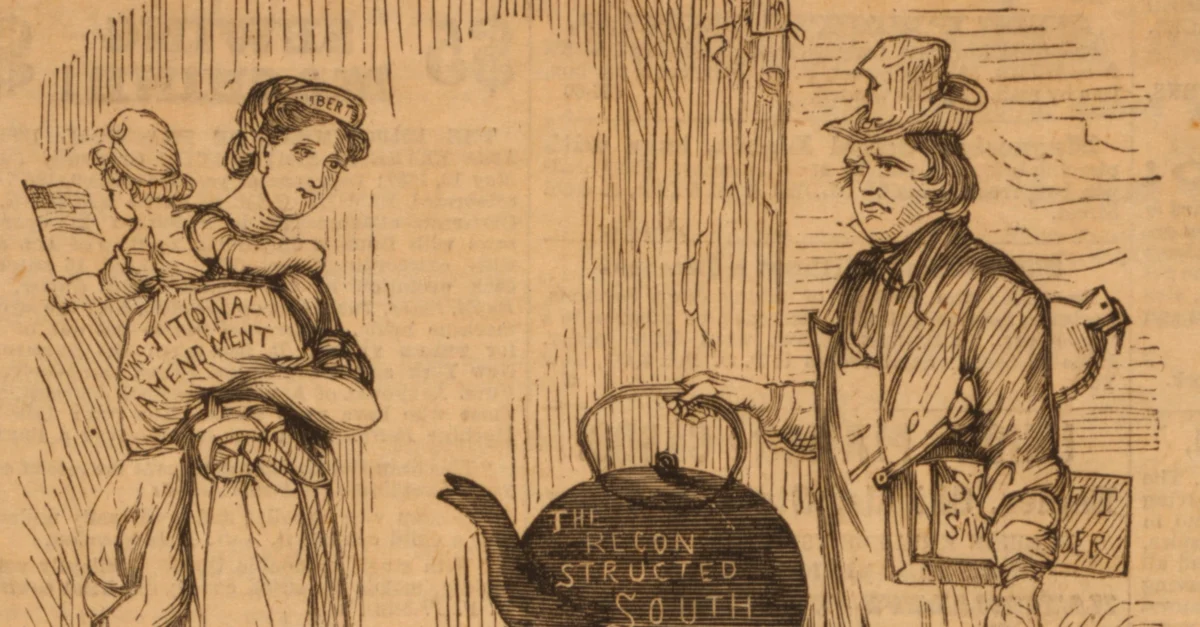
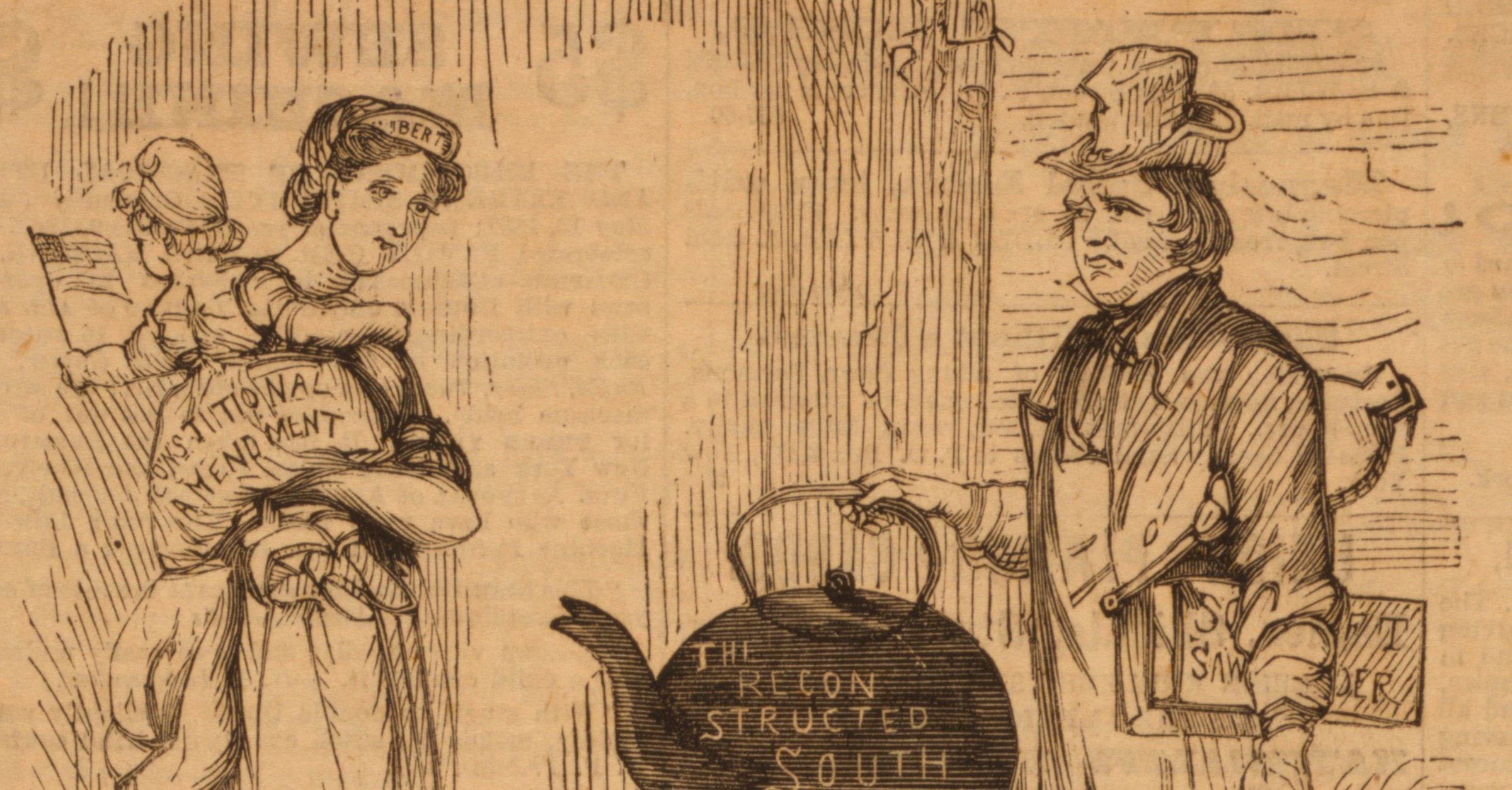
Washington, D.C. – Ratified in 1868 during the tumultuous Reconstruction Era, the Fourteenth Amendment stands as one of the most profoundly impactful and frequently litigated additions to the United States Constitution. Far more than a mere legislative update, it fundamentally redefined American citizenship, guaranteeing "birthright citizenship" to "all persons born or naturalized in the United States," and establishing the bedrock principles of "equal protection of the laws" and "due process" for all citizens. Drafted in the immediate aftermath of the Civil War to secure the newfound liberties of formerly enslaved people, its provisions have since become the legal linchpin for a vast array of civil rights advancements, making it an indispensable pillar of modern American jurisprudence and political discourse.
Reconstructing a Fractured Nation: The Genesis of Change
The conclusion of the American Civil War in April 1865 marked the end of the nation’s bloodiest conflict and, with the ratification of the Thirteenth Amendment in December 1865, the abolition of slavery across the United States. Millions of formerly enslaved people were liberated from generations of bondage, poised, at least on paper, to forge their own destinies. Yet, the monumental question remained: what would be the true place of these freedmen and women within American society? Would they be recognized as full citizens, endowed with the same rights and protections as others? Would they be granted the right to vote, to own land, to pursue education, and to participate in the democratic process that had so long denied them their humanity?
President Abraham Lincoln, acutely aware of the deep scars left by war and sectional division, understood that these questions demanded immediate and decisive answers. In early 1865, he and the anti-slavery Republican Party established the Freedmen’s Bureau, a federal agency tasked with assisting formerly enslaved individuals in their transition to freedom. The bureau provided crucial aid, including food, housing, medical care, and educational opportunities. It also made tentative plans to redistribute confiscated Confederate farmlands to freedpeople, a promise that resonated deeply and became immortalized in the rallying cry of "forty acres and a mule." Just days before his assassination in April 1865, Lincoln publicly voiced his support for the enfranchisement of Black Americans, particularly those who had served with valor in the Union Army. His untimely death, however, left the nation grappling with these unresolved issues and a leadership vacuum.
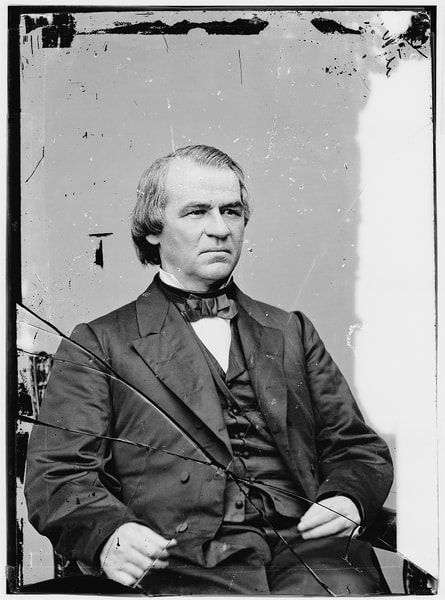
Lincoln’s successor, Andrew Johnson, a Democrat from Tennessee with a markedly different vision, swiftly derailed many of these progressive efforts. Johnson’s primary interest lay in quickly restoring the Southern states to the Union, often at the expense of securing the rights of Black Americans. He issued widespread pardons and granted amnesty to most ex-Confederates, returning much of their confiscated lands and effectively thwarting the Freedmen’s Bureau’s land redistribution initiatives. Johnson’s vetoes of subsequent Freedmen’s Bureau Bills further crippled the agency’s ability to aid freedpeople across the South.
This phase, known as "Presidential Reconstruction," emboldened the defeated Southern states. Former Confederate leaders were quickly reinstated into positions of power, and state legislatures across the South began implementing a series of discriminatory legislative policies known as the "Black Codes." These codes severely restricted the freedoms and civil liberties of Black Americans, effectively attempting to re-establish a system of racial subjugation akin to slavery. They limited property ownership, dictated labor contracts, prohibited interracial marriage, and denied Black citizens basic legal rights. When the Republican-controlled Congress reconvened in late 1865, the most ardent advocates for the Union and Black liberties – known as the Radical Republicans – were horrified by Johnson’s perceived betrayal of Reconstruction’s goals and his apparent willingness to allow the old slave-holding aristocracy to reclaim authority.
The Battle for Constitutional Safeguards: Congressional Debate
Faced with President Johnson’s obstructionism and the resurgence of Southern defiance, the Republican-controlled Congress acted decisively. They refused to admit newly elected Southern congressmen to their chambers, effectively buying time to devise a strategy to enshrine the hard-won gains of the Civil War into the Constitution, placing them beyond the reach of presidential interference or future state-level reversals. The urgency was palpable; in January 1866 alone, over 70 constitutional amendments were introduced, each attempting to address the complex issues of Black liberties and the future of Reconstruction.
One of the most pressing concerns was the issue of political representation. Prior to the war, the infamous Three-Fifths Compromise had allowed Southern states to count three-fifths of their enslaved populations for congressional representation, artificially inflating their political power despite denying these individuals any voting rights. With slavery abolished by the Thirteenth Amendment, Southern states could now count their entire Black population for representational purposes. However, since freedmen were still largely disenfranchised by the Black Codes and other state laws, the South stood to gain significant congressional influence disproportionate to its actual voting population. This prospect alarmed Republicans, who feared that "unrepentant… traitors" could seize control of the federal government and undermine Reconstruction entirely, as historian Eric Foner noted.
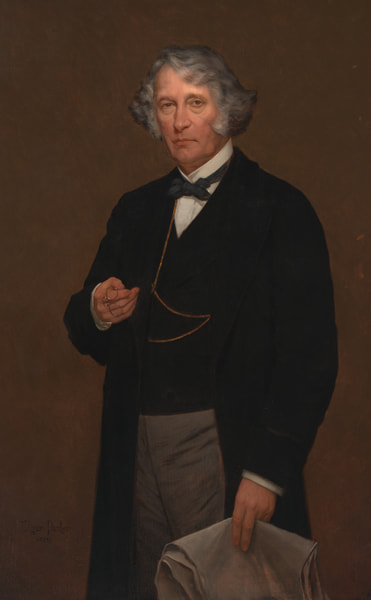
To counter this, the Joint Committee on Reconstruction proposed an amendment in late January 1866 that would penalize any state attempting to prevent male citizens from voting by proportionately shrinking that state’s congressional representation. While this measure passed in the House of Representatives, it ultimately failed in the Senate. Opposition came not only from Democrats but also from a faction of Radical Republicans who believed it did not go far enough. Senator Charles Sumner of Massachusetts, a leading radical voice and fervent abolitionist, argued passionately against the amendment. He contended that it offered few real protections, as a large state might still find it politically expedient to restrict Black suffrage, even at the cost of some representation. Sumner, unwilling to compromise on fundamental moral principles, declared, "the day of compromise with wrong had passed forever" and "a moral principle cannot be compromised." He bolstered his argument with petitions from revered abolitionists like Frederick Douglass, who shared his profound doubts.
The split within Republican ranks was a source of great frustration. Thaddeus Stevens, the influential Radical Republican leader in the House, condemned Sumner and his "self-righteous Republicans" for inadvertently aiding the "unrighteous copperheads" (a derogatory term for Northern Democrats sympathetic to the South). Stevens, ever the pragmatist, argued that compromises were necessary because they lived "among men and not among angels." Despite his pleas, the amendment failed to secure the necessary two-thirds majority in the Senate, forcing House Republicans back to the drawing board. The situation was tense; as one Republican congressman glumly observed, "The President has gone over to the enemy, and our friends are all split up among themselves." With crucial midterm elections looming, Republicans understood that failure to propose a comprehensive and agreeable amendment could lead to losing control of Congress and, with it, the upper hand in the battle for Reconstruction. This realization spurred the Joint Committee to present a new, more expansive amendment in late April, one designed to be more palatable to their radical colleagues and more robust in protecting liberties.
Forging the Framework: The Amendment’s Sections
The primary architect of the document that would become the Fourteenth Amendment was Ohio Congressman John A. Bingham, already a figure of national renown for prosecuting the conspirators behind Abraham Lincoln’s assassination. Bingham was deeply concerned that certain states would attempt to deny citizenship to Black Americans and, furthermore, would deprive them of the fundamental liberties guaranteed in the Bill of Rights. His vision for the amendment sought to permanently embed these protections into the Constitution.
The new amendment, swiftly approved by both houses of Congress on June 13, 1866, and sent to the states for ratification, comprised five pivotal sections:
Section 1: Defining Citizenship and Guaranteeing Rights
This is arguably the most consequential section, fundamentally reshaping the relationship between citizens, states, and the federal government. It begins with the Citizenship Clause: "All persons born or naturalized in the United States, and subject to the jurisdiction thereof, are citizens of the United States and of the State wherein they reside." This definitively established birthright citizenship, meaning that anyone born on U.S. soil, regardless of their parents’ legal status, is an American citizen. This clause was a direct response to the infamous Dred Scott v. Sandford Supreme Court decision (1857), which had denied citizenship to Black Americans. Bingham’s deliberate wording also opened the door for children of immigrants to receive full constitutional rights and privileges.
The section continues with the Privileges or Immunities Clause, which states, "No State shall make or enforce any law which shall abridge the privileges or immunities of citizens of the United States." While its initial broad intent to protect fundamental rights was later narrowed by the Supreme Court, it remains a testament to the framers’ aspirations.
Crucially, Section 1 also includes the Due Process Clause: "nor shall any State deprive any person of life, liberty, or property, without due process of law." This clause was revolutionary because it began the process of "incorporating" the protections of the Bill of Rights, originally applicable only to the federal government, against state governments. It ensures fair legal procedures and safeguards individual liberties from arbitrary state action.
Finally, the Equal Protection Clause mandates, "nor deny to any person within its jurisdiction the equal protection of the laws." This clause is the bedrock of anti-discrimination law in the United States, requiring states to treat all individuals equally under the law. Scholars like Manisha Sinha emphasize the profound importance of Bingham’s choice of the word "person" rather than "male" throughout this section. This purposeful linguistic choice proved prescient, later providing a vital legal foundation for marginalized groups, including women and LGBTQ+ individuals, to claim equality and challenge discriminatory practices.
Section 2: Reapportionment and Suffrage Penalties
This section directly addressed the "representation problem." It permanently abolished the Three-Fifths Clause and stipulated that representatives would be apportioned among the states according to their respective whole populations, explicitly excluding "Indians not taxed" (referring to Native Americans living on reservations and not integrated into the tax-paying population). It also introduced a penalty for states that denied or abridged the right to vote for any adult male citizen (21 years of age or older), except for participation in rebellion or other crime. In such cases, the state’s congressional representation would be proportionately reduced. It is important to note, however, that this penalty has rarely been invoked, even when Southern states flagrantly disenfranchised Black men during the subsequent Jim Crow era.
Section 3: Disqualification of Former Confederates
This section aimed to prevent ex-Confederates from reclaiming positions of power. It barred any person who had previously taken an oath to support the U.S. Constitution as a federal or state officer and subsequently engaged in insurrection or rebellion against the United States from holding any future civil or military office. However, Congress retained the power to remove this disability for individuals with a two-thirds vote in each House. While intended as a deterrent, this provision was often circumvented or lifted, leading historian Manisha Sinha to critically observe, "Never have traitors felt the hand of law so lightly."
Section 4: Public Debt and Confederate Obligations
This clause affirmed the validity of the U.S. national debt, including debts incurred for Union pensions and bounties for services during the rebellion. Conversely, it explicitly prohibited the United States or any state from assuming or paying any debt or obligation incurred in aid of the Confederacy, or any claim for the loss or emancipation of enslaved people. This provision effectively nullified the financial underpinnings of the Confederate cause and ensured that the economic costs of preserving the Union were borne by the nation, not its former enemies.
Section 5: Congressional Enforcement Power
The final section granted Congress the explicit authority to enforce the provisions of the amendment "by appropriate legislation." This broad grant of power provided the federal government with a crucial tool to protect the rights newly enshrined in the Constitution, allowing it to pass laws necessary to counter state-level resistance and ensure compliance.
The Long Road to Ratification: Official Responses
Upon its completion and passage by Congress, Secretary of State William H. Seward dispatched the Fourteenth Amendment to the states for ratification. The path to adoption, however, was fraught with opposition. President Andrew Johnson actively campaigned against it, echoing sentiments that it represented an unwarranted increase in federal power at the expense of states’ rights. Democrats and the former Confederate States largely remained defiant, with their state legislatures, save for Tennessee, refusing to ratify the amendment. Congressman Bingham countered these arguments, clarifying that the amendment "takes from no State any right… but it imposes a limitation upon the States to correct their abuses of power," as quoted by Foner.
Undaunted, the Radical Republicans, having decisively retained control of Congress in the 1866 midterm elections, pressed forward. In 1867, they passed the landmark Reconstruction Acts, which imposed martial law across the former Confederate states (excluding Tennessee, which had been readmitted in 1866 after ratifying the 14th Amendment). These acts made ratification of the Fourteenth Amendment a mandatory prerequisite for any Southern state seeking readmission to the Union. This strategic move effectively forced the hand of the Southern states. Although some states held out for decades—Kentucky, for instance, didn’t officially ratify it until March 1976—the requisite number of 28 states ratified the Fourteenth Amendment, leading to its formal adoption into the U.S. Constitution on July 9, 1868. This marked not only a pivotal moment in the history of Reconstruction but also a watershed event in the constitutional history of the United States, forever altering the balance of power and the scope of individual rights.
An Enduring Legacy: Modern Implications
The Fourteenth Amendment is widely regarded as the most significant constitutional amendment since the Bill of Rights. It fundamentally transformed the landscape of American law, enshrining concepts like birthright citizenship and equality before the law that have had profound and lasting consequences throughout U.S. history. Indeed, Section 1, with its Citizenship, Due Process, and Equal Protection Clauses, remains one of the most frequently litigated parts of the Constitution, continually shaping the interpretation of rights and liberties.
Its impact is evident in a series of landmark U.S. Supreme Court decisions that have expanded civil rights and reshaped American society:
- Brown v. Board of Education (1954): This monumental decision utilized the Equal Protection Clause to declare state-sponsored segregation in public schools unconstitutional, dismantling the "separate but equal" doctrine and providing a crucial legal foundation for the burgeoning Civil Rights Movement.
- Loving v. Virginia (1967): The Supreme Court invoked the Equal Protection and Due Process Clauses to strike down bans on interracial marriage, affirming the fundamental right to marry as a core liberty protected by the Constitution.
- Roe v. Wade (1973): For nearly five decades, the right to access abortion was federally protected, rooted in the Due Process Clause’s implied right to privacy. While this precedent was famously overturned in Dobbs v. Jackson Women’s Health Organization (2022), returning the authority to regulate abortion to individual states, the ongoing legal and political battles underscore the Fourteenth Amendment’s dynamic and often contested role in defining personal autonomy.
- Obergefell v. Hodges (2015): This landmark ruling legalized same-sex marriage nationwide, citing both the Equal Protection and Due Process Clauses to affirm the fundamental right of all individuals to marry the person they love.
Beyond these pivotal cases, the Fourteenth Amendment continues to be a subject of intense debate. The concept of birthright citizenship, though firmly established, remains a recurring point of political contention. The perennial tension between federal power and states’ rights, which underscored the amendment’s creation, persists in various forms today. Moreover, the amendment’s expansive language, particularly the use of "person" rather than "male," has proven instrumental in advocating for the rights of women, LGBTQ+ individuals, and other marginalized groups, demonstrating its remarkable adaptability as a "living document" that continues to be reinterpreted to meet the evolving demands of justice and equality in the United States. The Fourteenth Amendment, born from the ashes of civil war, remains a vibrant and contested testament to the nation’s ongoing pursuit of a more perfect Union.