The Intersection of Physics and Phantasmagoria: "Cosmic Circus" Debuts to Acclaim at Eastercon
Main Facts: A New Frontier in Science Communication
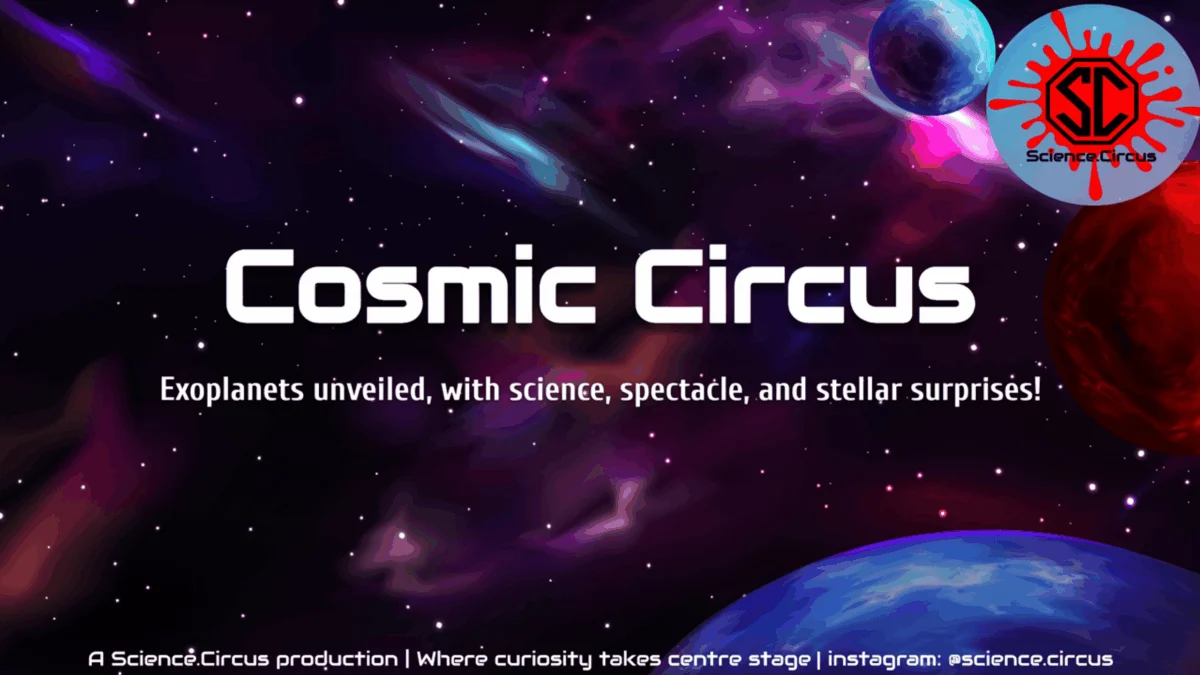
At the intersection of performance art, gravitational physics, and science fiction fandom, a new educational initiative titled "Cosmic Circus" has made a significant impact. Debuting at the recent Eastercon—the British National Science Fiction Convention—the performance sought to bridge the gap between complex astronomical concepts and accessible, high-energy entertainment.
Led by the duo of Dr. Emma and Dr. Pepper, the production was more than a mere variety show. It represented a calculated attempt to utilize "STEAM" (Science, Technology, Engineering, Arts, and Mathematics) principles to engage an audience that is notoriously discerning: the science fiction community. The show, which combines aerial silks, acrobatics, and poi with a narrative centered on space exploration, was generously sponsored by the Dublin 2029 Worldcon bid, signaling a growing investment in creative outreach within the global fandom community.
The core objective of the performance, as articulated by its creators, is to evolve into a touring educational program for schools. By leveraging the wonder of circus arts and the imaginative framework of science fiction, "Cosmic Circus" aims to demystify the rigors of astrophysics and the history of space travel for the next generation of scientists and dreamers.
Chronology: From Mundane Beginnings to Interstellar Inquiry
The atmosphere in the large program room at Eastercon was one of high anticipation as the show began. The chronology of the performance was designed to take the audience from the familiar to the fantastic, using a classic narrative arc of "the first contact."

The Arrival
The show opened with Dr. Emma and Dr. Pepper establishing a comedic rapport with the audience, immediately breaking the "third wall" to manage the overflow crowd. As the lights dimmed, the technical crew utilized atmospheric soundscapes and dynamic lighting to transform the convention hall into a stage for the extraordinary.
The narrative began with a depiction of the mundane: a hotel cleaner performing routine tasks. This grounded reality was shattered by the arrival of a flashing flying saucer. In a moment of sharp parody that resonated with the convention-going audience, the "alien" visitor’s first hurdle was not planetary conquest, but the quintessentially Earthly problem of finding a suitable parking space for a spacecraft.
The Introduction of Quindor
The audience was then introduced to Quindor, a character laden with the grandiloquent titles typical of space opera: Herald of the Dark Nebula, Guardian of the Quantum Rift, and Emissary of the Planetary Network. Despite these imposing monikers, the character served as a vessel for physical comedy and acrobatic prowess.
As Quindor attempted to navigate the idiosyncrasies of Earth, the performance transitioned into high-energy physical theater. This segment included:

- Acrobatic Sequences: Representing the physical toll of varying gravity.
- The "Space Leopard" Incursion: A surrealist comedic beat involving a costumed performer invading the stage, testing Quindor’s "interstellar diplomacy."
- Audience Participation: Breaking the fourth wall to involve attendees in the learning process, turning the passive act of spectating into an active dialogue.
The Philosophical Pivot
The narrative reached its climax through a sequence inspired by Monty Python’s "What have the Romans ever done for us?" sketch. In this iteration, the question was reframed: "What has space exploration ever done for us?" Through a rhythmic, escalating dialogue between Quindor and the cleaner, the show listed the tangible benefits of the space program—from satellite technology and medical imaging to the fundamental understanding of our place in the universe.
Supporting Data: The Science Behind the Spectacle
While the "Cosmic Circus" is an exercise in entertainment, its foundation is built upon rigorous scientific data and pedagogical theory. The performers utilized specific circus disciplines to mirror complex physical phenomena.
Orbital Mechanics and Poi
The use of poi—a performing art involving swinging tethered weights through various rhythmical and geometric patterns—was not merely decorative. In the context of the show, the centripetal force and momentum of the poi served as a visual metaphor for orbital mechanics and the gravitational pull of celestial bodies. By watching the arcs of the glowing weights, the audience was given a tactile demonstration of how planets remain in orbit around a star.
Gravity and Aerial Silks
One of the most well-received segments involved aerial silks. As performers suspended themselves from the ceiling, executing drops and wraps, the dialogue focused on the concept of gravity and the "well" of spacetime. The contrast between the grace of the aerialist and the constant pull of Earth’s gravity provided a visceral lesson in the forces that govern the movement of exoplanets.

Astronomy and Exoplanet Detection
The script cleverly integrated lessons on how astronomers identify planets outside our solar system. Using the "cleaner" character as a stand-in for a distant star, the show demonstrated the "transit method" of detection—observing the slight dip in a star’s brightness as a planet passes in front of it.
The educational content also extended to our own solar system, offering detailed data on:
- Jupiter’s Composition: Explaining the gas giant’s atmospheric layers.
- Observational Astronomy: Practical tips on how to locate Jupiter in the night sky using basic equipment or the naked eye.
- The Physics of Light: How spectral analysis allows scientists to determine the chemical makeup of atmospheres millions of miles away.
Official Responses: Fandom Traditions and Future Ambitions
The reception of "Cosmic Circus" at Eastercon was documented as overwhelmingly positive, but it also invited a deeper look at the tradition of "science humor" within the UK science fiction community.
A Legacy of Intellectual Wit
Long-time attendees of Eastercon noted that "Cosmic Circus" follows in the footsteps of legendary figures like Bob Shaw. Shaw was famous for his "Serious Scientific Talks," which used deadpan humor to explore speculative concepts. The organizers of "Cosmic Circus" acknowledged this lineage, noting that a "warm but demanding" audience like the one at Eastercon requires a high level of scientific accuracy to be paired with its comedy.

The Performers’ Vision
Following the performance, Dr. Emma addressed the crowd to outline the future of the project. She emphasized that the Eastercon show was a "proof of concept" for a broader educational mission.
"Our goal is to take this into schools," Dr. Emma stated. "We want to use the awe-inspiring nature of circus arts to lower the barrier of entry for STEM subjects. When a child sees a ‘planet’ spinning in a poi routine or an ‘alien’ defying gravity on the silks, the science becomes something they can feel, not just something they read in a textbook."
Call for Support
The production concluded with a plea for feedback and institutional support. To transition from a convention performance to a certified school program, the team requires further funding and rigorous impact data. The "Science Circus" project has established a digital presence (via linktr.ee/science.circus) to collect testimonials and engage with potential educational partners.
Implications: The Evolution of "Edutainment"
The success of "Cosmic Circus" carries significant implications for the future of science communication and the role of fan conventions in public discourse.

The "STEAM" Model in Practice
The production serves as a premier example of the STEAM movement, which advocates for the integration of the arts into traditional STEM education. By proving that high-level physics can be taught through physical theater, "Cosmic Circus" challenges the traditional classroom dichotomy between "creative" and "analytical" subjects.
The Role of Worldcon Bids
The sponsorship by the Dublin 2029 Worldcon bid is also noteworthy. It suggests that future Worldcon committees are looking beyond mere hospitality and toward "legacy projects"—initiatives that provide lasting value to the community and the public at large. By funding a project that aims to educate children, the Dublin bid is positioning itself as a patron of both the arts and the sciences.
Future Outlook
As "Cosmic Circus" moves into its next phase of development, the challenges will be twofold: maintaining the high production value of the circus acts in varied school environments and ensuring the scientific curriculum remains up-to-date with the rapidly evolving field of exoplanet research.
However, if the reaction at Eastercon is any indication, the appetite for this unique blend of "japes and Jupiter" is substantial. In an era where capturing the attention of students is increasingly difficult, the "Cosmic Circus" offers a compelling argument: sometimes, to understand the gravity of the universe, you first have to see someone fly.

For more information on the Science Circus schools project and to provide feedback for their funding applications, visit linktr.ee/science.circus.