The Unsettling Reflection: Exploring the Literary Trope of Battling Oneself

Introduction: The Primal Fear of the Self Divided
In the vast and imaginative landscapes of science fiction, fantasy, and horror, antagonists take myriad forms, from monstrous aliens and mythical beasts to spectral entities and relentless slashers. Yet, among this diverse pantheon of foes, there exists a particularly potent and uniquely unsettling adversary: a version of oneself. Whether manifested as a malevolent doppelgänger, a perplexing clone, or a chilling double, the confrontation with an identical or near-identical self plunges protagonists—and readers—into a profound crisis of identity, reality, and existential dread. This trope transcends mere physical combat, forcing characters to grapple with their deepest fears, hidden flaws, and the very essence of what makes them "them."
While superhero narratives often feature "mirror matches" where a hero’s unique tenacity or moral compass ultimately prevails against an evil twin, literary explorations of this theme delve into far more intricate and psychologically complex territory. Beyond the realm of caped crusaders, the encounter with a double rarely offers such clear-cut victories. Instead, these narratives frequently bring a character’s inner demons to horrifying life, challenging the protagonist’s perception of self and often requiring a form of defeat that extends beyond simple physical vanquishment. This article examines the enduring power of this unsettling trope through five compelling literary works, each demonstrating a distinct facet of the terror inherent in battling one’s own reflection.
The Chronology of the Double: From Folklore to Modern Metaphor
The concept of a spectral or physical double has deep roots in human culture, predating modern speculative fiction by centuries. The term "doppelgänger," meaning "double-goer" in German, originates from Teutonic folklore, where it often signified a harbinger of ill omen, a shadowy twin seen before one’s own death, or a malevolent spirit mimicking a living person. Early literary manifestations, particularly in the Romantic era, used the doppelgänger to explore themes of duality, madness, and the subconscious. Authors like E.T.A. Hoffmann and Edgar Allan Poe delved into psychological horror, where the double represented a character’s fragmented psyche or hidden desires. Robert Louis Stevenson’s Strange Case of Dr. Jekyll and Mr. Hyde (1886) famously externalized an internal struggle between good and evil into two distinct personalities, foreshadowing modern explorations of the divided self.

With the advent of science fiction, particularly in the 20th century, the doppelgänger trope gained new dimensions through the concepts of cloning, parallel universes, and advanced mimicry. These scientific explanations allowed authors to move beyond the supernatural, grounding the terror in plausible, albeit fantastic, scenarios. The double became a vessel for exploring not just psychological fears, but also philosophical questions about identity, individuality, free will, and the very definition of humanity in an age of technological replication. The five contemporary books discussed below exemplify how this ancient trope continues to evolve, offering fresh perspectives on the profound unease of confronting an alternate, often hostile, self.
Supporting Data: Five Literary Confrontations with the Self
The following books illustrate the versatility and profound impact of the "battling oneself" trope across different genres and narrative approaches, each offering a unique lens through which to examine identity, fear, and the human condition.
The Dark Half by Stephen King (1989)
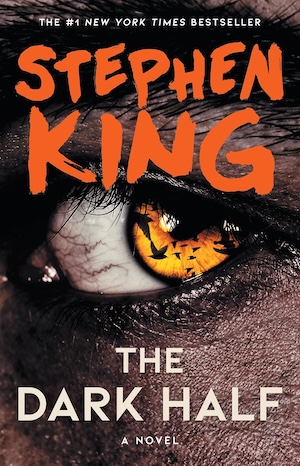
Stephen King, a master of psychological horror, delves into the terrifying implications of a divided artistic identity in The Dark Half. The novel centers on Thad Beaumont, a successful but literary novelist who also writes ultra-violent crime novels under the pseudonym George Stark. When Thad decides to "retire" Stark by staging a public, symbolic funeral for his alter ego, the decision unleashes a terrifying reality. Stark, rather than fading into obscurity, literally claws his way out of the grave, a tangible manifestation of Thad’s darker creative impulses. This physical embodiment of his pen name embarks on a gruesome murder spree, framing Thad and forcing him into a desperate battle for his life, his sanity, and his very identity.
King’s personal experience writing under the pseudonym Richard Bachman lends a deeply introspective layer to The Dark Half. The novel brilliantly blurs the lines between creator and creation, exploring the psychological burden of dual identities and the potential for a suppressed self to violently assert its independence. Stark is not merely an evil twin; he is the distilled essence of Thad’s darkest literary desires, a monstrous id brought to life. The horror is amplified by their shared biological markers—fingerprints, DNA—making Thad inextricably linked to Stark’s atrocities. While some critics argue The Dark Half may not reach the epic scale of King’s masterpieces like The Stand or IT, its intense focus on authorial identity and the visceral manifestation of psychological conflict makes it a profoundly unsettling and often underrated entry in his bibliography. It serves as a stark reminder that sometimes, our greatest enemies are those we create ourselves.
Dark Matter by Blake Crouch (2016)
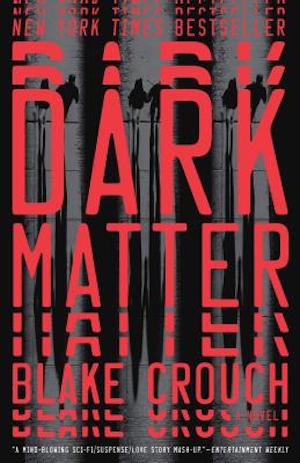
Blake Crouch’s Dark Matter catapults the "battling oneself" trope into the realm of high-concept science fiction thriller, playing expertly with themes of parallel universes and the fragility of personal identity. The narrative begins with physics professor Jason Dessen, whose life takes an abrupt and terrifying turn when he is abducted one night. He awakens to a world subtly, yet fundamentally, altered: his wife claims they never married, his son doesn’t exist, and he is a celebrated physicist working on a groundbreaking, experimental project rather than a contented family man. Jason’s desperate quest to reclaim his original life and family unravels a mind-bending mystery involving alternate realities and a shocking confrontation with an alternate version of himself.
Crouch masterfully utilizes the multiverse theory to create a scenario where "doubles" are not supernatural entities but rather products of infinite possibilities. The core horror of Dark Matter lies not just in the physical threat posed by an alternate Jason, but in the existential dread of realizing countless versions of oneself exist, each having made different choices, leading to vastly different lives. The novel explores the profound implications of these choices, the yearning for a lost reality, and the terrifying notion that one’s happiness could be stolen by a self from another dimension. The protagonist’s journey is a breathless, relentless race against time and alternate selves, making for an incredibly fast-paced and twisty read that keeps the reader perpetually off-balance, much like Jason himself. The brilliance of Dark Matter lies in its ability to make the reader question the solidity of their own reality, and the preciousness of the choices that define a single, unique life.
The Murders of Molly Southbourne by Tade Thompson (2017)
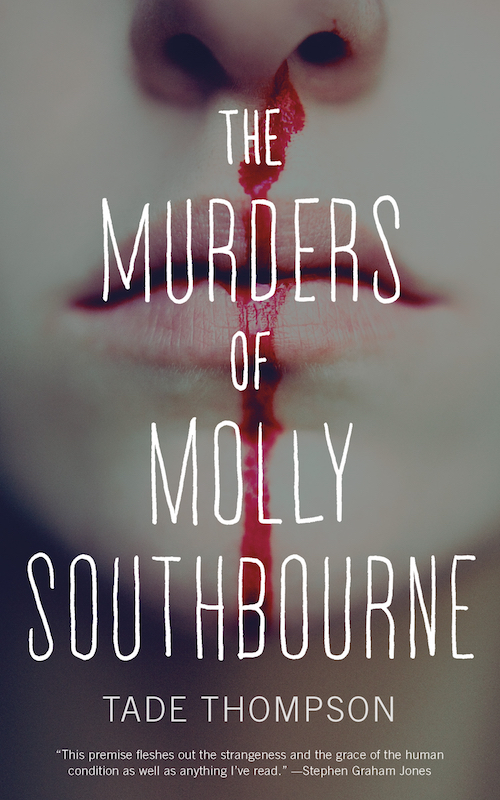
Tade Thompson offers a unique and viscerally disturbing take on cloning and self-replication in his novella, The Murders of Molly Southbourne. Unlike many sci-fi narratives where clones might coexist peacefully, Molly Southbourne suffers from a bizarre and horrific condition: every time she bleeds, a perfect, albeit short-lived, clone of herself is generated. These "mollies," as she calls them, are programmed with a single, overriding instinct: to murder the original Molly. The story begins with a new Molly clone awakening, chained in a basement, as the "original" Molly recounts her life story—a life defined by constant vigilance, relentless self-defense, and the brutal, necessary act of murdering her own nascent duplicates.
Thompson packs an extraordinary amount of existential and psychological horror into this compact novella. The Murders of Molly Southbourne is a relentless exploration of self-preservation, the nature of individuality, and the chilling reality of an unavoidable, internally generated threat. The clones are not just physical threats; they embody Molly’s past pains, mistakes, and the very blood that sustains her. The narrative forces readers to confront uncomfortable questions: which Molly is the "real" Molly? What does it mean to be an individual when endless, murderous copies of you are constantly being born? The premise ensures a continuous cycle of violence and self-destruction, making the novella both engrossing and incredibly bloody. It’s a stark, compelling meditation on the horrifying intimacy of fighting an enemy that is literally a part of you.
Such Lovely Skin by Tatiana Schlote-Bonne (2024)
Tatiana Schlote-Bonne brings the "battling oneself" trope into the digital age with Such Lovely Skin, a contemporary horror novel steeped in themes of guilt, social media, and demonic possession. The story follows Viv, a teenager consumed by grief and guilt after accidentally causing her little sister’s death and subsequently lying about it. In an attempt to return to some semblance of normalcy, Viv decides to resume her Twitch streaming, a source of income and connection. During an offline practice run of an indie horror game, Viv confides the truth of her sister’s death to an NPC. This act, however, inadvertently opens a door for an evil mimic, a demonic doppelgänger that latches onto Viv, manifesting her deepest anxieties and guilt into a terrifying external force.
The horror in Such Lovely Skin is deeply personal and psychological, reflecting Viv’s internal torment through the actions of her demonic double. The mimic begins to wreak havoc in Viv’s life, but her history of deceit and self-absorption makes it impossible for her to convince others of the imposter’s existence. Only Ash, an outcast boy Viv previously spread rumors about, believes her, creating an unlikely alliance against an enemy that exploits Viv’s vulnerabilities and past transgressions. While the protagonist’s self-obsessed personality can be challenging for some readers, Schlote-Bonne’s strength lies in her creation of visceral horror imagery and the effective portrayal of how guilt can fester and manifest as an external, inescapable terror. The novel serves as a modern cautionary tale about the consequences of suppressed guilt and the terrifying potential for digital spaces to become conduits for personal demons.
The Other by Annie Neugebauer (2026)
Annie Neugebauer capitalizes on the primal fear of replacement and isolation in her upcoming novella, The Other, which masterfully blends psychological suspense with an unnerving natural setting. Elise and Logan, a couple at a critical juncture in their marriage, embark on a multi-day hike in remote woods, hoping the solitude will provide space for introspection and reconciliation. Their quiet retreat is shattered when they encounter another couple on the trail—a couple who bear an unsettling, uncanny resemblance to themselves. Despite their unease, darkness falls, compelling them to set up camp nearby. The true horror unfolds the next morning when the other couple are not only physically identical but vehemently claim to be Elise and Logan, asserting ownership of their identities and their lives.
Neugebauer expertly leverages the isolated woodland setting, amplifying the sense of paranoia and vulnerability. The breakdown of trust, both internal to the couple and externalized by the doppelgängers, is a central theme. Elise and Logan are forced to question not only their own sanity but also the authenticity of each other, as the line between original and copy blurs. The novella is a fast-paced, incredibly stressful read, fueled by the desperate realization that they cannot allow their doppelgängers to reach their car and assume their lives in the outside world. The Other taps into fundamental human fears: the loss of identity, the betrayal of intimacy, and the terrifying prospect of being erased and replaced, all set against a backdrop of unforgiving nature. It is a powerful exploration of how far one would go to protect their selfhood and their reality.
Official Responses: The Psychological Resonance of the Double
The enduring appeal and profound impact of the "battling oneself" trope can be attributed to its deep psychological and philosophical resonance. Experts in psychology and literary theory often point to several key factors that make this trope so unsettling and powerful:
- Identity Crisis: At its core, facing a double is a direct assault on one’s sense of self. It forces protagonists, and by extension readers, to confront the fundamental question: What makes me me? If an exact replica exists, or if my life can be usurped, what is the unique essence of my being? This existential questioning is inherently disorienting and terrifying.
- The Shadow Self: Psychologically, the doppelgänger often embodies the "shadow self"—the unconscious aspects of one’s personality, including repressed desires, fears, and flaws. Carl Jung’s concept of the shadow suggests that encountering this darker, unacknowledged part of oneself can be profoundly unsettling but also offers potential for growth. In horror, however, this encounter is typically destructive, turning internal conflict into an external, tangible threat.
- The Uncanny: Sigmund Freud’s concept of the "uncanny" (das Unheimliche) is perfectly embodied by the doppelgänger. It describes the feeling of something simultaneously familiar and alien, something that ought to be hidden but has come to light. A double is familiar to the point of being identical, yet its alien intent or origin creates a profound sense of unease and dread, violating our expectations of self and reality.
- Paranoia and Trust: When confronted with a double, paranoia becomes rampant. Who can be trusted? Is the person next to me truly my loved one, or the imposter? This breakdown of trust extends not only to others but also to one’s own perceptions, blurring the lines of reality and fostering a deep sense of isolation and vulnerability.
- Fear of Replacement: The ultimate implication of a doppelgänger or clone is the fear of being replaced, of one’s life, relationships, and achievements being usurped by another. This fear touches upon our innate desire for individuality and significance, and the terror of being rendered redundant or forgotten.
This trope’s consistent presence across literature, film, and television underscores its potent ability to tap into these universal anxieties, making it a timeless narrative device for exploring the complexities of identity and the human psyche.
Implications: The Enduring Power of Self-Confrontation
The literary trope of battling oneself—through doubles, doppelgängers, or clones—remains a powerful and versatile tool for authors across speculative fiction genres. As demonstrated by the works of Stephen King, Blake Crouch, Tade Thompson, Tatiana Schlote-Bonne, and Annie Neugebauer, this trope transcends simple horror, delving into profound psychological, philosophical, and even sociological questions.
These narratives force protagonists to confront not only a physical adversary but also their own internal landscapes: their guilt, their choices, their fears, and the very definition of their identity. The struggle against a literal self becomes a metaphor for the battles we wage within ourselves, the constant negotiation between who we are, who we pretend to be, and who we could become. In a world increasingly concerned with personal identity, authenticity, and the implications of rapidly advancing technology, the doppelgänger trope provides a fertile ground for exploring these anxieties.
Whether rooted in ancient folklore or modern scientific speculation, the reflection of a hostile self continues to captivate and unsettle audiences, proving that sometimes, the most terrifying monster is the one that looks exactly like us. Its enduring presence in literature suggests that the fundamental questions it raises about selfhood, morality, and reality will continue to resonate for generations to come, making the battle against oneself a truly timeless and uniquely compelling narrative.