"The Artificer’s Knot" Ignites SPFBO Semi-Finals with Gripping Gaslamp Crime Narrative
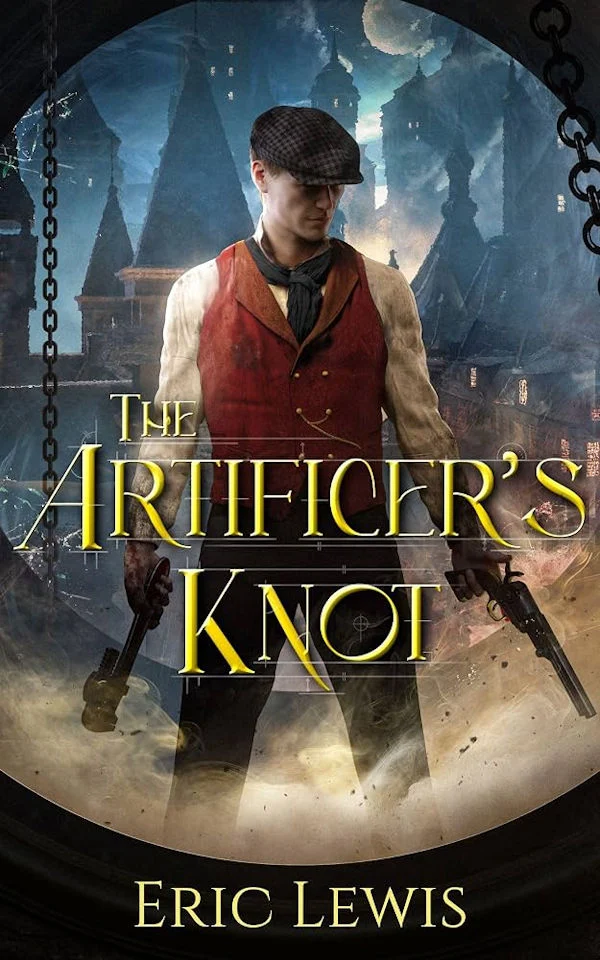
AUSTIN, TX – June 23, 2026 – In a literary landscape often dominated by traditional fantasy tropes, The Artificer’s Knot has emerged as a distinctive and compelling force, earning its place as a semi-finalist in the highly competitive Self-Published Fantasy Blog-Off (SPFBO). Hailed for its sharp prose, intricately crafted characters, and a world disturbingly reflective of real-world energy politics, the novel captivated a panel of seasoned judges with its audacious blend of gaslamp fantasy, gritty crime, and profound moral dilemmas.
The novel, penned by an as-yet-unnamed author, delves into a steampunk-esque industrial age powered by the mystical substance Vril, where an elite class of Alchemists wield a monopolistic grip on power. Against this backdrop, Randyll Tephius, a brilliant but disgraced Artificer, finds himself thrust into a dangerous underworld, navigating gang warfare, aristocratic machinations, and the insidious influence of a global energy cartel. Its recognition in SPFBO underscores a growing appreciation for genre-bending narratives that challenge conventional fantasy structures while offering poignant social commentary.
A World Forged in Vril and Oil: The Premise
At its heart, The Artificer’s Knot introduces readers to Randyll Tephius, a promising student Artificer whose academic career is abruptly curtailed. His thesis, which explores the revolutionary potential of newly discovered oil deposits, directly threatens the entrenched power of the Vril-monopolizing Alchemists. Expelled in disgrace and cast onto the unforgiving streets, Ran’s survival hinges on a chance encounter with Gouger Nebb, an aging and pragmatic mob boss who offers an unlikely lifeline.
Nebb, seeking a legitimate exit from his criminal empire, sees in Ran’s ingenuity a path to reinvention. Funded by illicit gains, Ran embarks on a quest to develop groundbreaking inventions, aiming to transform Nebb’s operations into a respectable enterprise. However, the path to redemption is fraught with peril. Sabotage, rival gangs, corrupt aristocrats, and sadistic law enforcement agents constantly threaten Ran’s ambitions, forcing him to adapt and compromise in a world where moral lines blur with alarming frequency.
The narrative intensifies when the very Alchemists who orchestrated Ran’s downfall re-emerge, presenting a tempting offer of wealth and professional restoration. Their proposal, however, comes with a steep price: Ran must betray Nebb and assist them in expanding their deadly energy monopoly worldwide. This critical juncture forces Ran to confront his own values, the cost of ambition, and the true meaning of loyalty in a society defined by greed and power.
The SPFBO Journey: From Entry to Semi-Finalist
The journey of The Artificer’s Knot through the SPFBO competition has been one of steady ascent, culminating in its recent semi-finalist status. The Self-Published Fantasy Blog-Off, initiated by author Mark Lawrence, is an annual competition designed to shine a spotlight on exceptional self-published fantasy novels, providing them with much-needed exposure and critical evaluation. Now in its eleventh iteration, SPFBO has become a crucial platform for independent authors, offering a rigorous multi-stage judging process conducted by a panel of dedicated fantasy bloggers and readers.
Each year, hundreds of entries are meticulously reviewed, with a select few advancing through various rounds. Reaching the semi-finals is a significant achievement, indicating that a book has distinguished itself among a vast pool of contenders through its quality of writing, originality, and overall narrative impact. For The Artificer’s Knot, this milestone signifies a collective recognition from the Fantasy-Faction judging team that the novel possesses a unique voice and compelling story worthy of broader attention. The competition’s structure ensures that books are judged on merit, often propelling hidden gems into the limelight and providing invaluable feedback to authors.
Critical Acclaim: Prose, Characters, and World-Building
The collective reviews from the Fantasy-Faction judges highlight several key strengths that propelled The Artificer’s Knot into the semi-finals. A recurring point of praise was the novel’s exceptional prose. Judge EG noted the writing’s "smooth" quality, describing it as effortlessly drawing the reader along, almost making them forget they were reading. This sentiment was echoed by Adawia, who found the writing "solid," and Julia, who described the narrative as "fast, clever, and confident." The dialogue, in particular, received commendation for being "unique to each character," lending an authentic voice and depth to the cast. Maureen further elaborated on the dynamic storytelling, likening the reading experience to "riding a zip line above the crowds on a fairground midway," teeming with danger, love, plotting, and grand ambitions.
Beyond the prose, the characters were universally lauded for their distinctiveness and complexity. Randyll Tephius, the protagonist, stood out as "fascinating" to EG, whose "unsuitable background for being a gangster" yet apparent ability to "thrive there" created a compelling and "twisty" dynamic. Julia further explored Ran’s character, acknowledging his "undeniably over-competent" nature as both an engine for the plot and a potential weakness, yet finding his journey of testing limits and compromising values to be the story’s "emotional weight." His "grounded voice" and "human flaws," even when his abilities strained credibility, made him relatable.
Gouger Nebb, the mob boss, also garnered significant attention for his nuanced portrayal. EG described him as "snarky and dangerous and yet somehow one of the most intelligent characters in the book, despite his lack of education." Adawia, initially reserved about Nebb’s "try-hard" persona, was eventually won over by his "sharpness" and "brutal common sense," recognizing him as a necessary figure in the novel’s "gritty world." Julia found Nebb to be "not a flashy or charismatic figure," but rather a character whose "ruthless when he needs to be, but not senselessly so" approach, combined with a "practical code" and sense of "rough fairness," made him surprisingly compelling despite her usual disinterest in criminal power structures. Kerry, too, appreciated Nebb’s "amiable looking but vicious and violent" nature, fitting the archetype while retaining depth.
The world-building, a crucial element in fantasy, was also celebrated. The "steampunk-esque adventure" immediately drew in EG, while the overall consensus pointed to a setting that felt "uncomfortably relevant" with its focus on "energy monopolies, gang warfare, and a brilliantly misplaced artificer." Julia particularly praised the "political and scientific underpinnings," noting how the "struggle over energy, monopolies, and control feels sharply relevant," with entrenched powers actively sabotaging threats to their dominance. The uncomfortable framing of petroleum as a "relative improvement over existing systems" while acknowledging its "own moral and environmental cost" was highlighted as a strength, demonstrating the novel’s refusal to offer simplistic answers.
Points of Contention: Plot Pacing and Predictability
While the novel garnered significant praise, some judges identified areas for improvement, primarily concerning the plot’s pacing and predictability. EG expressed a shift from initial intrigue to eventual disengagement, finding that the "escalation in the drama" became "overwhelming as underwhelming and a bit predictable." This constant increase in catastrophic events, followed by characters regrouping, led to a point where EG began "skimming the chapters" and could still "figure out how the book was going to end." This critique suggests that while the individual dramatic moments were well-executed, their relentless succession may have inadvertently dulled their impact over the long run.
Adawia also noted that some "characters’ actions or responses seemed occasionally a little ‘off’ or a little too convenient," suggesting moments where the plot might have prioritized convenience over organic character development or logical progression. Kerry echoed some of these sentiments, observing that the "characters all fell a tad heavy on the tropes," specifically mentioning "the brilliant and ambitious student who gets kicked out… who ends up working for the amiable looking but vicious and violent gangster." While not necessarily a flaw for all readers, this adherence to established archetypes might have contributed to the sense of predictability for some.
Julia, while largely positive, also acknowledged a potential "weakness" in Ran’s "over-competence," noting that "failure rarely feels like a real possibility." This, she admitted, "drain[ed] some tension from the story." However, she quickly mitigated this by emphasizing that the novel’s strength lay not in whether Ran would succeed, but what success demanded of him, thereby shifting the focus to the character’s internal struggle rather than external suspense. These observations collectively indicate that while the narrative was engaging, a more varied approach to conflict resolution or a deeper exploration of Ran’s limitations could have further elevated the story for some readers.
Genre Blending: Gaslamp, Crime, and Political Intrigue
The Artificer’s Knot stands out for its masterful genre blending, a characteristic that both intrigued and challenged the judges’ expectations. Described as a "gaslamp crime story," it seamlessly integrates elements of historical fiction, steampunk, and political thriller into a cohesive narrative. The "steampunk-esque adventure" was an immediate draw for EG, while the overall assessment highlighted its departure from "straightforward fantasy," emphasizing its unique appeal.
Maureen’s review vividly illustrates this blend, with mentions of "steam trains, steam boats," alongside "a charming underworld mob boss" and "ruthless competition" from "rich artificers." This creates a dynamic setting where industrial innovation clashes with criminal enterprise and societal power structures. Julia specifically commended the novel’s "fast, clever, and confident blend of gaslamp fantasy, crime story, and political intrigue," noting that it engaged her despite her usual disinclination towards "gang or mafia narratives." This speaks to the novel’s ability to transcend genre expectations and captivate a broad audience.
The political intrigue, particularly around energy monopolies, was a significant draw. Julia found this aspect "sharply relevant," highlighting the entrenched powers’ willingness to "sabotage any threat to their dominance." The narrative’s focus on "survival, leverage, and control" rather than "easy answers" resonated deeply, giving the world a "real bite." This sophisticated exploration of power dynamics, interwoven with the gritty realities of gang life and the moral ambiguity of its characters, positions The Artificer’s Knot as more than just an entertaining read, but also a thought-provoking commentary on societal structures and the cost of progress.
The Rigor of Self-Published Fantasy Blog-Off
The SPFBO competition is renowned for its rigorous and multi-faceted judging process, a testament to the dedication of its volunteer judges. The Fantasy-Faction team, comprising fourteen individuals including Adawia Asad, Eva Geraghty, Evelyn Grimald "E.G." Stone, Julia Kitvaria Sarene, Karen Lucia, Kerry Smith, Kit Caelsto, Maureen Neuman, Robert Max Freeman, Sara Rosevear, Sherry Cammer, Stacey Markle, Tianna Twyman, and Yaniv Rosenfeld Cohen, brings a diverse range of preferences and critical perspectives to the table. Each judge evaluates books independently, contributing to a comprehensive assessment that considers various literary elements from prose and characterization to plot and world-building.
This collaborative yet independent approach ensures that each book receives a thorough examination, with different judges often highlighting distinct strengths or weaknesses. For The Artificer’s Knot, the varying perspectives—from EG’s initial enthusiasm tempered by plot predictability, to Julia’s deep appreciation for its political depth and character complexity—collectively form a rich tapestry of critique. The semi-finalist status signifies that despite individual reservations, the novel’s overall quality and compelling elements were strong enough to earn a consensus among the judges, marking it as a standout entry in a highly competitive field. The upcoming announcement of the finalist pick, slated for Friday, June 26th, will further narrow the field, underscoring the intense scrutiny and high standards maintained throughout the contest.
The Enduring Relevance of Energy Politics
One of the most profound implications of The Artificer’s Knot lies in its thematic resonance with contemporary global issues. The narrative’s core conflict, revolving around energy monopolies and the struggle for control over vital resources, feels "uncomfortably relevant" in a world grappling with fossil fuel dependency, renewable energy transitions, and geopolitical tensions driven by resource scarcity. The fantastical Vril and newly discovered oil deposits serve as potent allegories for real-world power dynamics, where established industries fiercely protect their dominance against disruptive innovations.
Julia’s observation that the story is "not interested in easy answers" and its characters are focused on "survival, leverage, and control" rather than "clean solutions" underscores this relevance. The book subtly critiques the moral and environmental costs of industrial progress, even when presenting new energy sources as "improvements" over existing systems. This thematic depth invites readers to reflect on real-world issues such as corporate greed, technological advancement’s double-edged sword, and the ethical compromises often made in the pursuit of power and profit. It transforms the novel from a mere fantasy adventure into a trenchant commentary on the socio-economic forces shaping our own societies.
Moral Quandaries in a Corrupt World
The novel’s exploration of moral ambiguity is another significant implication. Randyll Tephius’s journey from disgraced student to an artificer allied with a mob boss forces him to confront and reshape his "sense of right and wrong." This internal struggle, highlighted by Julia as the story’s "emotional weight," delves into the difficult choices individuals face when caught between survival, ambition, and personal integrity in a corrupt world. The offer from the Alchemists to betray Nebb, the very man who saved him, epitomizes this moral crucible.
The world of The Artificer’s Knot is depicted as a "gritty" place where "corruption and gang rivalry are rampant," making it "hard to be a nice person and be successful." This stark reality forces characters, particularly Ran, into situations where ethical compromises are not just choices but necessities for survival. The novel does not shy away from the violence inherent in such a setting, yet, as Julia notes, it "does not linger on brutality," treating "death as a consequence of the world these characters inhabit." This restraint keeps the focus on the "power, choices, and momentum" of the narrative, emphasizing the psychological and ethical toll on its characters rather than sensationalism. Kerry specifically appreciated the ending, which leaves readers "questioning our MC’s morals and how he now views the world," underscoring the lasting impact of these moral quandaries.
Impact on Self-Published Fantasy Landscape
The success of The Artificer’s Knot as a semi-finalist in SPFBO carries significant implications for the broader self-published fantasy landscape. It reinforces the notion that quality, originality, and compelling storytelling can emerge from independent authors, challenging the traditional gatekeepers of the publishing industry. SPFBO acts as a powerful validator, providing credibility and exposure to titles that might otherwise struggle to find an audience.
For authors, having their work recognized in such a prestigious competition offers invaluable visibility, critical feedback, and a significant boost to their careers. It demonstrates that self-publishing is not merely a last resort but a viable and increasingly respected path for bringing diverse and innovative stories to readers. The novel’s genre-bending nature also signals a growing appetite within the fantasy community for narratives that push boundaries, blend genres, and offer fresh perspectives beyond conventional epic fantasy. This encourages other self-published authors to experiment with their storytelling, confident that there is an audience and a platform for unique voices.
Anticipation for the Finalist Announcement
As the SPFBO Round One draws to a close, the literary community eagerly awaits the announcement of the finalist pick this Friday, June 26th. The Artificer’s Knot has undoubtedly left a strong impression on the judges, with its intricate plot, memorable characters, and timely themes. Regardless of whether it advances further, its journey to the semi-finals is a significant achievement, highlighting its potential and solidifying its place as a noteworthy entry in the competitive world of self-published fantasy.
The SPFBO competition continues to serve as a vital conduit for discovering new talent and celebrating the vibrant diversity within the fantasy genre. A sincere thank you is extended to every author who bravely entered their work, demonstrating the courage and passion inherent in the self-publishing community. For readers seeking narratives that are both entertaining and thought-provoking, The Artificer’s Knot offers a compelling dive into a world where ambition, corruption, and innovation collide with explosive consequences.