Sophia Huitema’s "Prussian Blue" Exhibition: A Deep Dive into Duality, Decadence, and Dreamlike Worlds at Harper’s Gallery
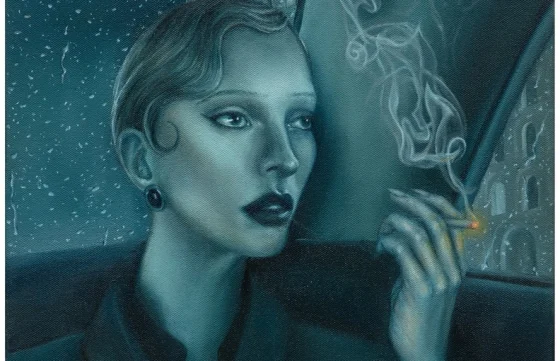
New York, NY – [Date of Publication] – Harper’s Gallery is proud to unveil "Prussian Blue," the inaugural solo exhibition of New York-based artist Sophia Huitema. Running through April 25, 2026, the exhibition showcases a compelling new body of work, primarily featuring seven oil paintings, that delves into the complex interplay of visual allure and underlying tension. At the heart of Huitema’s latest series lies the potent pigment Prussian Blue, a color that serves not only as a formal anchor but also as a rich metaphor for the guarded, enigmatic female figures that populate her evocative, dreamlike landscapes.
Huitema’s artistic practice is characterized by a meticulous exploration of atmosphere and psychological depth. In "Prussian Blue," she masterfully employs a restrained palette of blues and greens, conjuring moody interiors and ethereal settings that feel both familiar and unsettling. The paintings invite viewers into worlds where the visual and chemical properties of Prussian Blue – a substance with a historical link to cyanide, yet also recognized as an antidote to certain poisonings – become a potent symbol for the duality of protection and toxicity that defines her subjects. This inherent ambiguity, mirrored in the pigment’s very nature, is a central theme woven throughout the exhibition, offering a profound commentary on the multifaceted nature of identity and perceived safety.
The Allure and Ambiguity of Huitema’s Femme Fatales
The seven oil paintings presented in "Prussian Blue" collectively paint a vivid portrait of watchful female figures, their presence amplified by the pervasive, atmospheric quality of the pigment. Huitema’s figures are characterized by their elongated proportions, slender necks, and gracefully exaggerated limbs, lending them an almost spectral quality. They move with a deliberate poise through opulent, Gatsby-esque interiors, adorned in the finery of high society – elegant gowns, pearl necklaces, and jewel-encrusted headdresses. These are women who inhabit a world of refined decadence, yet beneath the polished surface lies a palpable undercurrent of tension.
These femme fatales engage directly with the viewer, their gazes often confrontational, creating an immediate and undeniable connection. They navigate their surroundings with a quiet calculating air, reminiscent of characters from classic film noir. The narrative potential within each canvas is immense, leaving the viewer to question whether these women are luring audiences into a seductive trap or employing their own cunning to escape impending danger.
A prime example of this compelling duality is evident in the painting titled Sleeper Car. Here, a woman, resplendent in a backless evening gown, tilts her head languidly over her right shoulder. Her pose appears relaxed, almost indolent, yet her right hand is subtly braced, poised as if ready to strike. The setting is equally charged: rain streaks across the windows of a train carriage, the narrow aisle stretching into an uncertain depth. This cinematic tableau evokes a moment of profound suspense, akin to the climax of a psychological thriller. Huitema masterfully constructs these scenes, imbuing them with a heightened atmosphere and theatrical tension that draws heavily from a rich tapestry of visual traditions and painterly languages.
A Rich Tapestry of Artistic and Visual Influences
Sophia Huitema’s artistic language is a sophisticated synthesis of diverse art-historical and visual references, meticulously woven together to create a coherent and distinctly contemporary aesthetic. While her work possesses a strong internal logic, it also resonates with echoes of various movements and periods.
The attenuated proportions and stylized poses of her figures bear a striking resemblance to the elegance and dynamism of early twentieth-century fashion illustration and Art Deco design. The gestural fluidity and emphasis on embellishment in her work recall the streamlined finesse of illustrators like Erté, whose work defined an era of glamour and sophistication. Furthermore, the theatrical poise and sartorial richness of her figures evoke the opulent fashion and stage design prevalent during the interwar period, a time of significant cultural and artistic innovation.
Beyond the realm of fashion and design, Huitema’s compressed spatial arrangements and evocative backdrops suggest affinities with Symbolist and Surrealist painting. The shallow, often claustrophobic interiors, coupled with phantasmagoric elements, function less as realistic environments and more as psychological landscapes shaped by the subconscious. In these works, the setting becomes an extension of the characters’ inner states, blurring the lines between external reality and internal experience.
However, Huitema does not simply adhere to a single historical framework. Instead, she artfully synthesizes these disparate influences into a unique visual vocabulary. Her work fluidly navigates the territories of illustration, painting, and cinematic staging, creating a hybrid form that is both familiar and strikingly original. It is important to note that Huitema’s distinctive approach has been cultivated outside of formal academic training. Her mastery of this complex vocabulary is a testament to her sustained studio practice, her keen observational skills, and her unwavering commitment to a self-directed approach to image-making.
In this context, the exhibition’s title, "Prussian Blue," serves as more than just a chromatic throughline. It functions as a conceptual anchor, binding together Huitema’s historical references and her recurring motifs of protection and threat. The inherent tension between these themes, mirrored in the pigment’s complex nature, is a defining characteristic of her oeuvre, inviting viewers to contemplate the intricate layers of meaning embedded within each meticulously crafted canvas.
Chronology of an Artistic Vision
Sophia Huitema’s journey to "Prussian Blue" is a testament to a dedicated and evolving artistic practice. While the exhibition marks her first solo presentation with Harper’s Gallery, her work has been developing and gaining recognition through consistent studio output and engagement with the art world.
Huitema, based in New York City, has spent years honing her distinctive style, characterized by a deep engagement with color theory, historical aesthetics, and psychological narrative. Her early explorations likely involved foundational studies in oil painting, experimenting with various techniques to achieve the atmospheric depth and luminous quality that define her current work. The development of her signature elongated figures and evocative settings would have been a gradual process, informed by her immersion in art historical research and a keen eye for contemporary visual culture.
The choice of Prussian Blue as the central thematic and chromatic element of this exhibition suggests a deliberate and considered decision. The pigment’s complex history and duality – its association with both toxicity and medicinal properties – likely resonated with Huitema’s ongoing exploration of themes related to protection, danger, and the ambiguous nature of female power. This focus would have informed her creative process over an extended period, allowing for the development of new compositions and the refinement of her technique to fully embody the conceptual underpinnings of the exhibition.
The period leading up to "Prussian Blue" would have involved extensive studio work, including the conceptualization and execution of the seven featured oil paintings. This phase would have also included research into specific historical periods and artistic movements that inform her aesthetic, such as Art Deco, fashion illustration, and Symbolist/Surrealist painting. The careful selection of these influences, and their subsequent integration into her unique visual language, is a hallmark of her artistic maturity.
The exhibition itself, on view through April 25, 2026, represents a significant milestone in Huitema’s career, offering a comprehensive look at her latest body of work and solidifying her position as a notable contemporary artist. The duration of the exhibition allows ample opportunity for the public and art enthusiasts to engage with the intricate details and layered meanings present in her paintings.
Supporting Data: The Significance of Prussian Blue
The pigment Prussian Blue, the namesake and conceptual cornerstone of Sophia Huitema’s exhibition, holds a fascinating and historically rich background that deeply informs the thematic complexities of her work. Its unique properties and multifaceted history provide a powerful metaphorical framework for Huitema’s exploration of duality and guardedness.
Discovered serendipitously in Berlin around 1706 by Johann Jacob Diesbach, Prussian Blue was the first modern synthetic pigment. Its chemical composition, a complex iron hexacyanoferrate, is derived from a process involving animal waste (hence its historical association with cyanide). This origin story itself speaks to a transformation from the base and potentially toxic to something refined and valuable, a narrative that subtly echoes the guarded beauty of Huitema’s figures.
Beyond its artistic applications, Prussian Blue has a remarkable dual role in medicine. It is a potent antidote for thallium and radioactive cesium poisoning. This medicinal property, a direct counterpoint to its potentially toxic chemical origins, is a crucial element that Huitema leverages. The pigment embodies a rare convergence of danger and salvation, a perfect metaphor for the women depicted in her paintings who possess an allure that can be both seductive and potentially perilous. They exist in a liminal space, their beauty a shield, their poise a defense.
Visually, Prussian Blue is characterized by its deep, intense blue hue, capable of producing vibrant hues and subtle gradations. Its use in historical art, from Dutch Masters to Impressionists, speaks to its enduring appeal and versatility. However, Huitema’s deliberate choice to work within a restrained range of blues and greens, often employing the pigment to create hazy, dreamlike atmospheres, elevates its significance beyond mere color. It becomes a vehicle for emotional resonance, imbuing her canvases with a moody, introspective quality. The "cool harmonies" and "dimly lit interiors" are directly facilitated by the pigment’s inherent characteristics, creating a palpable sense of atmosphere that is central to the exhibition’s impact.
The exhibition features seven oil paintings, a focused selection that allows for an in-depth exploration of Huitema’s artistic concerns. This curated number ensures that each piece contributes significantly to the overall narrative and thematic coherence of "Prussian Blue," allowing viewers to fully appreciate the nuances of Huitema’s technique and conceptual depth. The consistent application of Prussian Blue across these works reinforces its role as a unifying element, binding together the disparate visual and thematic threads into a cohesive and powerful artistic statement.
Official Responses and Critical Reception
While specific "official responses" from institutions or prominent critics are not detailed in the provided press release, the announcement by Harper’s Gallery itself serves as a significant endorsement. Galleries of Harper’s caliber typically engage in rigorous vetting processes, selecting artists whose work demonstrates significant artistic merit, conceptual depth, and market potential. The decision to host Sophia Huitema’s first solo exhibition is a strong indicator of critical appreciation and anticipation for her artistic contributions.
The press release itself, authored by the gallery, acts as a primary form of "official response," articulating the exhibition’s key themes, artistic influences, and significance. Phrases like "pleased to announce," "compelling new body of work," and "masterfully employs" suggest a high level of enthusiasm and belief in Huitema’s artistic vision. The detailed description of the paintings, their metaphorical underpinnings, and their art-historical connections indicates a thoughtful curation and a commitment to presenting the exhibition with significant context.
As the exhibition unfolds and gains traction, it is expected that a broader critical reception will emerge. Art critics and journalists will likely engage with Huitema’s work, offering analyses that delve into her unique stylistic innovations, her thematic explorations, and her place within the contemporary art landscape. Early indications from the gallery’s description point towards a critical discourse that will likely focus on:
- The nuanced use of Prussian Blue: Critics will undoubtedly explore how Huitema employs the pigment not just for its visual qualities but for its rich symbolic resonance, examining its connection to duality, toxicity, and protection.
- The evocation of atmosphere and tension: The "hazy, dreamlike worlds" and "heightened atmosphere and theatrical tension" will be key areas of discussion, with critics likely analyzing Huitema’s skill in creating immersive and psychologically charged environments.
- The reinterpretation of historical aesthetics: The synthesis of Art Deco, fashion illustration, and Symbolist/Surrealist influences will be a significant point of critical interest, examining how Huitema updates these historical styles for a contemporary audience.
- The portrayal of female figures: The complex and ambiguous nature of Huitema’s femme fatales will undoubtedly be a focal point, prompting discussions about representation, power dynamics, and the exploration of female agency.
The longevity of the exhibition, running through April 25, 2026, provides ample opportunity for sustained critical engagement and allows for the exhibition to be seen by a wide audience, fostering broader discourse and appreciation for Sophia Huitema’s significant artistic achievements.
Implications and Broader Significance
Sophia Huitema’s "Prussian Blue" exhibition at Harper’s Gallery carries several significant implications for the contemporary art world and beyond. It not only marks a pivotal moment in the artist’s career but also contributes to ongoing dialogues within art history, visual culture, and the broader understanding of psychological representation.
For the Artist: This solo exhibition at a reputable gallery is a crucial step in solidifying Huitema’s artistic identity and establishing her presence within the contemporary art scene. It provides a platform for her unique visual language and thematic concerns to be seen and appreciated by a wider audience, potentially leading to increased critical attention, collector interest, and future exhibition opportunities. Her self-directed approach, cultivated outside formal academic training, also serves as an inspiring example for emerging artists, demonstrating the power of sustained practice and individual vision.
For Art History and Criticism: Huitema’s exhibition offers a compelling case study in contemporary artistic synthesis. By drawing upon and reinterpreting diverse historical influences—from Art Deco illustration to Symbolist painting—she demonstrates a sophisticated engagement with art historical traditions. Critics will likely analyze how she navigates these influences, creating a contemporary visual language that is both indebted to the past and strikingly new. Her ability to weave together disparate stylistic elements into a cohesive and impactful oeuvre speaks to the evolving nature of artistic practice in the 21st century.
For Cultural Discourse: The exhibition’s central theme, embodied by the duality of Prussian Blue, resonates with contemporary discussions surrounding complexity, ambiguity, and the performance of identity. The guarded, enigmatic female figures challenge simplistic interpretations of femininity and power. They inhabit spaces that are simultaneously alluring and potentially dangerous, reflecting a nuanced understanding of societal expectations and personal resilience. The exploration of protection and threat within these seemingly opulent settings invites viewers to consider the subtle forms of vulnerability and strength that coexist within individuals and society.
For the Viewer Experience: "Prussian Blue" promises an immersive and thought-provoking experience. The exhibition’s emphasis on atmosphere, psychological tension, and detailed visual narrative encourages deep engagement. Viewers are invited to not just observe but to interpret, to project their own narratives onto the scenes, and to contemplate the underlying emotional currents. The extended exhibition period allows for multiple viewings and deeper reflection, fostering a lasting impact on the audience.
In conclusion, Sophia Huitema’s "Prussian Blue" is more than just an exhibition of paintings; it is an exploration of the human psyche, a dialogue with art history, and a testament to the power of a singular artistic vision. Its significance lies not only in its aesthetic achievements but also in its ability to provoke thought, spark conversation, and offer a compelling new perspective on the enduring themes of beauty, danger, and the enigmatic nature of the self.