Adrian Kay Wong’s "In The Middle of Things" Captures the Nuance of Everyday Existence at Hashimoto Contemporary
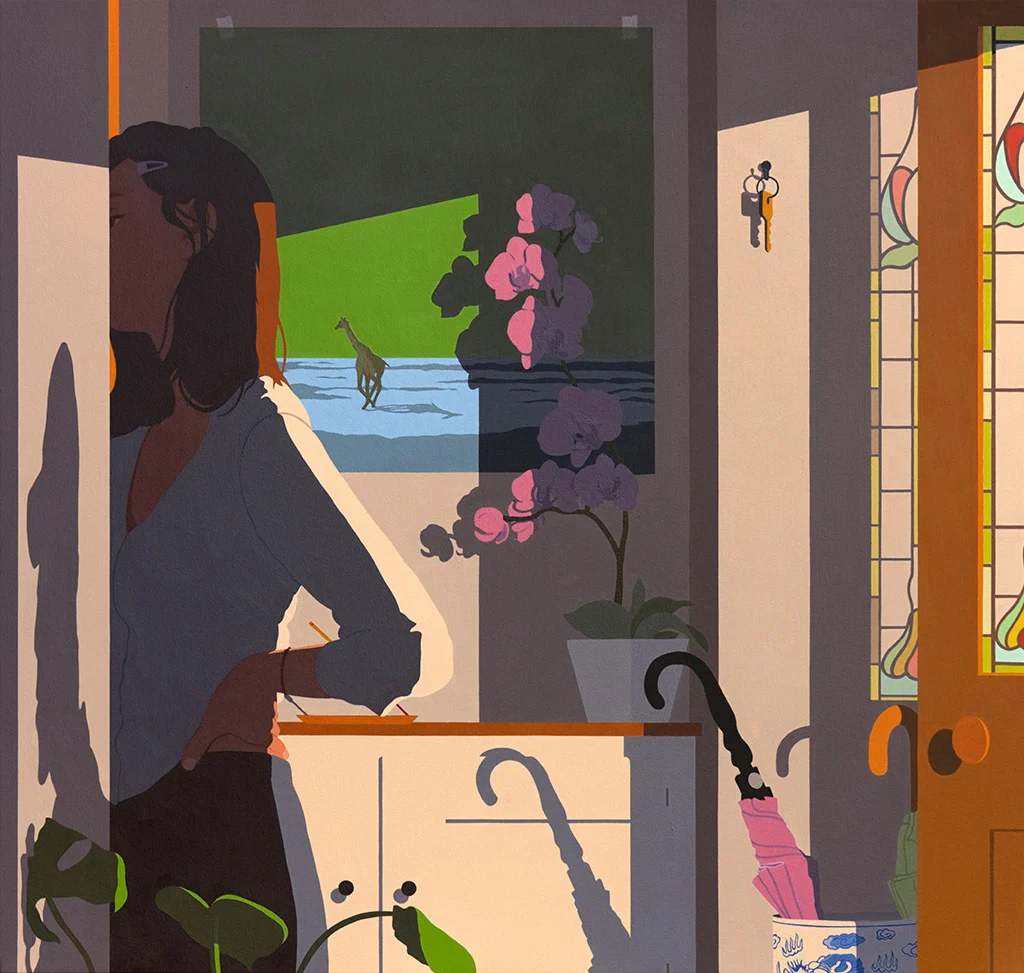
New York, NY – Los Angeles-based artist Adrian Kay Wong presents a compelling new body of work in his solo exhibition, "In The Middle of Things," currently on display at Hashimoto Contemporary in New York City. The exhibition, which runs until July 11th, delves into the subtle narratives and often overlooked interactions of daily life, skillfully interwoven with Wong’s personal memories and evolving cultural identity. Through meticulously composed canvases, Wong invites viewers to pause and contemplate the liminal spaces of experience, where observation meets recollection and the mundane becomes profound.
Born and raised in the vibrant San Francisco Bay Area, Wong’s artistic journey began with a foundational education, earning his Bachelor of Fine Arts from The School of the Art Institute of Chicago. This academic grounding, coupled with his lived experiences, has cultivated a distinctive artistic voice that resonates with a deep understanding of human connection and isolation, transience and permanence, and the inherent dualities that shape our perception of reality.
The Art of the Unseen: Wong’s Approach to Narrative
Adrian Kay Wong’s artistic practice is characterized by its ability to extract narrative from the seemingly incidental. His paintings are not grand pronouncements or dramatic scenes; rather, they are intimate observations of moments that might otherwise slip through the cracks of conscious awareness. Whether it’s a shared glance, a quiet gesture, or the ambient atmosphere of a particular space, Wong imbues these fleeting instances with a palpable weight and significance.
His work frequently explores the interplay between personal memory and universal human experience. While the scenes depicted may be rooted in Wong’s own recollections, they possess a quality that allows viewers to project their own histories and emotions onto the canvas. This empathetic resonance is a hallmark of his art, creating a bridge between the artist’s inner world and the collective consciousness of his audience.
Furthermore, Wong masterfully navigates the inherent dualities that define our daily existence. The exhibition title, "In The Middle of Things," directly alludes to the concept of in media res, a literary device that plunges the audience directly into the heart of the action. This mirrors Wong’s approach to visual storytelling, where figures are often depicted suspended in a moment of transition, caught between what has just occurred and what is yet to unfold. This deliberate ambiguity fosters a sense of anticipation and invites contemplation on the myriad possibilities that lie within any given situation. The resulting compositions are often imbued with a sense of profound personal connection, while simultaneously feeling universally familiar.
"In The Middle of Things": A Deep Dive into the Exhibition
The title, "In The Middle of Things," serves as a guiding principle for the exhibition’s thematic exploration. Wong’s carefully composed scenes eschew clear beginnings or endings, instead choosing to linger in the evocative space between direct observation and the hazy landscape of memory. This deliberate choice encourages viewers to engage with the paintings on a more intuitive level, allowing their own associations and interpretations to surface.
The exhibition showcases a collection of new paintings, each a testament to Wong’s refined technique and insightful conceptualization. The figures within his works often appear suspended, not necessarily in physical stasis, but in a psychological or emotional pause. They are caught in moments that feel both deeply personal – hinting at private thoughts and unspoken emotions – and universally recognizable, tapping into shared human experiences of anticipation, reflection, or quiet contemplation.
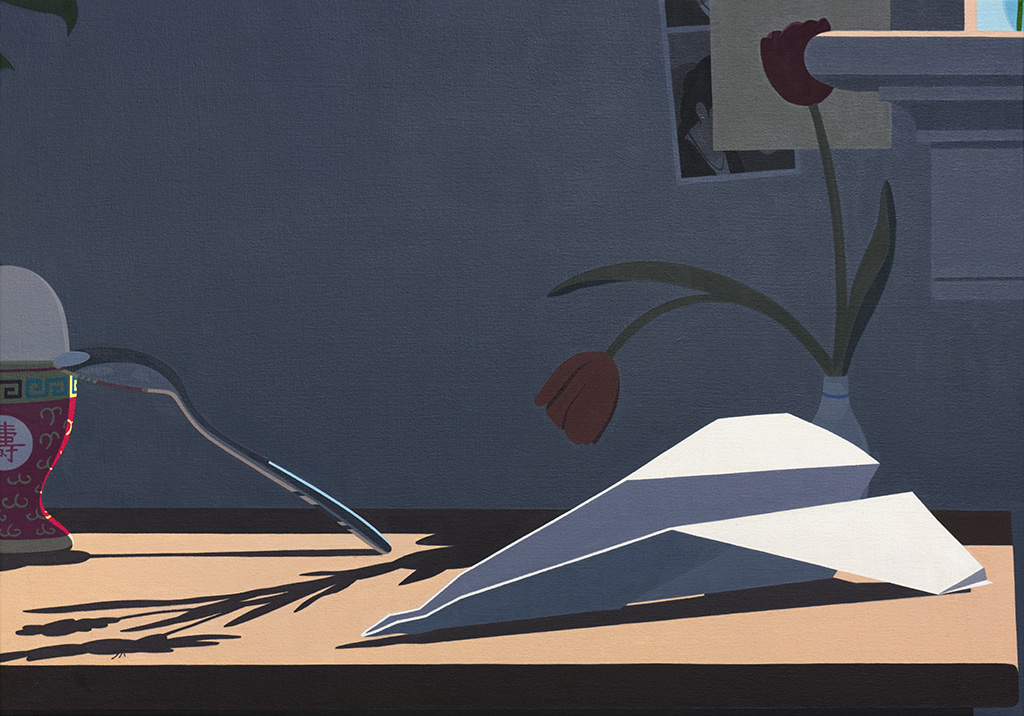
Wong’s exploration of dualities is particularly evident in his visual language. The intimacy of a shared space might be juxtaposed with a sense of subtle estrangement, the permanence of a painted image with the transient nature of the moment it captures, and the feeling of belonging with an underlying current of isolation. These tensions are not presented as conflicts to be resolved, but rather as inherent characteristics of the human condition, explored with a delicate and nuanced hand.
The exhibition’s title itself is a direct nod to the literary concept of in media res, a storytelling technique where a narrative begins in the middle of the action, thus immediately immersing the audience in the unfolding events. Wong applies this principle to his visual narratives, presenting scenes that are already in motion, requiring the viewer to piece together the context and implications. This approach bypasses conventional exposition, opting instead for an immediate emotional and psychological engagement. The figures in his paintings are not presented with a clear antecedent or a definitive conclusion; they exist in a state of perpetual becoming, mirroring the fluid and often unpredictable nature of life itself.
Chronology of an Artistic Vision
While the current exhibition, "In The Middle of Things," represents a recent culmination of Adrian Kay Wong’s artistic development, his creative journey has been a consistent exploration of similar themes. Born in the San Francisco Bay Area, a region known for its diverse cultural landscape and spirit of innovation, Wong’s formative years likely provided a rich tapestry of experiences that would later inform his artistic output.
His decision to pursue formal art education at The School of the Art Institute of Chicago was a significant step. This prestigious institution is renowned for its rigorous curriculum and its commitment to fostering critical thinking and experimentation. During his BFA studies, Wong would have honed his technical skills, deepened his understanding of art history, and engaged in critical dialogues with peers and faculty, all of which would have contributed to the development of his unique artistic voice.
Following his graduation, Wong established his practice in Los Angeles, a city that offers a vast and dynamic artistic ecosystem. His relocation to the West Coast likely further influenced his work, exposing him to new perspectives and a different cultural milieu. The themes of cultural identity, a recurring element in his art, are undoubtedly shaped by his experiences navigating different environments and his reflections on his own heritage.
The exhibition "In The Middle of Things" is not an isolated event but rather a natural progression of his artistic inquiries. Each painting within the show can be seen as a chapter in a larger ongoing narrative, reflecting his consistent dedication to exploring the complexities of human experience through the medium of paint. The selection of works for this exhibition demonstrates a mature and focused artistic vision, where the subtle nuances of everyday life are rendered with profound sensitivity and technical mastery.
Supporting Data: The Power of the Unseen
The impact of Adrian Kay Wong’s work can be understood through the lens of its ability to evoke a strong emotional and intellectual response from viewers. While specific critical reviews and sales data are not provided in the initial content, the very nature of his artistic approach suggests a profound connection with his audience.
Wong’s focus on the "seemingly incidental moments of the everyday" taps into a universal human desire for connection and understanding. In a world often characterized by rapid change and overwhelming information, his paintings offer a sanctuary for introspection and contemplation. The subtle narratives woven into his compositions encourage viewers to actively participate in the creation of meaning, fostering a sense of personal relevance and engagement.
The exploration of dualities – intimacy and estrangement, transience and permanence, belonging and isolation – resonates deeply with the contemporary human condition. These are not abstract concepts but lived realities that shape our relationships, our sense of self, and our perception of the world. By giving visual form to these complex emotional states, Wong provides a framework for viewers to process and understand their own experiences.
The use of in media res as a narrative strategy is a powerful tool for capturing attention and stimulating curiosity. By presenting figures suspended in moments of ambiguity, Wong invites viewers to become active participants in deciphering the story. This creates a more dynamic and memorable viewing experience, encouraging repeated engagement with the artwork. The success of this approach is often measured by the lingering impact of the artwork, the conversations it sparks, and the personal connections it fosters.
Official Responses and Critical Acclaim
Hashimoto Contemporary, a gallery known for showcasing contemporary artists with a strong conceptual grounding and a unique artistic vision, has provided a significant platform for Adrian Kay Wong’s "In The Middle of Things." The gallery’s decision to feature Wong’s latest solo exhibition underscores their recognition of his talent and the relevance of his artistic concerns.
While specific quotes from gallery representatives or art critics are not included in the provided text, the exhibition’s presence at a reputable contemporary art space like Hashimoto Contemporary signifies a level of critical endorsement. Galleries of this caliber typically curate exhibitions based on rigorous evaluation of an artist’s portfolio, their contribution to the contemporary art discourse, and their potential to resonate with a discerning audience.
The very fact that Wong’s work is being presented in a solo exhibition at Hashimoto Contemporary in New York City suggests that it has garnered positive attention within the art world. Such exhibitions are often preceded by a period of review and consideration by curators and gallerists, indicating that Wong’s artistic merit has been recognized and appreciated. The duration of the exhibition, running until July 11th, also allows ample opportunity for public engagement and critical reception.
The art world often responds to artists who offer a fresh perspective and a distinctive voice. Wong’s ability to capture subtle narratives, explore complex dualities, and weave personal memory with universal themes positions him as an artist of significant contemporary relevance. The exhibition serves as a testament to his ongoing contribution to the field of painting.
Implications of Wong’s Artistic Practice
Adrian Kay Wong’s "In The Middle of Things" offers several significant implications for the contemporary art landscape and for viewers’ understanding of the world around them.
1. Revaluation of the Mundane: Wong’s art challenges the conventional notion that significant art must depict grand events or dramatic subjects. By elevating the "seemingly incidental moments of the everyday" to the status of profound artistic inquiry, he encourages a broader appreciation for the richness and complexity of ordinary life. This can lead to a shift in how we perceive our own daily experiences, prompting us to find meaning and beauty in the overlooked details.
2. The Power of Ambiguity in Storytelling: The exhibition’s embrace of in media res and its deliberate creation of ambiguity has profound implications for how we engage with narratives. In an era saturated with easily digestible information, Wong’s work advocates for a more contemplative and interpretive approach to storytelling. It suggests that the spaces between what is explicitly shown and what is implied can be fertile ground for personal reflection and deeper understanding. This can foster a more nuanced and critical engagement with all forms of narrative, from literature to film to social media.
3. Navigating Duality in the Modern World: The dualities that Wong explores – intimacy and estrangement, transience and permanence, belonging and isolation – are increasingly pertinent in our hyper-connected yet often fragmented world. His paintings offer a visual language for grappling with these inherent tensions, providing a space for viewers to acknowledge and process their own experiences of these complex emotional states. This can lead to a greater sense of self-awareness and a more empathetic understanding of others.
4. The Role of Memory and Identity in Art: Wong’s integration of his own memories and cultural identity into his work highlights the deeply personal nature of artistic creation, while simultaneously achieving universal resonance. This underscores the idea that art can be a powerful vehicle for exploring personal histories and cultural heritage, and that by doing so, artists can tap into shared human experiences. It encourages a broader acceptance and appreciation of diverse perspectives and narratives within the art world.
5. Fostering Empathy and Connection: Ultimately, the implications of Wong’s artistic practice lie in its capacity to foster empathy and connection. By presenting relatable yet thought-provoking scenes, he invites viewers to see themselves and others in new ways. His work serves as a reminder of our shared humanity, the subtle threads that bind us together, and the profound beauty that can be found in the quiet contemplation of existence. "In The Middle of Things" is not just an exhibition of paintings; it is an invitation to engage with the world and with ourselves on a deeper, more nuanced level.