Vulkan: The Unyielding Heart of Humanity Amidst the Fires of War
Main Facts
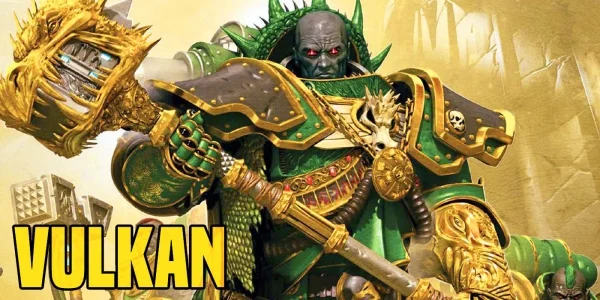
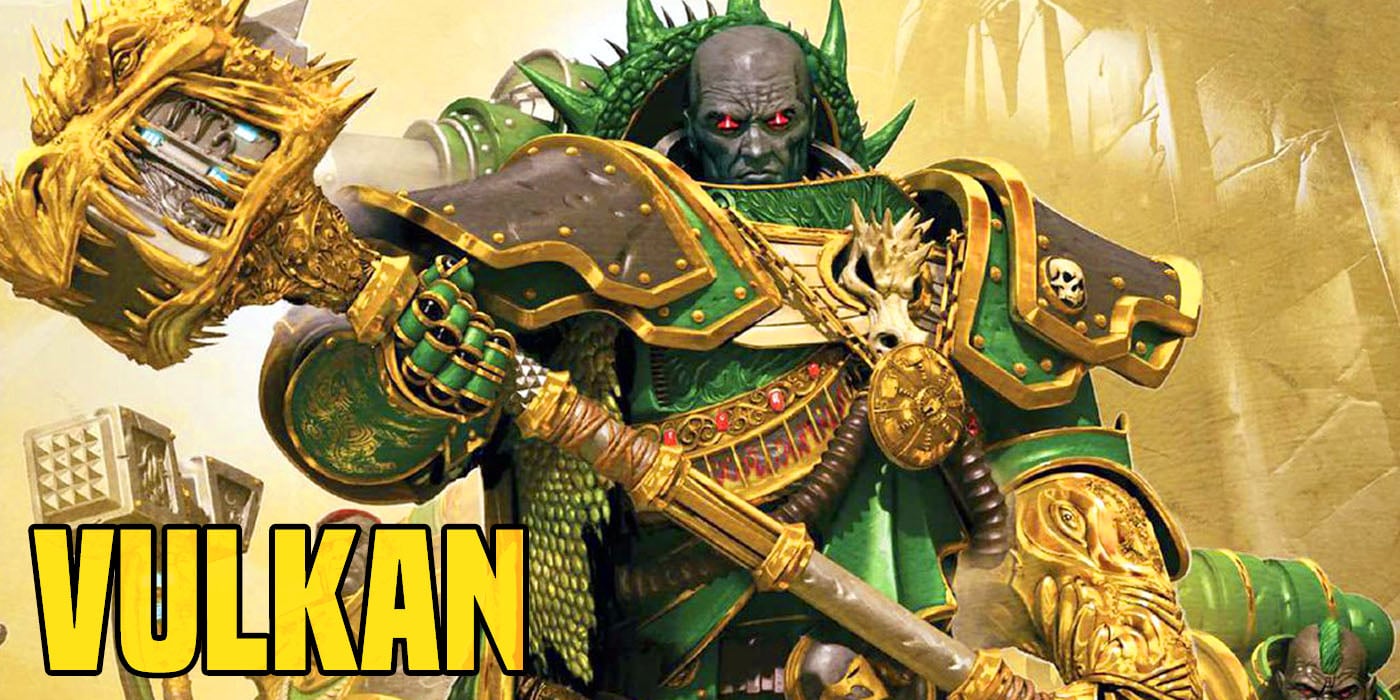
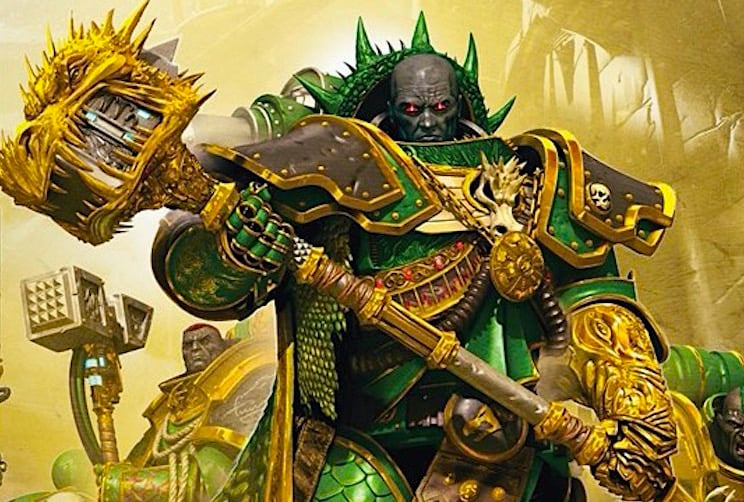
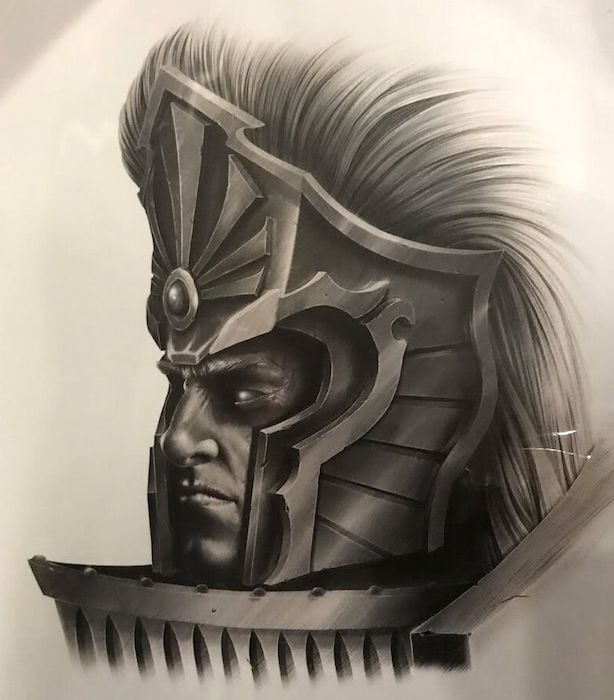
In the vast and often brutal tapestry of the Warhammer 40,000 universe, few figures resonate with the enduring spirit of humanity quite like Vulkan, Primarch of the Salamanders Legion. Born of the Emperor of Mankind’s own genetic artistry, Vulkan stands unique among his superhuman brethren not just for his colossal physical might and unparalleled craftsmanship, but for a profound, almost anachronistic, empathy for the common man. He is a perpetual, an individual possessing the extraordinary ability to regenerate from any wound, even total annihilation, rendering him effectively immortal. This gift, however, has proven to be as much a curse as a blessing, subjecting him to torments that would break any lesser being. His legacy is one forged in fire and compassion, a beacon of hope in an era defined by despair, and a testament to the enduring values of self-sacrifice and protection.
Chronology
Vulkan’s saga is a tumultuous journey spanning millennia, marked by extraordinary feats, unbearable suffering, and an unwavering commitment to the Emperor’s vision for humanity.
The Crucible of Nocturne: A Primarch Forged in Fire
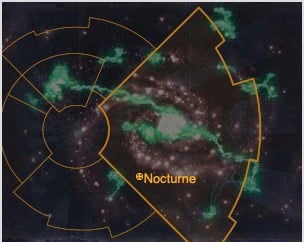
Like his eighteen brothers, Vulkan was scattered across the galaxy as an infant by the machinations of Chaos. His pod crash-landed on Nocturne, a volatile volcanic world plagued by a catastrophic geological phenomenon known as the "Time of Trial," where seismic activity and volcanic eruptions reshaped the planet’s surface with terrifying regularity. This harsh environment, coupled with the constant threat of raiding Dark Eldar corsairs, forged a resilient and close-knit society.
Vulkan was discovered and adopted by N’bel, a master blacksmith from the settlement of Hesiod. Under N’bel’s tutelage, the young Primarch rapidly surpassed all expectations. Within three years, he possessed the physical stature and strength of a grown man, coupled with an intellect and crafting prowess that astonished his adoptive people. He innovated forging techniques previously unknown, quickly becoming the greatest artisan on Nocturne. This early life instilled in him a deep respect for honest labor, the value of life, and the importance of community.
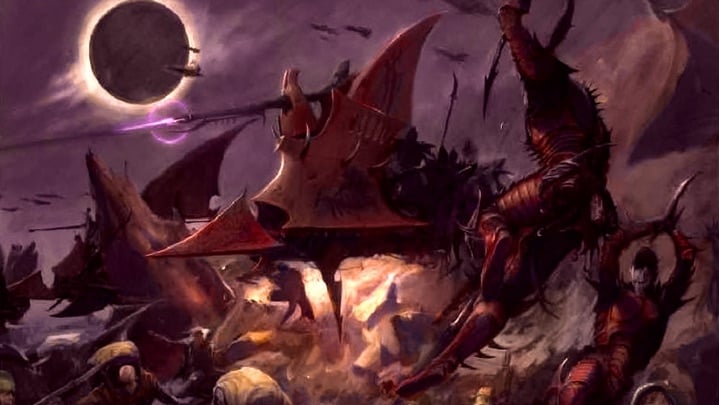
The people of Nocturne lived in constant fear of the sadistic Dark Eldar, who regularly descended upon their settlements to abduct and torment their inhabitants. The customary response was to hide, a desperate act of survival. However, in his fourth year, Vulkan refused to cower. Standing defiantly in the center of his village, his two smithing hammers crossed over his shoulders, he became an immovable bulwark against the xenos threat. Inspired by his raw courage, the villagers rallied behind him, transforming passive victims into active defenders. This decisive victory over the Dark Eldar not only saved his home but sparked a revolution across Nocturne. Within weeks, leaders from the seven largest towns pledged allegiance to Vulkan, vowing never again to hide from their oppressors. This foundational act cemented the core tenets of what would become the Promethean Creed: self-reliance, community, and the fierce protection of the innocent.
The Emperor’s Test: Humility and Honor
The newfound unity and burgeoning strength of Nocturne culminated in a grand tournament, a celebration of Vulkan’s leadership and the planet’s liberation from fear. It was during these festivities that a mysterious stranger arrived, clad in outlandish garments and possessing an unnerving, pale complexion. This stranger, none other than the Emperor of Mankind in disguise, challenged Vulkan, proposing a wager: the loser would forever serve the victor.
The contest spanned eight grueling days, testing every facet of strength, intellect, craftsmanship, and endurance. From the legendary "anvil lift," where both held immense anvils above their heads for half a day before declaring a tie, to intricate forging challenges, the two remained perfectly matched. The final challenge tasked them with constructing a weapon within 24 hours, then using it to hunt and slay the largest salamander they could find.
Vulkan, climbing a treacherous mountain, quickly dispatched a colossal Fire Drake. However, as he made his descent, the very volcano he stood upon erupted violently, casting him over a precipice. Dangling precariously by one hand, clutching the tail of his massive prize in the other, Vulkan faced an impossible choice: his life or his hard-won victory. It was then that the stranger appeared, carrying an even larger drake. Witnessing Vulkan’s mortal peril, the Emperor made a choice that defined the very essence of Vulkan’s character: he tossed his superior prize into a river of molten rock, using its burning carcass as a bridge to rescue the Primarch.
Returning to town empty-handed, the stranger conceded the tournament. Yet, to the astonishment of all, Vulkan knelt before him. "Any man who would value life over pride is worthy of my service," he declared, recognizing the true nobility of the act. At this profound moment, the Emperor shed his illusionary disguise, revealing his true, awe-inspiring form. Thus, father and son were reunited, bound by a shared understanding of compassion and sacrifice.
The Great Crusade: A Light in the Darkness
For a period after his rediscovery, Vulkan remained by the Emperor’s side, receiving personal tutelage and fighting alongside his father. This intimate apprenticeship undoubtedly deepened his understanding of the Imperium’s grand vision and his own place within it. When he was eventually reunited with his own Legion, it was at the head of a fleet bearing 3,000 new recruits, a testament to the Emperor’s investment in his son. In honor of the beast that had brought him and his father together, the Legion was officially renamed the Salamanders.
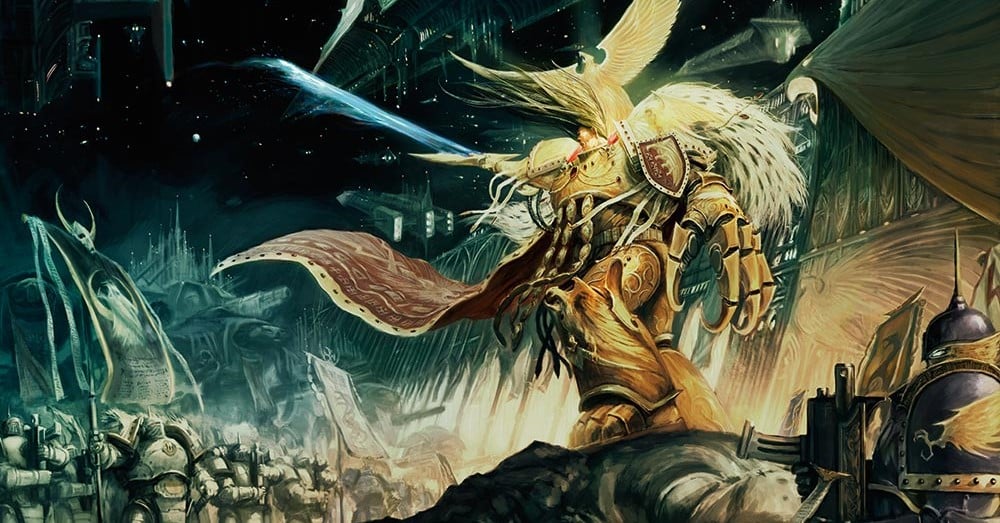
Vulkan and his Salamanders became renowned throughout the Great Crusade for their unique approach to compliance. While other Legions might raze worlds or employ brutal subjugation, the Salamanders sought to integrate, to uplift, and to protect. Their focus on minimal civilian casualties and their genuine empathy for the common human population often put them at odds with their more ruthless brethren.
A pivotal incident occurred during the reconquest of Kharaatan (designated One-Five-Four-Six), where the Salamanders fought alongside the Night Lords, led by Konrad Curze. Vulkan was horrified by Curze’s barbaric tactics, which included the wholesale slaughter of a city’s populace merely to sow fear. This ideological clash erupted into a fierce argument between the two Primarchs, highlighting the stark dichotomy between their philosophies. Vulkan, unable to condone such wanton cruelty, reported Curze’s actions to Warmaster Horus and Rogal Dorn of the Imperial Fists.
Later, when Vulkan presented Horus with a gift – the mighty Thunder Hammer Dawnbringer – he sensed a nascent darkness within his brother, a subtle but chilling shift in his aura. Trusting his intuition, Vulkan withheld Dawnbringer, a premonition that would prove tragically accurate. This moment underscores Vulkan’s innate perceptiveness and his burgeoning concern for the moral compass of the Crusade’s leadership.
The Horus Heresy: Immortality’s Agony
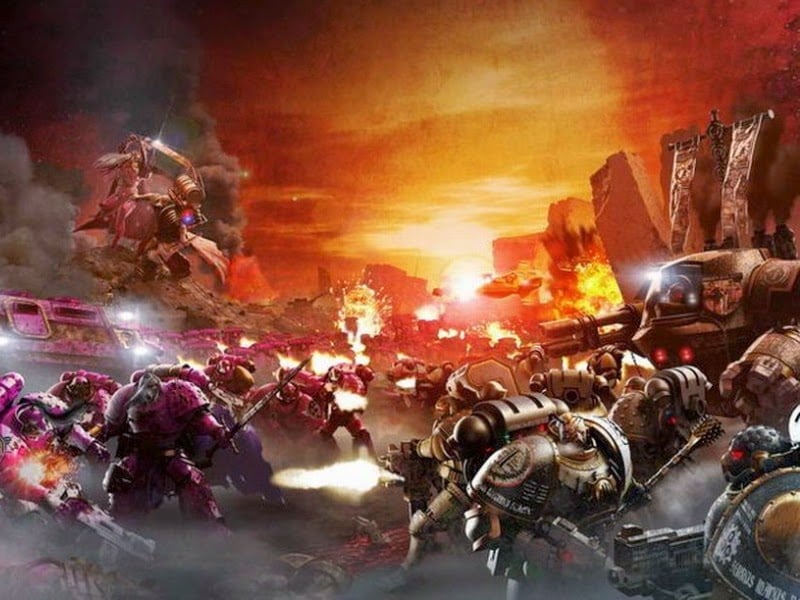
The nascent darkness Vulkan sensed erupted into the cataclysmic civil war known as the Horus Heresy. Vulkan and his Salamanders were among the loyalist legions deployed to Istvaan V, a world that would become synonymous with betrayal and slaughter. At the infamous Dropsite Massacre, the Salamanders, alongside the Iron Hands and Raven Guard, were decimated by nuclear missiles fired by the traitorous Iron Warriors. The sheer scale of the betrayal and the devastating firepower employed wiped out the vast majority of his Legion.
Vulkan, a perpetual, survived the apocalyptic blast, only to find himself surrounded by hundreds of Iron Warriors and Night Lords. Fighting with the ferocity of a cornered beast, he eventually succumbed to overwhelming numbers, stabbed, shot, and bludgeoned into unconsciousness. His survival, however, was not an escape, but the beginning of an unimaginable torment.
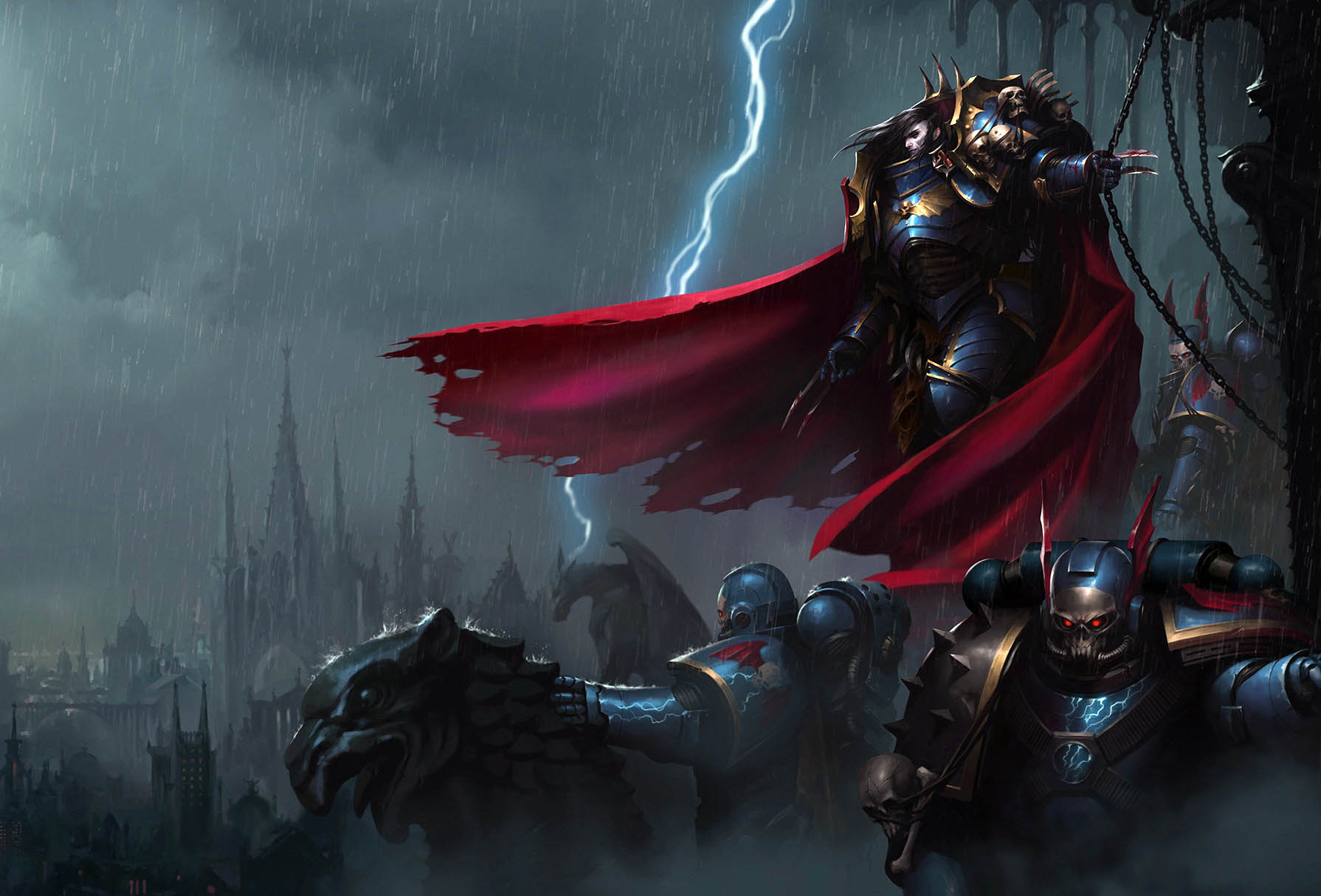
Konrad Curze, the Night Haunter, saw in Vulkan’s perpetual nature an opportunity for sadistic psychological warfare. For months, Curze subjected his brother to an endless cycle of death and resurrection. Vulkan was decapitated, disemboweled, shot countless times, hurled into the void of space, and even had his throat ripped out with a fork. Each gruesome death was followed by a complete regeneration, driving Curze to a frustrated frenzy and pushing Vulkan to the very brink of sanity. The psychological toll of these repeated deaths, the constant terror, and the grotesque violations of his form left an indelible scar on Vulkan’s psyche.
Curze eventually sought a definitive end to his macabre game, leading Vulkan into a labyrinth designed by Perturabo, Primarch of the Iron Warriors. At the maze’s heart lay Dawnbringer, Vulkan’s personal hammer, alongside the desecrated corpses of his loyal sons. Retrieving his weapon, Vulkan turned the tables on Curze, overpowering him and activating a hidden teleporter within Dawnbringer. This device, likely a failsafe or an intended escape route, hurled Vulkan across the galaxy, depositing him into the upper atmosphere of Macragge, the Ultramarines’ homeworld. The intense atmospheric reentry burned him to a charred husk, but he was confident he would regenerate under the care of his loyalist brothers.
Recovery and Rebirth: The Long Road to Terra
Vulkan’s charred remains were recovered by the Ultramarines, initially mistaken for a grotesque statue. Over several days, his body slowly regenerated, shocking the Apothecaries into summoning their Primarch, Roboute Guilliman. Guilliman was horrified to find Vulkan not only resurrected but mentally shattered, violent, and incoherent, lashing out at all around him. The trauma inflicted by Curze had broken the compassionate Primarch.
Yet, a twisted bond had formed between the tormentor and the tormented. Vulkan, even in his fractured state, could sense Curze’s presence. Breaking free of his restraints, he pillaged Guilliman’s private armory and set off to hunt the Night Haunter. Their brutal duel raged across an entire city, during which Vulkan began to consciously harness his regenerative abilities, focusing his will to accelerate his healing.
Their destructive confrontation was ultimately interrupted by John Grammaticus, a perpetual working for the Cabal. Grammaticus, tasked with permanently ending Vulkan’s existence, wielded the Fulgurite, a petrified bolt of the Emperor’s own psychic energy. He stabbed Vulkan through the heart, triggering a massive psychic explosion that killed both of them. Grammaticus regenerated, but his purpose was served; this would be his last life. Vulkan, however, did not recover.
His inert body was later retrieved by Guilliman, Lion El’Jonson, and Sanguinius, and placed in a stasis-capsule crafted by Guilliman himself, inscribed with the words "Unbound Flame." The few surviving Salamanders who had reached Macragge stood vigil over their fallen Primarch. Convinced of his eventual return, an expedition was mounted to Nocturne, where Vulkan’s body was eventually restored from the Unbound Flame at Mount Deathfire, a sacred volcanic peak on his home world.
Upon his full resurrection, Vulkan was in a fugue state, his memory fragmented. Deep within Mt. Deathfire, he conversed with an enigmatic old man, "Deathfire personified," who urged him to journey to Terra. This mysterious guide also led him to two artifacts he had no memory of forging: the Thunder Hammer Urdrakule and the Talisman of Seven Hammers. Accompanied by three loyal acolytes, dubbed the Draaksward, Vulkan opened a Webway portal beneath Nocturne, embarking on his perilous journey to the Throneworld.
The Webway’s Labyrinth and the Emperor’s Grim Task
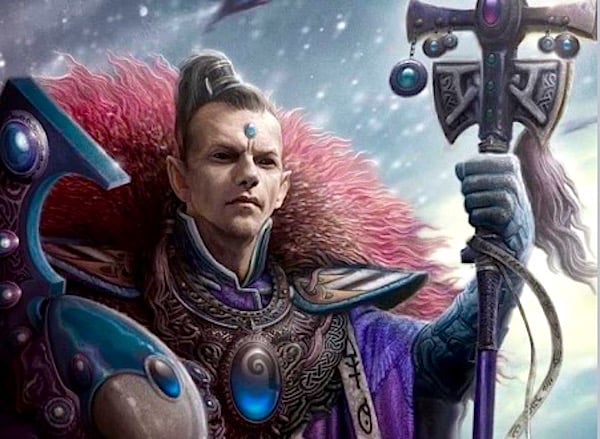
Vulkan’s journey through the Webway was an arduous odyssey, fraught with danger and unexpected alliances. He and his Draaksward battled Dark Eldar in a satellite realm of Commorragh, faced the guerrilla forces of Shadrak Meduson (whom Vulkan refused to join, prioritizing his Emperor’s call over Meduson’s war of attrition), and eventually found guidance from the enigmatic Eldar Farseer, Eldrad Ulthran, who directed them to a new Webway portal on Caldera.
Within the ancient, daemon-haunted confines of Calastar, a Webway nexus long abandoned after the War Within the Webway, Vulkan confronted the Great Unclean One Aghalbor. Utilizing the Talisman of Seven Hammers, Vulkan not only slew the powerful daemon but inflicted upon it a "True Death," severing its connection to the Warp and ensuring its permanent demise. It was here that Eldrad Ulthran revealed himself to be the "Old Man of Mt. Deathfire," confirming his long-range guidance. Eldrad then opened a final portal, bypassing the sealed Imperial Dungeon, and depositing Vulkan and his companions directly before the Imperial Palace on Terra.
Vulkan’s arrival on Terra brought immense relief to the beleaguered loyalists, particularly Rogal Dorn. He was swiftly escorted by Custodes to the Golden Throne, where the Emperor himself awaited. The Emperor, now a captive of the Throne, revealed that he had been expecting Vulkan, orchestrating his entire journey and compelling him to forge Urdrakule and the Talisman. Vulkan’s true purpose, the Emperor explained, was to oversee the Talisman of Seven Hammers, a weapon of unprecedented power: a dead man’s switch. Should Horus succeed in the Siege of Terra, this device would consume the entire planet in a cataclysmic inferno, denying it to the Ruinous Powers of Chaos.
Vulkan was horrified by the prospect of such destruction, but the Emperor reiterated his necessity, stating that Vulkan, ever hesitant to wield the weapons he forged, was the only one who could be trusted with such a terrible responsibility. With a heavy heart, Vulkan installed the Talisman into the Golden Throne and took up his vigil by the Eternity Gate, guarding the very heart of the Imperium and holding the fate of Terra in his hands.
The Siege of Terra: Defense of the Emperor
During the climatic Siege of Terra, Vulkan’s presence was kept a closely guarded secret. His next recorded action came when Magnus the Red, Primarch of the Thousand Sons, and a contingent of his sorcerous legion infiltrated the Imperial Dungeon, intent on slaying the Emperor. Vulkan intercepted a lethal blow from Magnus’s staff aimed at the Emperor on the Golden Throne.
Initially, both Vulkan and the Emperor offered Magnus a chance at redemption, a return to the Imperial fold, though it would necessitate the painful purging of his mutated Legion. Vulkan, understanding the deep bond Magnus had with his sons, admitted he might have made the same choice as Magnus when the offer was refused. Nevertheless, his loyalty was absolute, and he once again defended the Emperor against the Crimson King’s renewed assault.
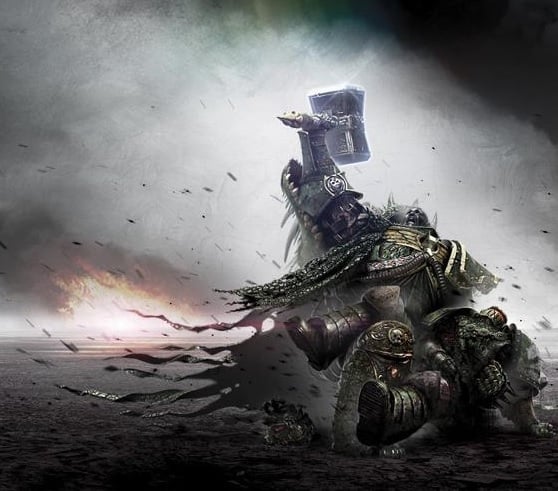
A furious duel ensued between the two Primarchs. Vulkan was saved from a decapitating blow by the ultimate sacrifice of Igen Gargo, one of his Draaksward. Enraged by his son’s death, Vulkan took up Gargo’s Thunder Hammer, wielding twin hammers to seemingly overwhelm Magnus. Yet, before Vulkan could deliver the final, despairing blow, Magnus fully embraced the powers of Chaos and vanished from the Throneroom, leaving Vulkan with a sense of tragic loss.
Post-Heresy: The Long Vigil and the Search for Artifacts
Following the Siege of Terra and the Emperor’s entombment on the Golden Throne, Vulkan’s activities become shrouded in mystery. Little is definitively known of his actions immediately after the Heresy. He is notably recorded as one of the few Primarchs to oppose the draconian dictates of the Codex Astartes, a controversial reform that broke the Legions into smaller Chapters. This opposition stemmed not from disloyalty or defiance, but likely from the crippling losses his Legion had sustained at Istvaan V, which had already reduced the Salamanders to a fraction of their original strength.
Eventually, Vulkan chose to depart from his Legion, echoing the path of Leman Russ, Primarch of the Space Wolves. He promised to return during the "End Times," a prophecy that continues to fuel the hope and resolve of his Chapter. Vulkan was presumed dead by the wider Imperium, his self-sacrifice at the climax of the War of the Beast approximately 1,500 years later being the last definitive record of his presence.
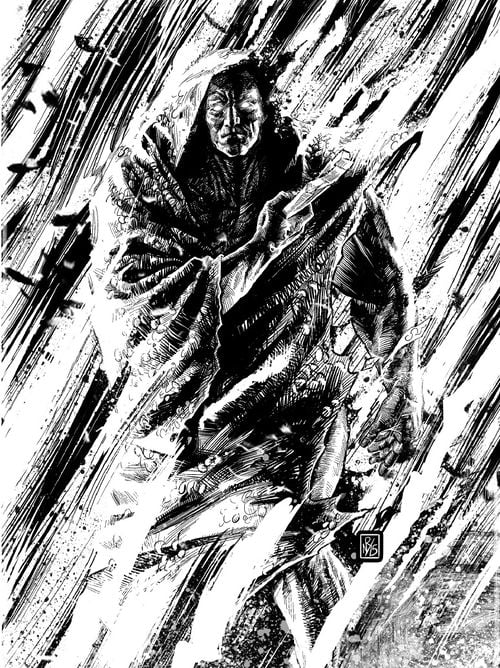
However, the Salamanders, ever loyal and hopeful, continue their sacred quest in the 41st Millennium. They believe their Primarch will return to them once they have gathered all nine of the fabled Artefacts of Vulkan, scattered relics of his unparalleled craftsmanship and immense power. This enduring vigil underscores the deep bond between Vulkan and his sons, a testament to his unique leadership and the profound impact of his compassionate nature.
Supporting Data
Vulkan’s character is defined by several key attributes and events that set him apart.
- Perpetual Nature: This unique genetic inheritance from the Emperor is central to his narrative. It allowed him to survive the Dropsite Massacre, endure Curze’s tortures, and continue his mission. However, it also condemned him to unimaginable suffering, making him a living martyr. The concept of "True Death" for Perpetuals, as achieved with the Fulgurite or the Talisman of Seven Hammers against a daemon, highlights the rarity and power of such methods.
- Master Craftsman: Vulkan’s skill in smithing is legendary. From his youth on Nocturne to forging artifacts like Urdrakule and the Talisman of Seven Hammers, his hands crafted wonders. This skill is passed down to his Legion, who are known for their meticulously maintained wargear and unique artificer items. His craftsmanship is not merely technical but imbued with a deep understanding of purpose and function.
- Empathy and Humanity: Unlike many of his more distant or brutal brothers, Vulkan consistently demonstrated compassion for ordinary humans. His actions on Nocturne and Kharaatan, prioritizing civilian lives over strategic advantage, exemplify this. This characteristic is the bedrock of the Promethean Creed and the Salamanders’ doctrine, making them defenders of humanity first and foremost.
- Physical Prowess: Vulkan was arguably the largest and physically strongest of all the Primarchs, capable of overturning Space Marine battle tanks with his bare hands. Yet, he deliberately held back during sparring matches, fearing he might inadvertently harm his brothers, further emphasizing his gentle nature despite his immense power.
- The Promethean Creed: This philosophical doctrine, based on Vulkan’s teachings and writings (particularly the Tome of Fire), guides the Salamanders. It emphasizes self-sacrifice, the protection of innocents, craftsmanship, and the "Circle of Fire"—a belief in rebirth through fire and unity with the earth, reflecting Nocturne’s volcanic nature and Vulkan’s own regenerative cycle. This creed provides a moral anchor for the Salamanders in the grim darkness of the 41st Millennium.
Official Responses (Canonical Interpretations & Factional Reactions)
The Emperor’s decision to entrust Vulkan with the Talisman of Seven Hammers speaks volumes about his trust in his son’s moral compass. The Emperor recognized Vulkan’s inherent aversion to destruction, making him the only one capable of wielding such a devastating failsafe. This "official response" from the highest authority underscores Vulkan’s unique position as the most "human" of the Primarchs, despite his superhuman nature.
The loyalist Primarchs, particularly Guilliman, Dorn, and Sanguinius, demonstrated their profound respect and concern for Vulkan during his recovery. Guilliman’s personal crafting of the "Unbound Flame" stasis capsule is a testament to this, as is their collective effort to return his body to Nocturne for potential resurrection.
The Night Lords, particularly Konrad Curze, reacted to Vulkan with a mixture of perverse fascination and furious frustration. Curze’s relentless torture was a twisted "official response" to Vulkan’s immortality, an attempt to break a spirit he could not kill. This ideological clash defined their interactions, with Curze seeing Vulkan’s empathy as weakness and Vulkan seeing Curze’s brutality as anathema to humanity.
The enduring quest of the Salamanders for the Artefacts of Vulkan serves as their ongoing "official response" to their Primarch’s disappearance. Their unwavering belief in his promised return shapes their entire Chapter culture and their operational priorities, driving them to recover the relics and prepare for his advent in the "End Times."
Implications
Vulkan’s story carries profound implications for the Warhammer 40,000 universe:
- Hope in the Grimdark: In a setting dominated by despair, fanaticism, and endless war, Vulkan represents a persistent, albeit rare, glimmer of hope. His commitment to protecting innocents and his personal sacrifice for the greater good provide a moral counterpoint to the rampant cruelty and cynicism of the 41st Millennium. The Salamanders, guided by his Promethean Creed, continue this legacy, often going against the more ruthless doctrines of other Imperial factions.
- The Burden of Immortality: Vulkan’s perpetual nature, while making him virtually unkillable, is depicted as a source of immense suffering. His torment at the hands of Curze highlights that true death might sometimes be a mercy, and that psychological wounds can be far more devastating than physical ones. This explores the darker side of extraordinary power and the price of unending existence.
- The Emperor’s Vision: Vulkan’s character and his ultimate role with the Talisman of Seven Hammers reveal a nuanced aspect of the Emperor’s grand design. The Emperor, for all his ruthlessness and ambition, valued empathy and self-sacrifice enough to entrust the ultimate failsafe to the Primarch who embodied these qualities most. It suggests that even amidst the cold calculus of galactic conquest, the Emperor held a deep, if often obscured, respect for the core values of humanity.
- The Enduring Legacy of the Primarchs: Vulkan’s eventual departure and the Salamanders’ continued search for his artifacts reinforce the mythical status of the Primarchs. Their absence creates a void, but their legends continue to inspire and guide their respective Chapters, shaping their doctrines and aspirations even millennia later. Vulkan’s promised return in the "End Times" offers a powerful narrative hook for the future of the setting, suggesting a potential re-engagement with the foundational figures of the Imperium.
- The Nature of Sacrifice: From his early defiance against the Dark Eldar to his agonizing decision to accept the duty of activating the Talisman of Seven Hammers, Vulkan’s life is a chronicle of sacrifice. His willingness to endure immense personal suffering for the sake of others, and ultimately for the preservation of humanity, solidifies his status as a tragic hero whose unwavering compassion remains his greatest strength.
Vulkan, the most humble and perhaps most human of the Primarchs, remains a cornerstone of the Imperium’s mythos. His story is a testament to the enduring power of empathy, the profound burden of immortality, and the ultimate sacrifice required to protect humanity from the encroaching darkness. His legacy burns brightly, a guiding flame for his loyal sons, the Salamanders, as they tirelessly strive to embody the Promethean Creed in a galaxy that desperately needs its warmth.