"The Bystander" Novel Blurs Lines Between GameLit and Meta-Horror in a Deadly Cinematic Gauntlet
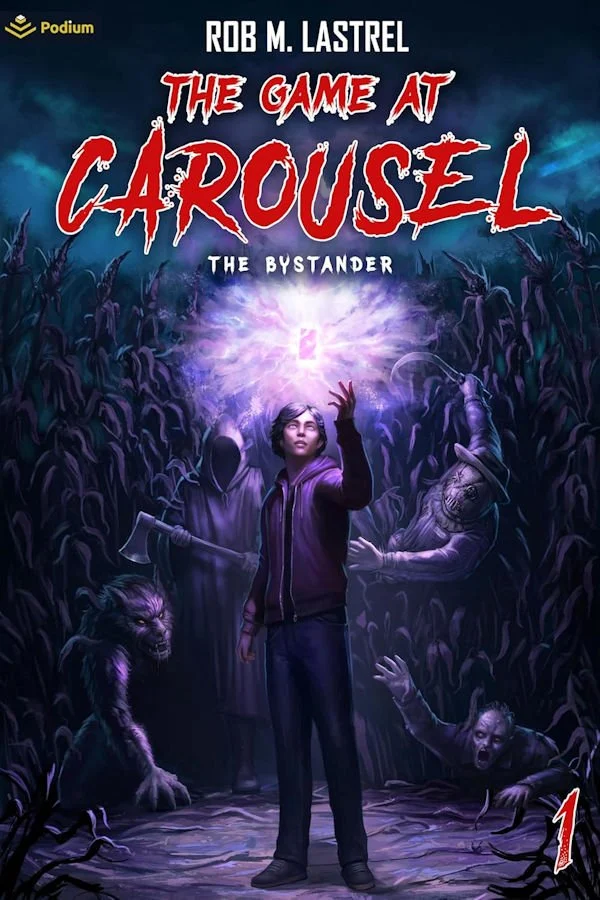
A New Literary Thriller Traps College Friends in a Self-Aware Nightmare, Forcing Them to Play Out — or Subvert — Classic Horror Tropes
In an innovative twist on the burgeoning GameLit and LitRPG genres, author Lastrel’s new novel, "The Bystander," plunges readers into a terrifying, meta-fictional world where college friends are forced to navigate a deadly horror movie simulation. Far from a simple game, this narrative challenges conventions by using cinematic "tropes" as character abilities, offering a fresh perspective on survival horror and the very fabric of storytelling.
The book introduces Riley Lawrence, a horror-obsessed college student, and his circle of friends as they embark on what they believe is a celebratory trip to the quaint town of Carousel for its Centennial Celebration. Their initial skepticism about the town’s eerie quietude quickly transforms into a chilling realization: they are trapped within an inescapable, meticulously crafted horror movie set. An enigmatic animatronic usher seals their fate, assigning each individual a classic horror archetype – from the "Scholar" and "Athlete" to "Eye Candy" and the coveted "Final Girl" – setting the stage for a perilous performance where the curtains rise on their own potential demise.
Riley, burdened with the "Film Buff" archetype, finds himself in a uniquely agonizing position. He possesses the meta-knowledge to anticipate every killer’s move, every jump scare, yet is simultaneously cursed to be among the first victims. However, a crucial discovery offers a glimmer of hope: the "Oblivious Bystander" trope. By convincingly feigning ignorance of the monstrous threats lurking around him, Riley can momentarily evade their grasp. This ingenious mechanic forms the core of his struggle, forcing him and his friends to strategically leverage their assigned tropes to uncover the truth behind their entrapment and, ultimately, to escape Carousel’s deadly embrace. The overarching question looms large over their every decision: can they truly survive a horror movie, or are they merely puppets in a predetermined narrative?
Chronology of a Nightmare: Descent into Carousel’s Deadly Game
The narrative of "The Bystander" unfolds with a meticulously crafted descent into its horrifying premise, guiding both characters and readers through an escalating series of revelations and trials.
The Illusory Celebration and Initial Skepticism
The journey begins with Riley Lawrence and his friends arriving in Carousel, lured by the promise of a Centennial Celebration. The initial ambiance of the town, marked by "few decrepit cars" and an unsettling quiet, immediately hints at an underlying eeriness. Their collective horror-obsession initially makes them dismissive, viewing the atmosphere through the lens of their genre familiarity rather than actual peril. This early stage skillfully sets up the meta-commentary that will define the rest of the story, as their understanding of horror tropes initially blinds them to their genuine danger.
The Unveiling of the Inescapable Set
The turning point occurs when the group stumbles upon a seemingly innocuous, locked building. Upon entering, they are greeted by an animatronic usher, a seemingly innocuous figure that serves as the gatekeeper to their nightmare. Each friend is handed a ticket, an ominous artifact that signifies their enrollment in this involuntary performance. As the lights dim, Riley’s genre knowledge transforms from a source of amusement to a chilling prophecy: they have entered a "patchwork of a horror movie set," a meticulously designed arena where their lives are the stakes. The transition from curious onlookers to unwilling participants is abrupt and terrifying, immediately establishing the high stakes of their predicament.
The Imposition of Archetypes
With their fate sealed, the friends are summarily assigned specific horror archetypes: "Scholar," "Athlete," "Eye Candy," "Final Girl," and Riley’s own "Film Buff." These roles are not merely labels; they come with inherent skills, limitations, and, most critically, predetermined fates within the horror narrative. This arbitrary assignment immediately introduces a layer of psychological tension, forcing characters to contend with identities that may or may not align with their true selves, and often contradict their survival instincts. The archetypes are both a guide and a trap, dictating their actions and reactions within the simulated horrors.
Riley’s Epiphany: The Bystander’s Loophole
Riley’s "Film Buff" archetype initially presents a cruel irony: possessing encyclopedic knowledge of horror tropes, he is doomed to recognize every threat but powerless to avoid being "the first to be hunted down." This understanding deepens his terror, as he’s forced to relive familiar genre deaths. However, a breakthrough moment arrives with his discovery of the "Oblivious Bystander" trope. This unique ability allows him to circumvent certain dangers by convincingly pretending not to notice them. This revelation fundamentally shifts his approach to survival, transforming his curse into a strategic advantage and highlighting the novel’s creative use of meta-mechanics. It’s a brilliant conceptual hook that drives much of the immediate tension and problem-solving.
The Relentless Cycle of Simulations
Following their initial entrapment and archetype assignment, Riley and his friends are thrust into a relentless series of horror-film simulations. These "rounds" are designed to adhere to "every classic horror story plot formula you can think of." The narrative structure mimics the cyclical nature of game levels, where characters face new scenarios, new monsters, and new challenges, all while operating within the constraints of their assigned tropes. This cyclical format allows the author, Lastrel, to explore a vast array of horror subgenres and scenarios, ensuring that the tension remains high and the characters are constantly tested.
The Enduring Struggle for Escape
Beneath the immediate terror of each simulation lies the overarching, desperate goal of escape. While the characters are constantly preoccupied with survival in the present moment, the question of "what’s trapping them there in the first place" and how to break free remains a constant, nagging undercurrent. This struggle forms the backbone of the series’ long-term narrative arc, providing a deeper purpose beyond mere survival within individual scenarios. It’s a conflict that fuels their investigations, their attempts to understand the rules of Carousel, and their desperate search for a way out of the deadly game.
Supporting Data and Genre Context: The Mechanics of Meta-Horror
"The Bystander" distinguishes itself through its intricate genre blending and a deep understanding of narrative mechanics, offering a rich tapestry for fans of both GameLit and cinematic horror.
The Evolving Landscape of GameLit/LitRPG
For decades, the GameLit/LitRPG genre has captivated readers with its fusion of traditional narrative and video game mechanics, offering protagonists who level up, gain abilities, and navigate worlds governed by explicit rules and stats. This genre’s appeal lies in its inherent sense of progression, character customization, and the vicarious thrill of overcoming challenges within a structured system. "The Bystander" acknowledges and embraces these core tenets, yet it boldly transcends them. Instead of conventional "abilities" derived from fantasy RPGs, Lastrel introduces "tropes" – powers and vulnerabilities directly inspired by a "cinephile’s lexicon." This subtle but significant shift redefines the genre, rooting its mechanics not in game systems but in the rich, recognizable language of film. The reviewer’s admission of "dipping my toes into the GameLit/LitRPG genre for decades" underscores the novel’s innovative departure, noting that while "The Bystander" is "game-like," it’s "not limited to gaming conventions." This move broadens the genre’s appeal, inviting readers who might be less familiar with traditional gaming but deeply appreciate cinematic storytelling.
Meta-Narrative and the Art of Lampshading
One of the novel’s most compelling features is its sophisticated use of meta-narrative, drawing direct parallels to works like "The Cabin in the Woods." That seminal film famously deconstructed horror tropes, revealing the puppet masters behind the clichés. "The Bystander" employs a similar self-awareness, where the characters, particularly Riley, are acutely conscious of the horror formulas dictating their reality. This meta-awareness serves a dual purpose: it heightens the comedic irony when characters attempt to defy their predetermined roles, and it allows Lastrel to expertly "lampshade" any potential narrative contrivances.
"Lampshading," a literary technique where an author draws attention to an implausible or cliched element of their story to justify or acknowledge it, is deployed with masterful precision. Riley, as the "Film Buff," often anticipates and articulates the very plot devices that might otherwise strain a reader’s suspension of disbelief. This ingenious approach makes even the most "contrived scenes" feel "natural," as the characters themselves acknowledge the artifice of their situation. By having the protagonist call out potential plot holes before the reader can, Lastrel effectively inoculates the narrative against criticism, transforming perceived weaknesses into strengths of the meta-commentary. It’s a testament to the author’s skill in leveraging genre knowledge to enhance, rather than detract from, the immersive experience.
Character Archetypes and Psychological Exploration
The core mechanic of assigned character archetypes – "Scholar," "Athlete," "Eye Candy," "Final Girl," "Monster Hunter," "Hysteric" – is more than just a plot device; it’s a potent tool for psychological exploration. Each role comes with a specific "Savvy stat" and a set of "associated skills and flaws," compelling characters to act in ways that might contradict their true personalities. The example of the athlete, "actually relatively clever and is studying to become a lawyer," yet forced to play the "dumb jock stereotype" due to a "low Savvy stat," perfectly illustrates this internal conflict.
This forced role-playing offers "incredible insight into their feelings and personalities." Characters are not merely playing roles; they are wrestling with them. The tension between their authentic selves and their assigned personas reveals their resilience, their frustrations, and their deepest desires. Arthur, the "badass veteran character," finding joy in his "monster-hunter role" despite his "cynical, hopeless real-life persona," is a particularly poignant example. It suggests that even within a terrifying, artificial construct, there’s a primal satisfaction in fulfilling a heroic, if manufactured, destiny. This dynamic adds a profound layer of character development, transforming what could be one-dimensional archetypes into complex, struggling individuals.
TTRPG Mechanics and Carousel’s Intuitive Rules
The reviewer, a seasoned player of "TTRPGs (table-top role playing games)," identifies a striking similarity between "The Bystander’s" scenarios and the rules governing role-playing games. In TTRPGs, players are often restricted to acting only on information their characters possess, not on their own meta-knowledge. This "difference between players talking about the game and their characters talking about the game" is mirrored in Carousel’s stringent requirements.
The "rules of Carousel" dictate that characters "play their roles accurately," with "dire consequences for players who refuse to play by them." These rules are often "intuited by most of the characters," meaning they learn through observation and grim experience, much like new players in a complex RPG. Those who fail to grasp or adhere to these unspoken rules "don’t last long," akin to a player being "kicked out of a campaign." This shared "lack of knowledge" creates a powerful bond between the characters and the reader. We, like them, are thrust into an unknown world, learning its brutal logic alongside them, making the stakes feel incredibly immediate and personal. This ingenious structural choice ensures that the narrative’s mysteries unfold organically, fostering a sense of shared discovery and vulnerability.
Critical Reception and Broader Implications
Despite some narrative pacing concerns, "The Bystander" has garnered enthusiastic attention, positioning itself as a significant entry in contemporary speculative fiction and a potential benchmark for future meta-narrative horror.
The Reviewer’s Enduring Recommendation
The concluding sentiment of the review – "I’m going to keep reading this series and see where it goes, and if that’s not a recommendation, I don’t know what is" – serves as the strongest possible endorsement. This commitment, despite identified critiques, speaks volumes about the novel’s captivating premise and its ability to hook readers on its unique blend of horror and meta-commentary. It suggests that the strengths of the narrative far outweigh its perceived weaknesses, leaving a lasting impression and a desire for more.
Identified Strengths: Innovation and Engagement
The novel’s strengths are multifaceted and deeply rooted in its innovative approach:
- Novel Trope Mechanics: The transformation of cinematic tropes into game-like abilities is a stroke of genius, offering a fresh mechanic that feels both familiar to genre fans and entirely new. This concept alone pushes the boundaries of GameLit, demonstrating how non-gaming frameworks can inform its mechanics.
- Engaging Meta-Commentary: The self-aware narrative, particularly through Riley’s "Film Buff" perspective, provides layers of intellectual engagement. It invites readers to actively analyze horror conventions alongside the characters, fostering a more interactive and thought-provoking reading experience.
- Psychological Depth Through Role-Playing: The forced archetypes and the internal conflict they generate allow for nuanced character development. Readers witness genuine human struggles against predetermined roles, revealing deeper truths about identity, resilience, and the desire for agency.
- Effective Use of Horror Formulas: By embracing and then deconstructing classic horror plots, Lastrel creates scenarios that are both terrifying and intellectually stimulating. The novel manages to deliver genuine scares while simultaneously examining the very mechanics of fear.
Areas for Narrative Refinement
While laudatory, the review also highlights specific areas where the narrative could be refined:
- Pacing of Progression: The "one-step-forward, two-steps-back approach" to the characters’ escape attempts creates a sense of stagnation. While this might be an intentional choice to emphasize the hopelessness of their situation or to prolong the series, it can lead to reader frustration regarding the overarching plot’s forward momentum.
- Distraction from Core Conflict: The continuous introduction of "new abilities and stat increases" can sometimes feel like a "distraction from the true conflict at hand" – the escape from Carousel. While these elements are core to the GameLit aspect, their frequency or emphasis might inadvertently dilute the urgency of the central mystery.
- Narrative Frustration from Shared Ignorance: The deliberate choice to have readers "share with the characters" their "lack of knowledge" about Carousel’s true nature, while effective for immersion, can also be a double-edged sword. While it builds suspense, a prolonged period without significant revelations about the world’s mechanics or the antagonists’ motivations might test some readers’ patience. However, the reviewer also notes that "much of the best conflict is driven by the characters’ attitudes toward the world and their lack of progress in escaping it," suggesting that this frustration is often integral to the intended emotional landscape.
Broader Implications for Speculative Fiction
"The Bystander" is more than just an entertaining read; it carries significant implications for the future of speculative fiction:
- Redefining GameLit/LitRPG: By seamlessly integrating cinematic language and tropes, the novel demonstrates how the GameLit genre can evolve beyond its traditional gaming roots, appealing to a wider audience interested in meta-narrative and genre deconstruction.
- Advancing Meta-Horror: It contributes to the growing wave of self-aware horror that not only frightens but also critiques its own conventions. This intellectual approach to horror encourages a deeper engagement with the genre, inviting readers to become active participants in its analysis.
- Interactive Audience Engagement: The novel’s structure inherently fosters an analytical reading experience. Cinephiles will delight in recognizing references and tropes, while gamers will appreciate the strategic application of "abilities." This active engagement ensures a memorable and thought-provoking journey.
- High Adaptation Potential: The inherently visual and game-like nature of "The Bystander" makes it ripe for adaptation into other media. Its episodic structure, compelling character archetypes, and high-stakes scenarios would translate exceptionally well to television, film, or even a video game, offering a unique interactive experience that could further explore its meta-fictional premise.
In conclusion, "The Bystander" stands as a testament to creative storytelling, skillfully blending genres to deliver a narrative that is both terrifying and intellectually stimulating. Lastrel has crafted a world where horror is not just experienced but dissected, inviting readers to question the very nature of narrative and the roles we play within it. It’s a novel that promises to leave a lasting mark on the landscape of contemporary speculative fiction, urging readers to confront their fears and perhaps, their own inner archetypes.