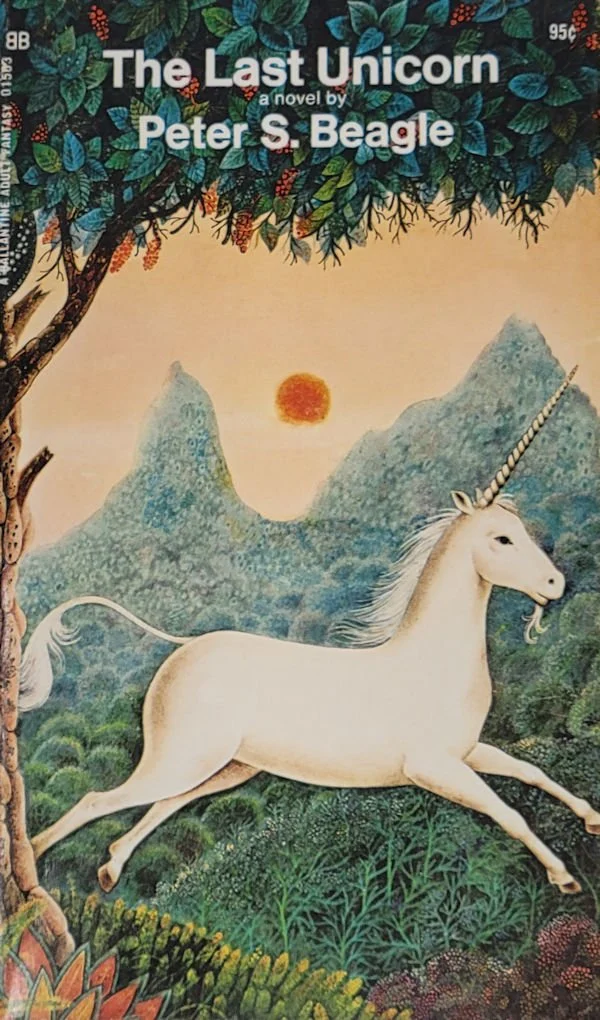
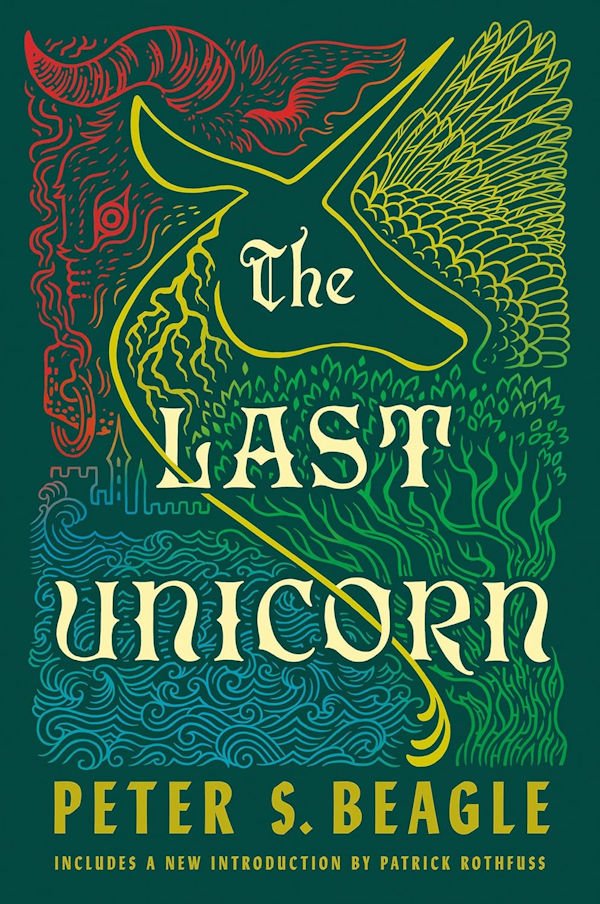
Peter S. Beagle’s seminal work, The Last Unicorn, stands as a monumental achievement in fantasy literature, transcending its genre to offer profound insights into the human condition. First published in 1968, this lyrical novel chronicles the journey of the eponymous unicorn, who, upon discovering she may be the last of her kind, embarks on a quest to find out what has become of the others. Accompanied by the bumbling but kindhearted magician Schmendrick and the disillusioned outlaw Molly Grue, she navigates a world where magic wanes and humanity grapples with its own mortality, desires, and regrets. The novel’s enduring legacy stems not merely from its fantastical premise but from its masterful exploration of universal themes such as time, beauty, sorrow, and the elusive nature of happiness. It challenges readers, regardless of their inclination towards fantasy, to confront existential questions that resonate deeply within the human experience.
Chronology: A Legacy Woven Through Time
The Last Unicorn first graced the literary world in 1968, immediately establishing Peter S. Beagle as a distinctive voice in fantasy. At a time when the genre was still largely defined by the epic scope of Tolkien, Beagle offered a more intimate, poetic, and philosophical approach. The book quickly garnered critical acclaim for its exquisite prose and profound thematic depth, earning a place among the genre’s classics.
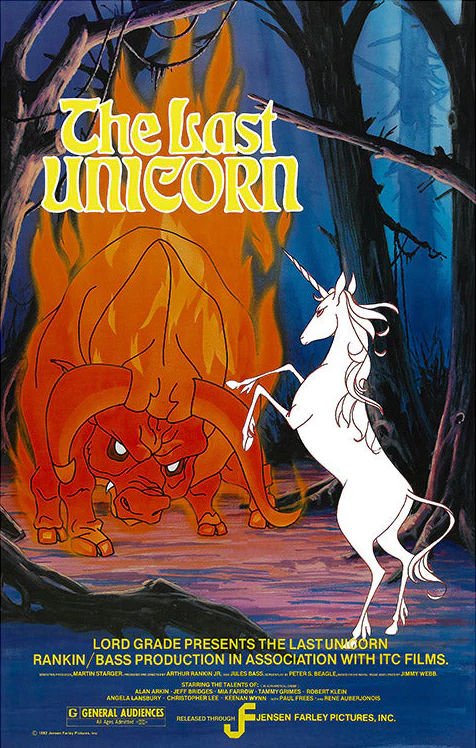
Its influence expanded dramatically with the release of the animated film adaptation in 1982. Produced by Rankin/Bass and animated by Topcraft (a studio whose animators would later form Studio Ghibli), with a screenplay written by Beagle himself and a memorable soundtrack by America, the film introduced the story to a wider audience. The visual artistry, coupled with the poignant narrative and iconic voice acting (featuring talents like Mia Farrow, Alan Arkin, Jeff Bridges, and Christopher Lee), cemented its status as a beloved cult classic. For many, the film served as their initial encounter with the tale, often years before they discovered its literary source.
Over the decades, The Last Unicorn has consistently been re-evaluated and celebrated, finding new generations of readers and viewers. Its themes of ecological concern (the disappearance of magical creatures), the fleeting nature of beauty, and the quest for identity have remained perpetually relevant. Peter S. Beagle himself has continued to champion the work, participating in screenings and readings, and has often reflected on the story’s unexpected longevity and the profound connection it fosters with its audience. Its journey from a quietly powerful novel to a globally recognized animated feature underscores its timeless appeal and its unwavering position as a cornerstone of fantasy literature.
Supporting Data: Unpacking the Universal Heart of a Unicorn’s Tale
The true genius of The Last Unicorn lies in its ability to transcend its fantastical trappings and delve into the fundamental aspects of human existence. Beagle employs the immortal, ethereal unicorn as a mirror to reflect our own transient lives, juxtaposing her timeless perspective with the keenly felt limitations of mortality. This narrative strategy allows him to explore hopes, fears, and the inherent frailty that defines us all. Through his intricately crafted characters, Beagle poses questions every person confronts, touching upon the fragility of existence, the illusions of happiness, and, most acutely, the relentless passage of time.
Thematic Depth: Beyond the Fantastical Veil
At its core, The Last Unicorn is a meditation on what it means to live, to love, and to face the inevitability of change and loss. It challenges the reader to consider: Do we have enough time to achieve our goals, or have we squandered too many years already? Are our aspirations truly worthy, or merely constructs of societal expectation? Can genuine happiness ever be attained, and if so, at what cost? Beagle masterfully presents characters who traverse their lives in an unfulfilled state, each representing a different facet of mortal despair and the human struggle for meaning.
Character Studies as Existential Mirrors
Schmendrick: The Burden of Unfulfilled Potential
Schmendrick the Magician is arguably the most relatable of the companions. Cursed with eternal youth and an almost pathological ineptitude for true magic, he embodies the agony of knowing one possesses a great destiny but lacking the means to achieve it. His predicament is poignantly articulated by a fellow magician:
"…your ineptitude is so vast, your incompetence so profound, that I am certain you are inhabited by greater power than I have ever known. Unfortunately, it seems to be working backward at the moment, and even I can find no way to set it right. It must be that you are meant to find your own way to reach your power in time; but frankly, you should live so long as that will take you. Therefore I grant it that you shall not age from this day forth, but will travel the world round and round, eternally inefficient, until at last you come to yourself and know what you are. Don’t thank me. I tremble at your doom."
Schmendrick represents the futility of a life lived without meaningful accomplishment, even when granted an abundance of time. He possesses the theoretical capacity for greatness but is perpetually thwarted by his own limitations, highlighting the internal battles we all face in realizing our potential. His journey is one of gradual self-discovery, where his "doomed" state eventually becomes the crucible for his true power to emerge, teaching him that magic, like life, requires both patience and a willingness to embrace imperfection.
Molly Grue: The Echoes of Lost Time
Molly Grue’s introduction is a raw, heart-wrenching confrontation with the unicorn, articulating a fear that resonates deeply with many: the terror of having run out of time for happiness. Her bitter lament speaks volumes:
"Where have you been?" she [Molly] cried. "Damn you, where have you been?" She took a few steps toward Schmendrick, but she was looking beyond him, at the unicorn.
"I am here now," she [the unicorn] said at last.
Molly laughed with her lips flat. "And what good is it to me that you’re here now? Where were you twenty years ago, ten years ago? How dare you, how dare you come to me now, when I am this?" With a flap of her hand she summed herself up: barren face, desert eyes, and yellowing heart. "I wish you had never come. Why did you come now?" The tears began to slide down the sides of her nose.
Molly embodies the universal fear of missed opportunities, of youth squandered, and the belief that the window for joy has irrevocably closed. She is a powerful counterpoint to Schmendrick; while he has all the time in the world but no fulfillment, Molly feels she has no time left to find it. Their intertwined narratives offer readers a profound confrontation with both sides of the same existential coin, forcing a reflection on how we perceive and utilize our finite existence. Her journey is one of rediscovering wonder and purpose, proving that hope can bloom even in the desert of regret.
King Haggard: The Emptiness of Possession
King Haggard is the antagonist, yet a deeply tragic figure. His pursuit of happiness manifests as an insatiable desire to possess the unicorns, to hoard beauty and wonder for himself. Despite having nearly every unicorn imprisoned within his castle, he remains utterly devoid of joy, plagued instead by despondency, hollowness, and paranoia. His philosophy is one of acquisition, believing that control over beauty will bring contentment. This belief, however, only serves to isolate him, coloring his view of all others as equally self-serving and miring him in perpetual distrust. Haggard’s ultimate fate serves as a stark warning against the illusion that external possessions, even those of sublime beauty, can fill an internal void. His character arc underscores the profound truth that true happiness cannot be owned; it must be experienced and shared.
Prince Lír: The Redemptive Power of Selfless Love
Prince Lír, King Haggard’s adopted son, begins his story trapped within his father’s desolate worldview. However, his journey is one of profound transformation, driven by his love for the unicorn, who has been magically transformed into the mortal Lady Amalthea. Through this love, Lír learns to appreciate using his strength, skills, and position not for self-aggrandizement, but for the protection and well-being of others. He articulates this realization eloquently:
"You were the one who taught me," he [Prince Lír] said. "I never looked at you [Lady Amalthea] without seeing the sweetness of the way the world goes together, or without sorrow for its spoiling. I became a hero to serve you, and all that is like you."
Lír’s transformation directly highlights the flaw in his father’s chosen path. His willingness to sacrifice, to serve, and to love selflessly stands in stark contrast to Haggard’s grasping nature. Beagle clearly delineates his views through their respective fates at the novel’s conclusion: Lír finds greater fulfillment and genuine heroism in his selfless acts than his father ever did in his amassed, empty possessions. He represents the triumph of altruism and empathy over avarice and despair.
The Unicorn: The Awakening of Mortality
The unicorn herself undergoes the most profound transformation. Initially, as an immortal creature, she cannot fully appreciate the ephemeral beauty of existence because she has never confronted the fear of death, metaphorically represented by the relentless, unfeeling force of the Red Bull. Ironically, to escape that metaphorical demise and save her kind, the unicorn must become mortal, taking on the human form of Lady Amalthea. This transition is agonizing, a direct confrontation with the decay and impermanence that defines human life.
In her mortal guise, she laments:
"This body is dying. I can feel it rotting all around me. How can anything that is going to die be real? How can it be truly beautiful?"
Yet, it is precisely this experience of mortality that allows her to finally comprehend and appreciate its true meaning. After her transformation back, she carries the unique burden and gift of having known both states. She emerges with a profound realization, expressed in the counterpoint to her earlier despair:
"Whatever can die is beautiful—more beautiful than a unicorn, who lives forever, and who is the most beautiful creature in the world."
This central theme posits that time is both cruel and necessary. It is a harsh master, yes, but also the essential element that allows us to appreciate the preciousness of our lives and, hopefully, succeed in living them well. The unicorn’s journey teaches us that true beauty and meaning are found not in eternal, unchanging perfection, but in the transient, vulnerable nature of life and the capacity for love and sorrow that comes with it.
Literary Craftsmanship: A Tapestry of Prose and Poesy
Beyond its universal themes, The Last Unicorn is a masterclass in storytelling, told in a style that marries fairytale enchantment with profound philosophical inquiry. Beagle’s prose is a glory of poetic language, whimsical charm, and interwoven wisdom, making the act of reading an immersive and deeply satisfying experience.
For an example of Beagle’s masterful descriptive prose, one need look no further than his evocative introduction to the unicorn’s home:
The unicorn lived in a lilac wood, and she lived all alone. She was very old, though she did not know it, and she was no longer the careless color of sea foam but rather the color of snow falling on a moonlit night. But her eyes were still clear and unwearied, and she still moved like a shadow on the sea.
This passage is not merely descriptive; it is lyrical, painting a vivid picture while simultaneously conveying the unicorn’s timelessness and ethereal nature. The use of metaphor ("color of snow falling on a moonlit night") and simile ("moved like a shadow on the sea") elevates the prose beyond mere narration, imbuing it with a sense of magic and wonder.
To break the occasional solemnity of this nearly lyrical telling, Beagle sprinkles touches of delightful whimsy throughout, often through the sharp wit of his characters:
"I would tell you what you want to know if I could, mum, but I be a cat. And no cat anywhere ever gave anyone a straight answer."
Or, offering a moment of unexpected humor from Prince Lír:
"I have ended my betrothal to the princess I had agreed to marry—and if you don’t think that was a heroic deed, you don’t know her mother."
These moments of levity provide crucial emotional counterpoints, preventing the narrative from becoming overly heavy and reinforcing the fairytale quality that allows such deep themes to be digestible.
Furthermore, Beagle, like all great authors, scatters moments of profoundness and undeniable truth throughout his work, sometimes intentionally, sometimes through the sheer purity of his storytelling:
"A lord who cheats an ugly old witch will cheat his own folk by and by. Stop him while you can, before you grow used to him."
Or, a wry observation on effort and talent:
"I always say perseverance is nine-tenths of any art—not that it’s much help to be nine-tenths an artist, of course."
These aphoristic statements offer concise philosophical insights, grounding the fantastical narrative in recognizable human wisdom and folly. They are the nuggets of truth that resonate long after the final page is turned, testament to Beagle’s ability to weave profound thought into engaging narrative.
Official Responses: Critical Acclaim and Enduring Reverence
Since its publication, The Last Unicorn has consistently received critical acclaim, solidifying its place as a literary masterpiece. Reviewers have lauded Beagle’s prose as "crystalline," "exquisite," and "hauntingly beautiful," often comparing his style to that of classic mythmakers and poets. It has frequently appeared on "best fantasy novels" lists and has been celebrated by authors across genres for its unique blend of pathos, humor, and philosophical depth. Ursula K. Le Guin praised its "exquisite language" and "delicate, painful wisdom," while Neil Gaiman has cited it as a significant influence on his own work, highlighting its emotional honesty and unforgettable characters.
Peter S. Beagle himself has often spoken about the enduring connection readers feel to the story, acknowledging its capacity to touch upon universal anxieties about aging, regret, and the search for meaning. He has expressed humility and gratitude for the novel’s longevity, recognizing that its themes continue to resonate because they are fundamental to the human experience. The animated film, despite initial mixed box office results, has grown into a beloved cult classic, regularly appearing on lists of top animated films and fantasy adaptations, further cementing the story’s cultural footprint. Its continued presence in popular culture, from fan art to critical analyses, is a testament to its profound impact and the deep affection it inspires.
Implications: A Timeless Call to Embrace Life’s Fleeting Beauty
The implications of The Last Unicorn extend far beyond the realm of fantasy literature. It serves as a powerful reminder that true beauty, meaning, and happiness are often found in the most unexpected places and through the most challenging journeys. The narrative subtly champions empathy, self-sacrifice, and the courage to confront one’s deepest fears. It implores us to cherish the transient nature of life, understanding that it is precisely our mortality that imbues our experiences, relationships, and aspirations with profound significance.
For contemporary readers, the novel’s exploration of time’s relentless march and the quest for purpose remains acutely relevant. In an age of increasing distractions and existential anxieties, Beagle’s fable encourages introspection, urging us to question what truly constitutes a well-lived life. It suggests that fulfillment is not found in endless possession or perpetual youth, but in the courage to engage with the world, to love fiercely, to accept loss, and to find beauty in the impermanence of all things.
In conclusion, The Last Unicorn is a work of profound universality and exquisite beauty that deserves to be read by everyone. While its fairytale-style telling and lyrical prose may not appeal to every single reader, for the vast majority, this exceptional novel will strike a deep chord. It offers a unique merging of human honesty and ethereal beauty, crafting a narrative that speaks to the heart of what it means to be alive. It is a book that fosters reflection, inspires wonder, and, for many, becomes a cherished companion, prompting re-reads year after year. Peter S. Beagle’s masterpiece is not just a fantasy novel; it is a timeless testament to the precious, fleeting magic of existence itself.
Askela, Eldoria – A compelling new voice in dark fantasy has emerged with the release of A Forest of Vanity and Valour, a novel that boldly reinterprets the enduring legend of Robin Hood through a gri
Conrad Street, Trinidad – A proposed multi-apartment development, intended to replace the beloved homestead of the late Mr. Vincent, has been abruptly halted following the unexpected discovery of an e
Northern Brazil – In the verdant, often overlooked interior of Brazil, a series of archaeological discoveries by Dr. Teresa, a distinguished Canadian archaeologist, has inadvertently opened a portal t



Leave a Comment