The Architecture of Self-Sabotage: Why Humans Profit from Their Own Misery
Main Facts: The Paradox of Intentional Failure
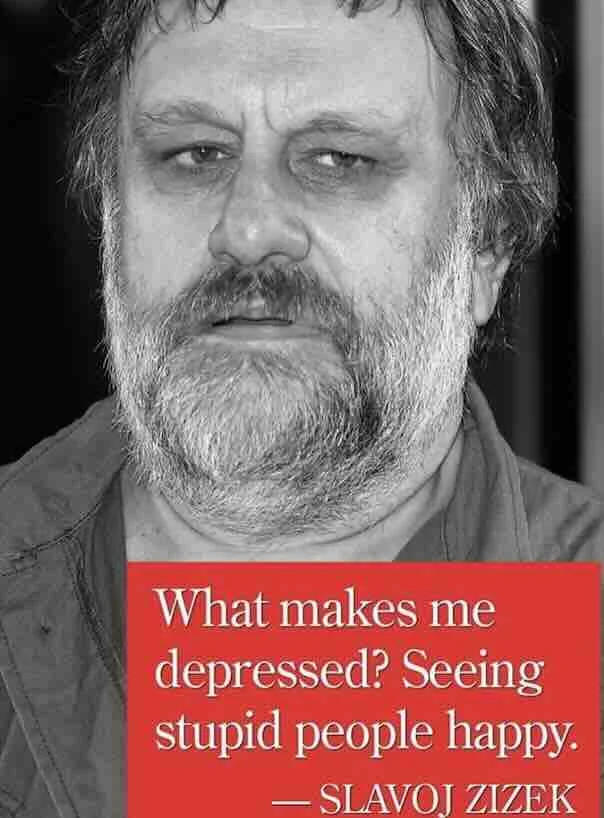
Self-sabotage is traditionally viewed as a psychological glitch—a momentary lapse in judgment or a lack of willpower that prevents individuals from achieving their goals. However, a growing body of philosophical and psychoanalytic thought, championed by the Slovenian philosopher Slavoj Žižek, suggests a more disturbing reality: we are often subconsciously invested in our own stagnation.
The core premise of this perspective is that humans are not unified, rational actors seeking self-actualization. Instead, we are fragmented subjects who frequently collaborate in our own ignorance. By utilizing the framework of Lacanian psychoanalysis, Žižek argues that what we call "self-sabotage" is often a deliberate, albeit unconscious, pursuit of a specific type of satisfaction known as jouissance.
This "ugly thrill" suggests that the habits we claim to hate—overworking, doomscrolling, or remaining in toxic relationships—provide emotional "kickbacks" that we are unwilling to relinquish. From a journalistic and sociological perspective, this challenges the multi-billion dollar self-help industry, which operates on the assumption that individuals are "good" people who simply need better tools. If Žižek is correct, the tools are irrelevant until the individual confronts the "madness" of their own desires.
Chronology: From Lacan to the Modern Productivity Crisis
The intellectual lineage of these ideas traces back to the mid-20th century, specifically the work of Jacques Lacan, who reinterpreted Freudian theory through the lens of linguistics and structuralism.
- The 1950s-1960s (The Lacanian Foundation): Lacan introduced the concept of the "divided subject." He argued that the "I" is a construct and that our desires are never truly our own, but are shaped by the "Big Other" (society, family, and language).
- The 1990s (Žižek’s Emergence): Slavoj Žižek gained international prominence by applying these dense psychoanalytic theories to popular culture and politics. He argued that ideology is not something imposed upon us, but something we actively participate in to avoid the void of our own lack of identity.
- The 2010s (The Digital Acceleration): As the digital economy blossomed, the concepts of "pseudoactivity" and "interpassivity" became increasingly relevant. The rise of social media created a landscape where "performing" a life became more important than living one.
- The 2020s (The Post-Pandemic Reckoning): In a world characterized by burnout and "quiet quitting," the Žižekian critique of resilience and toxic positivity has gained new traction. Observers note that the modern command to "be happy" has become a new form of psychological burden.
Supporting Data: The Economics of Pseudoactivity and Fantasy
To understand the scope of self-sabotage, one must look at the data surrounding modern productivity and the "authenticity" industry.
The Productivity Paradox
According to a 2023 report by Asana on the "Anatomy of Work," workers spend approximately 58% of their day on "work about work"—meetings, status updates, and clearing inboxes. This aligns with Žižek’s concept of pseudoactivity. It is a defensive mechanism: by staying "busy" with low-impact tasks, individuals avoid the anxiety of the "real" work that could lead to either monumental success or devastating failure.
The Authenticity Industry
The global self-improvement market was valued at approximately $43.7 billion in 2022 and is projected to reach $67 billion by 2030. This industry thrives on the "True Self" myth. However, psychological research into "ego depletion" and "choice overload" suggests that the constant search for an authentic essence leads to paralysis rather than liberation. The data suggests that the more people focus on "finding themselves," the higher the reported rates of anxiety and dissatisfaction.
The Rise of Interpassivity
The digital age has quantified what Žižek calls interpassivity—outsourcing our experiences to objects. For example, the "Save" feature on Instagram or the "Watch Later" list on YouTube allows users to feel the satisfaction of consuming content without actually doing so. A study by the Pew Research Center indicated that while digital consumption is at an all-time high, deep focus and comprehension metrics are declining, suggesting that we are "collecting" knowledge as a substitute for integrating it.
Official Responses: Expert Perspectives on the Žižekian Framework
Psychologists and cultural critics offer varying interpretations of the "philosophy of the rumpled man."
The Clinical Perspective:
Dr. Aris Thompson, a psychoanalyst specializing in Lacanian theory, notes: "Žižek’s value lies in his refusal to be polite. In clinical practice, we often see patients who are ‘addicted’ to their own martyrdom. They complain about their stress, yet they use that stress as a shield against the vacuum of their own identity. If they weren’t the ‘stressed-out executive’ or the ‘noble victim,’ who would they be? That question is terrifying."
The Productivity Critique:
Management consultant Sarah Jenkins argues that the corporate world incentivizes pseudoactivity. "We have created systems where ‘showing your work’ is more valuable than the work itself. When Žižek talks about acting to avoid change, he is describing the modern corporate boardroom perfectly. We commission reports to avoid making decisions. We hold retreats to avoid addressing structural rot."
The Positive Psychology Rebuttal:
Conversely, proponents of Positive Psychology, such as those following the Seligman model, argue that Žižek’s view is unnecessarily cynical. They contend that while "false hope" exists, a baseline of optimism is statistically correlated with better health outcomes and longevity. They argue that focusing on "jouissance" might lead to a fatalistic worldview that discourages effort.
Implications: The Future of Personal Development
The shift from "self-help" to "self-confrontation" carries significant implications for how we structure our lives, our work, and our mental health.
1. The Deconstruction of Resilience
As Žižek points out, resilience can be a trap. If society continues to praise the ability to "withstand" toxic environments, the impetus to change those environments disappears. The implication for HR departments and policy-makers is a move away from "wellness apps" and toward addressing the systemic "fires" that cause the need for resilience in the first place.
2. The End of the "Authenticity" Search
If the "True Self" is indeed a commercial fiction, the future of therapy may move away from excavation and toward construction. Instead of asking "Who am I?", the more productive question becomes "What am I doing?" This shifts the focus from internal navel-gazing to external action and experimentation.
3. Combatting the Superego of Enjoyment
The "Instagram-ification" of leisure has turned relaxation into a performance review. The psychological implication is a looming "leisure burnout." To combat this, individuals must learn to embrace the "boring" and the "unproductive" without the need to document or maximize it. The "right to be mediocre" may become a vital mental health slogan in the coming decade.
4. Moving Beyond Interpassivity
In an era of AI and automation, the risk of "outsourcing" our lives is higher than ever. As algorithms curate our tastes and "interpassive" tools manage our tasks, the act of "actually living"—cooking a meal, reading a physical book, engaging in unmediated conversation—becomes a radical act of resistance against self-sabotage.
Conclusion: The Harsh Path to Freedom
The philosophy of Slavoj Žižek offers a bracing antidote to the sanitized world of modern self-help. By acknowledging that we are often the architects of our own misery, we gain a terrifying but potent form of agency.
To stop self-sabotaging, one must be willing to:
- Identify the "ugly thrill" (jouissance) in bad habits.
- Distinguish between "pseudoactivity" and meaningful action.
- Abandon the search for a "true self" in favor of building a functional one.
- Reject the pressure to turn every moment of leisure into an audition for a "life well-lived."
- Accept when a situation is "on fire" rather than "challenging."
In the end, self-sabotage is not a mystery to be solved; it is a bargain we make with ourselves. The moment we stop lying about the terms of that bargain is the moment we truly begin to live. As the world continues to offer digital simulations of existence, the "embarrassing business of actually living" remains the only real cure for the madness.