Warhammer: The Old World: The Unanswered Questions Haunting the Reborn Battlefield
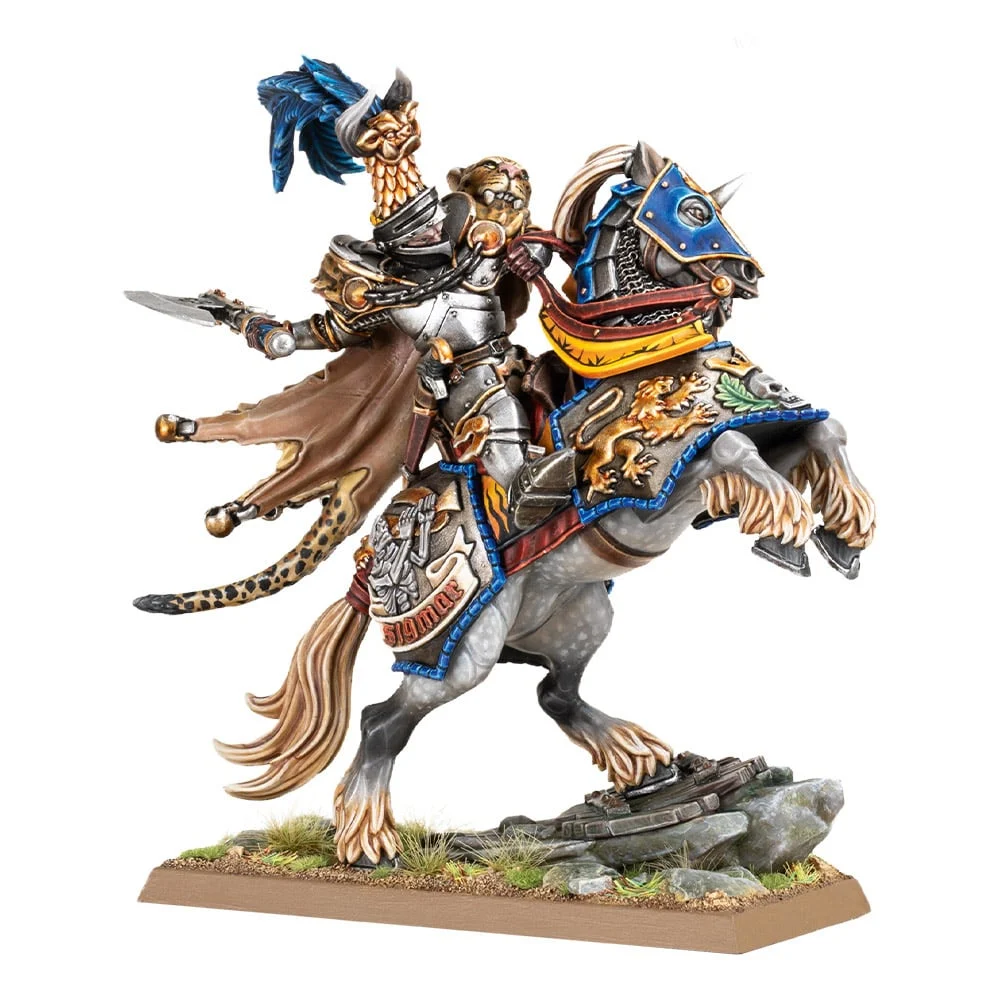
The resurgence of Warhammer: The Old World in early 2024 was met with widespread enthusiasm, heralding a return to the classic rank-and-flank battles that defined a generation of tabletop wargaming. Yet, despite its triumphant return and subsequent efforts by Games Workshop to clarify rules through FAQs, a persistent undercurrent of ambiguity continues to challenge players. A recent FAQ aimed to resolve some pressing issues, but it also highlighted the enduring nature of several critical rules questions that have plagued the game since its launch. These unresolved ambiguities not only complicate gameplay but also foster debate within the community, affecting competitive balance and player enjoyment.
Main Facts: Core Ambiguities Persist
Warhammer: The Old World, lauded for its intricate ruleset and strategic depth, has seen its community grapple with several fundamental rules that remain open to interpretation. Following the latest official FAQ, a number of key areas still lack the precise clarity needed for consistent play:
- Combat Resolution and Self-Inflicted Wounds: The core mechanic of determining combat winners becomes convoluted when units inflict wounds upon themselves. The rulebook’s dual phrasing on wound causation vs. enemy losses creates a significant grey area.
- Refusing Challenges in Small Units: While the "Nowhere to Run" rule outlines specific conditions under which challenges cannot be refused, the tactical scenario of a single-rank unit attempting to evade a challenge is conspicuously absent, leading to varied interpretations in competitive settings.
- Defining "Rear Corner" for Movement: Precise movement is paramount in The Old World. The vague definition of a unit’s "rear corner" when interacting with table edges or other units during wheeling maneuvers has generated confusion regarding permissible movement paths and unit blocking.
- Stacking of Multiple Wounds (X): The interaction of multiple sources of the "Multiple Wounds (X)" special rule, particularly when one is a fixed value and another is a dice roll, lacks a definitive stacking mechanism, impacting the lethality of powerful characters and units.
- Skirmisher Mechanics: Perhaps the most enduring and widely debated issue, the rules governing Skirmishers—their movement, formation, reforms, and fleeing—have remained consistently vague, undermining the strategic utility of these versatile units.
These ambiguities, far from being minor quibbles, touch upon core gameplay elements, influencing tactical decisions, unit effectiveness, and the overall flow of battles.
Chronology: A Lingering Legacy of Uncertainty
Warhammer: The Old World made its grand reappearance in early 2024, reigniting the passions of veteran players and attracting a new generation to the fantasy battlegrounds. Its initial release was accompanied by a comprehensive rulebook, harking back to the detailed complexity of previous editions. However, even in those initial months, astute players began to identify areas where the rules lacked the crystalline clarity necessary for a game of such strategic depth.
The first wave of community questions quickly surfaced across online forums, social media, and local gaming clubs. These initial discussions centered around common interactions, unit special rules, and movement mechanics. Games Workshop, acknowledging the feedback, began issuing FAQs (Frequently Asked Questions) and Designer’s Notes. These updates were generally welcomed, addressing a multitude of specific queries and attempting to clarify contentious points. For instance, early FAQs might have tackled specific weapon interactions or minor wording inconsistencies.
However, some of the issues highlighted in this article, such as the intricacies of Skirmishers or the "rear corner" definition, proved more resilient. They were either not addressed at all in initial FAQs, or the attempted clarifications themselves introduced new ambiguities. The latest FAQ, released several months after the game’s launch, successfully resolved a number of previously contentious points, offering a clearer path for many common game interactions. Yet, it conspicuously left these critical, long-standing questions unaddressed, much to the consternation of a community eager for definitive rulings.
The persistence of these specific ambiguities suggests a deeper challenge in their interpretation or a prioritization of other issues by the design team. For players, this chronological trail of unresolved questions has led to the adoption of house rules, varied tournament rulings, and an ongoing cycle of debate, creating a somewhat fractured play experience across different gaming environments. The expectation remains that, with each subsequent FAQ, these foundational questions will finally receive the definitive answers they require.
Supporting Data: Deconstructing the Ambiguities
To truly grasp the impact of these unresolved rules, it is necessary to delve into the specific language of the rulebook and explore the practical implications of its ambiguities.

Combat Resolution And Wounds You Do To Yourself
The heart of the confusion lies in the dual phrasing of the Combat Resolution rules. The core text states: "Each side’s basic combat result is equal to the number of unsaved wounds it caused during this Combat phase, plus any unsaved wounds a unit caused by shooting if it chose to Stand & Shoot as a charge reaction during this turn. In other words, each Wound the enemy side lost this turn due to a Stand & Shoot charge reaction or during the Combat phase is counted and is worth 1 combat result point."
This seemingly straightforward paragraph presents a critical distinction. "Unsaved wounds it caused" implies active agency from the scoring side. However, "each Wound the enemy side lost" shifts the focus to the recipient of the damage, regardless of its source. This semantic difference becomes crucial when a unit inflicts wounds upon itself.
Consider a unit whose magical weapon occasionally backfires, causing a wound to its wielder. Or a Wizard attempting a powerful spell in close combat, suffering a miscast that damages their own unit. Even environmental effects, like a "Timber!" special rule from a falling tree impacting a friendly unit, or psychological tests leading to a unit attacking itself, can cause self-inflicted damage.
Under the "it caused" interpretation, these self-inflicted wounds would not contribute to the enemy’s combat resolution, as the enemy did not cause them. Under the "enemy side lost" interpretation, however, the fact that the friendly unit lost wounds could theoretically be interpreted as a combat resolution point for the opposing side, as the total wound tally of the engaged unit has decreased. This seemingly minor difference can swing combat results, especially in close engagements where every point matters, creating an unfair advantage or disadvantage based on an unclarified rule. Tournament organizers are left to make arbitrary decisions, leading to inconsistent rulings across events.

Refusing Challenges In Small Units
Challenges are a pivotal mechanic, allowing heroic characters to face off, influencing combat resolution and protecting weaker models. The "Nowhere to Run" rule outlines scenarios where a character must accept a challenge:
- "They are not part of a unit, or they are the last remaining model in a unit."
- "They are part of a unit which is engaged in all four of its arcs (i.e., a unit that is completely surrounded)."
These conditions are clear. However, a significant edge case remains: what if a unit attempting to refuse a challenge has only a single rank? When a character refuses a challenge, the rules state they "move through the ranks" to the rear of the unit. If there are no ranks to move through—because the unit is only one model deep from front to back—is refusal still possible?
The rule doesn’t explicitly prevent refusal in single-rank units, as it’s not one of the two listed "Nowhere to Run" conditions. However, the physical act described for refusal (moving through ranks) becomes impossible. This tactical dilemma impacts elite units, skirmishers, or units that have suffered heavy casualties, reducing them to a single rank. Allowing refusal when the physical act is impossible strains credulity, while disallowing it without explicit rule support feels punitive. The ambiguity forces players to guess at designer intent, leading to frustrating stalemates and debates over fundamental combat interactions.
What Is A "Rear Corner"?
Maneuver is a cornerstone of The Old World, with unit positioning, wheeling, and blocking being critical strategic elements. The rule "The Ends of The World" permits a "corner" of a unit to pass off the table during movement, provided the unit finishes its movement wholly on the table. An FAQ added a crucial clarification: "Note that a unit’s front edge cannot pass through another unit."

The problem lies in the undefined term "corner" and, by extension, "rear corner." What constitutes a "corner" of a unit? Is it merely the precise, mathematical corner point of a single model? Or, as some argue, does the FAQ’s emphasis on the "front edge" imply that any part of the unit not the front edge could be considered a "rear corner" for certain movement interactions?
This distinction has profound implications for unit movement, particularly when wheeling or navigating tight spaces. If "rear corner" is narrowly defined, units are significantly restricted in their maneuverability near board edges or enemy formations. If interpreted broadly, allowing any non-front edge part of a unit to "pass through" (even if just visually, not physically through models), it opens up possibilities for aggressive, almost clipping-style, movement that could allow units to effectively wheel through enemy formations with their "rear" sections, blocking paths or achieving advantageous positions in ways that feel unintended. The lack of a clear diagram or definition forces players to adjudicate based on vague spatial reasoning, often leading to arguments over inches that can decide game outcomes.
How Do Multiple Wounds Stack?
The "Cumulative Special Rules" section generally states that rules with a numerical value in parentheses (X) stack. However, the "Multiple Wounds (X)" rule presents a unique challenge to this principle. Consider an Empire General wielding an "Ogre Blade – Multiple Wounds (d3)" who then benefits from a "Wrath of Winter" prayer cast by a Priest of Ulric, granting "Multiple Wounds (2)". How do these interact?
Three primary interpretations have emerged:

- Non-stacking/Highest Value: Some argue "Multiple Wounds" sets a value rather than modifying one, meaning only the highest or most beneficial value applies (e.g., d3, as d3 could be higher than 2). This perspective often arises from rules where effects don’t add but replace.
- Full Stacking (d3+2): This interpretation assumes a straightforward addition, treating both as independent modifiers to the base wound. If a successful attack causes one base wound, then Multiple Wounds (d3) adds (d3-1) additional wounds, and Multiple Wounds (2) adds (2-1) additional wounds. Therefore, the total would be 1 (base) + (d3-1) + (2-1) = d3+1. Or, more simply, if MW(X) replaces the 1 wound with X, then MW(d3) replaces 1 with d3, and MW(2) replaces 1 with 2. If they stack, how do they combine? If they sum, d3 + 2 wounds total.
- Partial Stacking (d3+1): This view attempts to reconcile the "base 1 wound" inherent in any attack. If "Multiple Wounds (X)" means "this attack causes X wounds instead of 1," then applying two such rules might mean one replaces the base 1, and the other adds to that replacement. So, if the Ogre Blade changes 1 to d3, and Wrath of Winter tries to change 1 to 2, how do they combine? One argument is that if d3 wounds are caused, and then +2 wounds are also caused, this would mean d3+2. However, some argue that if "Multiple Wounds (X)" already accounts for the initial wound, then simply adding the numerical values might double-count the "base 1 wound." So, it might be d3 (from the blade) plus an additional 1 wound (from the prayer, after subtracting the base 1 it would normally replace).
The difference between d3, d3+1, and d3+2 is significant, drastically altering the damage potential of powerful characters. This directly impacts list building, target priority, and the overall balance of hero-hammer, making definitive clarity essential.
How Do Skirmishers… (Move, Form Up, Reform, Flee, etc.)
Skirmishers are intended to be flexible, elusive units, excellent for screening, flanking, and harassing. In The Old World, their rules are unfortunately a labyrinth of ambiguity. Despite being a staple unit type, their core mechanics remain frustratingly vague "two and a half years into the game’s life" (as per the original article’s implied timeline, or since its re-release in 2024).
The issues with Skirmishers are multifaceted:
- Movement: Their ability to move freely, particularly through difficult terrain or around other units, is not clearly defined, leading to questions about clipping, pivot points, and interactions with obstacles.
- Formation in Combat: How do Skirmishers form up when engaged in close combat? Do they maintain their loose formation, or do they adopt a more rigid block? This impacts their combat effectiveness, susceptibility to flanking, and the number of models that can attack.
- Reforms: The rules for reforming a skirmish unit are unclear. Can they condense or expand their frontage and depth in ways that other units cannot? This affects their ability to adapt to changing battlefield conditions.
- Fleeing and Pursuing: When Skirmishers flee or pursue, do they maintain their loose formation, or do they behave like standard units? This has implications for their vulnerability to being caught or their ability to catch fleeing enemies.
The cumulative effect of these ambiguities is that Skirmishers, a potentially vital tactical element, are often underutilized or played inconsistently. Players are forced to rely on unofficial interpretations, which undermines their strategic role and creates an uneven play experience. The lack of clarity for such a fundamental unit type is perhaps the most glaring omission in the current rule set.

Official Responses: The Silence and Its Echoes
For the questions outlined above, the most recent FAQ, while addressing many other issues, has provided no explicit official responses. This silence, rather than clarifying, amplifies the existing confusion. When a game’s community is actively debating core mechanics, the absence of an authoritative ruling from the developers leaves a vacuum that is inevitably filled by house rules, local tournament rulings, and personal interpretations.
The reasons for this silence are open to speculation. It could be due to the sheer complexity of the issues, requiring extensive internal discussion and testing to avoid introducing new unintended consequences. It might be that these particular ambiguities are deemed lower priority compared to other game-breaking interactions. Or, perhaps, there is an ongoing internal debate within the design team itself regarding the intended interpretation, delaying a definitive public statement.
Whatever the reason, the lack of official clarification for these persistent questions contributes to a sense of frustration among players. It signals that even after multiple FAQ releases, fundamental aspects of the game’s rules remain in flux. This can be particularly disheartening for competitive players who seek a level playing field and for casual players who simply want to enjoy the game without constant rulebook consultation and debate.
Implications: The Ripple Effect on the Old World
The enduring ambiguities within Warhammer: The Old World’s ruleset have far-reaching implications for the game’s health, its competitive scene, and the overall player experience.

Impact on Competitive Play: In a competitive environment, precise rules are paramount. The unresolved questions discussed here create significant inconsistencies across tournaments. A ruling on "Multiple Wounds" stacking, for example, can drastically alter the effectiveness of certain character builds, potentially invalidating carefully constructed army lists. Similarly, differing interpretations of Skirmisher movement or challenge refusal can lead to unfair advantages or disadvantages depending on the event organizer’s chosen interpretation. This fragmentation undermines the integrity of competitive play, making it difficult to prepare consistently and fostering a sense of uncertainty.
Player Experience and Engagement: For the average player, constant ambiguity is a source of frustration. Debates over rule interpretations can disrupt the flow of a game, turning an enjoyable pastime into a protracted argument. This friction can deter new players, who may find the learning curve steeper and more confusing than necessary, and even lead to burnout among veterans. A lack of clarity diminishes confidence in the rulebook as the ultimate arbiter, forcing players to rely on external sources or personal interpretations, which can erode trust in the game’s official support.
Game Balance and Design Philosophy: The Old World was designed with a certain level of complexity and detail, aiming for a rich, strategic experience. However, when core mechanics like combat resolution or unit movement are ill-defined, the intended balance can be severely skewed. Units or strategies that rely on precise interpretation of these ambiguous rules become either inadvertently overpowered or underpowered. This not only impacts game balance but also reflects on the perceived thoroughness of the rulebook’s design and testing.
Community Dynamics: While debates can foster engagement, persistent and fundamental ambiguities can also breed division within the community. Players may gravitate towards different "schools of thought" regarding interpretations, leading to clashes rather than constructive discussion. A clear, unified rule set is crucial for building a cohesive and welcoming community around any tabletop game.
In conclusion, Warhammer: The Old World has made a magnificent return, captivating a dedicated fanbase. However, for the game to truly flourish and achieve its full potential, Games Workshop must address these lingering rules questions with definitive and unequivocal clarifications. The passion of the player base is evident, and their desire for a robust, well-defined game is clear. Providing comprehensive answers to these foundational ambiguities will not only improve the immediate gameplay experience but also solidify The Old World’s position as a premier tabletop wargame for years to come. The future of the Old World’s battlefields depends on it.