Unraveling the Legacy of Abner Doubleday: Beyond Myth and Misconception
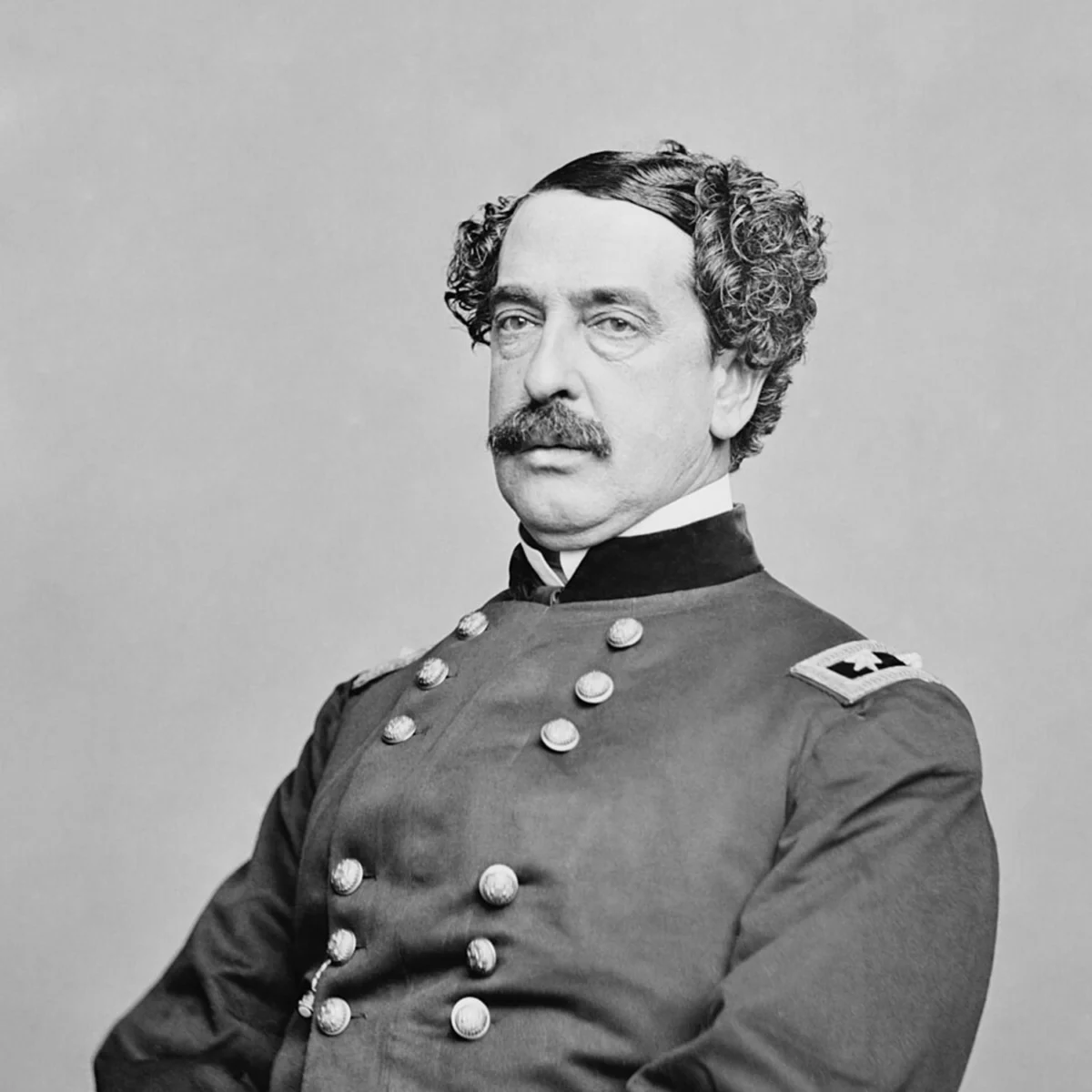
Abner Doubleday, a name frequently invoked in American lore, stands as a testament to how popular narratives can overshadow historical fact. While rightfully celebrated for his distinguished service in the United States Army, particularly during the Civil War, two persistent myths continue to cling to his persona: that he fired the first shot at the Battle of Fort Sumter and that he invented baseball. A closer examination of historical records reveals a more nuanced, yet equally compelling, truth about this significant figure.
Main Facts: A Hero’s True Contributions
Abner Doubleday’s actual contributions to American history are profound and require no embellishment. He was indeed present at the pivotal Battle of Fort Sumter, a confrontation that ignited the American Civil War. However, the popular assertion that Doubleday "fired the first shot" is inaccurate. Doubleday himself never made such a claim; rather, he stated he "aimed the first gun" in response to the Confederate bombardment. The soldier credited with physically pulling the lanyard and firing that initial Union cannon was Private James Gibbons. This subtle but crucial distinction has been lost to time, with the more dramatic, albeit incorrect, version still widely circulated in both print and online media.
Equally pervasive is the myth linking Doubleday to the invention of baseball. This narrative gained traction through the 1907 findings of the Mills Commission, a committee formed specifically to establish baseball’s American origins. Their conclusion, based largely on the dubious testimony of an individual named Abner Graves, declared Doubleday the game’s inventor in Cooperstown, New York, in 1839. In reality, Doubleday was nowhere near Cooperstown at that time; he was a cadet at the United States Military Academy at West Point from 1838 to 1842. The decision to name Doubleday as the "Father of Baseball" was a deliberate, almost symbolic, act. As a revered Union Civil War hero, he embodied an "all-American" ideal, making him a convenient, albeit fabricated, figurehead for a sport seeking an undisputed American genesis. The foundational "Knickerbocker Rules," which largely define modern baseball, were codified years later in 1845 by Alexander Cartwright, not Doubleday.
Despite these widespread fabrications, Doubleday’s genuine accomplishments are substantial. He is rightfully recognized for his strategic role in aiming the first Union gun at Fort Sumter, demonstrating cool resolve under fire. Furthermore, his leadership and conduct on the first day of the Battle of Gettysburg, July 1, 1863, were critical in stemming the Confederate tide and allowing the Union army to establish its defensive positions. Doubleday is also highly respected for his insightful memoirs, particularly Reminiscences of Forts Sumter and Moultrie in 1860-`61, which offer an invaluable firsthand account of the escalating tensions and the dramatic events in Charleston Harbor leading up to the war. Parts of this work were later reworked into an article titled "I aimed the first gun," ensuring his accurate account would endure.
Chronology: The Perilous Days at Charleston Harbor (Dec 1860 – April 1861)
Doubleday’s detailed memoirs provide a unique and compelling perspective on the precarious situation of Union forces in Charleston Harbor during the critical months preceding the Civil War. His account highlights the palpable tension, the strategic dilemmas, and the sheer bravery required to navigate an increasingly hostile environment.
The Gathering Storm: Pre-Secession Tensions
By late 1860, the United States was teetering on the brink of disunion. Abraham Lincoln’s election as president, perceived as a threat to the institution of slavery, propelled Southern states toward secession. South Carolina, a hotbed of secessionist sentiment, was the first to act, declaring its departure from the Union in December 1860. This political upheaval directly impacted federal military installations within these states, most notably the forts guarding Charleston Harbor: Fort Moultrie, Fort Sumter, and Castle Pinckney.
Doubleday, then a senior captain of the 1st Regiment of United States Artillery, had been stationed at Fort Moultrie for several years. He described Moultrie as a mere "sea battery," designed for coastal defense against foreign invaders, not internal rebellion. Its strategic weaknesses were glaring: low walls, easily scaled, and overlooked by civilian houses on Sullivan’s Island, which could provide cover for hostile riflemen. Fort Sumter, a more formidable structure, remained unfinished and unoccupied, while Castle Pinckney was under the care of a single ordnance sergeant.
The command of this beleaguered garrison fell to Major Robert Anderson of Kentucky on November 15, 1860. Anderson, a Southern Unionist, initially favored a firm stance against South Carolina’s revolutionary measures. However, his resolve regarding coercion began to waver as more Southern states joined South Carolina in secession, leading him to view a full-scale conquest of the South as a potentially hopeless endeavor.
A Fort Under Siege: Conditions at Moultrie
Anderson quickly recognized Fort Moultrie’s indefensibility. He requested the removal of sand drifts that had accumulated against its walls, making them easily scalable, and sought to strengthen its defenses. However, these efforts were largely futile. The garrison, consisting of just two companies reduced to 65 men (73 including the band), was critically understaffed. Requests for additional ammunition and reinforcements were denied by the War Department, under Secretary of War John B. Floyd, who argued that such actions would "irritate the people" of Charleston. This excuse, as Doubleday and his fellow officers suspected, was a thinly veiled pretext to weaken federal positions for an eventual Confederate takeover.
The hostile intent of the Charleston secessionists became increasingly clear. Attempts by Captain Truman Seymour to procure essential supplies from the federal arsenal in Charleston were met with interference from angry crowds. It became evident to Doubleday and Anderson that Fort Moultrie could not be held. Doubleday even proposed burning the surrounding houses to deny cover to potential attackers, but Anderson, ever cautious and hoping to avoid provoking an open conflict, refused. The officers found themselves in an unenviable position, feeling abandoned by a federal government that seemed paralyzed by indecision and, in the case of Secretary Floyd, actively working against their interests.
The Covert Relocation to Fort Sumter
The dire situation at Moultrie led to a secret, daring decision. It was clear that the only viable option was to move the garrison to Fort Sumter, a stronger, albeit incomplete, fortification in the middle of the harbor. Major Anderson, despite his initial reluctance to abandon his assigned post at Moultrie, eventually agreed to the audacious plan.
On December 24th, the day before Christmas, Doubleday approached Anderson requesting wire for entanglements. Anderson, with a "peculiar smile that puzzled me for the moment," promised him "a mile of it." This seemingly innocuous request was part of a broader deception. Anderson then secretly dispatched Quartermaster Hall with three schooners and barges, ostensibly to transport the officers’ families and six months’ provisions to Fort Johnson, a small post opposite Charleston. This maneuver served as a plausible cover story for the secessionist patrols who were constantly monitoring the fort’s activities.
The actual move occurred on the evening of December 26th. In a masterful display of deception and swift execution, the Union soldiers prepared for their departure. Doubleday described informing his wife of the imminent danger and ensuring her safety before rallying his company. Under the cover of dusk and the Charleston militia’s "afternoon nap," Doubleday’s company, followed by Captain Seymour’s, made their way to the embarkation point.
The crossing to Sumter was fraught with peril. Doubleday’s men, not experienced oarsmen, made slow progress. A secessionist guard-boat approached, forcing Doubleday to instruct his men to remove their coats and cover their muskets, while he opened his own coat to conceal his buttons, giving the impression of an officer supervising laborers. The ruse worked, and the guard boat passed them by. Doubleday’s party was the first to reach Fort Sumter, where they swiftly secured the main entrance and confronted the secessionist workmen, some armed, who were still on site. Within minutes, the fort was under Union control. Anderson, who had crossed in one of the engineer boats, soon arrived, and the quartermaster’s schooners, now carrying the families and stores, landed at Sumter. The secessionist workmen were promptly sent back ashore.
Four Months of Standoff and Preparation
The next morning, Charleston erupted in fury. Messengers were dispatched to spread the news, and the governor sent aides to demand Anderson’s immediate return to Moultrie. Anderson, however, stood firm. As Doubleday recounted, Anderson, despite being a Southerner, declared his unwavering commitment to defending Charleston Harbor.
From December 26, 1860, until April 12, 1861, a tense standoff ensued. Both Union and Confederate forces busied themselves fortifying their positions. While Anderson’s men worked tirelessly to complete Sumter’s defenses, the Confederates established batteries on all sides of the harbor, effectively encircling the federal garrison. Anderson, still hoping for a political compromise that might save both slavery and the Union, continued to endure hostile provocations and deliberately refrained from requesting reinforcements, fearing such an act would escalate the situation into a full-blown war. This period of fragile peace, however, was merely a prelude to the inevitable conflict.
The Battle Begins: April 12-13, 1861
The inevitable came on April 12, 1861. After an ultimatum to surrender was rejected, Confederate batteries opened fire on Fort Sumter at 4:30 AM. Doubleday’s account vividly describes the onset of the bombardment. He famously stated, "I aimed the first gun on our side in reply to the attack on Fort Sumter." This act, a direct and courageous response to aggression, marked the true beginning of the American Civil War.
Inside the fort, conditions were harsh. The men took their breakfast of "pork and water" before manning their guns. The bombardment was incessant, coming from all directions. The fort’s wooden structures quickly caught fire, posing an existential threat to the magazine. Officers, under a shower of shells, frantically worked to cut away dangerous woodwork. A shot struck near the magazine’s lock, bending its copper door and cutting off access to precious cartridges.
After approximately 34 hours of continuous bombardment, and with the fort engulfed in flames and ammunition severely depleted, Major Anderson surrendered on April 13. As a condition of surrender, the Union garrison was permitted to salute their flag with a hundred guns before marching out. This salute, however, turned tragic. Due to the recent conflagration, sparks and fire surrounded the cannons. When a gunner attempted to ram a cartridge into a gun after it had been sponged, a residual spark ignited it prematurely. The resulting explosion instantly killed Private Daniel Hough and seriously wounded five other men. The salute was curtailed to fifty guns.
With banners flying and drums beating "Yankee Doodle," the exhausted but defiant Union soldiers boarded a transport that would take them to a steamship bound for New York.
Supporting Data: The Mills Commission and Baseball’s True Roots
The story of Abner Doubleday and baseball is a classic example of historical revisionism driven by nationalistic fervor. In 1905, Albert Goodwill Spalding, a former baseball star and sporting goods magnate, established the Mills Commission. Its stated goal was to investigate the origins of baseball and, crucially, to "prove it was an American invention." At the time, baseball’s similarities to English bat-and-ball games like rounders and town ball were undeniable, and many believed it had simply evolved from these European predecessors. Spalding and others desired a purely American genesis.
The commission’s 1907 report, largely influenced by the testimony of Abner Graves, a mining engineer, delivered the desired conclusion. Graves claimed that in 1839, as a five-year-old child in Cooperstown, New York, he had played a game of "baseball" with Abner Doubleday, who was supposedly the inventor. This testimony was highly suspect. Graves was recalling events from over 60 years prior, his account was vague, and he was the sole source for the claim. Furthermore, as established, Doubleday was a cadet at West Point in 1839, making his presence in Cooperstown impossible.
The selection of Doubleday as the "Father of Baseball" was strategic. As a celebrated Union Civil War hero, he was a symbol of American virtue and patriotism. Attributing the invention of the national pastime to such an "all-American" figure served the commission’s agenda perfectly, providing a clean, patriotic origin story for the sport. This narrative, despite its complete lack of factual basis, captured the public imagination and was widely propagated for decades.
In stark contrast to the Mills Commission’s findings, historical research points to a more organic evolution of baseball from various bat-and-ball games. The true turning point in baseball’s development came with the codification of the "Knickerbocker Rules" in 1845 by Alexander Cartwright and his New York Knickerbocker Base Ball Club. These rules introduced many of the fundamental elements of modern baseball, such as the diamond-shaped infield, nine players per side, three strikes per out, and the concept of tagging runners rather than "plugging" them with the ball. Cartwright’s contributions are widely recognized today as far more significant to the game’s formalization than any supposed involvement by Doubleday.
Official Responses and Public Reaction
Government Inaction and Southern Aggression
The federal government’s response to the escalating crisis in Charleston Harbor was initially marked by indecision and a desperate hope for compromise. President James Buchanan’s administration hesitated to reinforce federal forts in the South, fearing it would provoke outright hostilities. This inaction, coupled with the suspected complicity of Secretary of War Floyd, effectively left Major Anderson and his men isolated and vulnerable. Floyd’s actions, such as refusing reinforcements and allegedly facilitating the transfer of arms to Southern arsenals, directly contributed to the perilous situation at Moultrie.
Confederate authorities, emboldened by federal restraint, became increasingly aggressive. After South Carolina’s secession, they demanded the surrender of all federal property within their borders. The move to Fort Sumter was seen as an act of defiance, leading to the governor’s demands for Anderson’s return to Moultrie. The final act of aggression, the bombardment of Fort Sumter on April 12, 1861, was a direct result of the Confederate government’s ultimatum for surrender, which Anderson firmly rejected.
The North Awakens: A Nation United by Fire
The firing on Fort Sumter proved to be the spark that ignited the nation. For months, many Northerners had downplayed the threat of secession, regarding the Southern states’ declarations as mere bluster. However, the sight of federal property being attacked, and the Union flag being fired upon, shattered any illusions of a peaceful resolution.
As Doubleday himself recounted, "With the first shot against Sumter, the whole North became united." Public opinion galvanized almost overnight. In New York, mobs demanded that every newspaper and private house display the Stars and Stripes, a clear signal of newfound patriotism and loyalty to the Union.
When Doubleday and his men reached New York City after their ordeal, they were met with an outpouring of public adoration. "We had a royal reception," Doubleday wrote. "The streets were alive with banners. Our men and officers were seized and forced to ride on the shoulders of crowds wild with enthusiasm. When we purchased anything, merchants generally refused all compensation." This spontaneous, fervent reception underscored the profound shift in Northern sentiment. President Lincoln, now with widespread public support, issued a call for 75,000 volunteers to suppress the rebellion, officially commencing the American Civil War.
Implications: Shaping History, Correcting Narratives
The Catalyst for Civil War
The Battle of Fort Sumter holds unparalleled significance as the unequivocal start of the American Civil War. It marked the end of any remaining hopes for political compromise and propelled the nation into four years of brutal conflict. The decision to fire upon a federal fort transformed the secession crisis from a political dispute into an armed rebellion, forcing states and individuals to choose sides. The scale and cost of the war that followed, both in human lives and national resources, were immense, forever reshaping the course of American history. Doubleday’s firsthand account of these foundational moments provides an intimate glimpse into the high stakes and personal experiences that defined this critical juncture.
Preserving a Legacy: Doubleday’s Enduring Importance
Abner Doubleday’s legacy is far richer and more compelling when viewed through the lens of historical accuracy. His actual contributions — bravely aiming the first Union gun at Fort Sumter, his crucial leadership at Gettysburg, and his articulate memoirs — are more than sufficient to cement his place in American history. His memoirs, Reminiscences of Forts Sumter and Moultrie in 1860-`61, remain an invaluable primary source, offering a detailed and personal perspective on the events that led to the Civil War. They serve as a vital counterpoint to the romanticized and often inaccurate narratives that have accumulated over time.
Doubleday was a competent, dedicated, and courageous Union officer who served his country with distinction. By separating fact from fiction, we not only honor his true achievements but also uphold the integrity of historical understanding. His story serves as a powerful reminder of the importance of critical inquiry and the continuous effort to correct historical narratives, ensuring that the genuine contributions of figures like Abner Doubleday are remembered and appreciated for what they truly were.