The New Doctrine of Force: Competence, Testosterone, and the Erosion of Strategic Oversight
Executive Summary: A Crisis of Command and Strategy
In the annals of military history, the transition from strategic wisdom to raw bravado has often signaled the decline of institutional stability. As the United States enters the fifth month of an unauthorized conflict in Iran, the Department of Defense—under the polarizing leadership of Secretary Pete Hegseth—finds itself at a crossroads. Recent congressional testimonies and policy shifts have ignited a firestorm of criticism, ranging from concerns over basic geopolitical literacy to the implementation of radical "testosterone-based" military readiness programs.
While the administration frames its actions as a return to "traditional masculinity" and "unapologetic American power," critics argue that the abandonment of established strategic doctrines, such as those championed by Sun Tzu and Carl von Clausewitz, has led to a breakdown in morale and international standing. This report examines the core facts of the current administration’s military and domestic security policies, the timeline of the escalating Iran conflict, and the deepening controversy surrounding the use of force both abroad and at home.
Main Facts: The Hegseth Doctrine and the Iran Quagmire
The current state of U.S. national security is defined by three primary pillars: a shift in internal military culture, an unauthorized foreign war, and a domestic security apparatus facing unprecedented scrutiny for lethal conduct.
The Congressional "Asean" Gaffe
During a recent appearance before Congress, Secretary of Defense Pete Hegseth—who has reportedly expressed a preference for the archaic title "Secretary of War"—demonstrated what critics call a "staggering" lack of basic geopolitical knowledge. Under questioning from Senator Tammy Duckworth, a decorated combat veteran, Hegseth was unable to name the members of the Association of Southeast Asian Nations (ASEAN). Furthermore, he erroneously identified several non-member states as part of the alliance. This failure has raised alarms regarding the leadership’s ability to manage critical Indo-Pacific partnerships.
The Testosterone Mandate
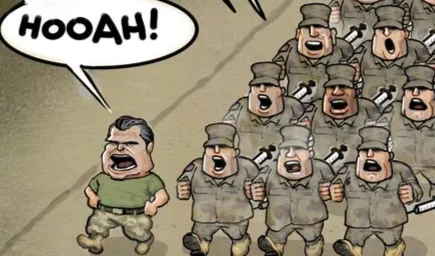
In a move that has baffled medical professionals and military historians alike, Hegseth has ordered mandatory testosterone screening for all male soldiers. The policy includes "optional" testosterone replacement therapy (TRT) for troops aged 30 and older, aimed at increasing the "aggression and vitality" of the force. Simultaneously, the Secretary has stalled the promotions of women and minority officers to senior leadership positions, signaling a shift toward a homogenized, hyper-masculine command structure.
The Iran Conflict
What was initially presented by the President as a "five-day surgical strike" has devolved into a five-month war of attrition in Iran. Initiated without the constitutional consent of Congress, the conflict has seen rising casualties, with a disproportionate number of minority and female service members among the fallen. Public support remains tepid, with independent polling showing barely a third of Americans back the ongoing operations.
Chronology: From Strategic Pivot to Tactical Stagnation
To understand the current crisis, one must trace the timeline of policy shifts and military engagements over the past several months:
- Early 2026: Pete Hegseth is confirmed as Secretary of Defense. He immediately begins a "cultural overhaul" of the Pentagon, focusing on removing "woke" influences and pausing diversity-driven promotion tracks.
- March 2026: The administration unilaterally launches strikes against Iranian infrastructure, bypassing the War Powers Act. The President claims the intervention is necessary to prevent nuclear breakout, despite the prior dissolution of international monitoring agreements.
- April 2026: The "five-day" window for victory closes. The conflict transitions into a broader regional engagement. Reports emerge of "stagnant efforts" on the ground as the U.S. avoids a full-scale troop surge while suffering losses from drone and missile strikes.
- May 2026: The Department of Defense announces the mandatory testosterone screening program. Internal dissent grows as officers question the scientific validity of "hormonal readiness."
- June 2026: A controversial nuclear energy deal is signed with Saudi Arabia. The deal, which lacks traditional non-proliferation oversight, allows for the development of nuclear power in a state with a history of human rights abuses and regional volatility.
- July 2026: A Guardian investigation reveals systemic misinformation within Immigration and Customs Enforcement (ICE) regarding domestic shootings, further eroding public trust in federal law enforcement.
Supporting Data: Casualty Demographics and Public Disapproval
The disconnect between the administration’s rhetoric and the reality of the conflict is supported by recent data and polling.
Casualties and Representation
Despite the administration’s emphasis on a "white, high-testosterone" fighting force, the reality of the front lines tells a different story. In the most recent week of the Iran conflict, three of the four Americans killed were minorities, and one was a woman. This discrepancy highlights the tension between the Secretary’s social engineering goals and the actual demographic makeup of the modern volunteer force.
Public Opinion
According to RealClearPolling, approval for the military action in Iran has plateaued at approximately 33%. Even traditionally sympathetic outlets have struggled to find a majority in favor; a Fox News poll indicated that support failed to reach the 50% mark, with a plurality of voters expressing concern over the lack of a clear exit strategy.
The Saudi Nuclear Risk
U.S. intelligence officials have expressed "grave concern" over the Saudi nuclear deal and the sale of F-35 fighter jets to Riyadh. The data suggests that such transfers could expose sensitive American defensive technology to China and other rivals through Saudi Arabia’s secondary alliances.
Domestic Implications: The ICE Crisis and the "Weaponized Vehicle" Narrative
The controversy surrounding the "Hegseth Doctrine" is mirrored in domestic security, specifically within ICE. A series of lethal shootings by ICE agents has sparked public outrage, with the agency frequently claiming that agents acted in self-defense against "weaponized vehicles."
However, a comprehensive report by The Guardian analyzed 26 such cases and found that these claims rarely hold up in court. Only one of the 26 cases resulted in an assault conviction against a civilian. In most instances, including the high-profile death of Renee Good, forensic evidence and video footage disproved the agency’s narrative of attempted vehicular assault.
This pattern of "evasive explanations" for the use of lethal force has led to a breakdown in trust between the government and the citizenry. As noted by legal analysts, when the public feels they can no longer trust the word of federal agents, the foundation of civil order begins to crumble.
Official Responses and Strategic Critique
Legislative Pushback
Senator Tammy Duckworth’s critique of Secretary Hegseth has become a rallying point for the opposition. She argued that military leadership requires more than "hooah" and "testosterone," emphasizing that knowledge of global alliances like ASEAN is a prerequisite for command, not an optional detail. "The art of war," she suggested, referencing Sun Tzu, "requires a mind as sharp as the sword."
Presidential Defense
The President has dismissed criticism of the Iran conflict by comparing current casualty rates to the Vietnam and Iraq wars, noting they are significantly lower. Critics, however, point out that this is a "false equivalence," as the current conflict does not yet involve the same scale of ground troops, and the lack of progress makes the comparison an "odd boast" rather than a measure of success.
Ethical Irony in Healthcare
Observers have pointed out a stark ideological contradiction in the Pentagon’s new health policies. While the administration has moved to ban gender-affirming care for transgender service members, it has simultaneously introduced "gender-affirming" testosterone supplements for cisgender men who fail to meet a "predetermined endocrine level." This move is viewed by many as a politicization of military medicine.
Implications: The High Cost of Incompetence
The convergence of these events suggests a dangerous trend toward "command by instinct" rather than "command by intellect." The implications are manifold:
- Morale and Discipline: A system that demands unquestioning obedience imposes a moral obligation on leaders to be both knowledgeable and responsible. Ill-conceived orders and "stagnant" military efforts lead to poor morale, which historically increases the risk of "friendly fire" incidents and internal mutiny.
- Geopolitical Vulnerability: The inability of the Secretary of Defense to identify key regional allies signals to adversaries that the U.S. may be retreating from sophisticated diplomacy in favor of blunt force.
- Erosion of International Norms: By providing nuclear technology to Saudi Arabia without oversight and ignoring the War Powers Act in Iran, the administration is dismantling the rules-based order that has governed global security since the end of the Cold War.
- Domestic Instability: The lack of accountability in domestic agencies like ICE, combined with a "warrior culture" being pushed from the top down, threatens to turn domestic law enforcement into a paramilitary force that views the civilian population as an adversary.
As Sun Tzu famously wrote, the art of war is a matter of "life and death, a road either to safety or to ruin." The current trajectory, defined by a preference for "sperminess" over strategy and bravado over balance, suggests a road that many fear leads toward the latter. The question remains whether the institutional guardrails of the American Republic—Congress, the courts, and the public—can restore the requirement for competence before the "stagnant efforts" in Iran and elsewhere turn into a definitive disaster.