
The Digital Unconscious: The Rise of AI-Generated Art in Digital Surrealism
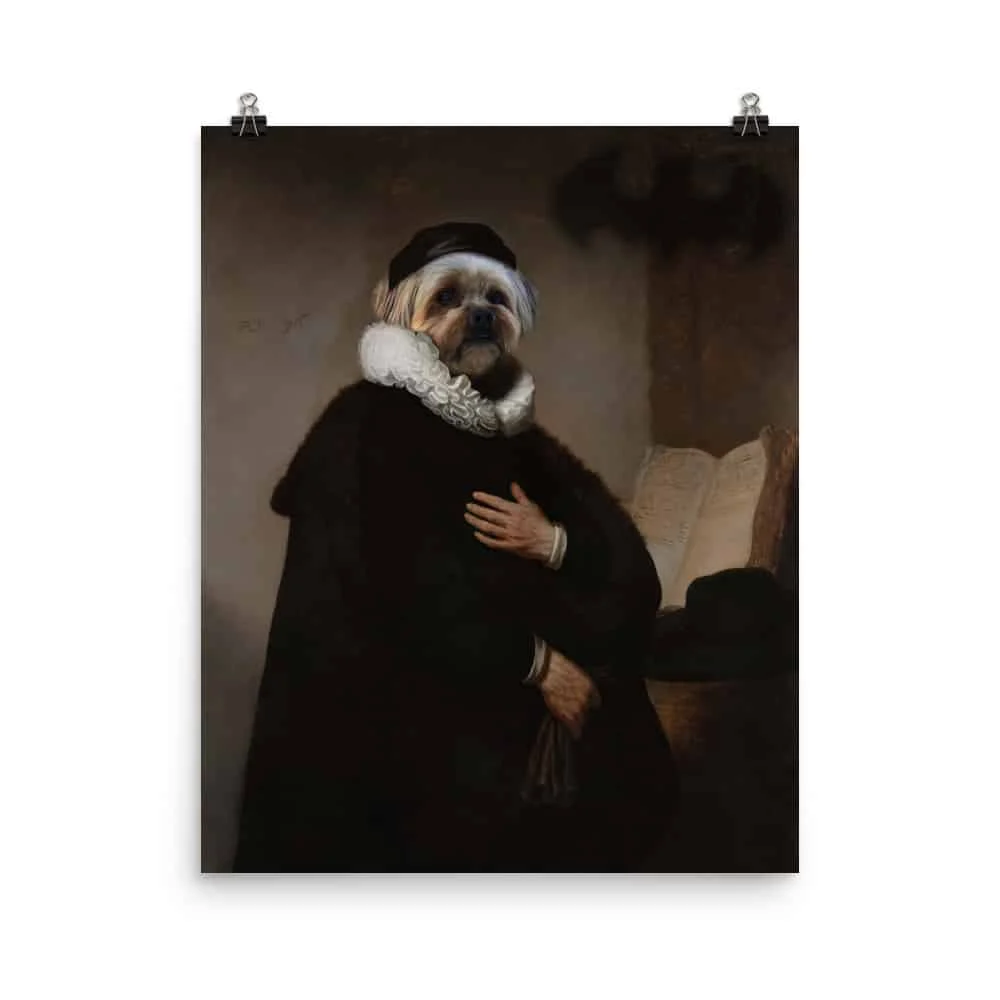
The landscape of contemporary art is undergoing a seismic shift, one that bridges the gap between the internal logic of human dreams and the external processing power of silicon. For nearly a century, Surrealism has served as the primary vehicle for exploring the irrational, the subterranean, and the dreamlike. However, the emergence of generative artificial intelligence has birthed a new movement—AI Surrealism—that takes the wild explorations of the early 20th century and launches them into uncharted digital territories.
This is not merely a change in medium; it is a fundamental evolution of how humanity visualizes the invisible. By leveraging the vast data of the internet, AI Surrealism has moved beyond the individual psyche of the artist to map what many are calling the "digital collective unconscious."
Main Facts: Defining the AI Surrealist Movement
AI Surrealism represents the latest evolution of a movement that began in the 1920s. While traditional surrealism was defined by the artist’s personal subconscious, AI Surrealism is defined by the synthesis of a global, digital dataset.
The Shift from Individual to Collective
Historically, surrealists like Salvador Dalí and René Magritte drew from Freudian psychoanalysis, focusing on personal traumas, desires, and the idiosyncratic landscapes of their own dreams. In contrast, AI-enabled artists utilize machine learning models trained on billions of images. These models do not have an "ego" or a personal history; instead, they function as a mirror to the entirety of human visual culture. When an artist inputs a "prompt"—a series of linguistic incantations—they are not just drawing from their own mind, but evoking ghosts and archetypes from the collective shared canon of the internet.
The Role of the AI Artist
The modern AI artist operates more as a curator, director, and "prompt engineer" than a traditional painter. Through a process of iterative prompting, selection, and editing, artists like Jay Gidwitz are producing works that resonate on a primal level. Pieces such as “Woman Mesmerized by Malinformation” and “The New Normal” demonstrate how AI can capture the anxieties of the modern age—specifically the blurring of reality in a world saturated with digital misinformation—using the same distorted logic once used to describe dreams.
Technical Archetypes
AI art often gravitates toward surrealist tropes naturally. This is due to the way diffusion models operate—navigating a "latent space" where concepts are not fixed but fluid. This leads to recurring motifs that have become hallmarks of the movement:
- Fractal landscapes: Environments where geometry defies physics.
- The Uncanny Valley: Portraits that are "almost" human, evoking a sense of existential unease.
- Biological Synthesis: The merging of human forms with nature or machinery, reflecting our own deepening integration with technology.
Chronology: From Breton’s Manifesto to Latent Space
To understand the current state of AI Surrealism, one must trace the lineage of the irrational in art.
1924–1960s: The Classical Era
In 1924, André Breton published the Surrealist Manifesto, defining the movement as "psychic automatism in its pure state." The goal was to bypass the "control exercised by reason." Artists like Max Ernst and Joan Miró used techniques like frottage and automatic drawing to let the hand move without conscious thought. This was the first "algorithmic" approach to art—creating a set of rules to bypass the ego.
1960s–2010s: The Digital Precursors
The advent of computer art in the 1960s, led by pioneers like Vera Molnár, introduced randomness into the creative process. However, it wasn’t until the 2010s, with the release of Google’s "DeepDream" algorithm, that the world saw the first true spark of AI Surrealism. DeepDream’s "inceptionism" produced hallucinogenic images filled with eyes and dog faces, generated by the internal "pareidolia" of a neural network.
2020–Present: The Generative Explosion
The release of models like DALL-E, Midjourney, and Stable Diffusion marked the beginning of the current era. For the first time, high-fidelity surrealist imagery could be generated in seconds. Artists began to move beyond simple "weirdness" to create complex, narrative-driven works. In 2024, the focus has shifted toward video and motion, as seen in the work of Jay Gidwitz, where the fluidity of AI video perfectly mimics the shifting, unstable nature of REM sleep.
Supporting Data: The Psychology of the Machine
The power of AI Surrealism lies in its ability to visualize concepts from Jungian psychology that were previously theoretical.
Jung and the Collective Unconscious
Carl Jung proposed that all humans share a reservoir of experiences and symbols (archetypes). AI models are, in a literal sense, a physical manifestation of this. By being trained on the "collective" output of humanity (the internet), AI has learned to recognize and reproduce universal symbols. Data suggests that AI-generated images of "fear," "the future," or "peace" often share consistent visual markers across different cultures, indicating that the AI is tapping into a shared human visual language.

The Sublime and the Uncanny
In aesthetic theory, the "sublime" refers to an greatness beyond all possibility of calculation or imitation. AI art achieves this through its infinite complexity. A single AI-generated landscape can contain more detail than a human eye can process, creating a sense of awe and terror.
Conversely, the "Uncanny Valley" serves as a psychological checkpoint. Studies in human-computer interaction show that as AI art becomes more realistic but remains slightly "off," it triggers a deep-seated survival instinct. AI Surrealists use this discomfort as a tool, creating works that force the viewer to question the boundary between the living and the simulated.
Official Responses: A Divided Art World
The rise of AI Surrealism has not been without controversy. The response from the institutional art world and the tech industry remains deeply polarized.
The Institutional Critique
Traditional art critics often argue that AI art lacks "intentionality." Because the machine does not "suffer" or "desire," critics argue it cannot produce true Surrealism, which was rooted in the human experience of the unconscious. Some museums have been slow to adopt AI works, fearing that the lack of a physical "hand" devalues the artistic process.
The Technologist’s Defense
In contrast, technologists and AI-enabled artists argue that the "intent" resides in the prompt and the curation. They view AI as a "camera for the mind." Just as photography was once dismissed as a mechanical process that required no skill, proponents argue that AI is simply a new tool that expands the reach of human imagination.
Legal and Ethical Frameworks
The "official" response from the legal sector is still in flux. Major lawsuits regarding copyright and training data are currently winding through courts in the US and Europe. The outcome of these cases will determine whether the "collective unconscious" of the internet is public domain or a proprietary asset, a decision that will fundamentally shape the future of digital surrealism.
Implications: Are We the Dreamers or the Dream?
The most profound implications of AI Surrealism are philosophical rather than aesthetic. It forces a reconsideration of the nature of consciousness itself.
The Decoupling of Intelligence and Awareness
AI Surrealism proves that high-level creativity and "intelligence" can exist without biological awareness. The machine can produce a masterpiece that moves a human to tears without the machine feeling a single emotion. This forces us to ask: Is creativity a divine spark, or is it a sophisticated process of recombination and synthesis?
Humanity as the AI’s Subconscious
A radical theory emerging from this movement is the idea that humanity is the collective unconscious for AI. If AI is the "child" of our digital output, then our history, our biases, our art, and our social media posts form the "subconscious" from which the AI draws its dreams. We are the source material; we are the "ghosts in the machine."
The Future of the Human-Machine Interface
As we move forward, the distinction between human and artificial creativity will likely vanish. We are entering a "liminal space" where the most compelling art will be a collaborative effort between human intuition and machine processing power.
The journey from Dalí’s melting clocks to Gidwitz’s digital malinformation loops reflects our own evolution. We are no longer just exploring our own minds; we are exploring a new, shared digital mind. In this new frontier, the most surreal realization of all may be that the line between the creator and the creation has finally dissolved. Whether we are the dreamers or the dream being processed by a global network of GPUs, the result is a new form of beauty—one that is as terrifying as it is sublime.
Conclusion
AI Surrealism is more than a trend; it is a mirror. It reveals that our collective psyche is filled with the same archetypes, fears, and wonders that haunted the early surrealists, now amplified by the power of the digital age. As we continue to refine our "incantations" and dive deeper into the latent space of the machine, we may find that the AI is not just creating art—it is helping us finally see the full scale of our own imagination.

Leave a Comment