From Tehran’s Outskirts to the Lido: Mohsen Gharaei’s ‘Falling House’ Secures Global Sales Ahead of Venice Premiere
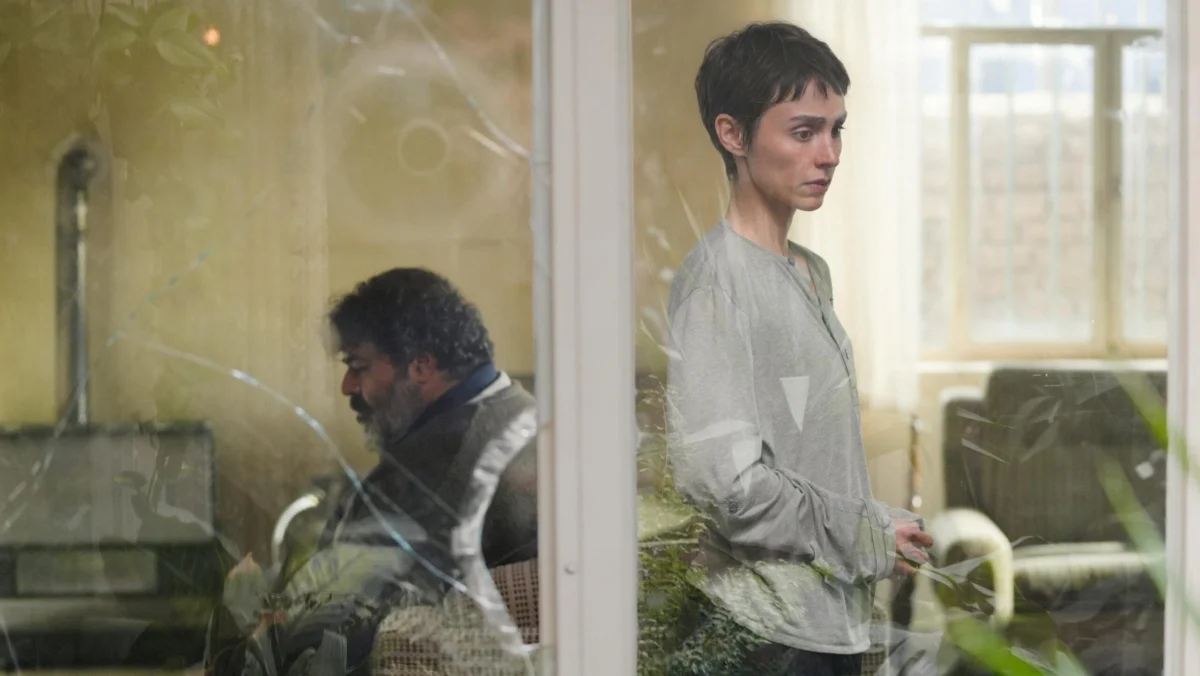
The global film industry is turning its gaze toward the 81st Venice Film Festival, where the world premiere of Falling House—the latest feature from acclaimed Iranian director Mohsen Gharaei—is poised to become one of the most talked-about entries in the Horizons (Orizzonti) section. In a major move ahead of the festival, Paradise City Sales has boarded the project for international sales, while the heavyweight CAA Media Finance will manage the domestic rights for the United States.
The film represents a significant milestone in contemporary Iranian cinema, blending a high-stakes domestic drama with a profound exploration of systemic oppression. As the festival circuit prepares for its debut, the arrival of Falling House marks the return of a filmmaker who has mastered the art of capturing the claustrophobia of modern life under the weight of political and social instability.
Main Facts: A High-Stakes Debut on the World Stage
Falling House arrives in Venice with a pedigree that commands attention. Directed by Mohsen Gharaei, the film is his highly anticipated follow-up to the 2017 hit Blockage, which secured the New Currents Award at the Busan International Film Festival and garnered critical acclaim at major hubs like Rotterdam and Munich.
The acquisition of international sales rights by Paradise City Sales is a testament to the film’s commercial and artistic potential. Paradise City, which is also bringing Andrea Pallaoro’s The Echo Chamber and Lili Horvát’s My Notes on Mars to Venice, has identified Falling House as a centerpiece of its current slate. Meanwhile, the involvement of CAA Media Finance signals strong interest from the North American market, where Iranian cinema has historically found a dedicated audience among cinephiles and awards voters.
The film’s narrative is a tense, localized drama with universal echoes. It centers on a modest family living on the fringes of Tehran. Their lives are upended by a massive urban redevelopment project that threatens to demolish their home. As the physical structure of their lives crumbles, the internal foundations of the family are equally under siege. Rashid, the father and a prison guard, faces accusations of corruption that threaten his livelihood and reputation. Simultaneously, his eldest daughter, Ensi, is harboring a secret plan to flee the country and pursue a career as a model—a dream that stands in stark opposition to the traditional and restrictive environment of her home.
Chronology: From Script to a Prophetic Reality
The journey of Falling House from conception to the screen is a story of artistic foresight. According to producer Milad Khosravi of Seven Springs Pictures, the screenplay—co-written by Gharaei and Amir Mohammad Abdi—was completed long before the recent waves of civil unrest and regional conflict that have gripped Iran.
"The idea for the film was conceived long ago," Khosravi noted, emphasizing that the script predated the "present madness" in the country. However, as the production progressed, the reality of life in Iran began to mirror the tensions depicted in the film. What started as a social drama about urban displacement evolved into what the producers describe as a "painfully prophetic" reflection of a society under duress.
Gharaei’s career has followed a trajectory of increasing complexity. His earlier work, Blockage, was praised for its gritty realism and its ability to turn a story about a municipal officer into a searing critique of social hierarchies. With Falling House, Gharaei expands his scope, moving from the streets of Tehran into the intimate, crumbling interior of a family home, using the physical threat of bulldozers as a metaphor for the relentless pressure of the state.
The production itself is a massive international collaboration, involving Seven Springs Pictures (Iran), RaeFilm Studios (USA), 3SIX9 Studios, Basis Berlin Filmproduktion (Germany), and Zentropa Germany. This multi-national backing allowed the film to maintain high production values despite the logistical challenges of filming in the region.
Supporting Data: A Powerhouse Creative Team
The technical and creative team behind Falling House reads like a "who’s who" of international prestige cinema. The involvement of these figures underscores the film’s status as a top-tier global production:
- Music by Max Richter: The film is scored by the world-renowned, critically acclaimed composer Max Richter. Known for his work on Hamnet, Ad Astra, and The Leftovers, Richter’s ability to blend minimalist classical structures with deep emotional resonance is expected to heighten the film’s mounting sense of dread.
- Production Pedigree: The film is produced by Milad Khosravi and Mohsen Gharaei for Seven Springs Pictures, alongside Oscar-winning producer Odessa Rae (Navalny). The executive producer is the Oscar-nominated Jon Kilik, whose credits include masterpieces like Babel and global blockbusters like The Hunger Games franchise.
- Technical Excellence: The cinematography is handled by Farshad Mohammadi, while the editing is a collaborative effort between Evelyn Rack (Sound of Falling) and Emad Khodabakhsh. The sound design is managed by Oscar-nominated Ansgar Frerich (Of Fathers and Sons), ensuring an immersive auditory experience that captures the looming threat of the demolition crews.
- Cast: The film stars a formidable ensemble of Iranian talent, including Laleh Marzban, Rima Raminfar, Farhad Aslani, and Elena Khakbaz. Their performances, particularly those of the female cast members, have already been singled out by sales executives as a highlight of the feature.
Official Responses: Voices of the Creators
The statements released by the film’s creators and distributors provide a window into the thematic depth of Falling House. Director Mohsen Gharaei offered a chilling philosophical take on the film’s core message, focusing on the nature of systemic violence.
"The most terrifying structures are the ones that no longer need a tyrant," Gharaei said. "Their logic has already taken root in the minds of many. They become truly powerful the moment they are no longer recognized as violence. A prison no longer needs walls. It only needs people willing to call it home."
This sentiment is echoed by producer Odessa Rae, who emphasized that while the film is set against a backdrop of political upheaval, its focus remains steadfastly on the human element. "‘Falling House’ is not a film about politics, but rather a film about people living under its weight," Rae explained. "Every system eventually arrives at someone’s front door. Mohsen captures this with extraordinary restraint."
Milad Khosravi highlighted the emotional weight the film carries for those living through the current climate in Iran. He described the film as a "warning we have felt growing for years," noting that it reflects the "long-term suffering of ordinary people who have endured decades of oppression and now face the fear and uncertainty brought by the ongoing war."
Jeanne Loriotti, sales executive at Paradise City Sales, praised the film’s narrative pacing and character development. "Mohsen Gharaei has crafted a compelling, plot-driven story that combines a true sense of urgency with remarkably rich and layered characters," she stated. She further noted the "mounting tension" and "emotional depth" that made the film an easy choice for their Venice slate.
Implications: Iranian Cinema and the Global Market
The premiere of Falling House in the Orizzonti section at Venice carries significant implications for both the filmmaker and the broader landscape of Iranian cinema.
Firstly, it reinforces the Venice Film Festival’s role as a vital platform for Middle Eastern voices. At a time when Iranian filmmakers face increasing scrutiny and domestic challenges, international festivals provide a crucial space for their work to be seen without the constraints of local censorship. The "prophetic" nature of the film suggests that Gharaei is tapping into a collective anxiety that resonates far beyond the borders of Iran.
Secondly, the high-profile collaboration between Iranian, American, and European production houses sets a template for future independent films. By bringing together the likes of Odessa Rae and Jon Kilik with Iranian creatives, Falling House demonstrates how international co-productions can amplify local stories, giving them the technical polish and distribution reach necessary to compete on the world stage.
Finally, the film’s focus on the female experience—highlighted by Ensi’s desire to escape and the "remarkable performances from the female cast"—aligns with the global conversation surrounding women’s rights in Iran. While the film may not be "about politics" in a traditional sense, the act of a young woman seeking agency in a world where her home is literally and figuratively falling apart is a powerful political statement in itself.
As the bulldozers move in on the family’s home in Falling House, the film invites the audience to consider what happens when the structures we rely on for safety become the instruments of our confinement. With its world premiere just around the corner, Falling House is set to be a harrowing, beautiful, and essential addition to the 2024 cinematic calendar.