Charvaka: The Ancient Indian Materialists Who Challenged Divinity and Embraced Earthly Pleasure
[Main Facts]
In the intellectual crucible of ancient India, circa 600 BCE, a radical philosophical movement emerged that dared to dismantle the prevailing spiritual edifice: Charvaka. Also known as Lokayata ("philosophy of the people" or, derisively, "of the common folk") or Brhaspatya, Charvaka stood in stark opposition to the dominant Vedic traditions, championing a philosophy of absolute materialism. At its core, Charvaka asserted that perceivable matter is the sole reality, dismissing concepts such as the soul, supernatural entities, and divine planes of existence as mere human inventions. This audacious school of thought rejected all religious authority, sacred scriptures, and the validity of inference and testimony in establishing truth, instead placing an unyielding emphasis on direct sensory perception as the only reliable path to knowledge.
The very name "Charvaka" carries layers of contested meaning, with some scholars suggesting it alludes to the act of "chewing," symbolizing the philosophy’s embrace of life’s sensory pleasures, particularly eating and drinking. Others posit it as the name of the founder or a prominent disciple, often linked to a reformer named Brhaspati. Regardless of its etymological roots, Charvaka’s essence was a profound call to live fully in the present, unburdened by fear of divine retribution or hope of an afterlife. It was a philosophy that, despite its eventual disappearance, left an indelible, if often unacknowledged, mark on the intellectual landscape of India and presaged many tenets of later Western thought.
[Chronology]
The Vedic Era and Brahmanical Orthodoxy: A Foundation for Dissent
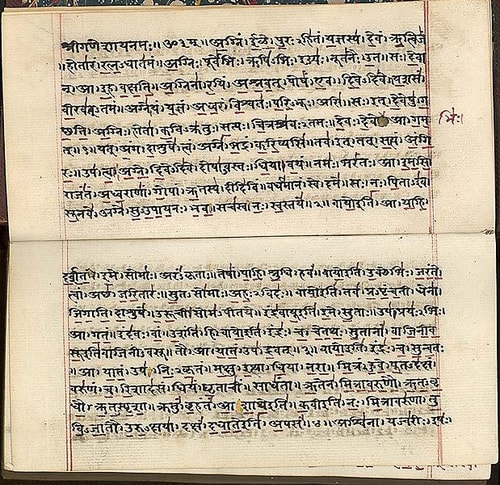
To truly grasp the revolutionary nature of Charvaka, one must understand the spiritual and philosophical environment it sought to disrupt. Ancient India, preceding Charvaka’s emergence, was largely shaped by the Vedic Period (circa 1500 to 500 BCE). This era was defined by the Vedas—the Rig Veda, Sama Veda, Yajur Veda, and Atharva Veda—sacred texts considered Shruti ("what is heard") by orthodox Hindus. These texts were believed to be divine revelations, cosmic vibrations "heard" by ancient sages in meditative states and subsequently preserved, first orally, then in written form.
The Vedic vision gave rise to Brahmanism, a complex religious and philosophical system predicated on the existence of an inherent cosmic order, rita. This order, it was argued, necessitated a divine orchestrator: Brahman, an incomprehensibly vast, all-encompassing being that was both creator and the universe itself. Human beings, it was taught, possessed an atman, a spark of this divine Brahman within them. The ultimate purpose of life, according to Brahmanism, was to achieve moksha (liberation) – the realization of the atman‘s union with Brahman, thereby breaking free from the cycle of samsara (rebirth) and suffering. This liberation was attained through righteous conduct (dharma) and morally appropriate actions (karma).
The priestly class, or Brahmins, held immense power and prestige in this system. They alone understood Sanskrit, the sacred language of the Vedas, and served as intermediaries between the common people and the divine. They prescribed elaborate rituals, sacrifices, and penances, which often required offerings that enriched the priestly class. Adherence to these doctrines, they promised, guaranteed a prosperous life and a blissful afterlife. Philosophical schools that accepted the Vedas as supreme authority and acknowledged the existence of Brahman, atman, and the cycle of rebirth were categorized as astika ("there exists").
The Rise of a Radical Counter-Narrative: Charvaka Emerges
It was into this deeply spiritual and hierarchical society that Charvaka, a nastika ("there does not exist") school, burst forth. While other nastika schools like Jainism and Buddhism also rejected Vedic authority, Charvaka’s materialism was uniquely radical. Its foundational ideas are attributed to Brhaspati, who, around 600 BCE, is believed to have articulated a profound skepticism towards what he perceived as the superstitious and exploitative nature of orthodox religious practices.
Brhaspati’s vision, as inferred from later critiques, suggested that the elaborate Vedic rituals and the promises of an afterlife were a clever ruse by the priestly class to maintain their power and wealth at the expense of the common people. He challenged the very premise of faith-based acceptance, arguing that if something could not be directly perceived, it could not be proven to exist. The purpose of life, therefore, was not to appease unseen gods or strive for an unprovable afterlife, but to fully embrace and enjoy the singular existence one undeniably possessed.
The central text of Charvaka, the Brhaspati Sutra, is tragically lost to history. This absence of primary texts presents a significant challenge for modern scholars, as our understanding of Charvaka is almost entirely derived from the refutations and criticisms found in later Hindu, Jain, and Buddhist works. These sources, inherently hostile to Charvaka’s atheistic and materialistic stance, likely presented a biased, and potentially caricatured, version of its doctrines. The identity of the founder also remains contested: while Brhaspati is often credited, some suggest Charvaka was the primary founder or a key disciple who further developed Brhaspati’s initial ideas.
Decline and Disappearance
Despite its considerable intellectual impact, especially in fostering critical inquiry and an early form of scientific reasoning, Charvaka never truly established itself as a predominant school of thought. It faded into obscurity by the 12th century CE. Several factors likely contributed to its demise: the lack of institutional support compared to the well-established astika traditions, the loss of its foundational texts, and perhaps most significantly, its stark denial of hope for an afterlife or ultimate meaning. In a world grappling with the uncertainties of life and death, the promise of spiritual liberation and cosmic order offered by Hinduism, Jainism, and Buddhism proved more enduringly appealing than Charvaka’s unflinching embrace of existential finitude.
[Supporting Data]
The Pillars of Charvakan Thought: A Materialist Manifesto
Charvaka’s philosophical framework was built on a series of radical rejections and bold affirmations, creating a coherent, albeit controversial, materialist manifesto.
Epistemology: The Unassailable Truth of Perception
Central to Charvaka was its epistemology, the theory of knowledge. It asserted that pratyaksha (direct perception) was the sole valid pramana (source or proof of knowledge). If something could be seen, heard, touched, tasted, or smelled, it existed and was true. Anything beyond the reach of the senses was deemed non-existent or, at best, unknowable and therefore irrelevant.
This led to a stringent critique of other pramanas accepted by orthodox schools:
- Rejection of Inference (Anumana): Charvaka famously argued against the reliability of inference. While inference plays a crucial role in scientific and daily reasoning (e.g., "where there is smoke, there is fire"), Charvaka maintained that such conclusions are not inherently infallible. The classic example illustrates this: observing smoke from a building leads one to infer fire. However, the "smoke" could be dust stirred by a broom, or steam, leading to a false conclusion. Since inference relies on a universal concomitance (e.g., fire always causes smoke), and one cannot perceive all instances of fire and smoke throughout time and space, inference is inherently fallible and cannot be the basis for absolute truth.
- Rejection of Testimony (Shabda): Given the fallibility of inference, testimony, especially religious scripture or the word of priests, was equally dismissed. If the Vedas could not be directly perceived or their claims empirically verified, then they were merely the words of men, not divine truth. The priests, therefore, had no special access to knowledge beyond what could be observed by anyone.
For Charvaka, the world was exactly as it appeared to the senses, and attempting to glean deeper truths through speculative inference or inherited tradition was a futile exercise.
Metaphysics: A Universe Without Gods or Souls
Charvaka’s epistemology naturally led to its radical metaphysics. Since only the perceptible exists, the school denied the existence of:
- God or Gods: There was no observable evidence for a divine creator or overseer. The universe, therefore, was not divinely governed.
- The Soul (Atman): The concept of an immortal soul, distinct from the body, was rejected. Consciousness, Charvaka posited, was an emergent property arising from the specific combination of the four fundamental elements (earth, water, fire, and air) that constitute the body, much like the intoxicating quality of fermented grains arises from their mixture. When the body perishes, consciousness ceases.
- Afterlife, Karma, and Rebirth: Without a soul, there could be no afterlife, no cycle of rebirth (samsara), and no moral accounting (karma) that carried over from one life to the next. What one saw in this life was all there was.
- Religious Cosmology: Speculating on the creation of the universe was deemed a waste of time. The universe operates according to natural laws, observable in the cyclical processes of nature itself. How it came to be was unknowable and, more importantly, irrelevant to living one’s present life.
This materialistic stance meant that the universe was self-sustaining and self-regulating, requiring no divine intervention or supernatural forces.
Ethics: The Pursuit of Earthly Pleasure
Charvaka’s ethics flowed logically from its metaphysics: if this life is all there is, and consciousness ceases with death, then the highest good is the pursuit of pleasure and the avoidance of pain in this present existence. This radical hedonism stood in stark contrast to the asceticism and spiritual striving advocated by other philosophical schools.
- Pleasure as the Ultimate Good: What felt good to the individual was good; what felt bad was bad. There were no divinely ordained moral laws or cosmic duties (dharma) to follow.
- Critique of Traditional Morality: Ethical systems, Charvaka argued, were merely constructs designed by the powerful (priests, rulers) to control the masses, burdening them with guilt and denying them natural pleasures. The sacrifices, penances, and self-denials promoted by orthodoxy were seen as tools of exploitation.
- Anticipating Utilitarianism: Centuries before Western thinkers like Jeremy Bentham and John Stuart Mill, Charvaka articulated a rudimentary form of utilitarian thinking. "Right behavior" could be understood as that which produces the greatest pleasure for the greatest number, and "wrong behavior" as that which causes the greatest pain. However, for Charvaka, this was often framed in terms of individual pleasure, with less emphasis on collective good than later utilitarianisms. The "evil" of society stemmed from the privation of pleasure, leading individuals to acts condemned by authorities who were merely trying to preserve their own pleasure.
In essence, Charvaka urged individuals to cast aside fear of divine punishment and embrace the tangible joys of the world, for there was no other reward or reckoning to anticipate.
Charvaka in Context: Distinguishing from Other Nastika Schools
While Charvaka, Jainism, and Buddhism were all nastika schools in their rejection of Vedic authority, their philosophical approaches diverged significantly.
- Jainism: Emphasized extreme asceticism, non-violence (ahimsa), and the purification of the soul (jiva) from karmic defilement to achieve liberation. It posited an eternal soul and a complex cosmology.
- Buddhism: Focused on understanding and eliminating suffering through the Four Noble Truths and the Eightfold Path. While it rejected an eternal, unchanging atman (doctrine of anatta), it acknowledged rebirth and the accumulation of karma.
- Charvaka: Stood alone in its complete materialism. It rejected the soul, karma, rebirth, and any form of spiritual liberation. Its focus was entirely on the material world and the pursuit of sensory pleasure, offering no spiritual path or metaphysical escape from suffering beyond maximizing enjoyment in the present. As John M. Koller observed, "Charvaka is the only completely materialistic system; all the others accept ways of spiritual life."
Echoes Across Continents and Centuries: Parallel Philosophical Streams
One of the most fascinating aspects of Charvaka is its striking parallels with philosophical movements that arose, likely independently, in other parts of the world, centuries later.
- Ancient Greece:
- Critias of Athens (c. 460-403 BCE): This Athenian politician and sophist articulated a view that religion was a clever invention by early rulers to control people through fear of unseen gods, echoing Brhaspati’s critique of priestly exploitation.
- Aristippus of Cyrene (c. 435-356 BCE): The founder of the Cyrenaic school of hedonism, Aristippus believed that the immediate gratification of sensual pleasure was the highest good, a philosophy almost identical to Charvaka’s radical hedonism.
- Epicurus (341-270 BCE): While also a hedonist, Epicurus’s "enlightened hedonism" was more nuanced. He advocated for moderation and tranquility (ataraxia) to achieve lasting pleasure, avoiding excesses that lead to pain. While his goal was pleasure, his method differed significantly from Charvaka’s more direct pursuit of sensual enjoyment, emphasizing the absence of pain over intense gratification.
- Ancient China:
- Yang Zhu (c. 440-360 BCE): This Chinese philosopher advocated a form of egoistic hedonism, urging individuals to preserve their own lives and pursue personal enjoyment, rejecting societal norms and religious doctrines as artificial constraints.
- Later Western Thought:
- Empiricism: Philosophers like David Hume (1711-1776) in the 18th century, with his skepticism about unobservable phenomena and emphasis on sensory experience, shared an epistemological lineage with Charvaka.
- Utilitarianism: Jeremy Bentham (1748-1832) and John Stuart Mill (1806-1873) developed the ethical framework of utilitarianism, advocating for actions that produce the greatest happiness (pleasure) for the greatest number, echoing Charvaka’s core ethical principle.
- Existentialism: In the 20th century, existentialists like Jean-Paul Sartre (1905-1980), with their emphasis on individual freedom, responsibility, and the absence of inherent meaning in a godless universe, share a thematic resonance with Charvaka’s rejection of divine purpose and insistence on creating one’s own values.
These parallels underscore the universal human tendency to question received wisdom and explore materialist, empiricist, and hedonistic perspectives, even across vast geographical and temporal divides.
[Official Responses]

The Orthodox Retort: Confronting the Materialist Challenge
The Charvaka school, with its outright rejection of virtually every tenet held sacred by orthodox traditions, inevitably drew fierce criticism. As noted, most of what we know about Charvaka comes from the refutations embedded in Hindu, Jain, and Buddhist philosophical treatises. These "official responses" were rarely dispassionate academic critiques; they were often polemical attacks aimed at discrediting and dismantling Charvaka’s arguments.
- The "Lokayata" Epithet: The term Lokayata itself, while sometimes translated as "philosophy of the people," was often used disparagingly, implying a simplistic, base, or unrefined worldview lacking intellectual depth—akin to "popular opinion" versus informed philosophy. This labeling served to diminish Charvaka’s intellectual standing.
- Epistemological Attacks: Orthodox schools vigorously defended the validity of inference (anumana) and testimony (shabda). They argued that denying inference would make all knowledge, including scientific and practical understanding, impossible. How could one predict the future, recognize causality, or even navigate daily life without inferring from past experiences? They contended that Charvaka’s rejection of these pramanas was self-defeating and impractical.
- Moral and Social Objections: The most vociferous critiques targeted Charvaka’s hedonistic ethics. Opponents argued that a philosophy promoting unbridled pleasure and denying moral accountability (karma) would lead to societal chaos, anarchy, and a complete breakdown of ethical order. They saw it as undermining the very fabric of society, which relied on the concepts of dharma (duty) and fear of retribution (in this life or the next) to maintain peace and justice.
- The "Straw Man" Problem: Given that Charvaka’s own texts are lost, there is a significant risk that the orthodox accounts exaggerated or misrepresented Charvaka’s actual positions to make them easier to refute. It is plausible that Charvaka’s hedonism, for example, was more nuanced than the "eat, drink, and be merry" caricature often presented. The absence of primary sources means we can never fully ascertain the true sophistication or internal coherence of Charvaka’s arguments as articulated by its proponents.
These hostile responses, while distorting Charvaka, inadvertently preserved its core tenets for posterity, offering a glimpse into a philosophical challenge that forced orthodox systems to sharpen their own arguments and defend their spiritual worldviews.
[Implications]
A Fading Legacy, Enduring Impact: Charvaka’s Unseen Influence
Despite its eventual decline and the loss of its foundational texts, Charvaka exerted a profound, albeit often indirect, influence on the intellectual landscape of ancient India. Its impact can be traced in several key areas:
- Stimulating Critical Thinking and the Scientific Method: Charvaka’s insistence on direct observation and empirical verification served as a powerful catalyst for critical inquiry. By challenging speculative metaphysics and unproven claims, it fostered an environment conducive to early scientific thought. Its emphasis on observable phenomena, the formation of hypotheses to explain them, and the demand for empirical corroboration laid conceptual groundwork that parallels the development of the scientific method. This intellectual rigor encouraged a more rational understanding of the natural world, moving away from purely divine explanations for phenomena like sickness, prosperity, or natural disasters.
- Achieving a Balance Between Spiritual and Material Worldviews: As scholar P. Ram Manohar notes, Charvaka "exerted a powerful influence and helped to achieve a balance between the spiritual and material worldviews." Even if not widely adopted, its presence forced other schools to acknowledge and engage with materialist critiques. It validated the importance of earthly life and tangible well-being, even for those who believed in higher spiritual pursuits. This engagement likely led to a more nuanced development of philosophical arguments within orthodox systems, pushing them to address practical concerns alongside spiritual ones.
- Influence on Governance and Practical Philosophy: The recognition of natural laws and the importance of observable reality, championed by Charvaka, indirectly influenced later texts on governance and practical ethics. Works like the Dharma Shastras (treatises on moral and civil law) and the Arthashastra (a treatise on statecraft, economic policy, and military strategy) reflect an understanding of human behavior and societal function based on empirical observation and pragmatic considerations, rather than solely on divine injunctions. The Arthashastra, in particular, demonstrates a realistic, often cynical, view of human nature and political power that resonates with Charvaka’s critique of self-serving authorities.
- A "What If" Scenario and Timeless Relevance: The disappearance of Charvaka leaves a poignant "what if" in intellectual history. Had its primary texts survived, or had it gained wider institutional support, the trajectory of Indian philosophy and perhaps even global thought might have been significantly different. Yet, its core questions about the nature of reality, the source of knowledge, and the meaning of a good life remain perennially relevant. In an age marked by growing secularism, scientific advancements, and a re-evaluation of traditional beliefs, Charvaka’s ancient voice finds new echoes in modern atheism, secular humanism, and philosophies that prioritize empirical evidence and earthly flourishing.
Charvaka’s message, that there is no ultimate reward for the virtuous or punishment for the wicked beyond this life, undoubtedly disturbed the status quo and denied the comforting hope offered by other systems. However, its radical insistence on perceived reality and the pursuit of earthly pleasure fundamentally challenged dogma and spurred critical thought, forever altering the intellectual landscape of India and leaving a legacy that continues to provoke reflection on the nature of existence itself.