The Unholy Alliance: How Ancient Power Forged the Church-State Divide
In the ancient world, the lines between divine authority and temporal rule were not merely blurred; they were virtually non-existent. Society, law, and religious belief were inextricably woven into a single fabric, with kings often serving as both supreme political leaders and high priests. This symbiotic relationship, where gods dictated covenants and rulers enforced them with divinely endowed authority, created a unified social and political order. However, the rise of Christianity, coupled with the eventual conversion of Roman emperors, dramatically reshaped this ancient paradigm, ushering in centuries of complex and often violent negotiations between spiritual and secular power.
The Indivisible Realm: Religion and Governance in the Ancient World
For millennia, the concept of a secular government separate from religious dictates was an alien notion. From the pharaohs of Egypt, revered as living gods, to the Mesopotamian kings who received their mandates directly from the heavens, rulers across diverse cultures derived their legitimacy and power from the divine. This divine mandate was not merely ceremonial; it was the very bedrock of law and order. Law-codes, such as Hammurabi’s Code or the Mosaic Law, were presented not as human constructs but as covenants handed down by deities, granting kings the ultimate authority to punish violations. The rationalization was simple yet profound: gods or a singular God endowed the ruler with a share of divinity, ensuring a unified society and political order.
This "symbiotic authority" meant that spiritual and temporal leaders were seen as complementary, each upholding the other’s legitimacy. A common spiritual overlay often transcended cultural uniformity and national borders, providing a shared understanding of morality and justice. In many ancient cultures, the king simultaneously served as the high-priest, embodying the ultimate fusion of religious and political leadership. This system provided a clear framework for moral guidance in everyday life, where religious traditions directly informed social conventions and legal statutes.
A New Ethos Emerges: Christianity’s Challenge to Ancient Norms
The advent of Christianity, articulated through the teachings of Jesus of Nazareth, presented a radical departure from these established norms. Early Christian tradition consistently claimed that Jesus introduced novel concepts of behavior and social interaction, often framed in polemical opposition to the dominant cultures of Judaism and the Roman Empire. This polemic, a literary device employed in the Gospels, highlighted perceived shortcomings in existing human relationships and proposed a transformative alternative.
One significant innovation was Jesus’s concept of "table fellowship." In a society where social status, business transactions, and communal bonds were often negotiated around the dinner table, Jesus’s open invitation to all, regardless of social standing or perceived purity, challenged deeply entrenched hierarchies. This revolutionary approach to social contacts redefined neighborly relations and extended compassion beyond traditional boundaries. Furthermore, the Christian tradition asserts that Jesus introduced new rules that critiqued prevailing economic practices, particularly those related to trade and banking, advocating for principles that prioritized human dignity over pure profit. This reorientation toward an internal, spiritual transformation, rather than strict external adherence to ritual or contractual obligations, began to subtly, yet profoundly, shift the understanding of individual and communal responsibility.
Distinctions in Faith: Jewish and Pagan Practices
The Jewish tradition, as outlined in the Book of Leviticus, meticulously detailed purity and impurity rituals and rules. "Impurity" was construed as a form of contagion, necessitating specific rituals for restoration. Crucially, these rules primarily applied to Jews, not Gentiles, and related to lifestyles and rituals divinely forbidden. The Gospels, through their polemical lens, claimed that figures like the Pharisees and Sadducees, particularly those associated with the Temple in Jerusalem, maintained "strict rules" that selfishly denied "salvation" to non-Jews. While "strictness" implied rigorous enforcement, historical information regarding the practical application of these rules in synagogues across the Roman Empire remains limited. It’s also vital to note that the Temple authorities in Jerusalem held no civil or religious authority beyond the city itself, making widespread enforcement of their specific interpretations challenging.
In stark contrast, Roman sacrifices were often based on a transactional principle known as do ut des ("I give so that you may give" or "That I will receive the benefits"). This contractual understanding of divine interaction emphasized reciprocal benefits, a utilitarian approach to religion. The Christian critique often portrayed both Jewish and pagan practices as overly "legalistic," focused solely on "the letter of the Law," and lacking genuine spiritual enlightenment or a deeper understanding of divine love and forgiveness.
The Theological Divide: Marcion and the Nature of God
The second century CE witnessed a significant theological schism articulated by the Gnostic Bishop Marcion. Marcion famously posited the existence of two distinct "high gods": the God of Israel and the God of Christians. He asserted that the God of Israel was solely responsible for "punishment for sins," a wrathful deity presiding over a harsh law. Conversely, the God of Christians, revealed through Jesus, introduced the radical concept of "forgiveness of sins," embodying love and mercy. This Marcionite dichotomy, though eventually condemned as heresy, had a profound and lasting impact on popular Christian understanding, contributing to the widespread perception of the Old Testament God as a "god of wrath" and the Christian God as a "god of love." This theological distinction further cemented the perceived break from older traditions.
Morality Beyond the Monotheistic Lens
The prevailing Christian narrative often suggested that Jesus and Christianity introduced moral and family values that were absent in paganism. This, however, was a simplification. Ancient religions and native cults, across the Roman Empire and beyond, invariably taught their own robust systems of moral and family values, often intricately linked to gender roles and societal expectations. Kings and subsequent emperors, whether pagan or Christian, consistently set the tone for morality and family values within their domains. The irony, of course, was that this morality was frequently enforced with violent precision, demonstrating that the enforcement mechanism often outweighed the ethical content itself.
Furthermore, moral and family values were extensively explored and taught within the various schools of philosophy that flourished in the Greek and Roman worlds, many of whose tenets Christians readily adopted. The popular image perpetuated by Hollywood, depicting blatant sexual immorality and violence in "sword and sandal" epics, often sensationalizes and generalizes historical reality. While some Epicureans in Rome certainly indulged in exotic foods, drink, and drunkenness leading to adultery, these were not universal behaviors, nor were they endorsed by the broader moral frameworks of the time. Indeed, the Greek word orgia, originally referring to religious rituals, unfortunately evolved into its modern connotation due to selective interpretation and cultural appropriation.
The Imperial Embrace: Constantine and the Christian State
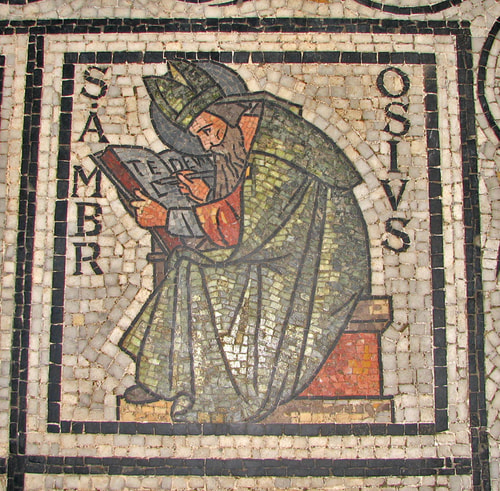
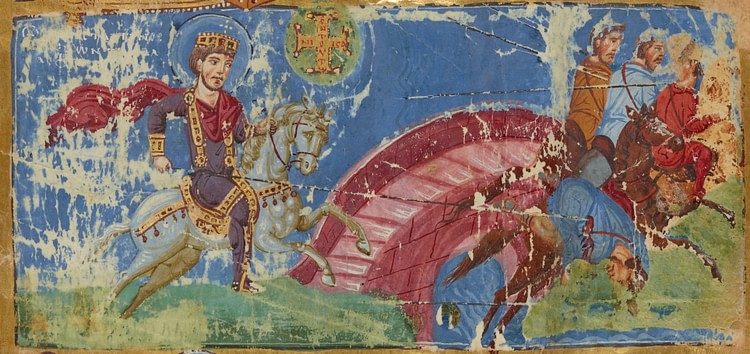
The monumental shift in the relationship between church and state truly began with Emperor Constantine I. His conversion to Christianity in 306 CE, culminating in the Edict of Milan in 313 CE, did not merely legalize Christianity; it elevated it to a favored status within the Roman Empire. This transformation was not without its complexities. The nascent Christian community was already embroiled in internal "schisms," particularly concerning those bishops who had avoided martyrdom during the last great Roman persecution under Emperor Diocletian by sacrificing to traditional gods. Appealing to the newly Christian emperor, various factions petitioned Constantine to rule on the fate of these "schismatics," effectively drawing him into ecclesiastical matters. It was in this context that Constantine was elevated as the de facto "head of the Church," as well as the head of the state.
The Council of Nicaea in 325 CE stands as a watershed moment. Convened by Constantine himself, it aimed to resolve the "Arian controversy." Arius, a presbyter from Alexandria, Egypt, taught that "the Son" (Jesus) was subordinate to "the Father," having been created at a specific point in time. This challenged the burgeoning orthodox understanding of Christ’s divinity. Constantine, presiding over the council, played a pivotal role in formulating "the Creed" – a statement of what all Christians should believe and practice. This Nicene Creed, defining the Trinity as three co-equal aspects of one godhead, effectively established orthodoxy. Anyone who diverted from or opposed the Creed was deemed a heretic, and heresy, under the new imperial-ecclesiastical system, was increasingly equated with treason. This conflation of theological dissent with political disloyalty carried dire consequences, often the death penalty. Tragically, historical accounts suggest that more Christians, condemned as "heretics" by the state-backed Church, perished in arenas and through imperial persecution after Constantine’s conversion than during the preceding Roman persecutions of Christians. The emperor’s role had shifted from persecutor to enforcer of Christian doctrine, often with brutal efficiency.
Theodosius I and the Assertive Church: Bishop Ambrose’s Stand
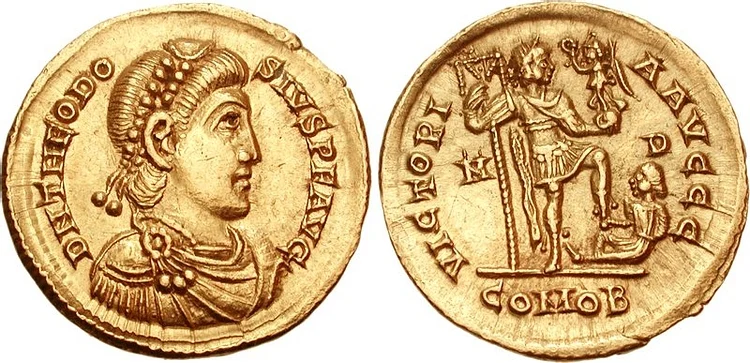
The complex interplay between imperial power and ecclesiastical authority reached a critical juncture during the reign of Emperor Theodosius I (347-395 CE), an emperor known for his staunch conservative orthodoxy, even though his own mother remained an Arian. It was during this period that Bishop Ambrose of Milan, a figure of immense moral and intellectual stature, boldly challenged imperial prerogative, setting precedents that would profoundly influence the future of Church-State relations in the West.
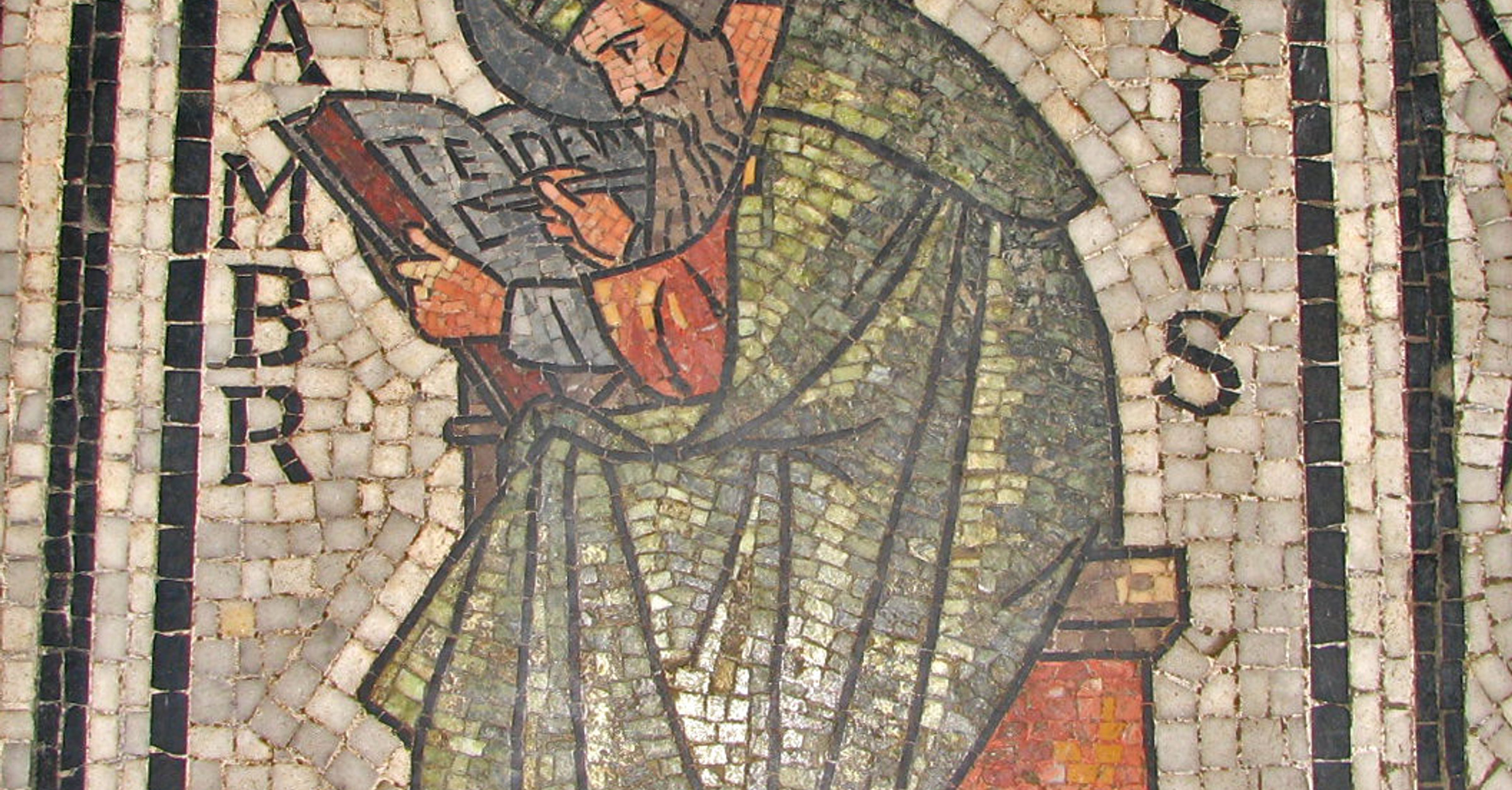
Ambrose, initially a Roman magistrate in areas north of Rome, was unexpectedly elected Bishop of Milan, a crucial imperial city, despite not yet being baptized. His background as a skilled negotiator of legal elements undoubtedly contributed to his subsequent acumen in ecclesiastical politics. A fervent opponent of Arianism, Ambrose consistently refused Arian followers’ demands to build a cathedral for their sect, reiterating his theological stance to the emperor on multiple occasions.
The Callinicum Synagogue Incident (388 CE)
One of the defining moments of Ambrose’s episcopate occurred in 388 CE in Callinicum, Syria. A zealous mob of vigilante monks, driven by anti-Jewish sentiment, burned down a synagogue. Emperor Theodosius, acting within his traditional imperial authority to maintain order and justice, ordered the monks to pay financial compensation for the damages inflicted upon the Jewish community.
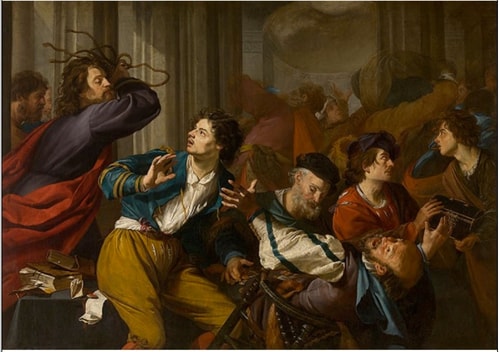
Ambrose, however, was appalled by this imperial decree. He famously castigated the emperor, arguing that if Theodosius enforced such compensation, "people would think he was a Jew." For Ambrose, allowing the state to protect a synagogue, a symbol of a rival faith, compromised the Christian identity of the emperor and the empire itself. Under immense pressure from Ambrose, who threatened excommunication, Theodosius reluctantly relented on the compensation order. Instead, he decreed that the ruins of the synagogue should be maintained as a symbolic sign of the supposed "end of Judaism," a deeply troubling precedent that underscored the growing power of the Church to dictate state policy concerning religious minorities.
The Thessalonica Massacre (390 CE)
An even more dramatic confrontation unfolded two years later. In 390 CE, a chariot race in Thessalonica sparked a tragic chain of events. A popular pagan charioteer, accused of immoral sexuality, was condemned and executed by a local Roman magistrate. In retaliation, an enraged mob rose up, tearing the magistrate limb from limb. Theodosius, incensed by this defiance of imperial authority, responded with brutal force, dispatching legions who massacred an estimated 7,000 citizens in the Hippodrome.
Ambrose was utterly appalled by the emperor’s extreme and indiscriminate reprisal. He publicly accused Theodosius of allowing the mob to take control and then reacting with disproportionate violence, emphasizing that the charioteer, though pagan, did not warrant such a slaughter. In an unprecedented assertion of ecclesiastical power over imperial authority, Bishop Ambrose took the extraordinary step of excommunicating the emperor. Excommunication meant that Theodosius, as the head of the state, was barred from participating in the Eucharist and other sacraments, a profound spiritual and political humiliation that impacted his standing among all Christians.
Defining Spheres: Ambrose’s De Officiis Ministrorum
Ambrose’s theological and political convictions were articulated in his treatise, De Officiis Ministrorum (377–391 CE). Drawing upon an exegesis of Genesis, Ambrose argued that the "state" itself was divinely ordained from the very beginning, in the Garden of Eden. Adam and Eve, in their fellowship and subsequent roles, established a template for human leadership on Earth. However, Ambrose meticulously outlined distinct roles for emperors and magistrates, whom he characterized as "dutiful sons of the Church."
Crucially, Ambrose asserted that when it came to theological issues (dogma), emperors and magistrates could not rule on matters of faith and moral conduct using their personal views. That, he declared, was the exclusive job of bishops within the Church. An emperor, while elevated, was ultimately "simply an elevated Christian" whose main duty was to carry out punishments for what the bishops deemed divergent or heresy, and to punish sinners according to the dictates of the Church. In a statement that would reverberate through centuries of Western thought, Ambrose famously declared that the emperor is "in the Church but not over the Church." This principle established a clear, albeit often contested, hierarchy where spiritual authority held sway over temporal power in matters of faith and morals. Theodosius and Ambrose were eventually reconciled, but only after the emperor performed public penance, a symbolic victory for ecclesiastical power that cemented Ambrose’s assertion.
Legacy and Implications: Shaping the Future of Church and State
The transformative period from the ancient, unified religious-political order to the Christian Roman Empire laid the groundwork for the enduring tensions and negotiations between Church and State in Western civilization. The actions of Constantine, establishing Christianity as a legal and then dominant religion, inadvertently created a powerful new player in the political arena. His instrumental role in defining orthodoxy at Nicaea, and the subsequent conflation of heresy with treason, tragically demonstrated the perils of imperial involvement in theological disputes, leading to persecution of Christians by Christians.
Bishop Ambrose’s courageous confrontations with Emperor Theodosius I, culminating in the emperor’s excommunication and public penance, marked a pivotal moment. Ambrose’s articulation of the emperor being "in the Church but not over the Church" established a fundamental principle of ecclesiastical independence and authority that would profoundly influence medieval political thought and the development of the papacy. This concept challenged the ancient notion of the ruler as supreme in all matters, asserting a distinct spiritual sphere with its own ultimate authority.
Over subsequent centuries, numerous Church Council meetings and theological treatises further refined these principles, but the core tension remained. The precedents set by these early interactions – the role of secular power in enforcing religious doctrine, the Church’s right to challenge and even discipline rulers, and the ongoing debate over the boundaries of spiritual and temporal jurisdiction – continue to resonate. The legacy of this ancient shift is evident in modern discussions of religious freedom, the separation of church and state, and the complex relationship between faith and governance across the globe. The ancient world’s seamless integration of religion and power gave way to a new, often fraught, dynamic, forever altering the landscape of human authority.