The Elusive Quest for Meaning: Can Language Truly Capture Reality?
A philosophical debate ignited by a simple question probes the very foundations of communication and the limits of human understanding.
London, UK – In an era defined by the rapid exchange of information and the ever-increasing complexity of global challenges, a fundamental question about the nature of communication has resurfaced, challenging our reliance on language to grapple with profound philosophical inquiries. The query, posed by an individual named William, cuts to the core of our communicative endeavors: "Letters are just lines. The combinations are finite. So why do we fall so heavily onto language to communicate and solve the nature of big philosophical questions? Language will never have the capacity to represent reality, so why try? Why don’t we consider it a lost cause?"
This provocative assertion, addressed to philosopher Geoffrey Klempner, founder member of the International Society for Philosophers (ISFP), has sparked a deep dive into the historical and philosophical underpinnings of language, meaning, and representation. Klempner’s response, far from dismissing the question, embarks on a compelling historical journey, tracing centuries of philosophical thought dedicated to this very puzzle. The ensuing discourse highlights a persistent tension: the undeniable utility of language in human interaction versus its inherent limitations in fully capturing the nuances and complexities of reality, particularly in the realm of abstract philosophical concepts.
The Paradox of Representation: From Ancient Greece to the Modern Era
The very act of using words – whether as lines on paper or as fleeting sounds – to signify something beyond themselves is, as Klempner notes, "truly something to wonder at." This inherent capacity of language to represent an external reality, however imperfectly, forms the bedrock of human civilization. Yet, the question of how this representation works, and what its limits are, has occupied thinkers for millennia.
H2: The Seeds of Doubt: Heraclitus and Plato’s Inquiry
The philosophical discomfort with the stability of language in a perpetually changing world can be traced back to the Presocratic philosopher Heraclitus. His famous dictum, "You can never step into the same river twice," encapsulates the fundamental challenge: if the objects and phenomena we label are in constant flux, how can the static labels of language retain their meaning? This paradox was further explored by Plato in his dialogue, Cratylus. Plato grappled with the relationship between words and their referents, questioning whether names inherently possess their meaning or if meaning is a matter of convention. This early exploration laid the groundwork for centuries of debate on the nature of meaning and the relationship between language and truth.
H3: Locke’s Mental Landscape and Leibniz’s Universal Language
Centuries later, in the 17th century, John Locke proposed a theory that sought to ground meaning in individual experience. For Locke, words were essentially labels attached to mental "ideas" derived from our sensory perceptions. The meaning of a statement, therefore, was understood as the combination of these internal ideas. This "two-stage process" suggested that language’s meaning was contingent on the internal workings of the human mind.
Simultaneously, on the continent, Gottfried Wilhelm Leibniz, a formidable intellectual adversary of Locke, envisioned a more ambitious solution: a characteristica universalis. This theoretical universal language was conceived to articulate reality with such clarity and precision that all philosophical problems could be resolved through calculation, akin to a mathematical proof. Leibniz recognized a profound truth that resonates with William’s initial query: the very structure and nature of the language we employ impose inherent limits on what can be conceived and articulated.
H3: The Dawn of Modern Logic: Frege’s Groundbreaking Work
The 19th century witnessed a pivotal development in the philosophy of language with the work of Gottlob Frege, a mathematician with a keen interest in philosophy. Frege’s creation of the first effective system of symbolic logic, his Begriffsschrift (Concept-Script), was a monumental achievement. For the first time, it provided a formal apparatus capable of representing quantifiers such as "All x" and "Some x." This allowed for a clear display of all possible logical relationships between quantified statements, a feat that had eluded great thinkers like Aristotle and generations of philosophers before Frege. His work provided a more robust framework for analyzing the logical structure of propositions, a crucial step towards understanding how language could potentially mirror the structure of thought and reality.
Wittgenstein’s Revolution and the Limits of Representation
The intellectual landscape shaped by Frege’s innovations became the fertile ground for the revolutionary ideas of Ludwig Wittgenstein. His journey from studying aeronautics at Manchester University to becoming a towering figure in 20th-century philosophy is a testament to his intellectual trajectory.
H2: From Aeronautics to the Tractatus
Wittgenstein’s initial fascination with the mathematics of aeronautics led him to Cambridge, where he encountered the work of Bertrand Russell, who had further developed Frege’s ideas on symbolic logic. Russell saw his work not merely as mathematical but as contributing to epistemology and metaphysics, echoing Locke’s earlier intuition that the logical analysis of language could illuminate how we acquire knowledge of the external world.
The crucible of World War I profoundly impacted Wittgenstein. While serving in the Austrian Army, he penned his 1914-1918 Notebooks, which laid the foundation for his seminal post-war work, the Tractatus Logico-Philosophicus. This book, as Klempner recounts, was a mind-altering experience for many, including himself.
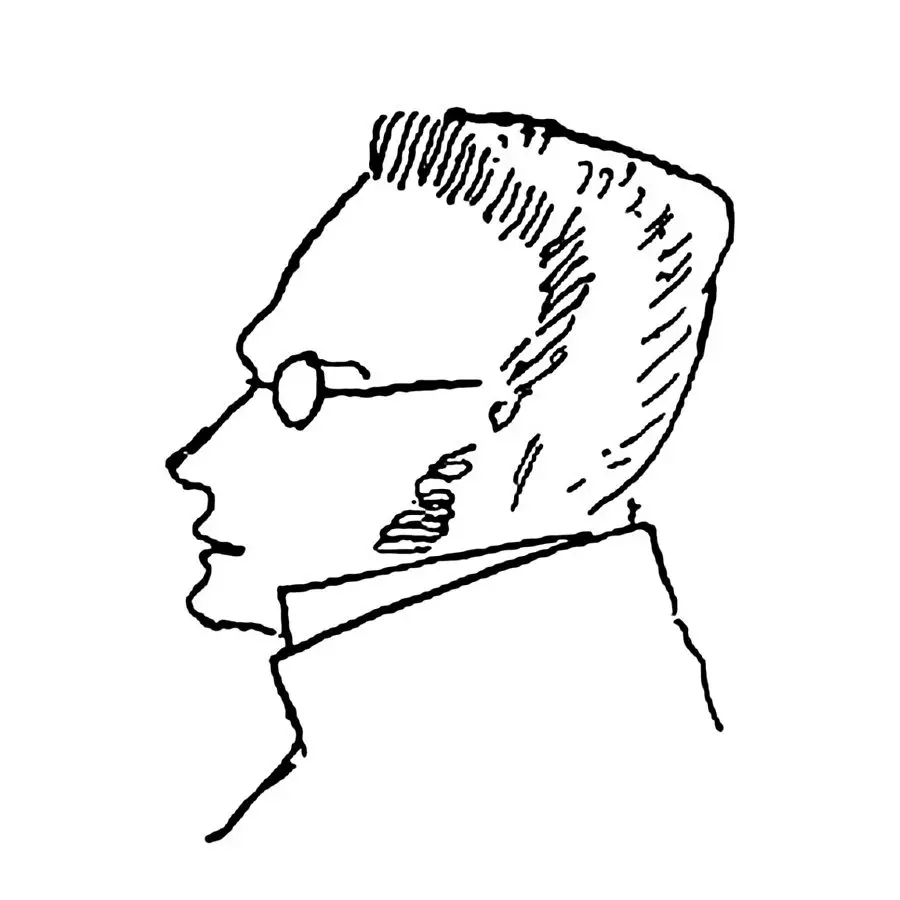
H3: The Picture Theory of Meaning
At the heart of the Tractatus lies the "picture theory of meaning." Wittgenstein posited that words arranged in a sentence form a "picture" of reality. Any conceivable statement, he argued, could ultimately be broken down into simple, "atomic" sentences. These atomic sentences, in turn, referred to "bits of the world," and their logical structure directly mirrored the relations between these bits. An analogy often employed is that of chess notation, where every possible move can be represented algebraically. Wittgenstein suggested that, while not immediately apparent, the world operates on a similar principle of representational structure.
This was, indeed, a "mind-blowing idea." It suggested a direct, almost transparent, correspondence between the logical form of language and the logical structure of reality. If this theory held true, language, when used correctly and stripped of ambiguity, could indeed provide a comprehensive and accurate representation of the world.
H3: The Inevitable Sideline: The Limits of "Saying"
However, Wittgenstein himself later recognized the limitations of his earlier picture theory. In the Tractatus, he remained adamant that "nothing can be said" that cannot be resolved into these pictures of reality. This led to a radical conclusion: much of what we typically consider philosophical discourse – particularly concerning ethics, values, and existential questions like "why is there anything at all?" – falls outside the bounds of meaningful language. According to this strict interpretation, such statements, while perhaps evoking subjective impressions, objectively "say" nothing. They are, in essence, "gibberish."
This conclusion, while logically consistent within the framework of the Tractatus, presents a profound dilemma for anyone seeking to engage with the deepest philosophical questions. If language is inherently incapable of addressing these fundamental inquiries, then the pursuit of meaning through philosophical discourse appears, as William suggested, a "lost cause."
The Unanswered Question: Towards a Deeper Understanding of Meaning
Klempner acknowledges the frustration inherent in this philosophical predicament. While the later Wittgenstein proposed the concept of "language games" – suggesting that discourse about ethics or ultimate reality operates within specific, socially constructed frameworks – this offers little solace to those seeking objective truth. The individual grappling with these profound questions does not feel they are merely "playing" a game; they genuinely mean what they say and aspire to know.
H2: The Chasm Between Meaning and Intent
The core of the frustration lies in the elusive nature of "meaning" itself. Klempner articulates this difficulty poignantly: "any account of how it is possible for words to have meaning falls short of being able to explain exactly what it is that I ‘mean’ to actually mean." This highlights a fundamental disconnect between the formal analysis of language and the subjective, lived experience of intentionality and understanding.
H3: The Continuing Quest for Representation
William’s initial question, therefore, remains a potent challenge. While language is our primary tool for communication and thought, its capacity to encapsulate the entirety of reality, especially the abstract and the ineffable, is demonstrably limited. The history of philosophy, as traced by Klempner, reveals a continuous struggle to bridge the gap between the finite symbolic systems we create and the infinite complexity of the world and our experience of it.
The implications of this ongoing debate are far-reaching. If language has inherent limitations in representing reality, then our understanding of complex philosophical problems may require approaches that transcend purely linguistic analysis. This could involve exploring alternative modes of understanding, such as intuition, direct experience, or even artistic expression, though these too present their own challenges in terms of shared understanding and verification.
H3: Official Responses and the Future of Philosophical Inquiry
While there are no "official responses" in the traditional sense to a philosophical question, the continued engagement with these ideas within academic and philosophical communities serves as a testament to their enduring significance. Scholars continue to explore the nuances of language, meaning, and consciousness, building upon the foundations laid by thinkers like Plato, Locke, Leibniz, Frege, and Wittgenstein.
The question of whether language is a "lost cause" for philosophical inquiry is, perhaps, too stark. Instead, it may be more accurate to view it as an ongoing, evolving conversation. The limitations of language do not necessarily render philosophical inquiry futile, but rather, they compel us to be more precise, more aware of the boundaries of our expression, and more open to the possibility that some truths may lie beyond the reach of words alone. The quest for meaning, it seems, is a journey that continues, pushing the boundaries of what we can say and, perhaps more importantly, what we can truly understand.