FOR IMMEDIATE RELEASE
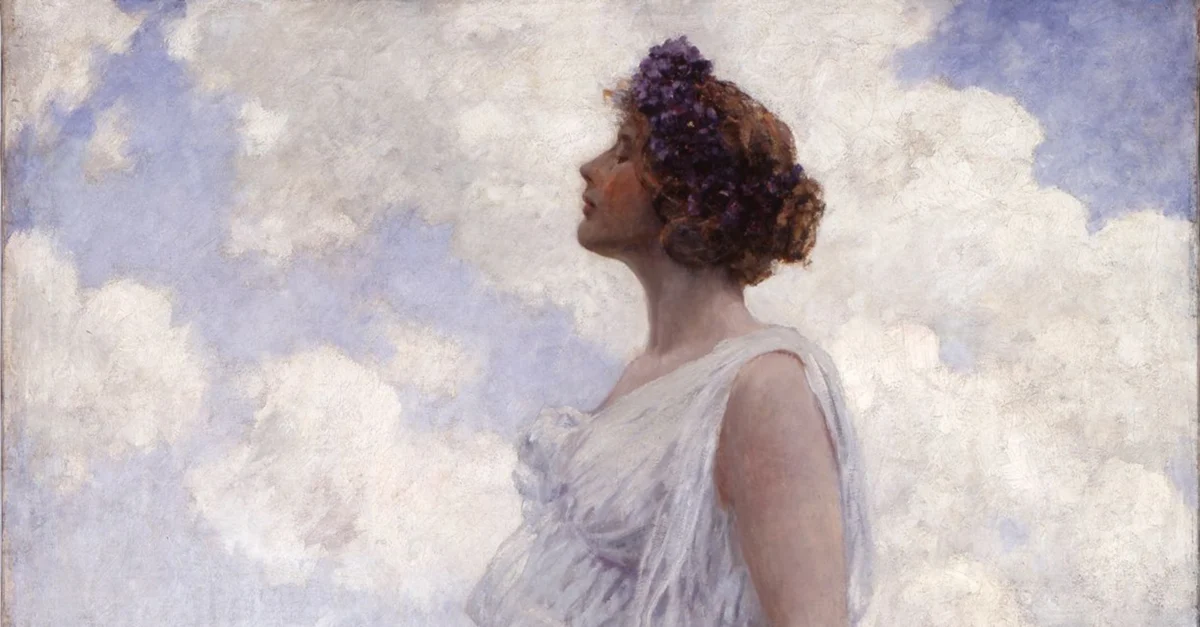
The Nymph of Ogygia: Unveiling the Enduring Tale of Calypso and Odysseus
ATHENS, GREECE – (Mythological Times) – In the annals of ancient Greek mythology, few figures evoke as potent a mix of beauty, longing, and divine decree as Calypso, the enigmatic nymph whose name, fittingly, translates to "to hide" or "to conceal." Best known from Homer’s monumental epic, The Odyssey (circa 750 BCE), Calypso’s narrative is inextricably linked to the legendary wanderings of Odysseus, the resourceful king of Ithaca, whom she held captive on her isolated island of Ogygia for a period spanning seven years—or five, depending on varying ancient accounts—during his arduous journey home from the Trojan War.
This report delves into the foundational facts, chronological events, supporting mythological data, the divine interventions that shaped her destiny, and the profound implications of Calypso’s story on Western literature and thought.
Main Facts: The Captivating Nymph
Calypso, frequently depicted with the Homeric epithet “the nymph with lovely braids” (The Odyssey, 5.33), embodies a complex figure within the mythological landscape. Her primary role in Homer’s narrative is that of a formidable obstacle and a passionate lover for Odysseus. Upon his shipwreck on Ogygia, Calypso became deeply enamored with the Ithacan king, desiring to bestow upon him the ultimate gift: immortality, thereby ensuring his eternal presence by her side. This profound attachment, however, directly conflicted with Odysseus’s unyielding yearning for his homeland, Ithaca, and his beloved wife, Penelope.
The divine hierarchy ultimately intervened in this celestial romance. Under the explicit command of Zeus, the king of the gods, and delivered by his swift messenger, Hermes, Calypso was compelled to release Odysseus. Her lineage, though subject to some variation in ancient sources, predominantly identifies her as the daughter of the Titan Atlas, the cosmic bearer of the heavens. Other traditions link her to the primordial sea deities, such as Oceanus and Thetis, or even Nereus, the "Old Man of the Sea," highlighting her deep connection to the oceanic realm and her potent, albeit isolated, power.
Her dwelling, the island of Ogygia, is portrayed not merely as a place of captivity but as a paradisiacal, albeit remote, sanctuary. Homer’s descriptions paint a vivid picture of a wild yet exquisitely beautiful landscape, teeming with natural splendor that underscores both Calypso’s allure and the seductive trap she represented for the weary hero.
Chronology: Odysseus’s Seven Years on Ogygia
The saga of Calypso and Odysseus unfolds across a distinct timeline within The Odyssey, beginning with Odysseus’s perilous arrival and concluding with his reluctant departure.
The Shipwreck and Initial Captivity
Odysseus’s arrival on Ogygia was not by choice but by a cruel twist of fate. Having survived the wrath of Athena and a devastating storm that claimed all his men and ships following the sacking of Troy and his subsequent adventures, he drifted for nine days clinging to the keel of his shattered vessel. On the tenth day, the currents delivered him to the shores of Ogygia, where Calypso discovered him. Out of compassion, and then growing affection, she nursed him back to health. This initial act of kindness quickly morphed into a possessive love, leading her to keep him on her island for what would become a significant portion of his decade-long journey home. During this extended period, Odysseus, though cared for and loved by Calypso, spent his days in profound sorrow, gazing out at the endless sea, weeping for his lost home and family. He would endure Calypso’s embrace in her grotto by night but return to the solitary beach each dawn, his heart heavy with grief.
Athena’s Intervention and Zeus’s Decree (Book 1)
The plight of Odysseus first comes to the fore in Book 1 of The Odyssey, during an assembly of the Olympian gods. Athena, his staunch divine patron, passionately pleaded with Zeus to secure Odysseus’s release. She acknowledged that many heroes of the Trojan War deserved their harsh fates but argued vehemently that Odysseus, a man of unparalleled wisdom and courage, did not. Her heart, she declared, broke for him, held captive by Atlas’s daughter on a distant, wave-lashed island, where he languished in despair, yearning for Ithaca to the point of wishing for death.
Zeus, recognizing Odysseus’s enduring wisdom and valor, reassured Athena that he had not forgotten the hero. He conceded that Odysseus deserved to return home. It was at this crucial juncture that Athena proposed sending Hermes, the swift messenger of the gods, to Ogygia to convey the divine mandate to Calypso, instructing her to release her unwilling guest.
Hermes’s Mission and Calypso’s Protest (Book 5)
Despite Zeus’s initial agreement, Odysseus’s captivity persisted, prompting Athena to once again implore Zeus in Book 5. She lamented Odysseus’s continued isolation, devoid of ship or crew, stranded on Calypso’s island. Responding to her persistent pleas, Zeus dispatched Hermes with an unequivocal message for Calypso: Odysseus must return home to Ithaca. Crucially, the decree stipulated that Odysseus would not receive divine aid for his journey, nor assistance from mortal men, but would construct a crude raft and endure a perilous twenty-day voyage across the treacherous seas.
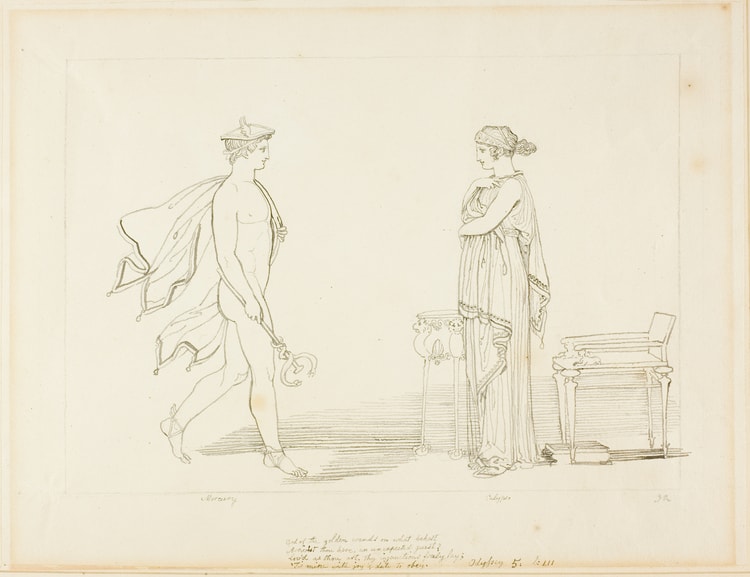
Hermes, following Zeus’s command, journeyed to Ogygia. He found Calypso within her enchanting grotto, singing beautifully as she worked at her loom. Spellbound momentarily by her beauty and the ethereal wonder of her island, Hermes was nevertheless recognized instantly by the immortal nymph. Calypso, extending the courtesies due to a fellow deity, welcomed him warmly, offering him a polished chair, ambrosia, and deep-red nectar.
After partaking of her hospitality, Hermes delivered the Olympian decree, explaining that he would not have undertaken such a journey to her isolated island had it not been for Zeus’s direct orders. He recounted Odysseus’s harrowing tale, his men’s demise due to Athena’s wrath, and the hero’s subsequent deliverance to Ogygia. Hermes emphasized that Odysseus’s ultimate destiny was not to perish on her island but to reunite with his loved ones.
Calypso vehemently protested, accusing the gods of hypocrisy and double standards. She argued that the Olympians were invariably scandalized when a goddess chose a mortal lover, even when that mortal became her husband, yet they themselves frequently engaged in such relationships. She passionately recounted how she had saved Odysseus from the wine-dark sea, cherished him, and even offered him immortality, only to now face divine wrath for her devotion. Despite her fierce indignation, Calypso understood the futility of defying Zeus. She conceded, agreeing to release Odysseus, though she insisted he would depart alone, without a ship or crew, offering only counsel and provisions for his journey. Hermes, in turn, advised her against incurring Zeus’s further anger by resisting.
The Farewell and Departure
Once Hermes departed, Calypso approached Odysseus, whom she found, as was his custom, weeping on the headland, his gaze fixed on the horizon. She delivered the news of his impending freedom, promising to assist him in constructing a raft, providing timber, food, water, and wine, and outfitting him with suitable clothing. Odysseus, hardened by years of deceit and suffering, was wary. He demanded a solemn, binding oath from Calypso that she harbored no further schemes to harm him. Calypso swore by the vaulting sky and the dark waters of the Styx, the most sacred oath for immortals, that she would never plot his demise and would act as she would wish to be treated.
Following this, they retired to her grotto, sharing a final feast of nectar and ambrosia. During this supper, Calypso made one last, poignant attempt to persuade him to stay, appealing to his mortality:
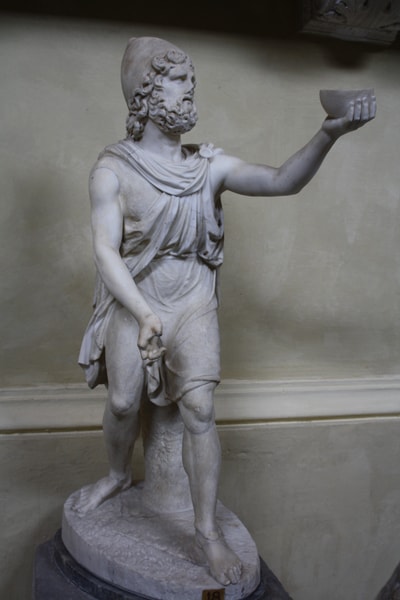
"So then, royal son of Laertes, Odysseus, man of exploits, / still eager to leave at once and hurry back / to your own home, your beloved native land? / good luck to you, even so. Farewell! / But if you only knew, deep down, what pains / are fated to fill your cup before you reach that shore, / you’d stay right here, preside in our house with me / and be immortal. Much as you long to see your wife, / the one you pine for all your days… and yet / I just might claim to be nothing less than she, / neither in face nor figure. Hardly right, is it, / for mortal woman to rival immortal goddess? / How, in build? in beauty?" (Homer, The Odyssey, 5. 224-237).
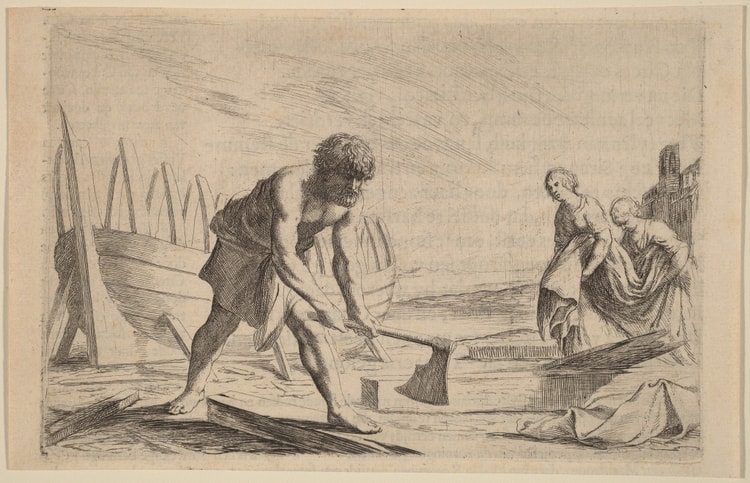
Odysseus, with his characteristic diplomacy and wisdom, acknowledged Calypso’s beauty and immortality, admitting that Penelope, as a mortal, could not compare. Yet, he reaffirmed his unwavering yearning for his home and family, a desire that transcended even the offer of eternal youth. After one last night spent together in the cavern, the work of liberation began. Calypso provided Odysseus with a bronze axe and guided him to a grove of towering trees. Over four days of strenuous labor, Odysseus constructed a sturdy raft, with Calypso supplying drills and bolts of cloth for the sail.
On the fifth day, Calypso bathed Odysseus, clothed him in fine, fragrant garments, provisioned his raft with wine, water, and meat, and summoned a gentle, favorable wind to propel him on his way. Thus, Odysseus finally departed Ogygia, leaving behind the beautiful nymph and her isolated paradise.
Odysseus’s Recount to Queen Arete (Book 7)
Later in his journey, after another shipwreck delivered him to the land of the Phaeacians, Odysseus recounted his time with Calypso to Queen Arete in Book 7 of The Odyssey. He described Ogygia as an island far at sea and Calypso as a "seductive nymph" with lovely braids, a figure whose beauty belied a dangerous, possessive nature, keeping both gods and mortals from venturing to her shores. He reiterated his survival at sea for nine days before reaching her island, and how Calypso, out of kindness, had initially taken him in and cherished him, offering him immortality. Yet, despite her generosity and the promise of eternal life, he confessed he could never truly love her. He spoke of seven years spent in tears, a period only ended by Zeus’s command in the eighth year, which prompted Calypso’s change of heart and subsequent aid in his departure.
Supporting Data: Lineage, Offspring, and Other Accounts
Beyond Homer’s seminal account, various ancient sources offer additional details regarding Calypso’s origins and potential descendants, enriching her mythological profile.
Varied Parentage
While Homer consistently refers to Calypso as “Atlas’s daughter,” establishing her as the offspring of the mighty Titan condemned to hold up the heavens after the Titanomachy (the war between the Titans and the Olympian gods), other traditions present alternative lineages. Some sources, such as Hesiod’s Theogony, imply a connection to the sea, listing her as a daughter of Oceanus, the primordial Titan of the ocean, and the sea nymph Thetis. Still others suggest her parentage from Nereus, an even older pre-Olympian sea god, often called "the old man of the sea." These varied genealogies underscore her liminal nature, connecting her to both the ancient cosmic powers of the Titans and the boundless, mysterious forces of the sea. Her mother, however, is rarely specified, highlighting her independent and powerful status.
Children of Calypso and Odysseus
Homer’s Odyssey makes no mention of children between Calypso and Odysseus, focusing solely on their intense, albeit one-sided, romantic relationship and Odysseus’s unyielding desire for home. However, other ancient Greek scholars and historians present different narratives. Apollodorus (circa 180 BCE), a prominent Greek scholar, attributes a son named Latinus to Calypso and Odysseus. Interestingly, other sources, including Hesiod, often credit the sorceress Circe with being Latinus’s mother, suggesting a fluidity in mythological traditions concerning heroic parentage. Hesiod, in his Theogony, more explicitly states that Calypso bore Odysseus two sons: Nausithous and Nausinous. These alternative accounts suggest a more lasting, fertile union than Homer portrays, perhaps reflecting different regional or chronological interpretations of the myth.
Alternative Fates: Calypso’s End
Homer’s narrative concludes with Calypso’s heartbroken but compliant farewell to Odysseus, her fate left open. However, the Roman writer Hyginus, in his Fabulae, offers a more tragic and definitive end for the nymph. According to Hyginus, Calypso, consumed by unrequited love and despair after Odysseus’s departure, takes her own life. This poignant detail adds a layer of profound sorrow to her character, transforming her from a mere obstacle into a tragic figure of immense passion and ultimate heartbreak.
Official Responses: The Divine Mandate and Mortal Resolve
The story of Calypso and Odysseus is fundamentally shaped by a series of "official responses" – the decrees of the Olympian gods and the reactions of the mortals and immortals involved.
Athena’s Advocacy
Athena’s persistent advocacy for Odysseus serves as the catalyst for his liberation. Her arguments before Zeus are not merely petitions but reasoned appeals to divine justice and the established order. She emphasizes Odysseus’s unique qualities – his wisdom, piety, and leadership – arguing that his prolonged suffering under Calypso’s spell is an unjust fate for a hero who has honored the gods. Her "official response" is a powerful articulation of a divine patron’s responsibility and a challenge to Zeus’s apparent inaction, ensuring that the hero’s journey home aligns with his deserved destiny.
Zeus’s Decree
Zeus’s "official response" is the ultimate authority. His decision to release Odysseus is framed not as a personal favor to Athena or an act of malice towards Calypso, but as a recognition of the hero’s fate and the natural order of things. He cannot allow an immortal’s possessive love to permanently alter a mortal’s destiny, especially one so pivotal as Odysseus’s. His command, delivered through Hermes, is absolute, underscoring the hierarchical structure of the Olympian pantheon and the supremacy of his will, even over the desires of other powerful immortals. The condition that Odysseus build his own raft and face further trials also reinforces the divine principle that heroes must earn their return, not be simply delivered.
Hermes’s Diplomatic Delivery
Hermes, as the messenger of the gods, acts as the official intermediary. His interaction with Calypso is a masterclass in divine diplomacy. He acknowledges her beauty and hospitality while unflinchingly delivering Zeus’s unalterable command. His explanation of Odysseus’s past and his fated return home serves as the "official justification" for the decree, leaving Calypso with no room for defiance. His final warning against incurring Zeus’s wrath reinforces the gravity of the situation and the ultimate power dynamic at play.
Calypso’s Grievance and Compliance
Calypso’s "official response" is a poignant protest against what she perceives as divine hypocrisy. She articulates a deeply felt grievance, accusing the male gods of jealousy and prejudice against goddesses who choose mortal lovers, a sentiment that resonates with broader mythological themes of gendered power dynamics among the gods. Her argument serves as her official objection to the decree. However, her eventual compliance, though reluctant and bitter, is the ultimate "official response" to Zeus’s authority. It demonstrates that even powerful nymphs cannot defy the will of the king of the gods, highlighting the limits of individual power within the cosmic order.
Odysseus’s Measured Acceptance
Odysseus’s "official response" to Calypso’s final temptation and assistance is a testament to his cunning and unwavering focus. He acknowledges her superior beauty and immortality, deflecting her final plea without insulting her, but unequivocally reaffirms his devotion to Penelope and his homeland. His demand for an oath before trusting her help is a pragmatic "official response" to his prior experiences of betrayal and suffering, ensuring his safety before committing to her aid. His actions—building the raft, accepting provisions—are his final "official response" to the opportunities presented by divine intervention and Calypso’s reluctant compliance.
Implications: Legacy and Enduring Resonance
Calypso’s story extends far beyond the pages of Homer, leaving an indelible mark on Western culture, influencing literature, art, and modern interpretations of love, captivity, and freedom.
Thematic Significance
Calypso’s narrative is rich with thematic implications. It explores the tension between possessive love and genuine affection, highlighting how even profound love, when it infringes upon another’s freedom and destiny, can become a form of imprisonment. Her offer of immortality forces a confrontation with the human condition: the transient nature of life versus the eternal, and the hero’s choice of mortal love, struggle, and eventual death over an ageless, pain-free existence. This choice underscores the value placed on human experience, familial bonds, and the journey of self-discovery, even if fraught with hardship. The divine intervention also raises questions about free will versus fate, demonstrating how even powerful immortals are subject to a higher cosmic order.
Literary and Artistic Legacy
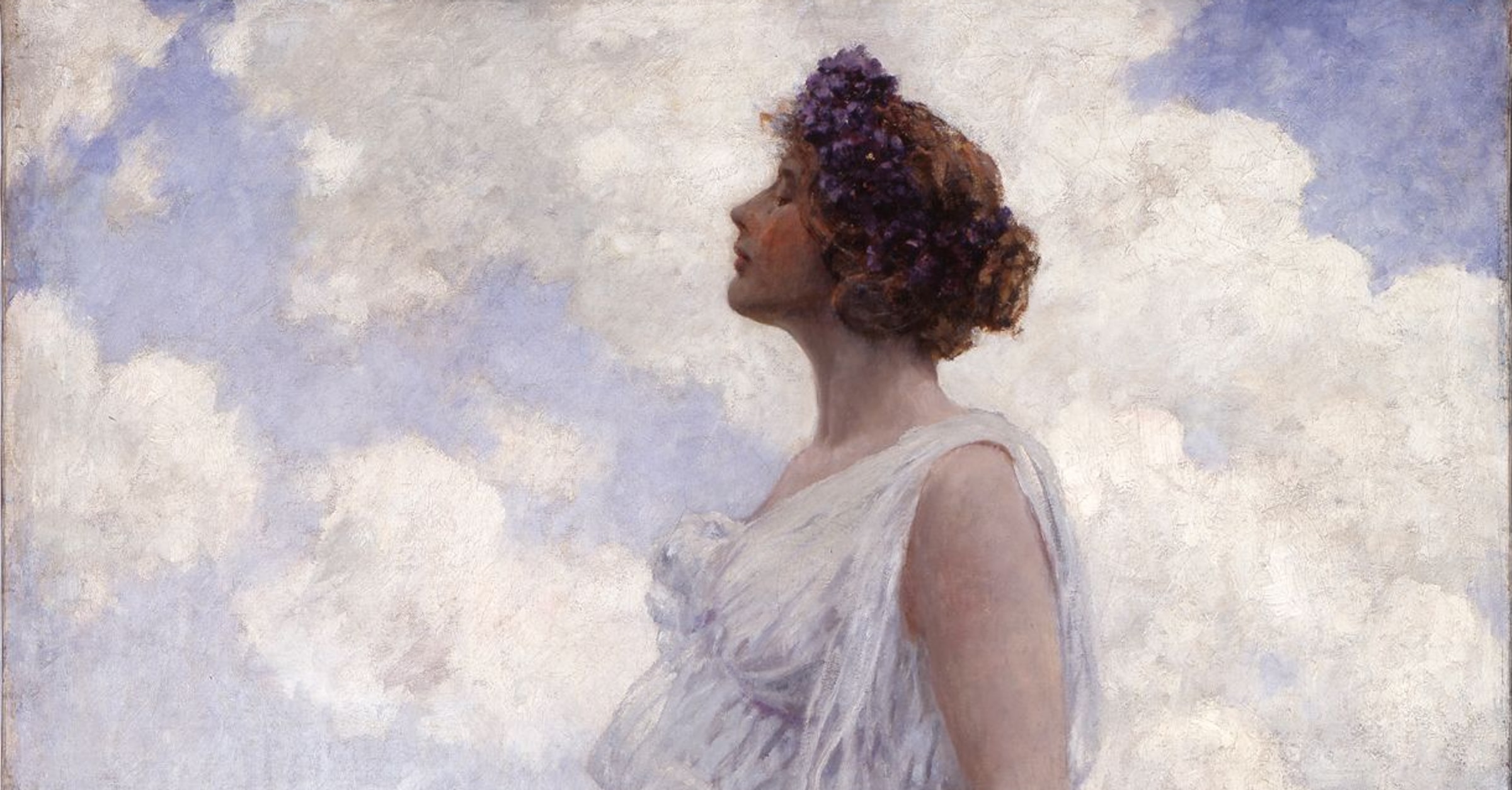
Calypso has become an archetypal figure, representing the enchanting temptress, the forlorn lover, and the isolated queen. Her portrayal as a beautiful yet cunning woman who initially obstructs Odysseus’s return but ultimately aids him highlights her complex character. While often cast as the antagonist, her genuine love and subsequent heartbreak have fostered more sympathetic interpretations. The English poet Letitia Landon (1802-1838), in her poem Calypso Watching the Ocean (1830s), beautifully captures this nuance, depicting a heartbroken Calypso sitting alone, gazing at the sea, yearning for the capacity to weep or escape her lonely island, thereby humanizing her divine sorrow. This literary tradition continues to explore the multifaceted nature of her character, moving beyond simple binaries of good and evil.
Her story has inspired countless works of art, from classical frescoes to Renaissance paintings and modern illustrations, each attempting to capture the beauty of Ogygia, the intensity of her love, and the pathos of her loss.
Modern Interpretations and Cultural Impact
In contemporary culture, Calypso’s myth continues to resonate, influencing narratives across various media. The enduring appeal of her character lies in her capacity to embody universal human experiences: the pain of unrequited love, the struggle for freedom, the allure of paradise, and the irresistible pull of home. Her story serves as a powerful reminder that even in the most idyllic settings, true contentment cannot be found without autonomy and connection to one’s roots.
The continued fascination with Calypso’s myth is evident in ongoing discussions and potential future adaptations. For instance, reports indicate that in Christopher Nolan’s anticipated epic production of The Odyssey (expected 2026), the role of Calypso is slated to be played by acclaimed South African and American actress Charlize Theron, signaling the character’s enduring relevance and appeal to modern audiences and storytellers who seek to reinterpret classical narratives through contemporary lenses. Such adaptations ensure that the tale of the captivating nymph of Ogygia, her passionate love, and her reluctant farewell, will continue to enchant and provoke thought for generations to come.
[END REPORT]