The Forgotten Dawn of Conflict: Unpacking the Battle of Philippi
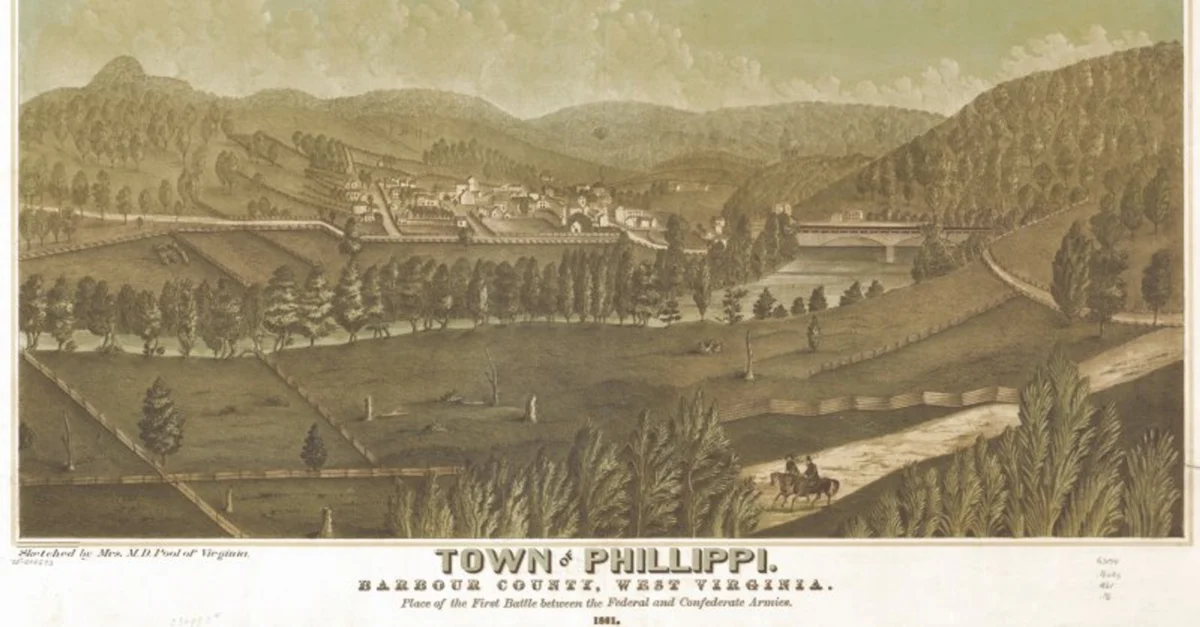
Philippi, West Virginia – Often overshadowed by the more widely recognized First Battle of Bull Run (First Manassas), the Battle of Philippi, fought on June 3, 1861, stands as the true opening act of organized land warfare in the American Civil War. This engagement, a swift Union victory, though frequently dismissed as a mere skirmish, was far more than a footnote; it was a pivotal moment that shaped early Union strategy, fueled Northern optimism, and significantly contributed to the eventual creation of West Virginia.
While the accidental clash at Fairfax Court House two days prior saw the first blood shed, Philippi marked the first deliberate, orchestrated military operation of the conflict. Its chaotic conclusion, famously dubbed the "Philippi Races" by a mocking Northern press, provided a dramatic, if somewhat misleading, preview of the long and bloody war that lay ahead.
Main Facts: The Unsung Inauguration
The Battle of Philippi occurred in what was then Philippi, Virginia (present-day West Virginia), on a rainy Monday morning, June 3, 1861. It involved approximately 3,000 Union troops under the overall command of Major General George B. McClellan (though he was not present at the battle) and Brigadier General Thomas A. Morris, against a poorly equipped and largely untrained Confederate force of around 750-775 recruits led by Colonel George Porterfield.
The Union objective was to dislodge the Confederate presence from the strategically important northwestern region of Virginia, particularly to protect the vital Baltimore & Ohio (B&O) Railroad. The Union plan involved a coordinated pincer movement, though circumstances on the ground led to an early, uncoordinated assault.
The engagement itself was remarkably brief, lasting only about 20 minutes, and resulted in a decisive Union victory. Casualties were extraordinarily light for a Civil War engagement: two Union soldiers wounded and three Confederates. Despite the low body count, the battle is historically significant for yielding the first recorded field amputations of the war, leading to an extraordinary story of innovation in prosthetics.
The Northern press seized upon the victory, portraying it as a great triumph and evidence that the "rebellion" would be swiftly crushed. This narrative, while boosting morale, also fostered a dangerous overconfidence that would soon be shattered at Bull Run. Known colloquially as the "Philippi Races," the battle earned its nickname from the panicked, disorganized flight of the surprised Confederate recruits, many still in their bedclothes, under Union artillery fire.
Chronology: From Division to Dawn Assault
Deep Roots of Division in Virginia
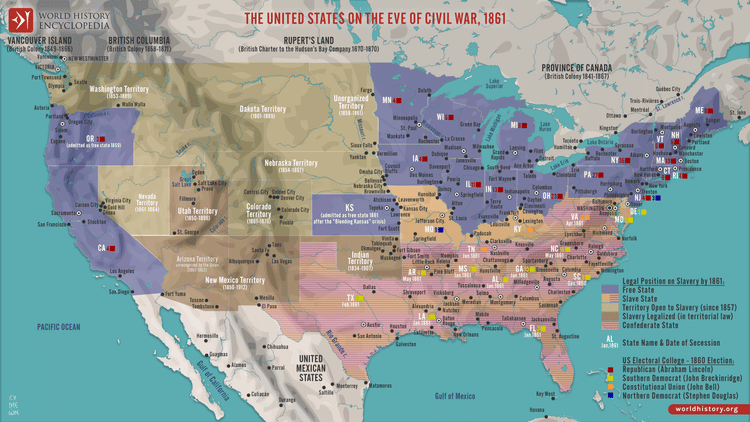
The roots of the Philippi conflict stretch back centuries, reflecting the inherent geographical, economic, and social schisms within Virginia. Founded in 1607, the Jamestown Colony evolved into a society heavily reliant on chattel slavery, particularly in its eastern and southern regions, where large plantations dominated the agricultural landscape. However, the mountainous northwestern counties developed a distinct identity. Less suitable for plantation agriculture and with a smaller enslaved population, this region fostered closer economic and cultural ties with the free states of Ohio and Pennsylvania. Its citizens felt increasingly alienated from the slave-holding aristocracy that controlled the state government in Richmond.
By the eve of the Civil War, this divergence had created two Virginias. The firing upon Fort Sumter on April 12, 1861, and President Abraham Lincoln’s subsequent call for 75,000 volunteers to suppress the rebellion, pushed these tensions to a breaking point. On May 23, 1861, Virginia’s government in Richmond officially voted to secede from the Union, joining the Confederate States of America. Yet, powerful pro-Union sentiment persisted in the northwest, especially in the strategically important city of Wheeling, which would soon become the seat of a pro-Union "government-in-exile," advocating for the creation of a new, loyal state.
Confederate Attempts to Consolidate Power
Despite the strong Unionist leanings, pockets of secessionist support existed throughout northwestern Virginia. Following the secession vote, Confederate officers were dispatched to recruit men for the nascent army. Colonel George Porterfield was tasked with organizing forces in the region. He initially attempted to establish a muster point in Grafton, a town with strong Union sympathies, but faced considerable local opposition. Recognizing the precariousness of his position, Porterfield wisely retreated to Philippi, a smaller town with a more pronounced pro-secessionist population.
Porterfield’s command, however, was a testament to the Confederacy’s early struggles with logistics and organization. He managed to muster between 750 and 775 recruits, but their equipment was woefully inadequate. They were armed with an assortment of ancient muskets from the War of 1812, hunting rifles, long knives, and whatever personal weapons they could scrounge. Crucially, they lacked military training, discipline, and any combat experience, rendering them more a militia than a coherent fighting force. To hinder any Union advance, Porterfield ordered the burning of bridges connecting Philippi to Wheeling, a move that would inadvertently provide the Union with a pretext for invasion.
Union Counter-Offensive: McClellan’s Strategy
The Confederate presence in northwestern Virginia, particularly the threat to the vital B&O Railroad, was unacceptable to the Union. Major General George B. McClellan, commanding the Department of the Ohio from Cincinnati, saw an opportunity not only to secure the region but also to demonstrate Union resolve. His objectives were clear: protect the B&O Railroad, vital for troop and supply movement, suppress secessionist activity, and support the pro-Union government forming in Wheeling.
McClellan dispatched Brigadier General Thomas A. Morris to lead the invasion. Morris, in turn, approved a daring plan conceived by Colonel Benjamin Franklin Kelley, commander of the First Virginia Infantry (a Union regiment raised on Virginia soil). The plan called for a classic pincer movement: Kelley’s force of 1,600 men would approach Philippi from the south, while Colonel Ebenezer Dumont, supported by Colonel Frederick W. Lander, would lead 1,400 troops from the northwest. To deceive Confederate intelligence, Kelley’s troops were initially loaded onto a train heading east, seemingly towards Harpers Ferry, before disembarking at Thornton and marching back towards Philippi under the cover of darkness.
The Battle Unfolds: A Pistol Shot in the Rain
The night of June 2-3, 1861, was dark and rainy, conditions that would prove detrimental to the unprepared Confederates. As the Union columns advanced, the Confederate camp in Philippi remained oblivious. No effective picket lines had been established, and guards were absent, leaving the encampment vulnerable. Morris’s plan dictated that the assault would commence before dawn, triggered by a pistol shot, followed by an artillery barrage and then an infantry charge, trapping the Confederates between Dumont’s and Kelley’s forces.
However, fate intervened in the form of Mrs. Thomas Humphreys, a staunch secessionist sympathizer in Philippi. Spotting Union troops deploying in the pre-dawn gloom, she quickly dispatched her son to warn the Confederate camp. When Union pickets apprehended her son, Mrs. Humphreys, in a desperate act of defiance, fired her pistol at them. Though she missed her mark, the shot rang out, prematurely signaling the attack.
The unexpected pistol shot shattered the Union’s perfectly timed pincer strategy. Kelley, having taken a wrong turn in the dark and rain, was still further north than intended, unable to deploy his men to block the southern escape route. Dumont’s artillery immediately opened fire on the unsuspecting Confederate camp. The bombardment, coupled with the sudden appearance of Union infantry, plunged the camp into widespread panic. Many Confederates, roused from sleep, fled in disarray, some still in their bedclothes – a detail that would be gleefully reported by the Northern press and give rise to the "Philippi Races."
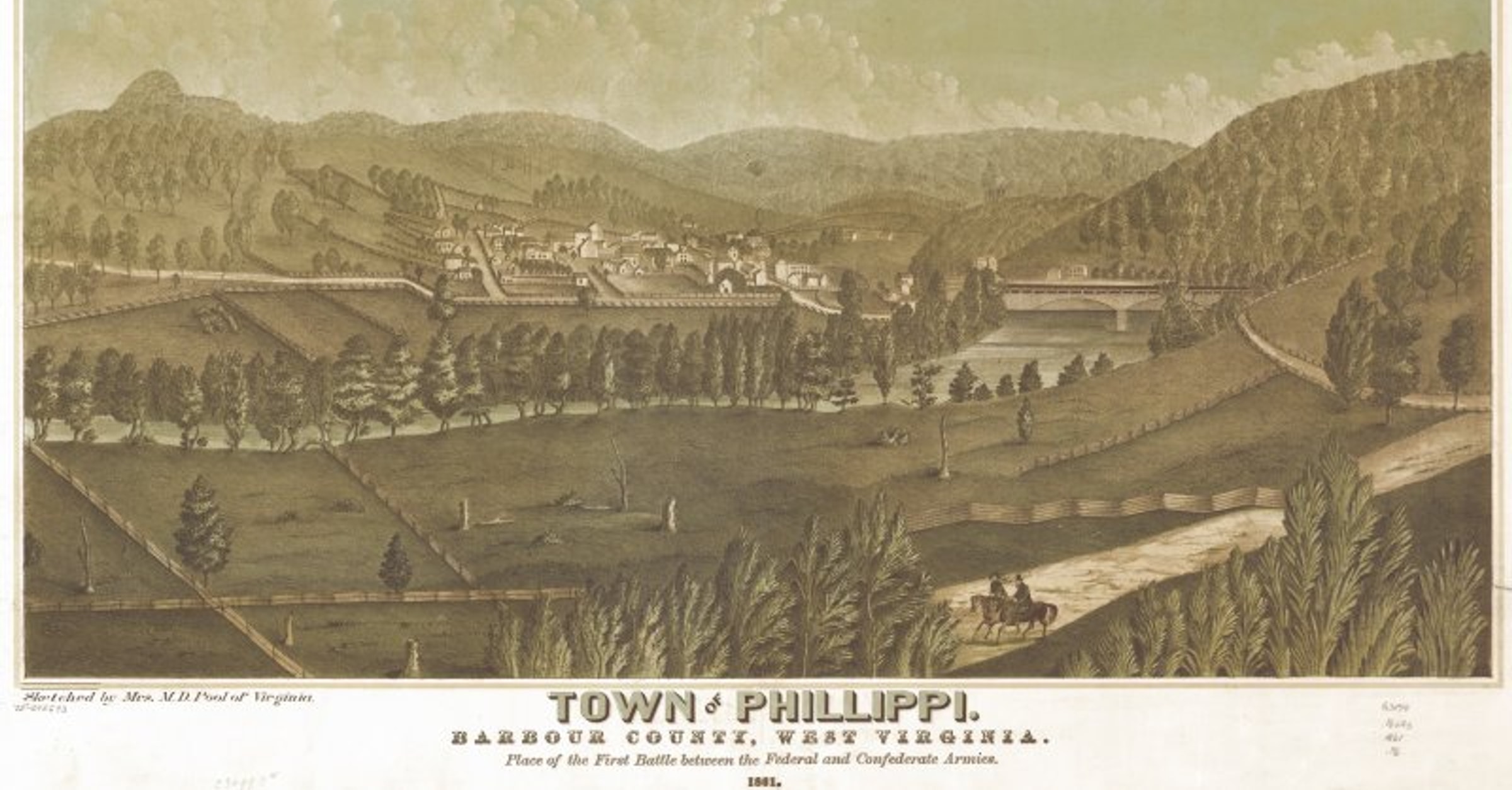
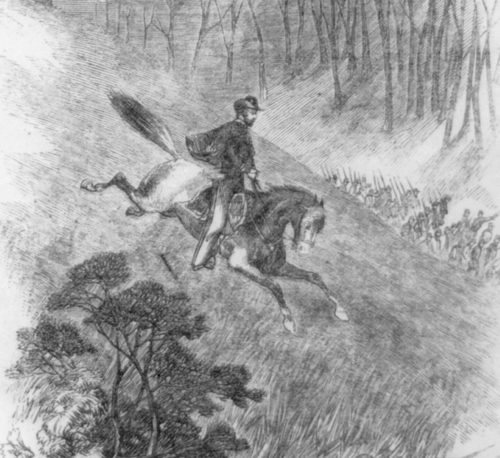
A few brave Confederates attempted to return fire, but their resistance was brief and futile against the organized Union assault. Dumont’s infantry advanced across the famous Philippi Covered Bridge, while Colonel Lander executed a "daring ride" down a steep hillside above the town, a feat later immortalized in illustrations and celebrated as a heroic moment in the Northern media. Kelley, though unable to complete the pincer, pursued the fleeing Confederates, sustaining a chest wound (from which he later recovered). Colonel Lander, witnessing this, shot Kelley’s assailant, who also survived. The routed Confederates continued their retreat for some 45 miles, finally regrouping in Huttonsville.
Supporting Data: Casualties, Courage, and Consequences
The Human Cost and a Legacy of Innovation
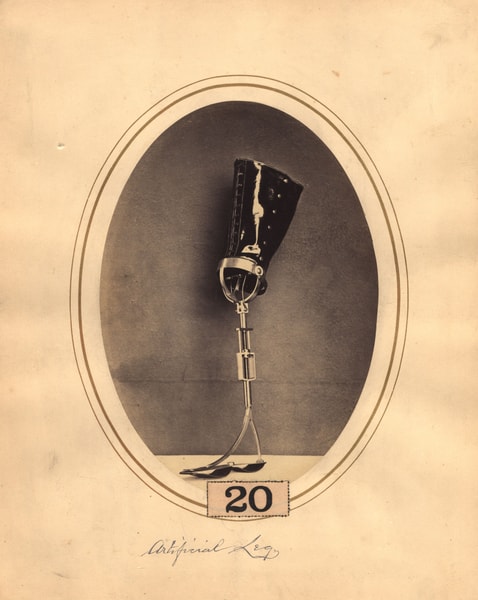
While a Union victory, the Battle of Philippi was remarkable for its low casualty count, especially when compared to the brutal battles that would soon define the Civil War. Only two Union soldiers were wounded, and three Confederates. However, these few casualties carried significant historical weight. Two of the wounded Confederates, struck by cannon fire, required amputations – marking these as the first recorded field amputations of the American Civil War.
One of these men was 18-year-old college student James E. Hanger. His personal tragedy became a catalyst for groundbreaking innovation. After returning home with a lost leg, Hanger, a skilled mechanic, refused to accept the crude, painful prosthetics available at the time. He meticulously designed and crafted his own artificial leg from barrel staves and rubber, incorporating hinges at the knee and ankle, allowing for a much more natural gait. His invention, known as the "Hanger Limb," was so superior that the Virginia State Legislature in Richmond commissioned him to produce more for other wounded soldiers. After the war, Hanger patented his design and founded what would become the Hanger Orthopedic Group, Inc., now simply Hanger, Inc., the world’s leading provider of prosthetics and orthotics. His ingenuity, born from the fields of Philippi, revolutionized prosthetic design and continues to impact countless lives today.
Confederate Disarray and Union Efficiency
The "Philippi Races" moniker perfectly captured the state of the Confederate force. Porterfield’s recruits, lacking training, discipline, and proper equipment, were simply no match for the organized Union columns. The absence of basic defensive measures like pickets underscores the amateur nature of the early Confederate war effort in this region. This disorganization highlights the stark difference between the fledgling Confederate forces and the more established, albeit still green, Union Army. The Union’s strategic planning, though imperfectly executed due to the early alarm, demonstrated a level of military professionalism that the Confederates in Philippi could not match.
Strategic Importance of Western Virginia
The Battle of Philippi was not just an isolated skirmish; it was part of a larger Union campaign to secure western Virginia. The region’s strategic importance lay primarily in the Baltimore & Ohio Railroad, a critical artery for troop movements and supplies connecting Washington D.C. to the Midwest. Protecting this railroad was paramount for the Union war effort. Furthermore, the Union aimed to support the strong pro-Union sentiment in the region, which, if cultivated, could lead to the formation of a new, loyal state. The success at Philippi, followed by other Union victories in the region, played a direct role in achieving these objectives.
Official Responses: Euphoria and Miscalculation
The Northern Press: A Triumph of Valor
The news of the Union victory at Philippi was met with widespread jubilation in the North. Newspapers heralded it as a "great triumph," painting vivid pictures of Union valor and Confederate cowardice. Colonel Lander’s "daring ride" became an instant legend, illustrated in popular periodicals like Leslie’s Weekly, solidifying his heroic image. Major General George B. McClellan, despite not being present, was showered with praise for orchestrating the campaign, his reputation soaring overnight. The press repeatedly emphasized the "cowardly flight of the rebels" and the "Philippi Races" as clear evidence that the rebellion was a fragile construct that would quickly collapse under Union pressure. This narrative was immensely effective in boosting public morale and solidifying support for the war.
Lincoln’s Cabinet: A Call for Swift Action
The Northern press’s optimistic portrayal of Philippi resonated deeply within President Lincoln’s administration. The swift, decisive victory, coupled with the low casualties, seemed to confirm the widespread belief that the war would be short and relatively painless. Buoyed by this confidence, Lincoln and his advisors, pressured by public opinion and the "On to Richmond!" cry, ordered a rapid advance on the Confederate capital. This decision, a direct consequence of the Philippi narrative, led directly to the First Battle of Bull Run (First Manassas) on July 21, 1861. The devastating Union defeat there would dramatically shatter the illusions fostered by Philippi, revealing the true, brutal nature of the conflict.
Confederate Reaction: Humiliation and Reassessment
For the Confederacy, Philippi was a humiliating and sobering defeat. Colonel Porterfield was quickly relieved of command, his failure attributed to poor leadership and the inability to properly organize and train his raw recruits. The battle underscored the urgent need for the Confederate army to improve its command structure, training, and logistical support. The "Philippi Races" became a painful symbol of early Confederate unpreparedness, a lesson that would be learned, albeit slowly and at great cost, in the months that followed. It also highlighted the precariousness of Confederate control in western Virginia and the strategic imperative to defend it more effectively.
Implications: A Prelude to a Nation Divided
Redefining the "First Battle"
The Battle of Philippi unequivocally holds the distinction of being the first organized land engagement of the American Civil War. This fact often gets lost in the popular narrative, which frequently assigns this status to the First Battle of Bull Run. Philippi’s significance lies not in its scale, but in its chronological position and its role as the initial test of wills and strategies between the Union and Confederate forces. It was a Union victory, correcting the common misconception that the first battle of the war was a Confederate triumph. While Bull Run was indeed the first major battle, Philippi provided the critical, if misleading, prelude.
The Birth of West Virginia
Perhaps the most enduring and profound implication of the Philippi campaign was its direct contribution to the formation of West Virginia. The Union victories at Philippi and the subsequent Battle of Rich Mountain in July 1861 emboldened the pro-Union government in Wheeling. This provisional government convened the Second Wheeling Convention in June 1861, issuing "A Declaration of the People of Virginia." This document asserted the right of the people, not just the legislature, to approve changes in state government, effectively nullifying Richmond’s secessionist vote. This decisive action paved the way for the region’s separation from Confederate Virginia, culminating in the admission of West Virginia to the Union as the 35th state in June 1863. Philippi, therefore, was not just a battle, but a foundational event in the birth of a new state.
A Lasting Legacy
Today, the city of Philippi, West Virginia, with a population of over 3,000, proudly serves as the county seat of Barbour County. The battle’s legacy is actively commemorated each June during the "Blue and Gray Reunion," an annual event featuring a reenactment of the battle, a parade, and a vibrant festival. The historic Philippi Covered Bridge, over which Dumont’s troops advanced, still spans the Tygart River, a tangible link to the past. Visitors and residents alike traverse the streets of the town that earned its unusual nickname, remembering the "Philippi Races" – a chaotic, yet crucial, opening chapter in the epic saga of the American Civil War. Furthermore, the global company Hanger, Inc., a direct descendant of James Hanger’s wartime innovation, stands as a testament to the unforeseen positive consequences that can emerge even from the crucible of conflict.
The Battle of Philippi, though a small engagement, cast a long shadow, influencing military strategy, shaping public perception, and altering political geography. It was a true curtain-raiser, signaling the beginning of a conflict whose scale and brutality would soon eclipse the initial optimism born on a rainy morning in western Virginia.