The Arctic’s Frozen Echo: Documenting the Suspended Reality of Pyramiden
SVALBARD, Norway — In the high latitudes of the Arctic Circle, where the sun vanishes for months and the permafrost dictates the limits of architecture, lies a settlement that defies the traditional narrative of decay. Pyramiden, a former Soviet coal-mining outpost on the Norwegian archipelago of Svalbard, exists in a state of eerie, crystalline preservation. It is a place where the clocks stopped in 1998, but the atmosphere remains thick with the intentions of a vanished empire.
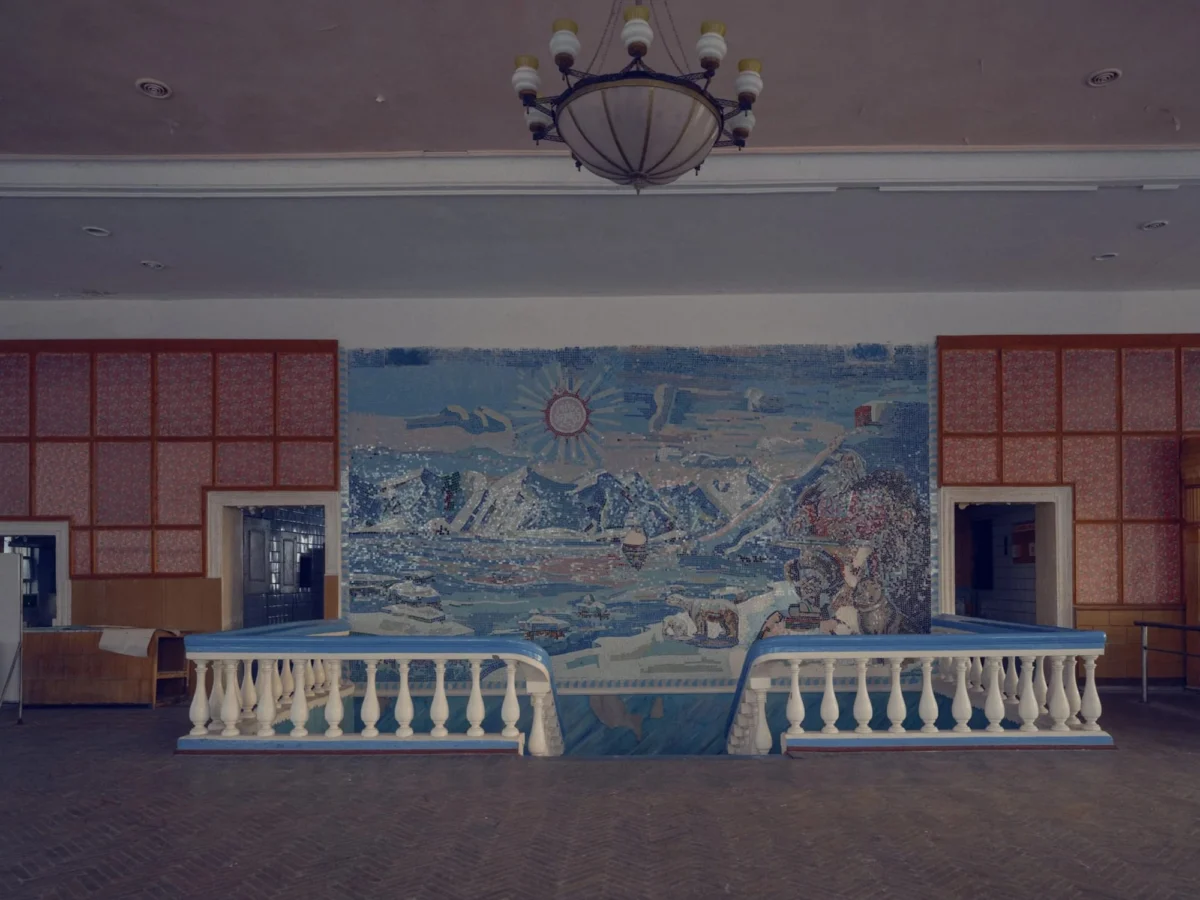
French photographer Damien Aubin recently journeyed to this remote frontier to document a world that he describes not as "abandoned," but as "left in suspension." His work, culminating in a limited-edition book slated for release this September, provides a hauntingly still look at a community where human intent has been decoupled from human presence.
Main Facts: A Soviet Utopia at the Edge of the World
Pyramiden stands as one of the most unique geographical and political anomalies on Earth. Located on the island of Spitsbergen, it was once a flagship of Soviet industrial prowess. At its height, it housed over 1,000 residents who enjoyed amenities rarely seen in such harsh climates, including a heated indoor swimming pool, a library, a cinema, and a music hall.

The town takes its name from the pyramid-shaped mountain that looms over the settlement. Today, the town is owned by the Russian state-owned company Trust Arktikugol. While industrial operations ceased more than a quarter-century ago, the settlement was never truly "lost." Instead, the extreme cold and the lack of humidity in the Arctic air have acted as a natural preservative.
Damien Aubin’s photography captures this preservation with a clinical, yet poetic, distance. His images depict classrooms where books remain open on desks as if students have merely stepped out for a recess that has lasted decades. A statue of Vladimir Lenin—the northernmost in the world—still gazes out over the empty "Champs-Élysées" of the town, surrounded by buildings that look ready for re-occupancy.
Aubin’s project spans not just Pyramiden, but also the neighboring settlements of Barentsburg (still an active Russian mining town) and Longyearbyen (the Norwegian administrative center). His work highlights a recurring theme across the archipelago: "spaces shaped by human intent, no longer aligned with it."

Chronology: The Rise, Fall, and Stasis of Pyramiden
The history of Pyramiden is inextricably linked to the complex geopolitics of the early 20th century and the unique legal status of Svalbard.
1910–1927: The Early Stakes
The settlement was originally founded by Sweden in 1910. However, the 1920 Svalbard Treaty granted Norway sovereignty over the archipelago while allowing all signatory nations—including the Soviet Union—equal rights to engage in commercial activities like mining. In 1927, the Soviet Union purchased the site from Sweden, seeking to establish a permanent presence in the strategic High North.
1940–1990: The Golden Age of the North
Post-World War II, Pyramiden became a model Soviet community. It was designed to showcase the superiority of the socialist system to the West. Unlike the grim, utilitarian mining towns often found in the USSR, Pyramiden was lush with imported soil from Ukraine to grow grass, a luxury in the barren Arctic. It was a prestigious posting for Soviet workers, offering high wages and a standard of living that rivaled Moscow.

1996–1998: The Sudden End
The decline of Pyramiden was catalyzed by the collapse of the Soviet Union, but the final blow came in 1996. Vnukovo Airlines Flight 2801, a charter flight carrying 141 people—mostly miners and their families from Pyramiden—crashed into a mountain during its approach to Longyearbyen. Everyone on board perished. This tragedy, combined with the dwindling profitability of the coal mines, led to the decision to shutter operations. In 1998, the last permanent residents departed, leaving behind a "ghost town" fully stocked with furniture, equipment, and personal effects.
2007–Present: The "Suspension" Era
In 2007, Trust Arktikugol began efforts to revitalize the town, not as a mine, but as a tourist destination. A handful of workers moved back to maintain the buildings and run a small hotel. Today, the town sees a seasonal influx of visitors who arrive by boat or snowmobile to witness the frozen relic of the Cold War.
Supporting Data: Infrastructure and Preservation
The survival of Pyramiden’s infrastructure is a testament to Soviet engineering and the unique Arctic environment.

- Environmental Preservation: The average annual temperature in Svalbard is approximately -6°C (21°F). This permanent deep-freeze prevents the rot and mold that usually destroy abandoned wooden and drywall structures. Consequently, the interiors of the "Miners’ Canteen" and the "Cultural Palace" remain structurally sound.
- The "Northernmost" Records: Pyramiden holds several unofficial world records, including the northernmost grand piano (a "Red October" model in the Cultural Palace) and the northernmost monument to Lenin.
- Logistics of the Void: Aubin’s photographs document the sheer scale of the industrial footprint. The power station, coal piers, and the "Farm"—where cows and chickens were once raised in climate-controlled barns—occupy a vast expanse of the valley, dwarfing the handful of humans currently residing there.
- Ecological Encroachment: While the buildings remain, nature is slowly reclaiming the perimeter. Polar bears are frequent visitors, often roaming the empty streets, and seagulls have turned the window ledges of abandoned apartment blocks into massive nesting colonies.
Official Responses and Administrative Status
The status of Pyramiden remains a point of delicate diplomatic balance between Oslo and Moscow.
Under the Svalbard Treaty, Norway must treat Russian citizens and companies with the same rights as Norwegian ones. However, as geopolitical tensions have risen in the 21st century, the presence of Russian "state-owned" ghost towns on Norwegian soil has become a subject of scrutiny.
Trust Arktikugol Statement:
Representatives for Trust Arktikugol have frequently stated that their goal is to preserve the historical heritage of Pyramiden while transitioning toward "sustainable Arctic tourism." They view the town as a living museum of Soviet history.

Norwegian Perspective:
The Governor of Svalbard (Sysselmesteren) maintains strict environmental and safety regulations over the site. While Norway respects the right of Russia to maintain its settlements, there is a clear push to ensure that tourism in Pyramiden adheres to the stringent environmental standards of the Svalbard Environmental Protection Act.
Damien Aubin’s Artistic Stance:
Aubin himself approaches the site with a neutral, documentary eye. "I photograph these environments at a distance, in a restrained, diffuse light," he notes. "There is no event to describe, no narrative to unfold." His work avoids the sensationalism often found in "ruin porn," focusing instead on the architectural and psychological weight of the space.
Implications: Geopolitics, Ecology, and the Lessons of Ruin
The fascination with Pyramiden, as captured in Aubin’s upcoming book, speaks to broader global anxieties.

1. The Geopolitical Chessboard
The Arctic is becoming a central theater for 21st-century power struggles. As polar ice melts, new shipping lanes and mineral resources are becoming accessible. Pyramiden serves as a physical reminder of Russia’s long-standing claim to a presence in the High North. The "suspension" of the town allows it to be reactivated or repurposed as a strategic asset at any time.
2. The Global Seed Vault and Long-Termism
Aubin’s inclusion of the Global Seed Vault in Longyearbyen provides a stark contrast. While Pyramiden represents a failed attempt at human permanence, the Seed Vault represents a desperate attempt to ensure biological permanence. Both are structures built into the permafrost, designed to outlast the political or environmental crises of the present.
3. The Philosophy of the "After-Human"
Pyramiden offers a preview of what a world without humans might look like. Because the decay is so slow, the "human intent" remains visible. We see not just the rubble of a building, but the specific choice of blue paint in a canteen or the arrangement of chairs in a theater. It forces the viewer to confront the transience of ideology and the permanence of the physical marks we leave on the planet.

Conclusion: A Monument to the Stillness
Damien Aubin’s photographic survey of Pyramiden arrives at a time when the world is increasingly preoccupied with the end of eras. Whether viewed as a historical curiosity, a geopolitical marker, or an artistic memento mori, Pyramiden remains a place where time has lost its forward momentum.
As Aubin’s limited-edition book prepares for its September release, it serves as a vital record of a settlement that refuses to disappear. In the "restrained, diffuse light" of the Arctic, Pyramiden stands as a monument to a suspended dream—a Soviet utopia that, while no longer inhabited by the masses, continues to preside over the snow-covered silence of the 78th parallel.