The Solar Paradox: Why NASA’s ‘Yellow Dwarf’ Is Actually Pure White
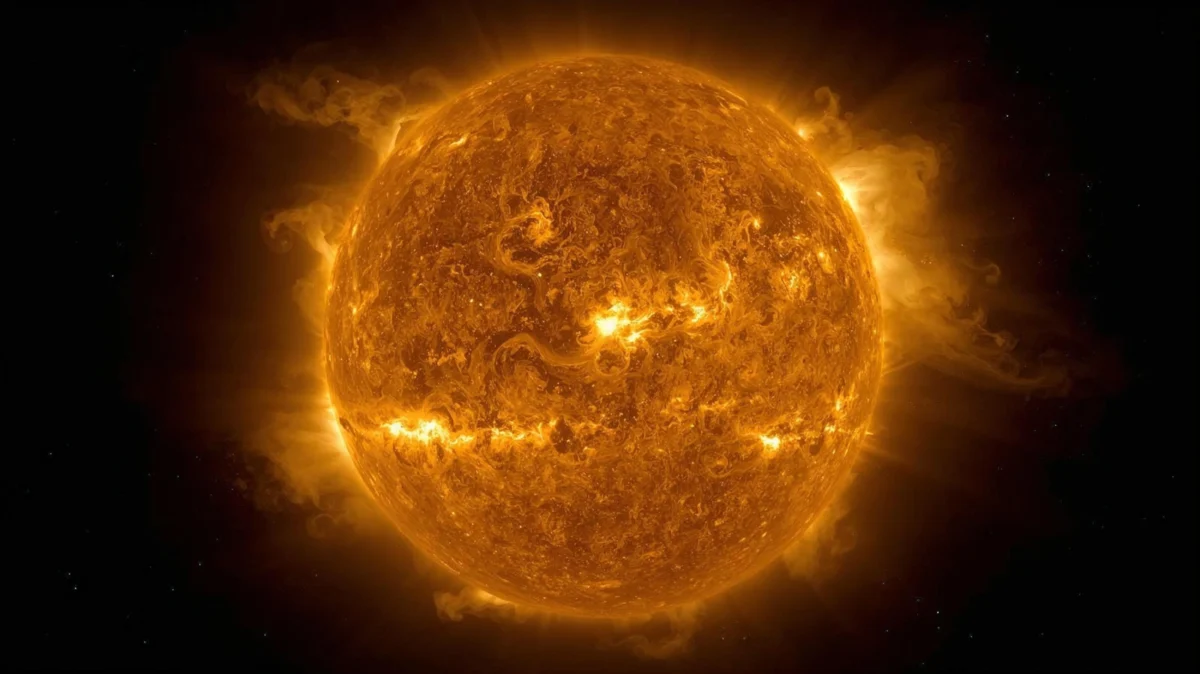
For generations, children have reached for the brightest yellow crayon in the box to depict the Sun. This celestial shorthand is reinforced by nearly every sunrise and sunset we witness, where our local star appears as a golden orb hanging in the sky. Even NASA, the world’s premier space agency, officially classifies the Sun as a "Yellow Dwarf." However, there is a fundamental disconnect between stellar classification and physical reality: the Sun is not yellow. If you were to stand in the vacuum of space, stripped of the Earth’s atmospheric filter, the Sun would appear as a blinding, brilliant white.
The discrepancy between the Sun’s actual color and its popular (and scientific) moniker involves a complex intersection of stellar evolution, atmospheric physics, and the historical development of astronomy. To understand why the Sun looks yellow—and why scientists continue to call it that despite knowing better—one must delve into the mechanics of light and the very way we categorize the universe.
Main Facts: The White Star in a Yellow Mask
At its core, the Sun is a G-type main-sequence star, frequently referred to as a G2V star. The "G" indicates its spectral class, while "V" (the Roman numeral five) denotes that it is a "dwarf" star currently in the longest, most stable stage of its life cycle.
The primary reason the Sun is white rather than yellow is its emission spectrum. As a "blackbody" radiator, the Sun emits light across the entire visible spectrum, from violet and blue to red and orange. When these wavelengths are combined and viewed simultaneously, the human eye perceives the result as white. While the Sun’s energy output actually peaks in the green-blue portion of the spectrum, the sheer volume of light emitted across all other colors washes this out, resulting in a pure white appearance.
The "yellow" we see from Earth is an optical illusion created by the atmosphere. As sunlight enters our atmosphere, it encounters molecules of nitrogen and oxygen. This interaction triggers a phenomenon known as Rayleigh scattering, which preferentially scatters shorter wavelengths of light—specifically blue and violet. Because the blue light is scattered in every direction (giving us a blue sky), the remaining light that reaches our eyes directly from the Sun is "depleted" of its blue components. This shifted balance leaves behind a surplus of longer wavelengths, such as yellow, orange, and red.
Chronology: The Evolution of Stellar Classification
The history of how we categorize the Sun begins in the late 19th and early 20th centuries, a period when astronomers were first learning to decode the messages hidden in starlight.
1890s–1910s: The Harvard Classification
The journey began with the "Harvard Computers," a group of female astronomers including Annie Jump Cannon and Antonia Maury. They developed the O, B, A, F, G, K, M spectral sequence. Originally based on the strength of hydrogen lines in a star’s spectrum, the system was later reordered by temperature. Under this system, "G" stars were identified as having temperatures between 5,000 and 6,000 Kelvin. Because stars in this temperature range have a peak emission that leans toward the middle of the visible spectrum, they were colloquially termed "yellow" to distinguish them from the "blue" O-stars and "red" M-stars.
1911–1913: The Hertzsprung-Russell Diagram
Independently, Ejnar Hertzsprung and Henry Norris Russell developed a graphical tool that changed astronomy forever. By plotting stars according to their luminosity (brightness) versus their spectral type (color/temperature), they revealed that most stars fall along a single diagonal line: the Main Sequence. It was here that the Sun was solidified as a "Yellow Dwarf." The term "dwarf" was used not because the Sun is small in an absolute sense—it contains 99.8% of the mass in our solar system—but to distinguish it from the "Giant" and "Supergiant" stars that occupy the upper regions of the diagram.
1943: The Yerkes Classification
The system was further refined into the Morgan-Keenan (MK) system, which added the Roman numeral luminosity classes. The Sun became a G2V star. The "2" indicates it is slightly hotter than a G0 star but cooler than a G9. Despite these technical refinements, the "Yellow" label remained firmly attached to the G-class, cementing the term in both scientific literature and public consciousness.
Supporting Data: The Physics of Scattering and Light
To understand why the Sun’s color changes depending on its position in the sky, we must look at the data behind atmospheric scattering.
Rayleigh Scattering
The Earth’s atmosphere acts as a filter. Rayleigh scattering is most effective on particles that are much smaller than the wavelength of the light. Blue light has a wavelength of approximately 450 nanometers, while red light is around 700 nanometers. Because blue light is shorter, it is scattered roughly ten times more efficiently than red light.
During the middle of the day, when the Sun is overhead, the light travels through the shortest possible path of atmosphere. Only a small amount of blue light is scattered, making the Sun appear slightly yellowish-white. However, as the Sun approaches the horizon during sunrise or sunset, the light must travel through a much thicker "slice" of the atmosphere. This increased path length scatters almost all the blue and even some of the green and yellow light, leaving only the longest wavelengths—the deep oranges and reds—to reach the observer.
Mie Scattering and Pollution
The article notes that smoke, smog, and wildfires can turn the Sun an "ominous" red. This involves Mie scattering, which occurs when atmospheric particles (like soot or water droplets) are of a similar size to the wavelengths of light. Unlike Rayleigh scattering, which is highly color-dependent, Mie scattering tends to scatter all wavelengths more broadly but can intensify the reddening effect when combined with heavy particulate matter. This was vividly seen during recent catastrophic wildfires in Canada and the Western United States, where the Sun appeared as a dull red disc even at midday.
Temperature and Color Correlation
In physics, there is a direct relationship between an object’s temperature and the color of light it emits, governed by Wien’s Displacement Law.
- O-Type Stars: >30,000 K (Deep Blue)
- A-Type Stars: 7,500–10,000 K (White/Blue-White, e.g., Sirius)
- G-Type Stars (The Sun): ~5,800 K (Pure White)
- M-Type Stars: <3,700 K (Red, e.g., Betelgeuse)
The Sun sits in a "sweet spot." While it is technically a "green-heavy" emitter, the combination of all visible outputs creates a white light that human evolution has calibrated as the baseline for "neutral" color.
Official Responses: Why NASA Keeps Using the Term
If NASA knows the Sun is white, why does it persist in using the "Yellow Dwarf" terminology? The answer lies in a blend of scientific tradition and public communication.
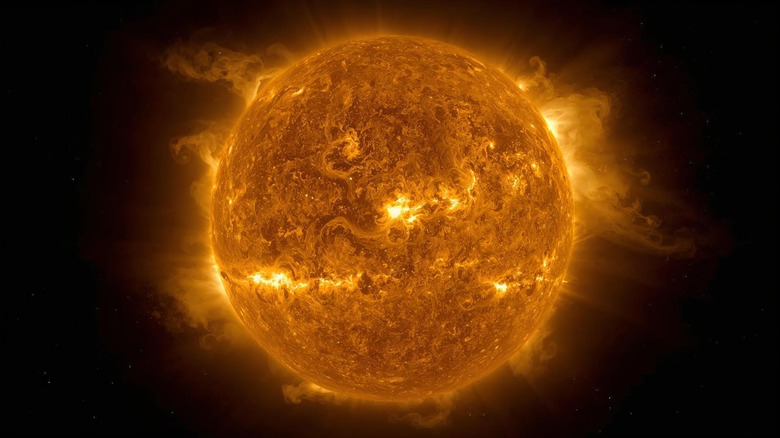
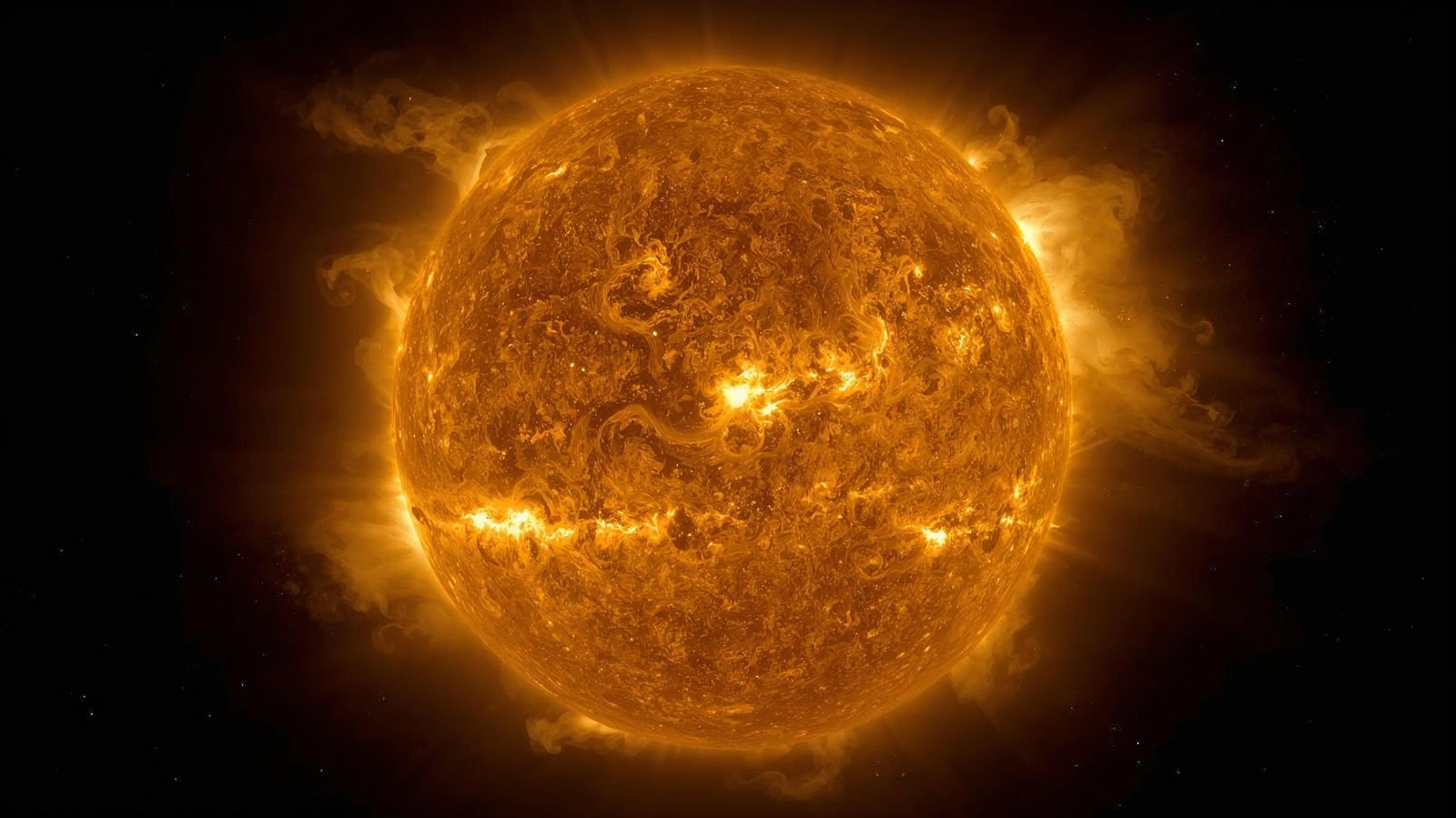
In official NASA educational materials, the agency clarifies that "the Sun is essentially all colors mixed together, which appear to our eyes as white." However, in their Solar Dynamics Observatory (SDO) and SOHO (Solar and Heliospheric Observatory) missions, NASA frequently releases images of the Sun in vibrant yellows, oranges, and even greens or purples.
Scientists at the Goddard Space Flight Center explain that these are "false-color" images. Because many solar telescopes observe the Sun in extreme ultraviolet (EUV) light—wavelengths that are invisible to the human eye—scientists must assign colors to these wavelengths so we can see the data. They often choose yellow or orange for the "visible" sun because it aligns with human expectations. If NASA released a photo of the Sun as a flat, white circle, it would lack the detail necessary to show sunspots, solar flares, and prominences, and it would likely confuse the general public who have been conditioned to see the Sun as "golden."
Furthermore, the "Yellow Dwarf" label is a taxonomical anchor. Just as a "Black Hole" isn’t a hole and "Dark Matter" might not be matter in the traditional sense, "Yellow Dwarf" is a name for a category of stars with specific mass, lifespan, and temperature characteristics. Changing the name would require rewriting over a century of astronomical catalogs.
Implications: From Exoplanets to Human Vision
The reality of the Sun’s color has profound implications for how we understand our place in the universe.
Astrobiology and Exoplanets
When astronomers look for Earth-like planets, they often prioritize "G-type" stars. Understanding the true white nature of our Sun helps scientists calculate the "habitable zone"—the distance at which a planet can sustain liquid water. If we were orbiting a truly yellow star (a cooler K-type), the light reaching the planet would be dimmer and redder, potentially altering the path of photosynthesis for any life that might evolve there.
Human Evolution
Our eyes are a direct product of the Sun’s output. Human vision evolved to be most sensitive to the wavelengths where the Sun is most active. We see "white" because our brains have adapted to perceive the Sun’s total output as the standard for illumination. If our Sun were a "Blue Giant," our definition of white would likely shift toward the ultraviolet.
Solar Technology
Understanding the full spectrum of the Sun’s white light is critical for the development of photovoltaic cells. Solar panels are designed to capture not just the "yellow" light we see, but the invisible infrared and high-energy ultraviolet light that the Sun emits in abundance.
In conclusion, while the "Yellow Dwarf" remains a useful classification in the Hertzsprung-Russell diagram, it is a misnomer in the physical world. The Sun is a white star, a fact hidden from us by the very atmosphere that allows us to breathe and observe its beauty. Whether through the lens of a telescope in orbit or the eyes of a child with a crayon, the Sun remains a symbol of light—even if the color of that light is more complex than it first appears.