
The Democratization of the "Frontier": Robinhood’s Bold Leap into Private Equity
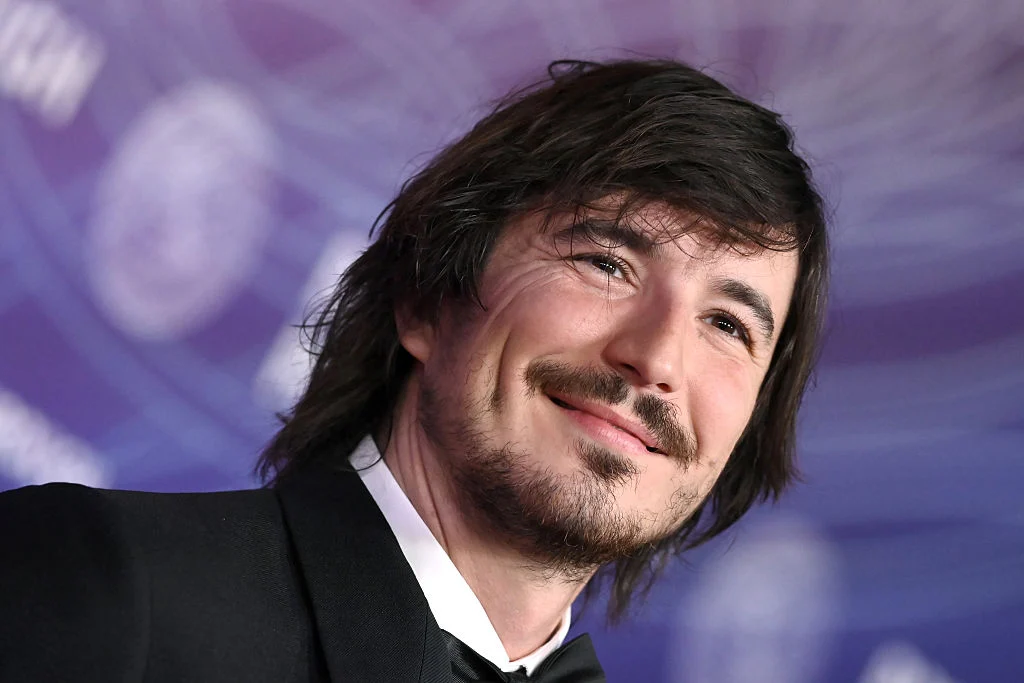
In a move that signals a seismic shift in the landscape of modern finance, Robinhood Markets Inc. is aggressively dismantling the barriers between Main Street investors and the high-stakes world of private venture capital. Speaking at The Wall Street Journal’s “Future of Everything” conference, Robinhood CEO Vlad Tenev heralded the early success of the firm’s Ventures Fund I—a publicly-traded vehicle designed to give retail traders a seat at the table once reserved for institutional titans and billionaire "accredited" investors.
As the traditional "unicorn" label becomes an undersized descriptor for private companies valued at nearly a trillion dollars, Robinhood’s initiative marks a pivotal moment. By allowing retail participation in pre-IPO giants like OpenAI, Stripe, and Databricks, the fintech disruptor is not merely adding a new product to its suite; it is challenging the very definition of market access in the 21st century.
Main Facts: Breaking the "Accreditation" Barrier
The core of Robinhood’s strategy lies in the Robinhood Ventures Fund I, a NYSE-listed entity that functions as a publicly traded venture capital firm. Unlike traditional venture capital funds, which typically require investors to meet "accredited investor" status—defined by high net worth or income thresholds—the Ventures Fund I is accessible to anyone with a Robinhood account and a few dollars to spare.
A New Class of "Frontier" Companies
During his interview, Tenev introduced a new terminology to the financial lexicon: "Frontier Companies." The term is intended to replace the now-quaint "unicorn," a label coined in 2013 for startups valued at over $1 billion. With AI powerhouses like OpenAI and Anthropic currently raising capital at valuations between $850 billion and $900 billion, Tenev argues that the old nomenclature fails to capture the sheer scale of these private entities.
"We call them frontier companies," Tenev explained. "There are private companies that are raising capital at valuations in the high hundreds of billions. You’re going to see, perhaps, multiple private companies getting into the trillions [in valuation] before the IPO."
Unprecedented Retail Interest
The scale of retail appetite for these private stakes is significant. Tenev revealed that over 150,000 retail investors participated in the fund’s initial public offering (IPO). This level of engagement suggests a massive pent-up demand among non-professional investors to capture the "value appreciation" that has historically occurred behind closed doors before a company ever rings the bell at the New York Stock Exchange.
Chronology: The Evolution of Market Democratization
To understand the significance of the Ventures Fund I, one must look at the trajectory of Robinhood’s broader mission.
- The Commission-Free Revolution (2013–2020): Robinhood disrupted the brokerage industry by eliminating trading fees, a move that forced legacy giants like Charles Schwab and Fidelity to follow suit. This era was defined by bringing the masses into the public equity markets.
- The Pandemic Surge and Diversification (2020–2023): Following the "meme stock" era, Robinhood expanded into cryptocurrencies, retirement accounts (IRAs), and 24-hour trading, solidifying its position as a holistic financial platform for the digital generation.
- The Launch of Ventures Fund I (March 2026): Recognizing that the most explosive growth was happening in the private sector, Robinhood launched its venture fund. The goal was to solve the "late-stage IPO" problem, where companies stay private for a decade or more, leaving retail investors with only the "scraps" of growth once the company finally goes public.
- The AI Integration (April 2026): Following its debut, the fund quickly moved to secure stakes in the most coveted AI startups, including a high-profile entry into OpenAI. This move allowed retail traders, for the first time, to have direct (albeit indirect through the fund) exposure to the leaders of the generative AI revolution.
Supporting Data: The High Cost of Staying Private
The shift toward Robinhood’s model is driven by a stark reality in the capital markets: the "IPO drought" and the lengthening "private-to-public" timeline.
- Valuation Disparity: In the early 2000s, companies like Amazon went public with valuations well under $1 billion. Today, the average "frontier" company stays private until it has reached a multi-billion, or in the case of OpenAI, a near-trillion-dollar valuation.
- The "Carry" Advantage: Tenev highlighted a crucial data point regarding the fund’s structure. Traditional VC funds operate on a "2 and 20" model—a 2% management fee and a 20% "carry" (a share of the profits). Robinhood’s fund charges a competitive management fee but eliminates the 20% carry entirely. For an investor, this means 100% of the profits (after fees) remain with the shareholder, a radical departure from the industry standard.
- Portfolio Diversity: The fund’s current holdings include a "who’s who" of the private tech world:
- OpenAI: Leading the AGI race.
- Stripe: The backbone of internet payments.
- SpaceX/Boom: Leaders in aerospace and supersonic travel.
- Databricks: A titan in big data and AI integration.
- Fintech Peers: Ramp, Airwallex, and Mercor.
Official Responses: Tenev on the "Ground Floor" Vision
Throughout the WSJ interview, Vlad Tenev maintained a consistent focus on equity—not just in terms of stock, but in terms of fairness. He argued that the current system effectively "taxes" the middle class by preventing them from investing in the most lucrative growth stages of a company’s lifecycle.
"The aspiration is, if you’re a company raising a seed round and a Series A round… retail should be a big chunk of that round, much like it now is in the public markets," Tenev stated.
He further emphasized the "daily liquidity" aspect of the fund. Unlike traditional private equity or venture capital, where an investor’s money might be locked up for 7 to 10 years, the Ventures Fund I is traded on the NYSE. This allows an investor to buy a share on Tuesday and sell it on Wednesday, bringing a level of flexibility to private equity that was previously unthinkable.
"We should let those people in at the ground floor," Tenev added, "so that they can actually benefit from this potential appreciation that’s increasingly happening in the private markets."
Implications: A New Era of Systemic Risk and Opportunity
The rise of the Ventures Fund I carries profound implications for the future of the global financial system.
1. The Erosion of the Traditional IPO
If companies can access massive pools of retail capital through vehicles like Robinhood’s fund without the regulatory "headaches" of a direct public listing, the incentive to go public may diminish further. This could lead to a two-tier market where the most innovative companies remain "semi-private" for their entire high-growth phase.
2. Retail Exposure to Private Volatility
While the upside is significant, private valuations are notoriously opaque and subject to sudden corrections. Unlike public stocks, which are priced by the market every second, private valuations are often set during sporadic funding rounds. Robinhood’s fund provides daily liquidity, but the underlying assets do not. This "liquidity mismatch" could pose risks if there is a mass exodus of retail investors during a market downturn.
3. Pressure on the Venture Capital Industry
By removing the 20% carry, Robinhood is putting immense pressure on traditional VC firms. If retail investors can get exposure to the same "frontier" companies without giving up a fifth of their profits to a fund manager, institutional LPs (Limited Partners) may begin to demand similar terms from their managers.
4. Regulatory Scrutiny
The SEC has historically been protective of retail investors, citing the "sophistication" required to navigate private markets. Robinhood’s success in listing this fund on the NYSE suggests a potential softening of regulatory stances or, at the very least, a successful navigation of existing loopholes. However, as the fund grows, it is likely to attract closer inspection from regulators concerned about the "retailization" of high-risk private equity.
Conclusion
Vlad Tenev’s "Frontier" vision is more than just a marketing rebrand; it is a recognition that the geography of wealth creation has shifted. By bridging the gap between the private boardrooms of Silicon Valley and the smartphone screens of millions of individual investors, Robinhood is attempting to rewrite the rules of capitalism.
Whether this democratization leads to a new era of middle-class wealth or exposes retail investors to the brutal volatility of the startup world remains to be seen. What is certain, however, is that the era of the "exclusive" unicorn is ending, and the era of the "public-private" frontier has begun.




Leave a Comment