The Enigmatic Legacy of Harry Stephen Keeler: A Master of the Macabre and the Unconventional
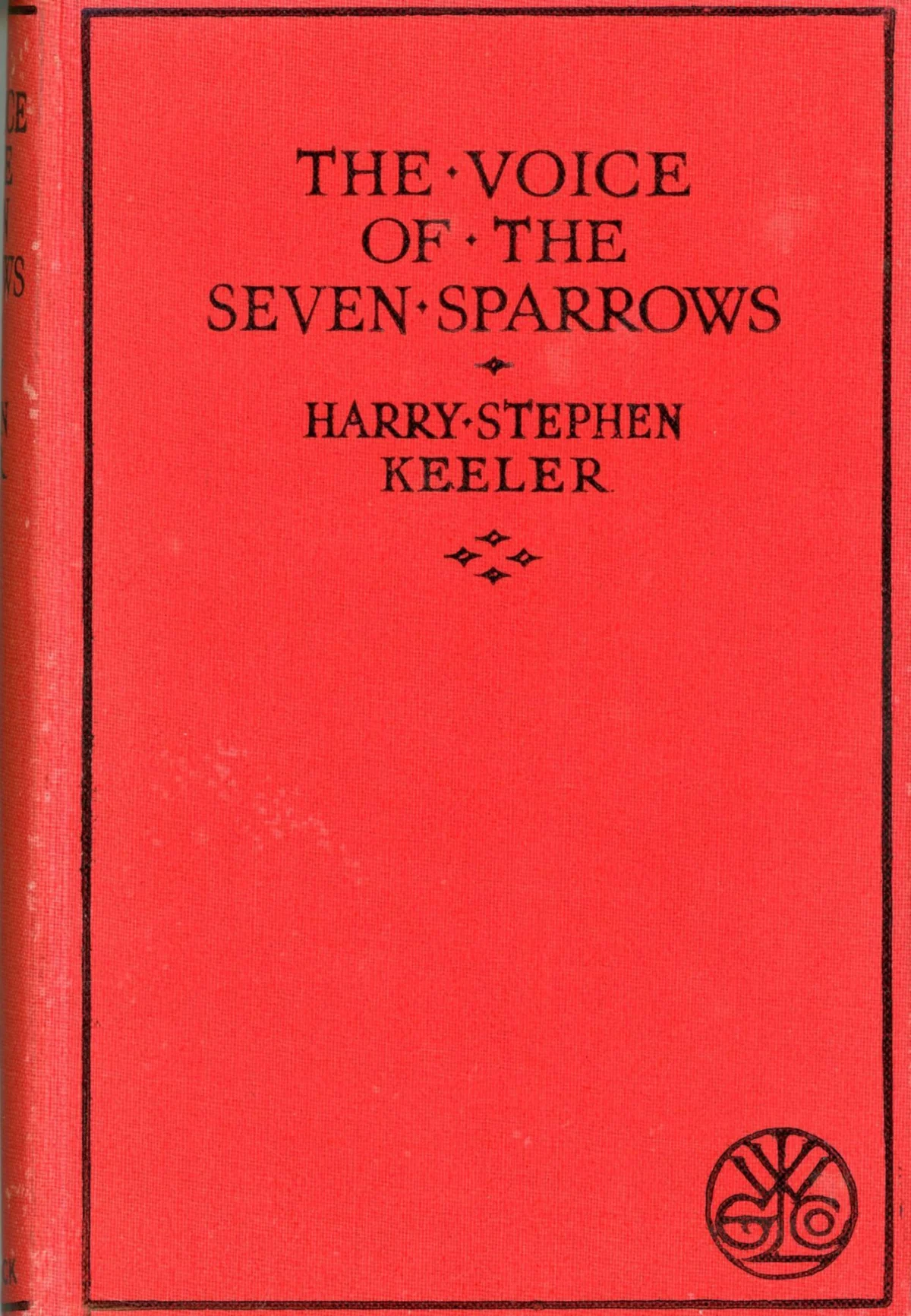
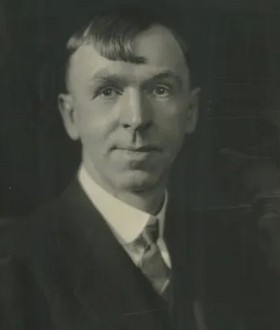
Chicago, IL – In the annals of 20th-century American literature, few figures are as polarizing, perplexing, and ultimately as fascinating as Harry Stephen Keeler. Born in Chicago in 1890, Keeler carved out a unique, often bewildering, niche in pulp fiction, mystery, and proto-science fiction. His life, marked by profound early trauma and struggles with mental health, seemed to fuel a literary output characterized by surreal plots, labyrinthine narratives, and a distinct disregard for conventional storytelling. Despite periods of significant popularity and critical disdain, Keeler’s work has experienced a remarkable modern resurgence, attracting a dedicated cult following and sparking a re-evaluation of what constitutes "good" or "bad" writing.
A Prolific Yet Polarizing Voice Emerges from Chicago
Harry Stephen Keeler was a writer who defied easy categorization. Prolific to an astonishing degree, he penned dozens of novels and short stories, many of which captivated readers during the peak of his popularity in the 1930s. Yet, his literary style was anything but conventional. His narratives were renowned for their convoluted plots, often veering into seemingly unrelated tangents, introducing bizarre coincidences, and delaying the resolution of mysteries until the very last lines. This distinctive approach, dubbed "Keeleresque" by his admirers, has led to his work being simultaneously lauded as uniquely visionary and dismissed as "astoundingly unreadable" by critics.
From his early experiences with mental health institutions, which profoundly influenced thematic elements in his work, to his unconventional collaborations with his wife, Hazel Goodwin, Keeler’s journey through the literary world was anything but ordinary. While mainstream publishers eventually shied away from his increasingly experimental style, his stories found homes in pulp magazines and, decades after his death, a new lease on life through dedicated small presses and an enthusiastic fan base. His peculiar genius continues to challenge readers and critics alike, making him a perpetual subject of debate and a compelling case study in the subjective nature of literary appreciation.
A Life Forged in Adversity: Chronology of an Unconventional Author
Harry Stephen Keeler’s life began in Chicago on November 3, 1890, a city that would remain his home and a frequent backdrop for his imaginative tales. However, his early years were anything but stable, laying a foundation of profound emotional challenges that would arguably shape his idiosyncratic literary vision.
Childhood Shadows and Early Trauma
The first tragedy struck when Keeler was just two years old, with the death of his father. His mother subsequently remarried, but this new chapter brought its own set of devastations. His first stepfather, a gambler, squandered his mother’s savings and mortgaged the family home—a property inherited from Keeler’s biological father—before ultimately taking his own life. The emotional and financial upheaval of this period was immense. In a desperate attempt to maintain solvency and keep their home, Keeler’s mother began taking in boarders, many of whom were theatrical workers, introducing a colorful yet transient element into young Harry’s formative environment.
The instability continued when his mother remarried for a third time, only for this stepfather to succumb to illness when Keeler was merely 13. By this tender age, he had already experienced the loss of three father figures, two under traumatic circumstances. The cumulative effect of these losses, coupled with the family’s persistent financial insecurity, appears to have significantly impacted Keeler’s mental well-being. Records indicate that his mother had him committed to an "insane asylum" during his childhood. He underwent multiple sessions, with one notable discharge on July 29, 1914, when he was declared recovered, and his property and voting rights were formally restored. These harrowing experiences in mental institutions would later emerge as recurring motifs in his fiction, suggesting a deep, unresolved engagement with these formative trials.
Education, Industry, and the Dawn of a Literary Career
Despite the profound challenges of his youth and a tendency to skip school to attend to a paper route, Keeler demonstrated an underlying intellectual drive. He successfully pursued higher education, earning a degree in electrical engineering from the prestigious Armour Institute, now part of the Illinois Institute of Technology. This period of practical study and technical discipline stands in stark contrast to the wildly imaginative and often illogical narratives that would later define his literary career, hinting at a multifaceted individual capable of both rigorous logic and boundless fantasy.
Following his graduation, Keeler spent two years, from 1912 to 1914, working in a Chicago steel mill. This immersion in heavy industry offered him a direct encounter with the gritty realities of working-class life, providing another layer of experience that subtly informed his later depictions of urban environments and diverse characters. It was during this period that his passion for writing began to solidify. In 1913, he published his first short story, marking his official entry into the literary world. The following year, 1914, proved pivotal with the publication of "Victim No. 5," his first foray into crime fiction in novella form. His early works found homes in the burgeoning pulp magazine market, appearing in popular periodicals such as Argosy and Top-Notch Magazine, which were vital platforms for genre fiction writers of the era.
A Partnership in Prose: Marriage and Collaboration
In 1919, Keeler married Hazel Goodwin, an author herself, whose writing style was notably more conventional and mainstream than his own. Their marriage would last over four decades until her death in 1960, forming a central pillar of stability in Keeler’s often tumultuous life. Their literary partnership was as unconventional as Keeler’s individual writing, frequently blurring the lines of authorship. Hazel not only influenced Keeler’s work but also actively collaborated with him, sometimes in surprisingly direct ways. Keeler was known to seamlessly integrate Hazel’s short stories into his own novels, presenting them as narratives discovered by his characters within the pages of a fictional magazine. A notable example of this unique collaboration saw Keeler base at least six of his novels around the main character from Hazel’s 1930 short story, "Spangles." This interweaving of their creative outputs remains a distinctive feature of his bibliography.
Beyond his prolific writing, Keeler also played a significant role in the pulp magazine industry. In 1921, a notice in 10 Story Book announced a contract for Keeler’s short stories to appear throughout 1922. More remarkably, as later noted by David Langford, Keeler served as the magazine’s editor from 1919 to 1940. This editorial position provided him with a platform, influence, and perhaps a degree of creative freedom rarely afforded to authors, allowing him to shape the content of a popular publication for over two decades.
Peak Popularity and the Shifting Tides of Publishing
The 1930s marked the zenith of Harry Stephen Keeler’s popularity. During this decade, his unique brand of convoluted mystery and surreal storytelling resonated with a significant readership, granting him a degree of creative license. This popularity, ironically, emboldened him to become even more experimental in his narrative structures and thematic explorations. However, as the literary landscape began to shift in the 1940s, Keeler’s increasingly unconventional style started to fall out of favor with mainstream publishers. In 1942, Dutton, his American publisher, dropped him from their roster, a significant blow to his career.
He was subsequently picked up by a smaller, less prominent publisher, Phoenix Press, which catered more to niche markets. During this period, Hazel Goodwin Keeler’s involvement in his work grew even more pronounced, as her stories continued to be incorporated into his novels. Yet, this new publishing arrangement proved temporary, with Phoenix Press also discontinuing their relationship with him in 1948. Around the same time, his British publisher, Ward, Lock & Co., similarly ended their association, effectively severing his ties with major publishing houses.
Despite these later publishing struggles, Keeler’s earlier success had, at least temporarily, extended into other media. In 1934, two films were adapted from his work. Sing Sing Nights was a direct adaptation of his novel of the same title. The second, The Mysterious Mr. Wong, starring the iconic Bela Lugosi in the title role, was "suggested" by Keeler’s story "The Twelve Coins of Confucius." These cinematic adaptations underscore the broad appeal and recognition Keeler’s imaginative narratives achieved during his peak.
Later Years and Enduring Mystery
The passing of his first wife, Hazel, in 1960, marked another profound personal loss for Keeler. Three years later, he remarried, taking Tertza Rinaldo (also known as Thelma), his former secretary, as his wife. Harry Stephen Keeler passed away on January 22, 1967, in his beloved Chicago, and was laid to rest in the city’s historic Rosehill Cemetery.
His death, however, was not the end of his story. In the early 1980s, Tertza Rinaldo Keeler, recognizing the unique literary significance of her late husband’s work, generously donated his papers to Columbia University (Chicago). This invaluable collection is now meticulously maintained in their Rare Book and Manuscript Library, ensuring that Keeler’s creative process, correspondence, and manuscripts are preserved for scholarly study and future generations of enthusiasts. This archival preservation stands as an early testament to the enduring, albeit unconventional, importance of his contribution to American letters.
The "Keeleresque" Universe: Supporting Data on Style, Themes, and Reception
To truly appreciate Harry Stephen Keeler, one must delve into the peculiar mechanics of his literary universe, a realm where logic often takes a backseat to elaborate contrivance, and narrative cohesion is a fluid concept. His work has, for decades, been a battleground for literary critics and a source of endless fascination for his dedicated followers.
Navigating the Labyrinthine Plots and Surreal Narratives
Keeler’s writing style is perhaps his most defining characteristic. His novels are not merely complex; they are famously, almost defiantly, convoluted. Plots are known to twist and turn through improbable coincidences, tangential subplots, and an array of eccentric characters, often defying conventional expectations of narrative economy and straightforward progression. This tendency led to critics describing his stories as having a "surreal quality," even when they weren’t explicitly fantasy or science fiction. The real world, in Keeler’s hands, often felt just as strange and unpredictable as any speculative realm.
A common criticism, and indeed a point of fascination, is that his narratives frequently "went off the rails," introducing bizarre concepts or elaborate philosophical digressions that seemed to occur to him in the moment, regardless of their immediate relevance to the central mystery. This "lack of tightness" in his storytelling, rather than being a flaw for his fans, became part of the unique "Keeleresque" charm. Readers are often taken on a journey through multiple layers of riddles, ciphers, and wildly improbable scenarios, with the central mystery often becoming secondary to the sheer spectacle of the narrative’s unfolding.
The traumatic experiences of his youth, particularly his time in mental asylums, profoundly permeated his thematic concerns. Many of Keeler’s stories directly or indirectly explore the lives of children in asylums, suggesting that these deeply personal experiences remained a potent source of inspiration, perhaps even a recurring psychological landscape he continuously processed through his fiction. This often lends a darker, more poignant undercurrent to his otherwise fantastical or comedic plots.
A Divisive Critical Landscape: From "Unreadable" to "Superb"
The critical reception of Harry Stephen Keeler’s work has been as varied and extreme as his writing itself. He remains a figure who evokes powerful, often contradictory, responses, making any definitive assessment challenging. Richard Polt, the founder of the Harry Stephen Keeler Society – a testament to his cult status – famously described Keeler’s novel The Portrait of Jirjohn Cobb as "one of the most astoundingly unreadable novels ever written." Polt further elaborated on this by calling it "the Waiting for Godot of the Keeler canon, drawn out to the length of Finnegan’s Wake." This comparison to works renowned for their difficulty and experimentalism, while critical, also implicitly acknowledges a certain avant-garde ambition in Keeler’s work.
A hallmark of Keeler’s mysteries is his audacious approach to resolution. On multiple occasions, the identity of the guilty party is withheld until the very final pages, or, in one infamous instance, revealed in the last line of the entire book. This narrative gambit, while frustrating to some, is seen by others as a bold subversion of traditional mystery tropes, forcing readers to re-evaluate everything they thought they knew.
The debate over his quality is perhaps best exemplified by the contrasting opinions on his 1915 story, "John Jones’s Dollar." William Poundstone, a commentator on Keeler’s work, asserted that it is Keeler’s "best-known story and would rate extensive anthologization if the writing wasn’t so bad, even by stiff Keeler standards of badness." Conversely, Robert Jennings, writing in Fadeaway #41, unequivocally hailed the same story as "superb." This stark divergence in opinion highlights the deeply subjective nature of Keeler’s appeal, where what one reader perceives as a glaring flaw, another interprets as a stroke of genius or a deliberate artistic choice. His "bad" writing, for many fans, is precisely what makes him so good and so uniquely Keeler.
Genre Explorations: Crime, Science Fiction, and the Weird
While primarily known for his intricate crime fiction, Keeler also ventured into other speculative genres. His "genre fiction," distinct from his general "weird fiction," included early works like the 1915 stories "When Time Ran Backward" and "John Jones’s Dollar," both published in Black Cat. These stories showcased his willingness to explore concepts beyond traditional mystery, dabbling in elements that could be classified as early science fiction or speculative fiction.
His later novels further cemented his place in the broader landscape of genre literature, with titles like The Face of the Man from Saturn, The Man with the Magic Eardrums, and The Man Who Changed His Skin. The latter, intriguingly, was only published in Spanish during his lifetime, underscoring the challenges he faced in finding English-language publishers willing to embrace his increasingly unorthodox narratives towards the end of his career. These titles alone hint at the imaginative scope and the bizarre premises that were characteristic of Keeler’s mind, demonstrating a fascination with transformation, identity, and the extraordinary.
The Peculiar Art of Collaboration
The collaboration between Harry Stephen Keeler and his first wife, Hazel Goodwin Keeler, merits further examination as a truly unique aspect of his literary practice. Hazel, a published author in her own right, possessed a more conventional and commercially appealing writing style. Keeler’s method of integrating her short stories directly into his own novels was an unusual and bold move. He would craft scenarios where his characters would stumble upon a magazine or book and begin reading a story within it – that story invariably being one of Hazel’s. This narrative device, while unorthodox, served multiple purposes: it showcased Hazel’s work, provided a break from Keeler’s often intense and convoluted main plots, and added another layer of meta-narrative complexity to his already intricate novels. It also suggests a deep personal and professional synergy between the couple, where their creative worlds were intricately intertwined, challenging traditional notions of individual authorship.
Posthumous Vindication and the Cult of Keeler: Official Responses and Revival Efforts
Despite falling out of favor with mainstream publishers in his later years, Harry Stephen Keeler’s legacy has experienced a remarkable and enduring revival in the decades since his death. This resurgence is largely due to dedicated academic efforts, the commitment of niche publishers, and the passionate advocacy of a growing cult following.
Academic Recognition and Archival Preservation
The donation of Keeler’s papers to Columbia University (Chicago) by his second wife, Tertza Rinaldo, in the early 1980s was a crucial turning point in the preservation and recognition of his work. The establishment of the Harry Stephen Keeler Collection within the university’s Rare Book and Manuscript Library elevated his status from a forgotten pulp writer to a subject of academic interest. This collection includes manuscripts, correspondence, personal documents, and other ephemera, offering invaluable insights into Keeler’s creative process, his personal struggles, and his interactions with the literary world. Such archival preservation is a significant "official response" to his legacy, indicating that his work, however unconventional, is considered worthy of serious scholarly study and conservation for its unique contribution to American popular fiction.
The Resurgence Through Dedicated Publishers
Perhaps the most instrumental force in Keeler’s modern revival has been Ramble House, a small, independent publisher dedicated to bringing forgotten and eccentric authors back into print. Ramble House has undertaken the monumental task of reprinting many of Keeler’s previously obscure novels, and in some cases, publishing his work for the very first time in English. Their commitment has made a vast portion of Keeler’s extensive bibliography accessible to a new generation of readers.
This effort, combined with the ubiquitous presence of online booksellers, has democratized access to Keeler’s unique literary universe. No longer confined to rare book dealers or dusty library shelves, his books are now readily available to anyone curious enough to explore the depths of his "good (or awful)" writing. This accessibility has been vital in fostering his contemporary cult status, allowing readers worldwide to engage with his challenging narratives and form their own opinions on his distinctive genius.
The Harry Stephen Keeler Society: A Testament to Enduring Fandom
The formation of the Harry Stephen Keeler Society, spearheaded by Richard Polt, is perhaps the most vibrant and telling "official response" to Keeler’s enduring appeal. This society is not merely a fan club; it is a dedicated community of scholars, enthusiasts, and curious readers who celebrate Keeler’s work, discuss its intricacies, and actively promote its rediscovery. The existence of such a specialized society speaks volumes about the profound impact Keeler has had on a segment of the literary world. It demonstrates that his work, despite its perceived flaws or unconventional nature, resonates deeply with those who appreciate literary eccentricity, complex puzzles, and narratives that boldly defy established norms. The society’s efforts contribute significantly to maintaining discourse around Keeler, encouraging new readers, and ensuring his place in the pantheon of unique American authors.
Enduring Implications: Reassessing a Literary Enigma
Harry Stephen Keeler’s journey from forgotten pulp author to celebrated cult figure carries significant implications for how we understand literary merit, the nature of creativity, and the enduring power of unique storytelling.
Redefining "Good" and "Bad" Writing
Keeler’s work forces a critical re-evaluation of what constitutes "good" or "bad" writing. If "good" writing is defined by clarity, conciseness, tight plotting, and character development, then Keeler often falls short. Yet, his ability to craft utterly unique, often mind-bending narratives, to create worlds brimming with eccentricities, and to provoke such strong, conflicting reactions suggests a different metric of success. For his admirers, the "badness" is precisely the point – a deliberate subversion, an embrace of maximalism, or an unfiltered glimpse into a truly original mind. His legacy implies that literary value is not always found in adherence to convention but sometimes in its most radical departures, challenging readers to embrace narratives that actively resist easy consumption.
The Legacy of an Outsider Artist
Keeler can be viewed as an "outsider artist" of literature. Working largely within genre fiction, he nonetheless pushed its boundaries to an extreme, creating a body of work that stood apart from his contemporaries. His life story, marked by trauma and mental health struggles, often found oblique expression in his fantastical and labyrinthine plots, suggesting a profound, almost therapeutic, engagement with his own psyche through his writing. This makes him a compelling figure for those interested in the psychological underpinnings of creativity and the ways in which personal experiences can manifest in art, however bizarrely. His influence, though perhaps not direct on mainstream literature, has undeniably shaped a niche of cult fiction, proving that originality, however unwieldy, can find its audience.
A Continuing Journey of Discovery
The ongoing availability of Keeler’s novels, the academic interest, and the vibrant activity of the Harry Stephen Keeler Society all point to a continuing journey of discovery for his work. As literary tastes evolve and the appreciation for experimental and unconventional narratives grows, Keeler’s position in the literary canon may yet shift. He serves as a powerful reminder that not all literary genius fits neatly into predefined categories, and that some of the most fascinating voices emerge from the margins. Whether one finds his writing "superb" or "astoundingly unreadable," Harry Stephen Keeler remains an undeniable force, an enigmatic figure whose unique vision continues to captivate, confound, and inspire debate, ensuring his peculiar corner in the vast landscape of American literature is anything but forgotten.