Cultivating Creativity: Embracing the Rhythms of the Writing Life for Sustainable Success
Introduction: The Peril of Perpetual Hustle in the Authorial Journey
For many writers, particularly those who emerged during the vibrant and demanding era of the independent publishing boom, the prevailing wisdom for achieving success has long been rooted in a relentless pursuit of productivity. The mantra has been clear: push harder, write faster, do more. This ethos, while capable of yielding initial triumphs, often comes at a steep price. Burnout has become a pervasive and deeply personal concern within the writing community, a topic that resonates with the lived experiences of countless authors. This article delves into the critical need for a sustainable writing routine, one that not only facilitates the completion of ambitious projects but also nurtures a creative life that can endure and flourish over the long haul.
The core of this exploration lies in understanding that creativity possesses its own inherent rhythms. As writers mature, a profound shift occurs, moving from an impulse to override natural cycles to a conscious effort to honor them. There are distinct periods for focused exertion and necessary recuperation, times for generating new work and moments for replenishing the creative wellspring. By acknowledging and respecting these natural ebbs and flows, discipline can transform from a rigid taskmaster into a supportive partner, working in concert with a deeper, more intuitive creative process. This article, building upon the insightful framework presented by author Brian Hicks, introduces a revolutionary approach: "Writing the Seasons," a method designed to foster a saner, more sustainable, and ultimately more successful writing life.
The Illusion of Two Writer Archetypes: Beyond Burnout and Stagnation
Brian Hicks’s observations resonate with a common misconception within the author community, particularly among independent publishers. He identifies two prevailing, yet fundamentally flawed, archetypes of writers: the "hard-driving, rapid-release, all-gas, no-brakes writer" and the "slow-grinding, perpetually drafting, angst-ridden, soon-to-be former writer." The implicit belief is that the former is destined for success, while the latter is doomed to perpetual incompletion.
However, Hicks argues with compelling logic that neither of these extremes is conducive to long-term success. The first type, characterized by relentless output, inevitably succumbs to burnout, while the second, perpetually stuck in a cycle of indecision and inaction, never truly gains momentum. The ultimate outcome for both, despite their vastly different approaches, is the same: a failure to achieve sustainable creative output and literary success.
This binary thinking overlooks a crucial third path – a more balanced and grounded approach that eschews both manic pacing and self-recrimination. This third type of author recognizes the fundamental absence of a reliable, consistent writing rhythm in both prevailing models. It is this missing element that Hicks aims to address with his "Writing the Seasons" methodology, a framework designed to restore sanity and confidence by establishing a sustainable and predictable creative cycle.
The Agricultural Metaphor: Lessons from the Land for the Literary Life
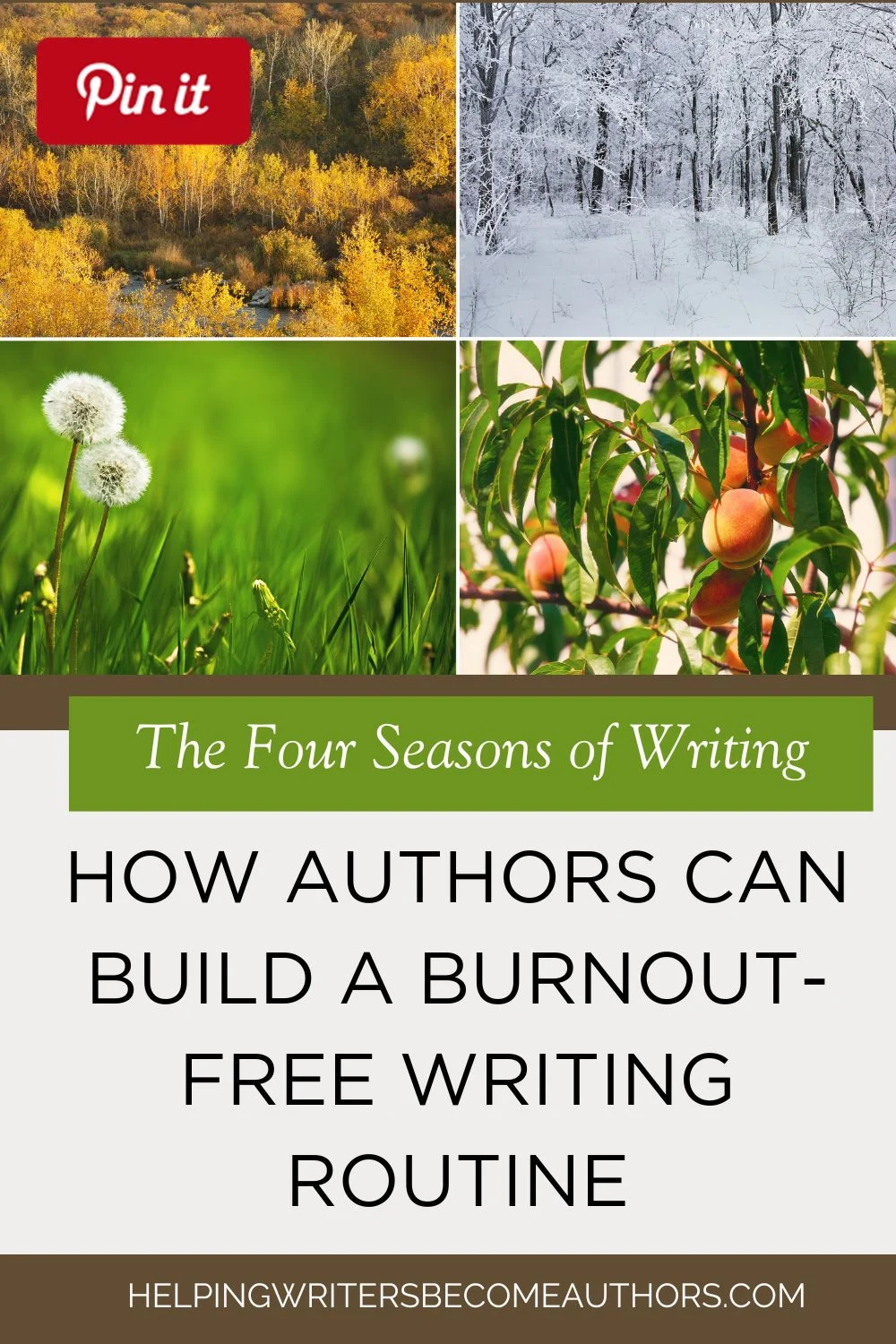
The wisdom of the seasons, a fundamental aspect of natural law, offers a powerful and enduring metaphor for structuring a sustainable writing routine. Just as farmers meticulously plan their activities around the predictable progression of spring, summer, autumn, and winter, authors can cultivate a similarly ordered and productive approach to their craft.
The inherent challenge for many writers stems from the fragmented nature of modern life. Juggling day jobs, family obligations, community commitments, and a multitude of other responsibilities often leads to a "snatch-and-patch" writing process. Moments are pieced together erratically – late nights, early mornings, brief interludes between professional tasks, or stolen minutes while supervising children’s activities. This approach, essentially writing in the margins of an already overstuffed life, frequently results in a decade passing with projects unfinished and creative aspirations unmet.
The correlation between inconsistent effort and inconsistent results is undeniable. Conversely, establishing a consistent and reliable rhythm, much like the dependable cycle of the seasons, naturally leads to consistent and reliable outcomes. The natural world provides a constant testament to this principle. The unwavering sequence of spring, summer, autumn, and winter, repeating year after year in a predictable order, demonstrates the power of temporal structure. We cannot dictate two springs or skip a necessary winter. Each season plays a vital role in the overall cycle, and by mirroring this natural order, authors can build a writing calendar that fosters focus and productivity without succumbing to burnout.
Spring: The Urgency of Drafting and Seeding New Narratives
Just as the agricultural world hinges on the opportune moment for planting, the initial phase of the writing process, "Spring," is dedicated to the crucial act of drafting. This is a period of intense activity, mirroring the farmer’s urgent need to sow seeds before the window of opportunity closes. Spring is not an indefinite season; it is characterized by a finite duration, demanding focused effort and a commitment to action.
Farmers understand the critical importance of this period; they cannot afford to postpone planting or take extended vacations during spring. Missing this crucial window has direct and predictable consequences for the harvest. Similarly, writers must create their own "Spring" for drafting. Without this dedicated period, excuses inevitably arise, and another year can pass without a completed manuscript.
"Spring" is the author’s busy season. It requires an unwavering commitment to the task at hand, a willingness to temporarily set aside non-essential distractions. Volunteer opportunities may need to be deferred, and minor household inconveniences might be temporarily overlooked. The focus must be on the paramount goal of putting words onto the page. Crucially, it also necessitates clear communication with family and friends, informing them that a period of intense creative focus has begun and that availability will be limited until the next phase.
During this dedicated "Spring," authors will engage in crucial preparatory work such as outlining, developing backstories, and establishing a concrete weekly writing schedule. The ultimate objective of this season is the completion of a first draft.
The duration of "Spring" is not a rigid, one-size-fits-all prescription. While natural seasons are approximately three months long, a writer’s "Spring" can be adapted to individual circumstances. A writer with fewer external commitments and a faster drafting process might complete their first draft in a month. Conversely, an author balancing multiple jobs, young children, and significant volunteer work will likely require a considerably longer "Spring." The key to making this system effective lies in setting a definitive end date for this intensive drafting period. The knowledge that "Summer" is approaching serves as a powerful motivator, prompting careful planning and dedicated execution.
Summer: The Rigors of Revision and Cultivating the Narrative
Following the initial planting of "Spring," the "Summer" phase of the writing process mirrors the farmer’s diligent work in nurturing the developing crops. This is a period of intense effort, focused on tending, weeding, and protecting the planted seeds from various challenges. In the literary realm, "Summer" is synonymous with revision – the meticulous process of refining, strengthening, and shaping the initial draft into a polished manuscript.
This phase can be particularly challenging, as it often involves confronting the imperfections and weaknesses inherent in a first draft. Authors may encounter unforeseen plot holes, inconsistent character development, or prose that falls short of their aspirations. The temptation to abandon the current project and "plant a new field" by starting a fresh story can be strong. However, just as a farmer remains committed to the crop they planted, authors must commit to the narrative they began.
The analogy extends to the feedback received from beta readers or early reviewers. "Summer" can bring criticism that is difficult to hear, forcing authors to make tough decisions, such as "killing their darlings" – removing beloved passages that, while perhaps beautifully written, do not serve the overall story. This season demands trust in the process, a belief that by diligently tending to the seeds sown in "Spring," the "miracle of the sun and the seed and the soil" will ultimately yield a work of which they can be proud.

The duration of "Summer" is often more fluid than that of "Spring." Revision is a less glamorous but equally vital stage, and it can be a demanding and sometimes arduous undertaking. Writers may experience moments of frustration, even a temporary aversion to their own manuscript, leading to the temptation of extended breaks. Such breaks, however, can derail progress and transform a promising project into a perpetual work-in-progress (WIP). As with "Spring," setting a firm end date for "Summer" is essential. This deadline, though personal and dictated by individual process, must be respected to ensure the manuscript moves forward towards completion.
Autumn: The Harvest of Publication and Sharing the Literary Bounty
"Autumn" represents the culmination of an author’s dedicated efforts throughout "Spring" and "Summer." It is the season of harvest, the reward for perseverance and commitment. In literary terms, this translates to the exciting, and sometimes daunting, process of publication, whether through querying literary agents or pursuing self-publishing avenues. While these actions may not always feel like immediate rewards, they are the direct consequence of bringing the literary crop to fruition.
The initial phase of "Autumn" should involve acknowledging and celebrating the accomplishment. Framing a published book cover, enjoying a celebratory meal, or engaging in any activity that marks the milestone serves as a powerful affirmation of hard work. However, it is also crucial to embrace a fundamental law of life and creative endeavor: "The reward for hard work is more work."
Just as a farmer doesn’t harvest a crop only to leave it in the field, authors don’t write a manuscript to keep it hidden away. The act of writing culminates in the desire to share the story with readers. "Autumn" is the season to take that literary harvest to market. While the timelines for querying and marketing can be less rigidly defined than those for drafting and revision, it is important to recognize that this phase continues until tangible results are achieved. Even as the next "Spring" approaches and a new creative cycle begins, the efforts of "Autumn" continue to bear fruit.
Winter: The Essential Season of Rest, Reflection, and Renewal
The final, yet equally indispensable, phase of the authorial cycle is "Winter." This is the designated season for rest, reflection, and preparation for the next creative endeavor. Just as nature enters a period of dormancy to conserve energy and prepare for renewal, writers must also embrace periods of respite.
During "Winter," authors can engage in activities that replenish their creative reserves. This might include catching up on industry podcasts, delving into craft books, or immersing themselves in the work of other authors. It is also a time to learn more about the business of writing, such as marketing strategies and reader engagement. While active writing of a new manuscript may not be occurring, authors may still be engaged in ongoing marketing campaigns or continuing the querying process for their published work. Importantly, they will likely be contemplating their next novel, allowing ideas to germinate without the pressure of immediate production. This deliberate pause allows the creative mind to recharge, ensuring a renewed sense of enthusiasm and energy when "Spring" inevitably returns.
The duration of "Winter" also has an end date, as the inexorable cycle of seasons dictates that "Spring" will arrive once more, demanding the planting of a new crop. This understanding provides a sense of anticipation and purpose, ensuring that rest is not an endpoint but a vital prelude to future creation.
Personalizing the Seasonal Rhythm: Crafting a Sustainable Calendar
The true power of the "Writing the Seasons" approach lies in its adaptability. The key to its success is the creation of a personalized seasonal calendar that harmonizes with an individual’s real-life commitments. The process begins with identifying the ideal "Spring" – a period when other calendar demands naturally lessen.
Consider the ebb and flow of your existing schedule. If your children’s extracurricular activities tend to decrease during the winter months, then a January-to-March "Spring" might be an optimal choice. Conversely, if your professional life becomes less demanding during a particular time of year, that could be your designated "Spring."
The example provided by Brian Hicks highlights the importance of aligning one’s "Spring" with personal circumstances. As his wife is a teacher, setting his writing "Spring" during the actual summer months would be counterproductive. The shift in household energy and routine during the summer break would disrupt his focus. Therefore, understanding these personal rhythms is paramount.
Once the "Spring" is established, the duration of each subsequent season can be determined. This is a highly personal decision. Some authors may be able to complete two full cycles of seasons within a year, while others, requiring more time for drafting and revision, may find that three-month "Springs" and "Summers" align better with their process. The crucial element is not the exact length of each season, but the commitment to establishing deadlines and adhering to them.
The Enduring Impact: Why a Seasonal Routine Fuels Literary Completion
The ultimate goal of adopting a "Writing the Seasons" approach is to foster a sustainable writing routine that empowers authors to finish more books. The tangible act of creating a seasonal writing calendar, by scheduling start and end dates for each phase and integrating them into digital calendars with alarms, transforms intention into actionable commitment.
Farmers achieve consistent and reliable productivity not through sporadic bursts of effort, but through a consistent, reliable, and fundamentally sustainable process. By embracing this same principle, authors can shift from a pattern of starting and abandoning projects to one of consistent completion. The decision to become more like farmers, to cultivate a structured and cyclical approach to their craft, will inevitably lead to a dramatic reduction in unfinished manuscripts and a renewed sense of confidence and accomplishment in their literary journey.
Further Resources and Community Engagement
For authors seeking to refine their outlining process and ensure a clear roadmap for their "Spring" drafting season, the Outlining Your Novel Workbook offers a practical and hands-on guide. This resource is designed to help writers develop their stories before drafting, fostering greater clarity, confidence, and purpose. It is available in various formats, including paperback, e-book, and a desktop app, catering to diverse learning preferences.
The conversation around sustainable writing practices is ongoing. Authors are encouraged to share their insights and strategies in the comments section, discussing what has helped them create burnout-free writing routines and maintain consistency with their literary goals. This collaborative exchange of ideas enriches the entire writing community and provides valuable support for those navigating the challenges of the authorial path.