Into the Abyss: One More Delve Officially Graduates to 1.0 on SteamVR and Meta Quest
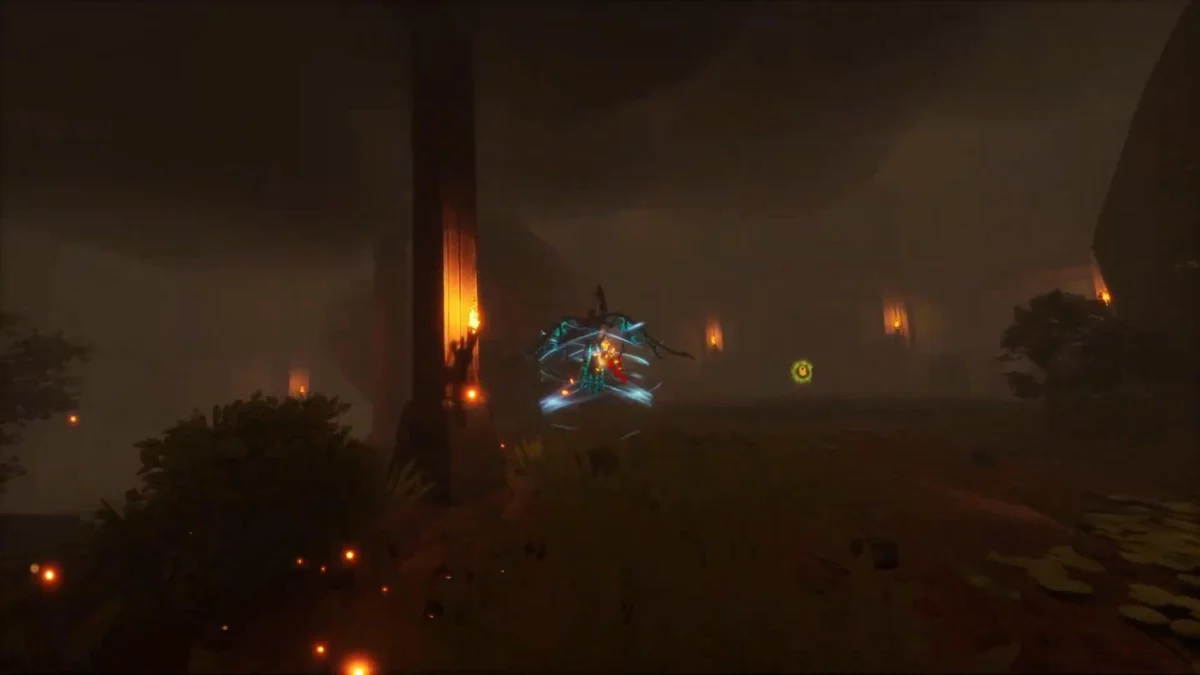
The virtual reality landscape has long been defined by its search for the "killer app"—that definitive experience that justifies the hardware. While rhythm games and shooters have dominated the charts, the "dungeon crawler" genre has slowly been carving out a significant niche, fueled by the desire for immersive, tactile, and social experiences. Today, that niche grows more robust as One More Delve, the physics-based co-op dungeon crawler from the independent development circuit, officially exits its Early Access phase to launch its 1.0 version on SteamVR and Meta Quest 3.
This transition marks a pivotal moment for the title, which has undergone a rapid evolution since it first appeared on the radar of VR enthusiasts earlier this year. With the 1.0 release, the developers are promising a more polished, content-rich experience that addresses early criticisms while doubling down on the physics-driven combat that served as its initial hook.
Main Facts: A New Contender in the Physics-Based Arena
One More Delve is designed as a three-player cooperative experience that places players in the boots of adventurers exploring procedurally influenced, atmospheric dungeons. Unlike traditional RPGs where combat is determined by stats and pre-baked animations, One More Delve utilizes a comprehensive physics engine. This means that the weight of a mace, the parry of a sword, and the impact of a shield against a skeleton’s ribcage are all calculated in real-time, providing a level of "heft" and presence that has become the gold standard for high-end VR titles like Blade & Sorcery or The Walking Dead: Saints & Sinners.
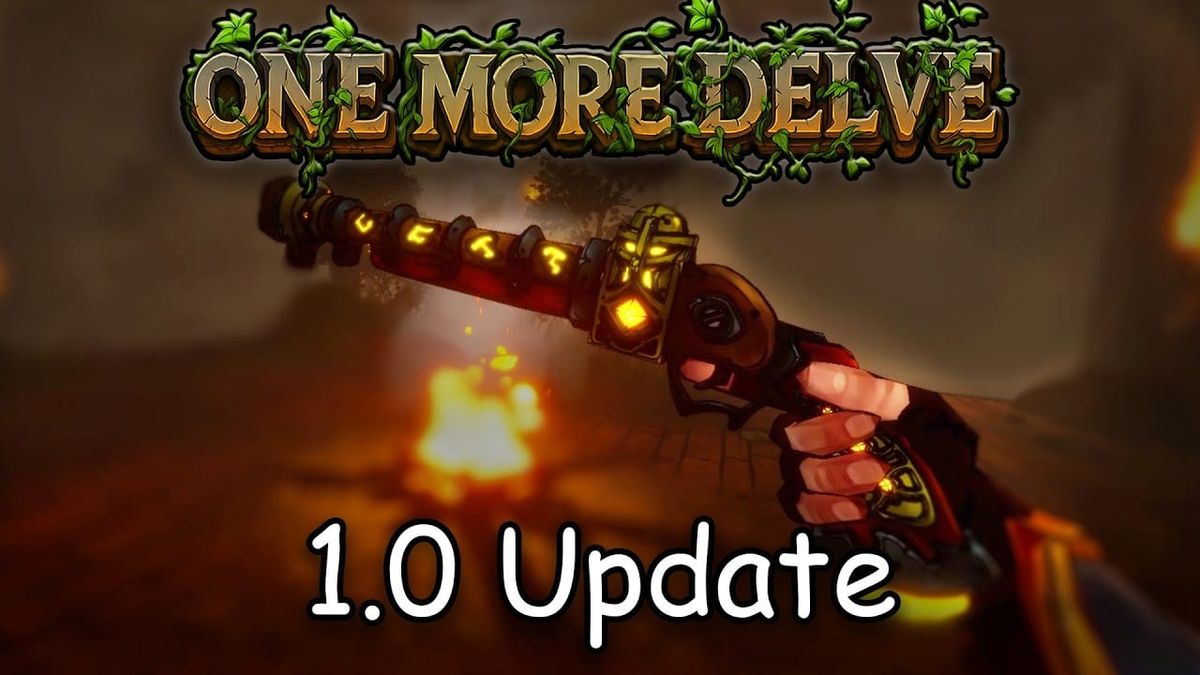
The 1.0 launch is not merely a label change; it brings a substantial injection of content. Most notably, the game now features five distinct dungeons, up from the three available at its initial Early Access launch. Each dungeon offers varied environments and difficulty settings, allowing for scalability as players improve their gear and skills. Additionally, the update introduces the Flintlock pistol—a game-changing weapon that adds a black-powder ranged element to the predominantly melee-focused combat—alongside a suite of new character models, clothing options, and refined weapon aesthetics.
Chronology: The Rapid Ascent from Showcase to 1.0
The journey of One More Delve has been remarkably swift, suggesting a focused development cycle and a clear vision from the production team.
- March 2024: The game was officially spotlighted during the VR Games Showcase. This appearance generated significant buzz among the "hardcore" VR community, specifically those looking for a cooperative alternative to solo-play physics sandboxes.
- April 27, 2024: The game entered Early Access. At this stage, it was a "promising but unpolished" gem. It launched with three core dungeons and the fundamental physics systems in place. Players praised the core combat loop but noted that the game lacked the breadth of content needed for long-term replayability.
- May 2024: Responding quickly to player feedback, the developers released a major content update. This "May Milestone" added a fourth dungeon, introduced new boss encounters to diversify the endgame, and expanded the loot pool with additional armor sets and weapon varieties.
- July 2024 (Today): The 1.0 release. By moving out of Early Access in just a few months, the developers have signaled that the core architecture is stable. The addition of the fifth dungeon and the Flintlock pistol represents the "completion" of the initial roadmap, though post-launch support is expected to continue.
Supporting Data: The Mechanics of Immersion
To understand why One More Delve has captured the attention of the VR community, one must look at the data points of its gameplay design. The game’s appeal rests on three pillars: physics, cooperation, and progression.
Physics-Based Interaction
In One More Delve, the environment is reactive. If a player swings a longsword and hits a stone wall, the sword bounces back with appropriate force, potentially leaving the player vulnerable. This encourages tactical play over "controller-wiggling." The 1.0 update has reportedly refined these collision matrices to reduce the "visual glitches" and "clipping issues" that were identified by critics during the Early Access period.
Cooperative Synergy
The game supports up to three players. Data from similar VR titles suggests that retention rates are significantly higher in cooperative games compared to solo experiences. By allowing players to occupy specific roles—such as a tank with a heavy shield or a ranged specialist with the new Flintlock pistols—the game fosters a "social presence" that is unique to VR.
The Flintlock Factor
The introduction of the Flintlock pistol in version 1.0 is more than a cosmetic addition. In a physics-heavy game, ranged weapons are notoriously difficult to balance. The Flintlock requires a deliberate reload mechanic and carries significant stopping power, offering a high-risk, high-reward alternative to the safer, more consistent melee options. This adds a layer of "combat pacing" that was previously missing.
Official Responses: Addressing the "Rough Edges"
During the Early Access phase, the reception of One More Delve was cautiously optimistic. Professional impressions, including those from UploadVR, highlighted that while the foundation was solid, the game suffered from "rough edges," specifically regarding collision detection and visual artifacts.
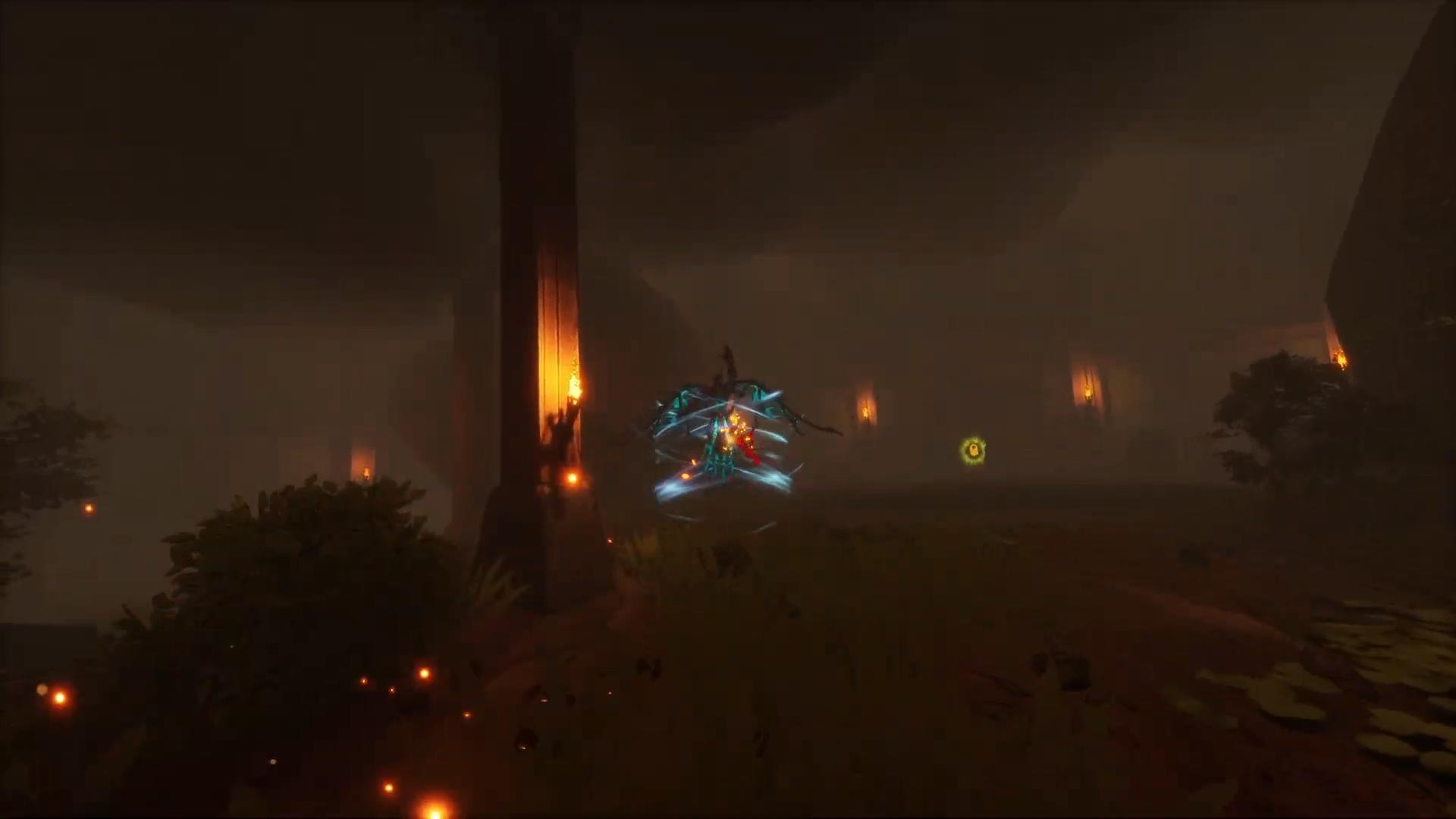
In the lead-up to the 1.0 release, the development team has been vocal about their commitment to polish. While they have not issued a lengthy formal manifesto, their actions through the May and July updates speak to a "fix-first" philosophy. The 1.0 trailer showcases significantly smoother character animations and more stable environmental textures.
By incorporating the 1.0 designation, the developers are effectively stating that the "collision issues" that plagued the initial April launch have been mitigated to a degree that meets commercial standards. The addition of "difficulty settings" for the new dungeons is also a direct response to community requests for a higher skill ceiling for veteran "Delvers."
Implications: The Maturation of the VR Dungeon Crawler
The successful transition of One More Delve to a full release has several broader implications for the VR industry and the Meta Quest/SteamVR ecosystems.
1. The Quest 3 Performance Standard
One More Delve is specifically optimized for the Quest 3. This is significant because the Quest 3’s increased processing power allows for more complex physics calculations without the need for a tethered PC. As more games like One More Delve move to 1.0, we are seeing the "mobile VR" space close the gap with PCVR in terms of mechanical complexity.
2. The Shortened Early Access Model
Traditionally, VR games stay in Early Access for years (some, like Blade & Sorcery, only recently hit 1.0 after nearly half a decade). One More Delve’s rapid three-month stint in Early Access suggests a new trend: using Early Access as a final "stress test" and "polishing phase" rather than a multi-year development crutch. This could lead to higher consumer confidence in the VR market, where "Early Access fatigue" is a real concern.

3. Competition in the Co-op Space
The 1.0 release puts One More Delve in direct competition with heavy hitters like Dungeons of Eternity. While Dungeons of Eternity focuses on a more "arcade-like" and polished loot-grind, One More Delve is positioning itself as the more "tactile" and "grounded" alternative. This competition is healthy for the genre, as it forces developers to innovate on combat mechanics and dungeon variety.
4. The "Physics-First" Philosophy
The success of this title reinforces the idea that VR players value physical interaction over graphical fidelity. Even if a game has "rough edges," players will gravitate toward it if the act of swinging a sword feels "real." One More Delve’s move to 1.0 proves that there is a sustainable market for "AA" indie titles that prioritize mechanical depth.
Conclusion: One More Delve, One Giant Leap
One More Delve enters the 1.0 era as a testament to the power of focused development and community feedback. By taking a simple premise—three friends, a dark dungeon, and a heavy sword—and applying a sophisticated physics layer, the game has managed to stand out in a crowded market.
With five dungeons now available, the addition of black-powder weaponry, and a significantly polished engine, the game is no longer just a "promising start." It is a full-fledged experience that offers a glimpse into the future of cooperative VR gaming. Whether you are a SteamVR enthusiast or a Meta Quest 3 owner, the message from the developers is clear: the dungeon is ready, the physics are tuned, and there is always room for One More Delve.
Availability: One More Delve 1.0 is available now on the Meta Horizon Store for Quest 3 and on Steam for all compatible VR headsets.