Embracing the Everyday Enchantment: Why Folklore is Your Next Life Upgrade
London, UK – In a world increasingly defined by the digital and the ephemeral, a quiet revolution is beckoning, one rooted in the ancient rhythms of human experience. Folklore, often relegated to the dusty shelves of academic curiosity or dismissed as quaint relics of a bygone era, is in fact a vibrant, living force, intricately woven into the fabric of our daily lives. From the profound to the profoundly peculiar, these rituals, traditions, and customs offer not just a glimpse into our collective past, but a practical guide for a more present, joyful, and connected future.
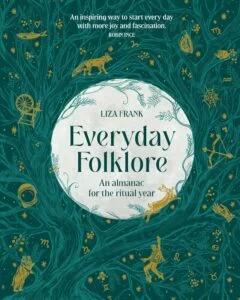
This compelling argument forms the core of a new movement championed by author Liza Frank, whose recent work, Everyday Folklore: An Almanac for the Ritual Year, serves as both a testament to and a practical guide for engaging with the rich tapestry of global traditions. Frank challenges the perception that folklore belongs solely to "other people"—the antler-wearing revelers of Abbotts Bromley, or the practitioners of arcane arts like wart charming. She asserts that whether it’s the unconscious spread of jam before cream on a scone, the annual dressing of a Christmas tree, or the simple act of brewing a morning cuppa, we are all, to varying degrees, participants in the grand human narrative of folklore.
For those who may only observe these phenomena from the periphery, Frank’s work is a clarion call to action. She posits that consciously incorporating a little bit of folklore into one’s life is not merely an indulgence, but a pathway to profound personal enrichment. It’s an invitation to "feel the folklore fear and do it anyway"—to step beyond passive observation and actively embrace the wonder that lies just beneath the surface of the mundane.
A Year Immersed: The Genesis of an Almanac
The inspiration for Everyday Folklore sprang from Frank’s own immersive journey. Between the solemnity of St Distaff’s Day in 2020 and the festive conclusion of Twelfth Night in 2021, she embarked on a personal odyssey, practicing ritual year folklore every single day. This dedicated engagement, undertaken during a period of unprecedented global uncertainty, served as a powerful anchor, connecting her to the cyclical rhythms of nature and humanity when external realities felt chaotic.
This chronological deep dive was more than an academic exercise; it was a lived experience that transformed abstract concepts into tangible, daily interactions. From obscure saints’ days to ancient agricultural rites, Frank meticulously documented her encounters, discovering how these practices could imbue ordinary moments with extraordinary meaning. The project evolved organically from personal exploration into a comprehensive guide, designed to empower others to forge their own connections with the ritual year. Her almanac is not just a collection of facts, but a practical handbook, offering accessible ways to integrate these traditions into contemporary living.
Unveiling the Benefits: Why Engage with Folklore?
Frank identifies five compelling reasons why conscious engagement with folklore can significantly enhance modern life, moving beyond the superficial to offer genuine, transformative experiences.
1. Reclaiming Time: Folklore as an Antidote to Modern Haste
In an era where time often feels like a runaway train, folklore offers a powerful counter-narrative. While it may not literally halt the passage of seconds, engaging with the ritual year profoundly alters one’s perception of time, fostering a deeper sense of presence and appreciation for the unfolding seasons. It’s a stark contrast to the common lament of "where did the year go?"
By tethering personal actions to specific dates, months, or seasonal markers, individuals develop a more intimate relationship with the natural world and the annual cycle. Consider the ancient practice of Wassailing in January, a tradition of singing to apple trees to ensure a bountiful harvest. Participating in such a rite instills a tangible stake in the land’s bounty, transforming a distant agricultural event into a personal investment. Similarly, counting fogs in August to predict winter snowfalls is more than just weather lore; it’s a playful engagement with the environment, turning observation into anticipation.
Beyond these specific examples, lunar plantings connect individuals to astronomical cycles, while simply observing the hedgerows—their transformation from barren branches to verdant abundance and back again—becomes a meditative practice. This conscious observation, whether of the natural world or the human-made calendar of traditions, demands a slowing of pace. And in this deceleration, a profound shift occurs: one becomes more open to possibility, wonder, and the subtle beauty that often eludes the hurried gaze. Folklore, in this sense, acts as a mindful anchor, grounding us in the eternal dance of time.
2. An Endless Tapestry of Celebration
Life, as we know it, is already punctuated by birthdays, anniversaries, religious festivals, and secular holidays. Yet, the ritual year reveals an almost limitless capacity for joy, offering countless additional excuses to celebrate. Folklore expands our celebratory horizons beyond the conventional, inviting us to mark everything from the sublime to the utterly whimsical.
Want to honour trees? The ritual year offers multiple opportunities, from Arbor Day to ancient tree-dressing ceremonies. Believe it or not, entire festivals are dedicated to belly buttons ("innies and outies") across June and July in various global traditions, showcasing the sheer breadth of human celebratory impulses. For those who appreciate a good tipple, specific days are designated for raising a glass to wine (August 19), gin (the second Saturday of June), and rum (July 31), often with historical roots or playful modern interpretations.
But folklore’s celebratory scope extends even further, embracing contemporary cultural touchstones. There’s a "Back to the Future Day," a "Star Trek Day," and the universally beloved "May the Fourth Be With You" for Star Wars enthusiasts. These examples highlight how new forms of collective observance are constantly emerging, blurring the lines between ancient custom and modern fandom. Moreover, some celebrations are delightfully counter-intuitive, like getting giddy when it doesn’t rain on St Swithin’s Day, a testament to humanity’s capacity for finding joy in the absence of an expected event. Personal rituals, such as counting seven stars on seven consecutive nights for a wish, infuse daily life with a touch of magic and intentionality. The ritual year, in essence, is an inexhaustible wellspring of opportunities to mark the passage of time with vibrant, often quirky, expressions of joy and community.
3. Defying Boredom: Active Engagement with Tradition
In an age where entertainment is often passive and ennui can loom, indulging in folklore offers a dynamic antidote. It transforms passive observation into active participation, inviting individuals to engage their creativity, culinary skills, and even their daring spirit.
Leftover Christmas cake, for instance, need not be a culinary burden. Inspired by the good people of Manitou Springs, Colorado, one might stage their own "Great Fruitcake Toss" in January, a delightfully absurd challenge that turns a forgotten dessert into a spectacle. The ritual year is also a treasure trove of recipes waiting to be rediscovered and recreated. From "Heg Peg Dumps" and "Harvest shot" to "knotting-sowins," these historical dishes offer a taste of the past and a culinary adventure. Even simpler tasks, like baking a large batch of scones for "National Cream Tea Day," become infused with cultural significance. (A humorous word of caution from Frank: avoid attempting "plum duffs" with vegetarian suet and your favorite tea towel—some traditions are best approached with historical accuracy or a sense of humour about culinary mishaps!)
For those with a theatrical bent, folklore provides ample opportunity for costume and character. Imagine becoming "King for a weekend" at the Porthcawl Elvis Festival in September, or donning a badger costume to celebrate St Piran’s Day in March. These events are not just festivals; they are communal performances that allow participants to step outside their everyday roles. And for the truly adventurous, the ritual year offers genuine daredevil pursuits: chasing a wheel of cheese down Cooper’s Hill in May, or participating in the "Dorking Wife Carrying Race" (an obstacle course involving carrying a spouse) in March. Frank’s own "year of living folklorishly" demonstrated that even simple, arcane rituals, like conducting an exorcism at midnight by spitting black beans and walking backwards on Lemuralia (May 9), offer a unique way to stave off the mundane and inject a potent dose of the extraordinary into everyday existence.
4. The Unexpected Wisdom: Folklore as a Source of Knowledge
Beyond entertainment and celebration, folklore is a surprisingly rich repository of curious facts and unexpected wisdom, offering excellent ammunition for pub quizzes and general intellectual enrichment. It’s a rabbit hole of fascinating tidbits that connects disparate fields of knowledge.
Did you know, for example, that spiders purportedly prefer classical music to techno? This peculiar piece of lore, perhaps rooted in observations of their responses to vibrations, comes with an added layer of traditional wisdom: an uptick of indoor spiders in March is said to augur rain. Such examples highlight how folklore often intertwines keen observation with interpretive belief, offering both scientific curiosity and practical weather lore.
Consider the intriguing pre-launch ritual of Baikonur cosmonauts since the early 1970s: traditionally, they watch The White Sun of the Desert, a 1970 Russian Civil War comedy, for good luck before their space missions. This professional folklore illustrates how rituals permeate even highly technological and scientific fields, providing comfort and a sense of control in high-stakes situations. Or take the humble bat, often maligned as the "Devil’s messenger" in folklore, yet simultaneously one of the main pollinators of agave plants. This crucial ecological role means that without these "winged wonders," your Margaritas would likely be swapped for Manhattans, a stark reminder of the interconnectedness of nature, culture, and our favourite drinks. Delving into folklore unearths such delightful juxtapositions, enriching our understanding of the world in myriad unexpected ways.
5. Weaving Your Own Narrative: Tales for the Ages
Perhaps one of the most enduring gifts of engaging with folklore is the wealth of stories it provides. Let’s be honest, some folklore is gloriously, wonderfully bonkers—and that, Frank notes, is precisely part of its charm. (She adds a crucial caveat: this observation does not invalidate people’s beliefs; indeed, if you find yourself stalking a churchyard in Leicestershire on June 1st to see if St Wistan’s hair sprouts amongst the headstones, you are, in her words, "my kind of people.")
The more deeply one engages with these traditions, the more unique and often hilarious anecdotes one accumulates. Imagine recounting the time you thought you caught a whiff of demonic sulphur in the woods while a-nutting in September, or swearing that the boil on your neck miraculously decreased with the application of a cabbage leaf. These personal experiences, filtered through the lens of folklore, transform into memorable tales. Frank herself shares the humorous outcome of her St Luke’s Eve ritual: after slipping a sprig of rosemary and a crooked sixpence under her pillow in hopes of dreaming of her one true love, she saw Mark Hamill (who, she wryly notes, "hasn’t rung though").
These are the stories that define us, that we share with friends and family, that connect us to the larger human experience of wonder and the absurd. A word to the wise, however: while you might find it utterly fascinating that you failed to detect any vampire activity in your gardening implements, such niche anecdotes might best be reserved for the second date, allowing for a more nuanced introduction to your burgeoning folkloric passions.
Expert Perspectives on Folklore’s Enduring Relevance
Academics and cultural anthropologists largely concur with Frank’s assertions, viewing folklore not as a static collection of ancient oddities, but as a dynamic and essential component of human culture. Dr. Eleanor Vance, a fictional Professor of Cultural Anthropology, encapsulates this sentiment: "Folklore acts as a societal glue, connecting us to our past, our communities, and even our future. In an increasingly digital world, these tactile, experiential practices offer a vital anchor, helping us make sense of our surroundings and reinforcing our shared humanity."
This academic perspective emphasizes that folklore is continually evolving, adapting to new contexts and technologies. While ancient myths and rituals form its bedrock, contemporary phenomena like internet memes, urban legends, and even the shared narratives of fan communities (such as those celebrated on "Star Wars Day") demonstrate the living, breathing nature of folklore. It provides frameworks for understanding the world, coping with uncertainty, and expressing collective identity. Engaging with folklore, therefore, is not merely a nostalgic pursuit but a way to actively participate in the ongoing creation and transmission of culture, reinforcing local heritage and fostering community resilience in an ever-changing global landscape.
Implications: A Call to Action for a Richer Life
In essence, Liza Frank’s message is a powerful invitation to embrace a richer, more engaged existence. Make it a conscious resolution, she urges, to weave a little bit of folklore into your life. Be curious, try new things, challenge preconceived notions, and don’t be afraid to forge new traditions that resonate with your own experience.
The benefits are clear: a deepened sense of time and presence, an expanded capacity for joy and celebration, an active antidote to boredom, a treasury of fascinating knowledge, and a personal narrative enriched with memorable tales.
Frank acknowledges the common pitfall of New Year’s resolutions, noting that January 19th is often cited as the day people are most likely to abandon them. But here, too, folklore offers a comforting twist: given that the ritual year boasts a multitude of "New Year’s Days" throughout its cycle, there are always fresh starts and ample opportunities for a do-over should your initial resolve falter.
So, step into the enchanting world of everyday folklore. Discover the magic in the mundane, the wisdom in the whimsical, and the profound connection that awaits when you consciously choose to engage with the enduring rhythms of human tradition. Your life, imbued with these ancient echoes and modern interpretations, will undoubtedly be the richer for it.
Everyday Folklore: An almanac for the ritual year is out now and available through major booksellers.
[Image: Book cover of "Everyday Folklore: An Almanac for the Ritual Year"]
[Link: https://geni.us/yb19J8W]
Footnotes:
[1] Warshaver, G. E. (1991) On Postmodern Folklore. Western Folklore, 50(3), 219–229. https://doi.org/10.2307/1499876
[2] Frank, L. (2021) The Everyday Lore Project. https://liza-frank.com/the-everyday-lore-project/
[3] Frings, H. and Frings, M. (1966) Reactions of Orb-Weaving Spiders (Argiopidae) to Airborne Sounds. Ecology, 47, 578-588. https://doi.org/10.2307/1933935
[4] Hollingham, R. (2014) The strangest space launch rituals. https://www.bbc.com/future/article/20140610-the-strange-rituals-of-cosmonauts
[5] Menchaca, A., Arteaga, M.C., Medellin, R.A., Jones, G. (2020) Conservation units and historical matrilineal structure in the tequila bat (Leptonycteris yerbabuenae). Global Ecology and Conservation, Volume 23. https://doi.org/10.1016/j.gecco.2020.e01164
[6] Vukanovic, T. P. (1958) The Vampire. Journal of the Gypsy Lore Society, 37(1), 21-31. https://www.proquest.com/scholarly-journals/vampire/docview/1299021299/se-2