The Physicality of Sound: An In-Depth Analysis of the Woojer Vest 4 Haptic System
The landscape of immersive technology has historically been dominated by two senses: sight and sound. From the early days of low-resolution virtual reality (VR) to the current era of high-fidelity mixed reality, the industry has chased the "perfect" visual and auditory experience. However, a third frontier—the sense of touch—remains the most difficult to master. While standard controllers offer basic rumble features, they rarely bridge the gap between digital events and physical sensation. Enter the Woojer Vest 4, a wearable haptic system designed to transform sound into a visceral, full-body experience.
The Woojer Vest 4 represents a significant leap in consumer haptics, aiming to provide "immersion turned up to 11." By translating low-frequency audio into powerful physical vibrations across the torso, it seeks to redefine how we interact with games, cinema, and music.

Main Facts: Technical Specifications and Market Positioning
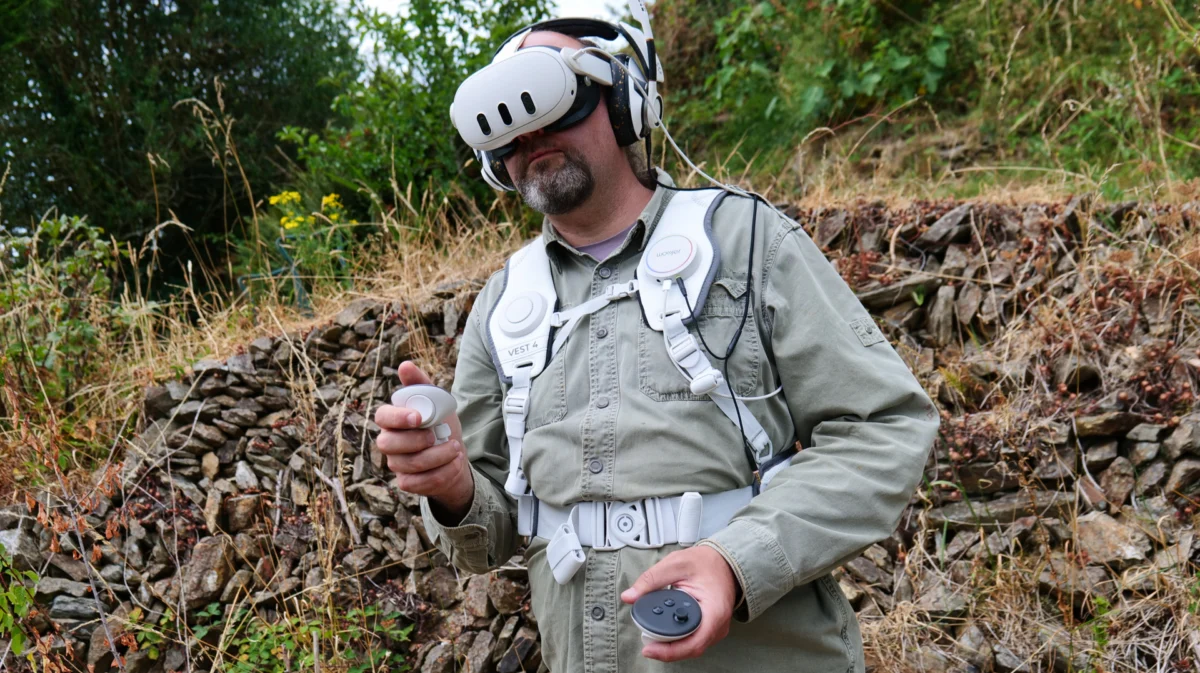
The Woojer Vest 4 is not a traditional haptic device in the sense that it does not rely on software-driven telemetry. Instead, it functions as a wearable surround-sound subwoofer. The device utilizes six patented Osci TRX2 transducers—high-fidelity tactile actuators—strategically placed around the wearer’s body: two on the chest, two on the back, and two at the waist.
Key Specifications:
- Frequency Response: 1Hz to 250Hz (covering the infrasonic and bass ranges).
- Transducers: 6x Osci TRX2 actuators.
- Connectivity: Bluetooth 5.0, 3.5mm Stereo Input/Output, and USB-C Audio.
- Weight: Approximately 3.3 lbs (1.5kg).
- Battery Life: Up to 10 hours of playtime, depending on intensity levels.
- Charging: 3-hour full charge via USB-C.
- Price Point: MSRP ranges from $349 to $499, positioning it as a premium enthusiast accessory.
Unlike competitors such as bHaptics, which require specific game integrations to function, the Woojer Vest 4 is "platform agnostic." Because it processes raw audio signals, it is compatible with virtually any device that outputs sound, including the Meta Quest 3, PlayStation VR2, PC, Xbox, and mobile devices. This universal compatibility is its primary selling point, though it comes with a trade-off in positional accuracy compared to telemetry-based systems.

Chronology: The Evolution of Wearable Bass
The journey to the Vest 4 is a story of iterative engineering. The concept of wearable haptics gained traction in the mid-2010s, with companies like Subpac pioneering the "tactile bass" niche. Early models were often bulky, resembling heavy backpacks with a single large transducer that vibrated the entire spine. While effective for music producers, these early units lacked the nuance required for gaming and cinematic immersion.
Woojer entered the market with a focus on polyphonic haptics. Their previous models, including the Vest Edge and the original Woojer Strap, experimented with the placement and number of transducers. The Vest 4 represents the culmination of this evolution, refining the ergonomics and the digital signal processing (DSP).

The setup process for the Vest 4 reflects the complexities of modern "plug-and-play" hardware. Upon unboxing, users are met with a mandatory firmware update—a standard requirement in the current hardware climate to ensure compatibility and fix early-production bugs. The transition from the older, more industrial designs to the Vest 4’s sleeker neoprene and faux-leather aesthetic signals a move toward mainstream consumer appeal, even if the device remains a niche luxury.
Supporting Data: Performance, Latency, and Ergonomics
To understand the impact of the Woojer Vest 4, one must look at the data regarding its performance in various media environments. The device operates on a "low-pass filter" logic, meaning it ignores high-pitched sounds (like dialogue or chirping birds) and focuses on the "thump" of the audio spectrum.

Haptic Intensity and Nuance
The Vest 4’s six-transducer array allows for a more distributed sensation than previous generations. In testing with high-fidelity shooters like Battlefield 6, the system demonstrates a remarkable ability to differentiate between types of mechanical feedback. A gunshot is rendered as a sharp, localized "kick" to the shoulder, while a nearby tank engine creates a sustained, low-frequency growl that vibrates the ribcage.
According to user feedback and technical testing, the upper transducers are significantly more powerful than the waist-mounted units. This is partly due to human anatomy; the chest and shoulders have less "natural padding" than the waist, allowing the haptic energy to transfer more directly to the skeletal structure.

The Latency Challenge
One of the most critical data points for any gaming accessory is latency. The Woojer Vest 4 supports Bluetooth 5.0, but the inherent delay in Bluetooth audio remains a hurdle.
- Wired Connection: Latency is negligible (under 10ms), making it the gold standard for rhythm games like Beat Saber or Pistol Whip.
- Bluetooth-to-Bluetooth: Testing shows a latency of approximately 140ms. While the Woojer app includes a "sync" slider to delay the haptics to match the audio, this is only effective for passive media like movies. In fast-twitch gaming, a 140ms delay can break the immersion, leading most enthusiasts to prefer a wired setup despite the "cable spaghetti" it creates.
Thermal and Ergonomic Data
While the vest is relatively light at 3.3 lbs, it acts as a significant thermal insulator. In a 30-minute session of active VR gaming, body temperature within the vest can rise significantly. Although the interior uses breathable mesh, thermodynamics dictates that a padded vest worn during physical activity will lead to increased perspiration. Woojer offers washable liners to mitigate this, but it remains a factor for long-term comfort and hygiene.

Official Responses and Design Philosophy
Woojer’s design philosophy centers on "The Science of Sensation." In official documentation and product briefings, the company emphasizes that haptics should not be a novelty but a fundamental component of the "tri-sensory" experience (visual, auditory, tactile).
Responding to critiques regarding the lack of native game telemetry, Woojer representatives have historically argued that "universal compatibility" is more valuable to the consumer than "bespoke integration." By focusing on the audio signal, Woojer ensures that their hardware never becomes obsolete as long as games continue to use sound. This "plug-and-play" philosophy is designed to lower the barrier to entry, even if the price tag remains high.

The inclusion of the Woojer Device Manager app is a direct response to the need for user customization. The app provides three distinct processing modes:
- Gaming Mode: Optimized for discrete, sudden effects (explosions, gunfire) with minimal background interference.
- Broad Mode: Designed for movies and music, offering a wider frequency response for a more "cinematic" feel.
- Focus Mode: A narrow-band setting that emphasizes specific low-end frequencies, useful for competitive gaming where identifying footsteps or specific mechanical cues is vital.
Implications: The Future of Tactile Immersion
The release of the Woojer Vest 4 carries broader implications for the future of the XR (Extended Reality) industry and high-end home entertainment.

1. The Democratization of Haptics
While currently priced for enthusiasts, the Vest 4 demonstrates that high-fidelity haptics can be achieved without proprietary software hooks. As the cost of Osci-style transducers decreases, we may see this technology integrated into standard gaming chairs or even mainstream clothing. The Vest 4 serves as a proof-of-concept for how "wearable sound" can enhance the metaverse, making virtual interactions feel more "weighty" and real.
2. Accessibility and Sensory Substitution
Beyond gaming, the Woojer Vest 4 has profound implications for the deaf and hard-of-hearing community. By translating audio into tactile sensation, the vest allows users to "feel" music and cinematic soundscapes in a way that was previously impossible. This application of sensory substitution is a growing field of research, and the Vest 4 is one of the most powerful consumer-grade tools available for this purpose.

3. The "Friction" of Immersion
The Vest 4 also highlights the ongoing struggle between "immersion" and "friction." To achieve the highest level of presence in a digital world, users must currently "suit up"—putting on a headset, controllers, and now a haptic vest. This added friction is the primary hurdle preventing mass-market adoption. The success of future iterations will likely depend on how much of this technology can be miniaturized or made more "invisible" to the wearer.
Conclusion
The Woojer Vest 4 is a polarizing but undeniably powerful piece of technology. It is expensive, it can be cumbersome to wire, and it will make you sweat during an intense round of VR. However, for those seeking the "bleeding edge" of immersion, it offers a sensation that no other category of peripheral can match.

By turning the human torso into a resonance chamber, the Vest 4 bridges the final gap between the digital and the physical. It transforms a game from something you watch and hear into something you endure. For the dedicated gamer, the audiophile, or the VR enthusiast, the Woojer Vest 4 isn’t just an accessory—it’s a fundamental shift in how we perceive the digital world. Whether it’s the rhythmic pulse of a techno track or the bone-shaking thump of a mortar shell, the Vest 4 ensures that you don’t just play the game; you feel every second of it.