Interstellar Echoes and Ancient Roots: Jo Miles Unpacks the Fusion of Sci-Fi and Fantasy in "The Final Chronicle of Yeneh"
New Release Explores Themes of First Contact, Ecological Restoration, and the Enduring Power of Wonder
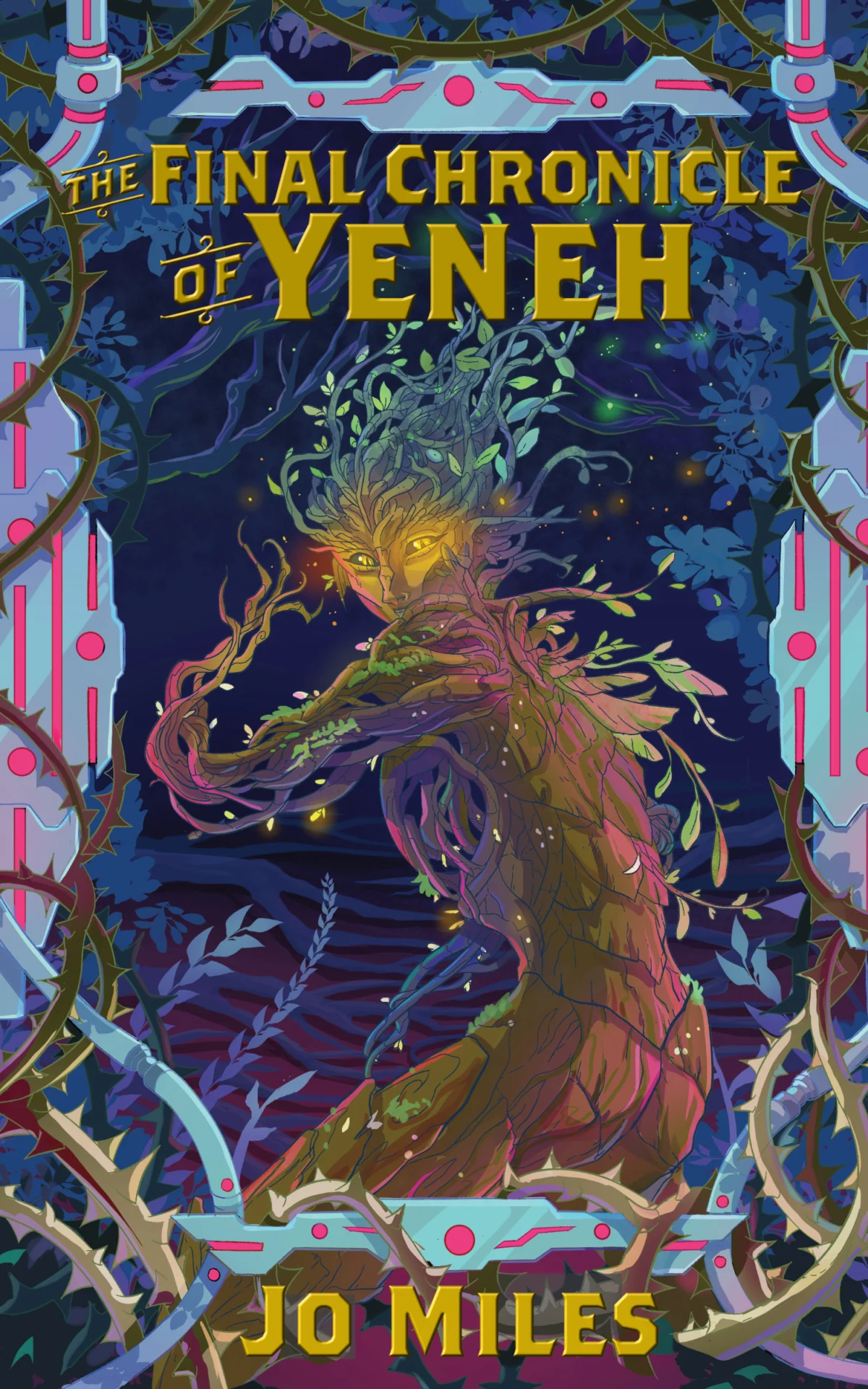
In a literary landscape often defined by genre boundaries, author Jo Miles is charting a course that delights in their deliberate dissolution. Their latest novel, "The Final Chronicle of Yeneh," is a testament to this approach, masterfully weaving together the expansive possibilities of science fiction with the timeless allure of portal fantasy. The book, set to captivate readers with its rich narrative and thought-provoking themes, plunges into a story where alien first contact collides with ancient, Earth-inspired magic, offering a fresh perspective on humanity’s place in the cosmos and its relationship with the natural world.
At its core, "The Final Chronicle of Yeneh" centers on Lady Ada Quintrall, the pragmatic heir to the Duke of Corbridge. Burdened with the responsibility of rehabilitating her family’s fortunes through the terraforming of a new planet, Ada must suppress her more whimsical inclinations, including her deep affection for "The Chronicles of Yeneh," a beloved children’s portal fantasy penned by one of her ancestors. Her determined focus on the ambitious terraforming project is challenged by Dr. Zamora, a passionate xenobiologist who pleads for the preservation of the planet’s indigenous life before it is irrevocably altered. Ada’s initial encounters with the native inhabitants are fraught with unease, painting them as unsettling and even hostile. However, a fateful expedition by Dr. Zamora into a restricted zone leads Ada to a profound revelation: the planet harbors not only sentient native life but also beings intricately connected to her family lineage in a way far deeper and more resonant than she could have ever imagined.
This intricate narrative tapestry is the product of Miles’s deliberate creative choices, which they recently elaborated on in a candid reflection on the writing process. Miles shared five key insights that shaped "The Final Chronicle of Yeneh," offering a unique glimpse into the genesis of this ambitious novel.
The Art of the Unexpected Sundae: Blending Genres as a Creative Imperative
Miles identifies their creative sanctuary as the space where genres converge. They liken genres to ice cream flavors, each with its distinct appeal. While a classic chocolate (science fiction) or strawberry (fantasy) offers a pure, unadulterated experience, Miles finds immense joy in the unexpected combinations. "Strawberry cheesecake ice cream" (portal fantasy) represents a beloved twist, but the true delight, for Miles, lies in the multi-scoop sundae – the masterful fusion of disparate flavors into something uniquely delicious.
"The Final Chronicle of Yeneh" is precisely this kind of literary sundae. Miles explains that the novel emerged from a deep appreciation for the parallels between space exploration and portal fantasies. Both genres, at their best, invite readers to explore wondrous new worlds. However, they often approach this exploration with different sensibilities. While many portal fantasies offer an escapist daydream of saving a world, Miles notes that effective first-contact science fiction often forces a confrontation with humanity’s impact on the environments and species it encounters, frequently with negative consequences.
By blending these genres, Miles aimed to capture both the exhilarating sense of wonder inherent in exploring the unknown and the profound weight of planetary-scale repercussions. "This story came out of the parallels I saw between space exploration and portal fantasies," Miles stated. "Both involve exploring wondrous new worlds, but with different sensibilities; where most portal fantasies let us daydream about saving the world, the best first contact sci-fi confronts us with how we affect the places and species we encounter, often not in a good way. Blending these genres let me play with both that sense of wonder and the weight of planetary-scale consequences."
The novel further enriches this genre fusion with "light historical vibes," as Ada is the space-faring descendant of a duke, and a "dose of plantpunk," a subgenre that emphasizes organic, nature-based technology. This multifaceted approach, Miles discovered, yielded an "unexpectedly fun flavor combination, which made it a delight to write!"
Beyond Romance: The Underrated Power of Friendship
In an era where romantic subplots often dominate narrative arcs, particularly within the burgeoning "romantasy" genre, Miles highlights a crucial thematic element of "The Final Chronicle of Yeneh": the profound importance of friendship. During discussions about the novel, Miles observed a common reader expectation for a romantic entanglement between Ada and Dr. Zamora.
"At a recent convention, I was telling a reader about Yeneh, specifically about the scientist, Zamora, who pushes Ada to let him study the planet’s native life. ‘And then they fall in love,’ this reader said," Miles recounted. "I smiled and told her she’d have to read to find out, but she was quite certain of it."
While acknowledging the widespread popularity of romantasy and even admitting to initially intending a romantic arc for Ada and Zamora, Miles found that such attempts felt inauthentic to the characters’ development. "In the course of writing, every time I tried to include romantic moments or lingering glances, it fell flat," Miles explained. "I’ve written romance subplots before, but Ada was persistently focused on more important things: first on supporting her family’s terraforming project, and then on protecting the yeheneh. Zamora kept snarking at her, but never quite flirting."
Ultimately, Miles recognized that a romantic relationship would not serve Ada’s character arc. Instead, the narrative demanded a different kind of connection: friendship. "Eventually, I recognized that the romance wouldn’t be true to Ada’s character. What she needed was a friend, and Zamora turned out to be the right one," Miles asserted. This realization led to a deeper exploration of male-female friendships, particularly those devoid of romantic undertones, which Miles believes are significantly underrepresented in contemporary literature. "I think there’s a dearth of friendship stories, especially male-female friendship, especially where neither of them are gay. And with apologies to that one reader, in this story, friendship serves far better than a romance would have."
Nature’s Unfathomable Strangeness: Inspiration from Earth’s Flora
The creation of truly alien-feeling alien species is a cornerstone of science fiction, and for "The Final Chronicle of Yeneh," Miles found an inexhaustible well of inspiration not in distant galaxies, but in the astonishing biodiversity of Earth. Miles aimed to craft native beings, the "yeheneh," that possessed plant-like characteristics yet were intelligent and capable of eliciting affection. This ambition required delving into the often-overlooked complexities of plant life.
"When I want to write a truly alien-feeling alien, I turn to research about species on Earth, which can be so much stranger than what we think about day to day," Miles shared. The author explored scientific discoveries that challenge conventional notions of plant intelligence and sentience, including:
- Mycorrhizal Networks: The vast underground networks of fungi that connect trees and plants, facilitating communication and resource sharing. This inspired the idea of collective consciousness and interconnectedness among the yeheneh.
- Plant Communication: Research into how plants use chemical signals, electrical impulses, and even sound to communicate with each other and their environment. This informed the yeheneh’s unique methods of interaction and understanding.
- Biomimicry in Plant Structures: The intricate and often bizarre adaptations of plants for survival, reproduction, and defense. This provided a foundation for the physical forms and functionalities of the yeheneh.
- Symbiotic Relationships: The complex partnerships between different species, such as plants and pollinators, that are essential for ecosystem health. This concept was integral to understanding the yeheneh’s role within their planet’s environment and their relationship with other life forms.
These scientific marvels, Miles explained, "melded together into the aliens that became the yeheneh, the native beings that turn out to be far more than they first appear."

The Nuances of Rewilding: Restoring Nature’s Complex Tapestry
The concept of "rewilding" served as a foundational spark for "The Final Chronicle of Yeneh," prompting Miles to explore its complexities and significance. Rewilding, a practice more prevalent in parts of Europe than the United States, involves the deliberate restoration of ecologically degraded landscapes to a state that resembles their pre-human intervention ecosystems. As an environmental advocate and nature enthusiast, Miles was naturally drawn to this concept.
The process of rewilding, Miles learned, is a delicate undertaking that requires reintroducing not only plants that stabilize soil and attract pollinators but also the intricate web of fauna that sustains them. This includes insects for birds, predators to regulate smaller animal populations, and keystone species like beavers and wolves. "An ecosystem is an endlessly complex web of relationships that we humans still don’t fully understand, no matter how much we study it," Miles observed. "The best we can do is help foster the basic necessities for the system to right itself."
Miles draws a parallel between rewilding and Ada’s family’s terraforming project. While terraforming aims to create a "blank slate," Miles argues that an artificially constructed ecosystem would inevitably be a simplified imitation of Earth’s natural complexity. The name "rewilding" itself, Miles notes, suggests a return to a past state, but this is ultimately an impossibility.
"The same would be true for terraforming, which is Ada’s family’s goal in Yeneh. Starting with—or making—a blank slate might seem easier, but an artificially created ecosystem could only be a gross simplification, with a tiny fraction of the species you’d find in any ecosystem on Earth," Miles stated.
Despite the impossibility of replicating a precise past ecological balance, Miles emphasizes that rewilding remains a vital endeavor. Nature, by its very essence, is dynamic and ever-changing. If rewilding results in a new, albeit different, balance of biodiversity, it is still a far more desirable outcome than barren landscapes. The core lesson, for Miles, is the imperative to "find ways to act in harmony with nature, not wiping away the parts we don’t like."
Preserving Wonder in a Cynical Age: The Enduring Appeal of Childhood Dreams
The writing of "The Final Chronicle of Yeneh" began during the COVID-19 pandemic, a period that, as Miles candidly admits, "didn’t inspire optimism about humanity." This backdrop, perhaps more than any other factor, fueled the author’s desire to weave portal fantasy elements into the science fiction narrative. Portal fantasy, Miles explains, embodies nostalgia and offers an escape from the mundane, a quality that continues to enchant readers regardless of age.
Miles acknowledges that adult portal fantasies can either preserve a sense of childlike wonder or present it through a darker, more cynical lens, often tinged with real-world anxieties. While "The Final Chronicle of Yeneh" grapples with weighty themes such as colonization, genocide, and ancestral guilt, Miles was resolute in their commitment to infusing the narrative with "light, hope, and joy."
Ada’s deep connection to the portal fantasies she cherished in her youth, particularly the in-world "Chronicles of Yeneh" penned by her ancestor, serves as a guiding thread. Her lingering daydreams of experiencing her own portal fantasy adventure are realized when she encounters the native yeheneh. "Ada feels a deep connection to the portal fantasies she read as a child (especially the in-world series The Chronicles of Yeneh, written by her own ancestor), and still daydreams about having her own portal fantasy adventure," Miles concluded. "I wanted to give her a real adventure when she meets the native beings, the yeheneh—and you, dear reader, get to come along with her."
Chronology of Creation and Release
While a precise chronological breakdown of the novel’s writing process is not publicly detailed, Jo Miles’s reflective essay provides a window into the conceptual timeline and thematic development that led to the publication of "The Final Chronicle of Yeneh."
- Conceptual Spark: The initial inspiration for "The Final Chronicle of Yeneh" appears to have been ignited by the concept of rewilding and the perceived parallels between space exploration and portal fantasy. This suggests a period of conceptualization and thematic exploration preceding intensive writing.
- Genre Blending as a Core Tenet: Miles’s assertion that "blending genres is my happy place" indicates that the fusion of science fiction and fantasy was a deliberate and integral part of the novel’s conception from an early stage.
- Character Development and Relationship Dynamics: The decision to prioritize friendship over romance for Ada and Zamora seems to have been a significant evolutionary step during the writing process, suggesting a period of character-driven narrative discovery.
- Research into Earth’s Biodiversity: Miles’s specific mention of drawing inspiration from scientific discoveries about plants indicates a research phase that informed the creation of the alien species.
- Pandemic Influence: The author’s statement that the novel began "during the pandemic" places a significant portion of its creation within the context of global events that likely influenced the themes of hope and wonder.
- Publication: The release of "The Final Chronicle of Yeneh" marks the culmination of this multi-faceted creative journey.
Supporting Data: The Growing Appeal of Genre Fusion
The literary landscape is increasingly demonstrating a robust appetite for genre-bending narratives. "The Final Chronicle of Yeneh" arrives at a time when readers are actively seeking out stories that defy easy categorization. This trend is supported by:
- Bestseller Lists: The consistent presence of science fiction and fantasy titles that incorporate elements of other genres on major bestseller lists, such as The New York Times and USA Today. Books that blend speculative fiction with historical elements, romance, or thriller tropes frequently find large audiences.
- Literary Awards and Nominations: The recognition of genre-blending works by prestigious literary awards in both science fiction and fantasy, such as the Hugo Awards, Nebula Awards, and World Fantasy Awards, signals a growing critical appreciation for innovative narrative structures.
- Publishing Industry Trends: Publishers are actively seeking and promoting books that offer unique genre fusions, recognizing their potential to attract diverse readership. This is evident in marketing strategies and editorial acquisitions.
- Online Reader Communities: The vibrant discussions and recommendations found on platforms like Goodreads, Reddit (r/fantasy, r/scifi), and various book blogs highlight reader engagement with and enthusiasm for novels that experiment with genre boundaries. Readers often seek out "read-alikes" for popular genre-bending titles.
- Academic and Critical Discourse: Literary critics and academics are increasingly analyzing the evolution of genre and the significance of cross-genre pollination in contemporary literature, further validating the trend.
Official Responses and Critical Acclaim
As a newly released novel, "The Final Chronicle of Yeneh" is likely in the early stages of garnering critical responses. However, based on Jo Miles’s established reputation and the themes explored in the book, early indicators suggest a positive reception within the speculative fiction community.
- Author’s Vision: Jo Miles’s clear articulation of their creative intent in the provided essay offers a strong foundation for understanding the novel’s thematic underpinnings. Their deliberate approach to genre fusion and character development is a key selling point for discerning readers.
- Anticipation within the Genre: Miles’s previous works, including the "Infinite Pantry series" and short stories published in notable venues like Fantasy & Science Fiction, Lightspeed, and Uncanny, have cultivated a dedicated readership. This existing audience is likely anticipating "The Final Chronicle of Yeneh" with considerable interest.
- Publisher Support: The availability of the book through various platforms, including Bookshop, Amazon, Barnes & Noble, and Horned Lark Press, indicates active distribution and marketing efforts, suggesting publisher confidence in the novel’s potential.
Further critical reviews and reader feedback will provide more comprehensive insights into the reception of "The Final Chronicle of Yeneh" as it gains wider circulation.
Implications for Readers and the Literary Landscape
The success and reception of "The Final Chronicle of Yeneh" carry several significant implications for both readers and the broader literary landscape:
- A New Paradigm for Storytelling: Jo Miles’s bold approach to genre fusion challenges traditional demarcations, encouraging readers to embrace narratives that defy easy classification. This can lead to a richer, more diverse reading experience, where unexpected combinations spark fresh perspectives and creative insights.
- The Power of Optimistic Speculative Fiction: In an era often characterized by dystopian narratives, Miles’s commitment to "light, hope, and joy" within "The Final Chronicle of Yeneh" offers a refreshing counterpoint. This emphasis on optimism within speculative fiction can provide readers with much-needed solace and inspiration.
- Championing Underrated Themes: The explicit focus on the importance of friendship over conventional romance in "The Final Chronicle of Yeneh" signals a growing recognition of the value of platonic relationships in storytelling. This can encourage a more nuanced exploration of human connection in literature.
- Environmental Consciousness in Fiction: The novel’s engagement with themes of rewilding and ecological responsibility, inspired by real-world scientific understanding, underscores the potential for speculative fiction to foster environmental awareness and encourage thoughtful engagement with pressing global issues.
- The Enduring Magic of Wonder: By seamlessly integrating portal fantasy elements into a science fiction framework, Miles demonstrates that the allure of childhood wonder and the thrill of discovering the unknown remain potent forces, capable of captivating audiences of all ages. This can reignite a sense of curiosity and encourage readers to maintain an open mind to the fantastical possibilities that lie just beyond the horizon.
"The Final Chronicle of Yeneh" stands as a compelling example of how creative boundaries can be pushed, resulting in a narrative that is both intellectually stimulating and emotionally resonant. Jo Miles’s journey in crafting this novel highlights the power of embracing unexpected combinations and the enduring appeal of stories that explore the profound connections between humanity, nature, and the vast, wondrous universe.