Stepping into the Sketchbook: Artist Leteramma Revolutionizes Digital Art with Immersive 2D-to-3D Transformations
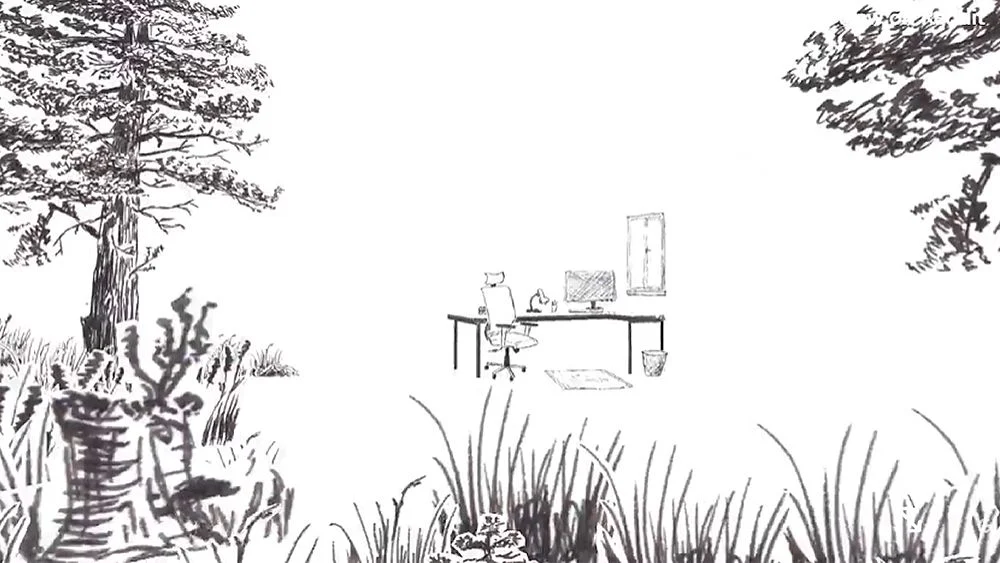
London, UK – [Date] – In a remarkable fusion of traditional artistry and cutting-edge digital technology, an artist known online as Leteramma is captivating the internet with their innovative approach to transforming simple pencil sketches into fully explorable 3D environments. Leveraging the power of free and accessible 3D modelling software, Leteramma is inviting viewers to experience the uncanny sensation of stepping directly into the pages of a sketchbook, blurring the lines between the tangible and the imagined.
This groundbreaking work, primarily showcased on platforms like Reddit, has ignited a conversation within the digital art community about the potential of accessible tools to democratize advanced creative processes. Leteramma’s creations offer a unique visual experience, evoking a dreamlike quality where the textured lines and shading of pencil drawings coalesce into three-dimensional spaces that can be navigated and explored. The artist’s dedication to learning and experimenting, even while relatively new to 2D drawing, highlights a potent blend of curiosity and technical prowess.
The Genesis of a Sketchbook World: From Paper to Pixels
Leteramma’s artistic journey into this unique 3D realm began with a fundamental yet powerful concept: reimagining the flatness of a 2D sketch. The artist’s initial foray into this ambitious project involved meticulously creating a series of traditional pencil drawings. These sketches, imbued with the characteristic texture and depth of graphite on paper, were then carefully scanned. This crucial step transformed the physical artwork into digital assets, laying the groundwork for their subsequent digital manipulation.
The chosen tool for this ambitious transformation was Blender, a powerful and versatile open-source 3D creation suite. The accessibility of Blender, being entirely free, plays a significant role in Leteramma’s ability to experiment and innovate without financial barriers. This aligns with a broader trend in the digital art world, where increasingly sophisticated tools are becoming available to artists of all levels.
Once the scanned sketches were imported into Blender, Leteramma embarked on a series of technical and artistic refinements. A key element of the process involved manipulating the shader settings. The artist cleverly converted the white of the paper into a white emission, giving the drawn elements a luminous quality. This technical tweak was instrumental in creating the ethereal and dreamlike atmosphere that defines their work.
Following this, the artist employed a sophisticated technique of "cutting out" the scanned drawings, effectively isolating the sketched elements from their paper background. These isolated images were then integrated into a geometry node setup. This intricate system was designed to ensure that the drawings would always maintain their orientation towards the viewer, regardless of the camera’s position. As Leteramma explained on Reddit, "Essentially, it just rotates the drawings so they always face the camera." This clever manipulation ensures that the illusion of a flat, drawn surface is maintained even within a 3D space, contributing to the unique visual language of their art.
Furthermore, the background elements were also treated with a white glow, a deliberate choice designed to foster a seamless integration of the cut-out sketches. This meticulous attention to detail in lighting and composition allows the individual drawn elements to appear as if they are naturally existing within a cohesive, albeit surreal, environment. The result is an immersive experience that feels both familiar, due to the sketchbook aesthetic, and profoundly otherworldly.
A Dreamscape of Pencil Lines: Exploring the Aesthetic
The artistic output of Leteramma is characterized by a distinct and compelling aesthetic that directly stems from their innovative 2D-to-3D process. The most prominent visual hallmark is the palpable presence of the pencil sketch. The lines retain their organic quality, exhibiting the subtle variations in pressure and texture that are inherent to hand-drawn marks. The shading, a fundamental element of pencil art, is not merely replicated but recontextualized within a three-dimensional space, creating a sense of depth and volume that is both unexpected and captivating.
The environments Leteramma constructs often possess a surreal and introspective quality. The "My Room" series, for instance, transforms a personal space into a navigable dreamscape. The familiar objects and architectural elements are rendered in the distinct style of pencil drawings, giving them an almost ephemeral presence. Walking through these spaces feels akin to entering a memory or a half-forgotten dream, where the logic of reality is suspended, and the visual language of art takes precedence.
This dreamlike quality is further amplified by the intelligent use of lighting and composition. The emitted white of the paper and the subtle glow of the backgrounds create an atmosphere that is both soft and illuminating. This prevents the 3D space from feeling overly dark or imposing, instead opting for a gentle immersion. The constant orientation of the drawn elements towards the viewer ensures a consistent and engaging viewing experience, reinforcing the feeling of being enveloped by the artwork.
The artist’s exploration of this aesthetic is not limited to single scenes. Leteramma has demonstrated a capacity to create entire environments that feel cohesive and lived-in, despite their unconventional construction. This suggests a deep understanding of spatial design and visual storytelling, even when employing unconventional methods. The ability to evoke specific moods and atmospheres, from the whimsical to the contemplative, further solidifies the impact of their unique artistic vision.
Beyond the Sketchbook: Exploring Liminal Spaces and Unsettling Atmospheres
While the pencil sketch aesthetic is Leteramma’s signature, their artistic curiosity extends to exploring other styles and moods. In a series of pieces, the artist delves into the realm of unsettling and atmospheric environments, drawing inspiration from the concept of "liminal spaces." These are transitional or in-between places that often evoke feelings of unease, nostalgia, or isolation.
To achieve these distinct atmospheres, Leteramma employs specific rendering techniques, including the use of Optix denoising. This advanced rendering feature helps to smooth out noise and artifacts in the rendered image, contributing to a cleaner and more refined final output. However, in Leteramma’s hands, this technical refinement is used to enhance, rather than eliminate, a sense of unease.
The resulting scenes often evoke the aesthetic of "The Backrooms," a popular internet creepypasta and urban legend that depicts vast, labyrinthine, and unsettlingly empty spaces. These creations by Leteramma are characterized by their starkness, repetitive architectural elements, and often muted color palettes. The deliberate use of light and shadow plays a crucial role in creating a sense of disorientation and isolation.
For example, images that hint at "The Backrooms" might feature endless corridors, vacant rooms, or disused industrial spaces, all rendered with a subtly distorted or dreamlike quality. The absence of clear narrative elements, combined with the uncanny familiarity of these spaces, creates a powerful psychological impact on the viewer. Leteramma’s ability to translate the abstract concept of liminality into tangible, navigable 3D spaces is a testament to their artistic versatility and technical skill.
These explorations into darker and more unsettling themes demonstrate Leteramma’s command over a range of artistic expressions. By pushing the boundaries of their 3D modelling techniques, they are not only creating visually striking artwork but also engaging with complex psychological and cultural themes. The ability to shift from the whimsical charm of a sketchbook world to the eerie desolation of a liminal space showcases a mature and multifaceted artistic voice.
The Technical Foundation: Blender and Geometry Nodes in Action
The success of Leteramma’s immersive 3D creations hinges on a sophisticated understanding and application of the tools available within Blender. While the artistic vision is paramount, the technical execution is equally impressive, particularly considering the artist’s self-proclaimed status as a relative newcomer to 2D drawing.
Blender: The Free Engine of Creation
Blender’s role as the primary software cannot be overstated. Its comprehensive suite of tools for 3D modeling, sculpting, texturing, rendering, and animation makes it an ideal platform for artists looking to bring their imaginations to life. The fact that it is free and open-source democratizes access to professional-grade 3D creation, allowing artists like Leteramma to experiment and develop complex workflows without significant financial investment. This accessibility is a critical factor in fostering innovation within the digital art community.
Geometry Nodes: Sculpting with Data
A cornerstone of Leteramma’s technique is the use of Blender’s Geometry Nodes. This powerful node-based system allows artists to procedurally generate and manipulate geometry. Instead of manually modeling every element, artists can create systems that define how geometry is created, modified, and distributed.
In Leteramma’s case, Geometry Nodes are instrumental in several key aspects:
- Procedural Placement and Orientation: As mentioned, the artist uses Geometry Nodes to ensure that the scanned sketches, when converted into 3D objects, always face the camera. This is achieved through nodes that calculate the camera’s position and orientation and then apply a rotation to the geometry accordingly. This creates the illusion of a flat, 2D surface existing within a 3D space.
- Dynamic Composition: Geometry Nodes can be used to control the density, scale, and arrangement of elements. This allows Leteramma to create complex scenes where multiple sketches are integrated seamlessly, with variations in their placement and appearance.
- Material Control: While shaders handle the visual appearance, Geometry Nodes can also influence how materials are applied and distributed across the geometry, allowing for fine-tuned control over the emission properties and glows that define the artwork.
Shader Editor: Bringing Drawings to Life
The Shader Editor in Blender is where the visual magic truly happens in terms of material properties. Leteramma’s innovative use of shaders is crucial to the sketchbook aesthetic:
- Paper as Emission: The transformation of the white paper background into a white emission is a key shader effect. This gives the drawn elements a luminous quality, making them stand out and contributing to the dreamlike atmosphere.
- Line Art Shading: While not explicitly detailed, it’s implied that the shaders are carefully crafted to mimic the appearance of pencil lines. This might involve techniques that emphasize edges, control subsurface scattering to mimic graphite’s interaction with paper, or even employ non-photorealistic rendering (NPR) shaders to achieve a stylized, hand-drawn look.
The Workflow: A Seamless Integration
The entire workflow, as described by Leteramma, is a testament to their technical proficiency:
- 2D Sketching: The foundational artistic creation.
- Scanning: Digitizing the physical artwork.
- Importing into Blender: Bringing the scanned images into the 3D environment.
- Shader Setup: Defining the visual properties of the drawn elements and backgrounds.
- Geometry Nodes: Procedurally arranging, orienting, and manipulating the geometry of the sketches.
- Rendering: Utilizing Blender’s rendering engines (like Cycles or Eevee, potentially with OptiX for specific effects) to produce the final images or animations.
This iterative process, combining traditional artistic skills with advanced digital tools, allows Leteramma to push the boundaries of what is possible in digital art and create experiences that are both technically sophisticated and emotionally resonant.
The Artist’s Journey: Learning and Evolution
Leteramma’s emergence as a prominent digital artist is underscored by their own narrative of continuous learning and artistic evolution. The artist openly shares that they are "relatively new to 2D drawing," a statement that makes their current achievements even more remarkable. This humility and transparency invite viewers to connect with their creative process on a more personal level, demonstrating that artistic mastery is often a journey of persistent effort and self-directed learning.
Their dedication to self-improvement is evident in their approach to acquiring new skills. Leteramma has been actively learning from online resources, a common and highly effective method for artists in the digital age. This includes seeking out tutorials and guides that cover both traditional drawing techniques and advanced 3D software applications. The mention of seeking out "how to draw tutorials" suggests a commitment to strengthening their foundational artistic skills, which then informs their more complex digital endeavors.
The engagement with online communities, particularly platforms like Reddit (r/blender and r/Art), plays a vital role in Leteramma’s development. Sharing their work and receiving feedback from a global audience provides invaluable insights and encouragement. It also allows for a direct dialogue with other artists and enthusiasts, fostering a collaborative spirit within the digital art landscape. The artist’s willingness to explain their process, as evidenced by their Reddit posts detailing the use of geometry nodes and shader settings, contributes to the broader knowledge base of the creative community.
The evolution of Leteramma’s artistic style is also a key aspect of their journey. While the immersive sketchbook aesthetic is their most recognized work, their exploration of unsettling liminal spaces demonstrates a desire to experiment with different moods and visual languages. This willingness to step outside of their comfort zone and tackle new challenges is a hallmark of a maturing artist. The use of techniques like Optix denoising for specific atmospheric effects further indicates a conscious effort to expand their technical toolkit and artistic repertoire.
Leteramma’s story is an inspiring example of how passion, perseverance, and the intelligent use of accessible technology can lead to the creation of unique and impactful art. Their journey highlights the democratizing power of free software like Blender and the importance of online communities in fostering artistic growth and innovation. As they continue to learn and experiment, it will be fascinating to witness the further evolution of their distinctive artistic voice.
Implications for the Future of Digital Art
Leteramma’s innovative approach carries significant implications for the future trajectory of digital art, particularly in its potential to democratize immersive experiences and redefine the relationship between traditional and digital mediums.
Democratization of Immersive Art: The most profound implication lies in the accessibility of creating immersive 3D environments. By leveraging free software like Blender, Leteramma has demonstrated that complex, engaging virtual worlds are no longer the exclusive domain of large studios with substantial budgets. This opens doors for independent artists, educators, and hobbyists to explore narrative and experiential art in ways previously unimaginable. The ability to transform simple sketches into navigable spaces lowers the barrier to entry for creating interactive art, encouraging a new wave of creators to experiment with virtual environments.
Blurring the Lines Between 2D and 3D: Leteramma’s work masterfully bridges the gap between traditional 2D artistry and the dimensionality of 3D. This fusion challenges conventional distinctions between these art forms. It suggests a future where the tactile qualities of drawing, painting, and other traditional mediums can be seamlessly integrated into dynamic digital experiences. This could lead to hybrid art forms that retain the soul of traditional craftsmanship while embracing the interactivity and scale of digital technology. For art education, this approach could offer new ways to teach perspective, composition, and spatial reasoning.
New Avenues for Storytelling and Expression: The ability to step inside a sketch or a dreamlike environment offers powerful new avenues for storytelling and personal expression. Artists can create literal interpretations of their inner worlds, allowing audiences to not just observe but to experience their visions. This is particularly relevant for conveying emotions, abstract concepts, or psychological states that might be difficult to articulate through traditional means alone. The liminal space explorations, for instance, tap into universal feelings of unease and introspection, making them highly relatable and impactful.
The Rise of Accessible Creative Toolkits: Leteramma’s success story reinforces the growing importance of accessible and powerful creative toolkits. As software like Blender continues to evolve and become more user-friendly, the potential for groundbreaking artistic innovation by individuals increases exponentially. This trend suggests a future where the focus will shift even further from the technical mastery of complex software to the imaginative application of these tools to achieve unique artistic outcomes.
Inspiration for Next-Generation Artists: Leteramma’s work serves as a potent source of inspiration for the next generation of artists. Their journey from relative novice to acclaimed digital innovator, driven by curiosity and accessible tools, provides a tangible roadmap for aspiring creators. It highlights that creativity is not solely dependent on formal training or expensive equipment but on a willingness to learn, experiment, and push the boundaries of what is perceived as possible.
In conclusion, Leteramma’s pioneering work is more than just visually captivating; it is a paradigm-shifting demonstration of how technology and artistic vision can converge to create entirely new forms of creative expression. The implications for the future of digital art are vast, promising a more inclusive, innovative, and experientially rich artistic landscape.