The Audiobook Revolution: Navigating the Evolving Landscape of Audio Content Creation
For decades, the dream of transforming a printed book into an audiobook was often met with a daunting financial hurdle. Thousands of dollars, a leap of faith in a producer or narrator, and the lingering question of recouping the investment weighed heavily on authors, particularly those new to the publishing world. This financial barrier frequently led to the painful decision of foregoing an audiobook altogether, a choice that is now proving to be a significant misstep in the modern literary landscape.
The absence of an audiobook is rapidly becoming a tell-tale sign of an AI-generated book, a stark indicator that the work may lack the human touch. In an era where artificial intelligence is increasingly capable of crafting compelling narratives, the presence of an audiobook, even one generated by AI, signals a more authentic and engaging authorial presence. The cost of audiobook production has undergone a dramatic transformation, offering a spectrum of options from elaborate, full-cast productions costing upwards of $10,000 to surprisingly lifelike AI-generated voices available for as little as $100. This democratization of audio content creation is reshaping how authors connect with their audiences and unlock new revenue streams.
A Shifting Market: Beyond Audible’s Dominance
Historically, Audible reigned supreme in the audiobook market. However, the landscape is rapidly evolving. Competitors like Spotify and Chirp are steadily chipping away at Audible’s market share, offering authors new avenues for distribution and potentially more favorable royalty structures. Audible’s once-unquestioned dominance is now being challenged, making it a more optional, though still significant, player in the author’s distribution strategy. This burgeoning competition is a boon for authors, offering greater flexibility and the potential to reach a wider audience without being solely reliant on a single platform.
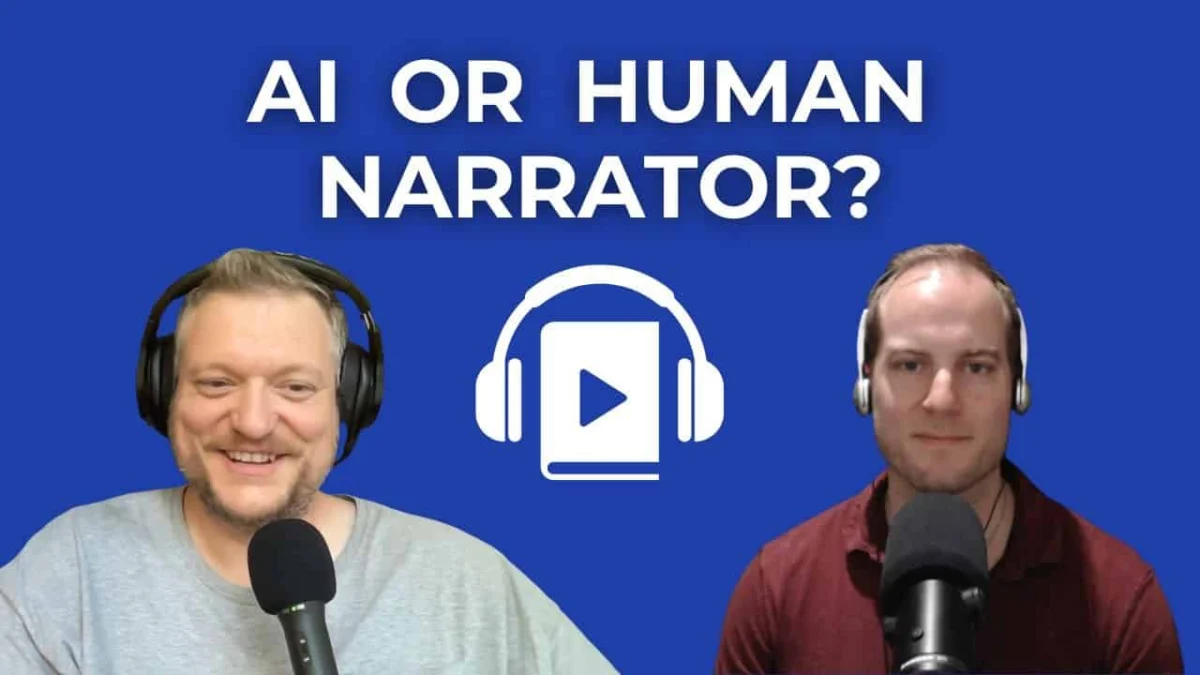
To navigate this complex and dynamic environment, we delve into the insights of audiobook expert Derek Doepker, who, in collaboration with Thomas, a seasoned voice in the publishing industry, provides a comprehensive roadmap for authors considering audiobook production. They explore five distinct tiers of audiobook creation, detailing the pros, cons, and critical decision-making factors involved.
Tier 1: The AI-Narrated Audiobook – A Starting Point
The advent of sophisticated AI voice generation has introduced a new and accessible tier for audiobook production: the AI-narrated audiobook. Derek Doepker emphasizes a nuanced perspective on AI, acknowledging its utility without advocating for its exclusive adoption. "Practically speaking, you can’t just make any book with AI narration and publish it anywhere," he cautions, highlighting the importance of adhering to platform-specific terms of service.
Amazon’s Virtual Voices program, while offering AI narration, comes with a significant price tag of approximately $150 per recorded hour. In stark contrast, platforms like ElevenLabs provide comparable, and often superior, AI voices for as little as $15 per hour. However, a crucial caveat exists: Audible currently prohibits the distribution of audiobooks created using ElevenLabs’ voices. This restriction underscores the need for authors to carefully consider their distribution strategy when opting for AI narration.
"If you publish an AI-narrated audiobook, you’re foregoing that market share," Doepker explains, referring to listeners who may have a preference for human narration. While some AI voices are remarkably convincing, prolonged listening can sometimes lead to the "uncanny valley" effect, where the artificiality becomes noticeable and potentially off-putting.
Despite these limitations, the AI-narrated audiobook presents a compelling alternative to having no audiobook at all. For authors who believe they lack a suitable voice for narration or find human narration prohibitively expensive, AI offers a viable entry point. "If the choice is between nothing and an AI-narrated version, AI is at least something," Doepker asserts. This initial investment can generate sales that would otherwise be missed, with the option to later upgrade to a human-narrated version.
Thomas adds that audience tolerance for AI voices is rapidly evolving, particularly among younger demographics accustomed to AI-generated audio on social media platforms. "The performance is getting better too," he notes, citing advancements in AI that allow for emotional inflection and coaching within the text. The use of a cloned AI voice by Melania Trump for her audiobook is cited as a significant moment, signaling the increasing acceptance and quality of AI narration.
Tier 2: AI Full Cast – Enhancing the Listener Experience
Building upon the foundation of AI narration, a more immersive option emerges: the AI full cast. This approach involves assigning distinct AI voices to each character, transforming a single narration track into a richer, more dynamic listening experience. "With a tool like ElevenLabs, it’s not much more expensive to give each character a distinct voice and use a separate narrator than it is to have one AI voice read the entire book," Thomas explains.
This method allows for a radio-drama-like feel, where female characters are voiced by female AI, male characters by male AI, and even non-human characters can be given appropriate synthetic voices. While this may not perfectly replicate a human performance, the flexibility and distinctiveness of character voices significantly enhance engagement.
Doepker cautions against pursuing a full AI cast solely to mimic a traditional audiobook narrator. However, he acknowledges its appeal for fiction authors seeking to bring their characters to life. "All those issues are solved with an AI full-cast audiobook," he states, referring to the logistical and financial challenges of hiring multiple human voice actors. The primary drawback remains the distribution limitations imposed by platforms like Audible when using non-approved AI voices. Authors may opt to sell these productions directly to consumers via their websites.
Tier 3: The Professional Human Narrator – A Timeless Choice
The professional human narrator remains a cornerstone of audiobook production, offering a blend of authenticity and performance artistry. Thomas highlights how this tier has become more accessible over the years. The days of expensive studio rentals and cumbersome recording equipment are largely behind us. Modern technology allows narrators to record high-quality audio from home, leading to an increased pool of talent and a decrease in costs.
"Human narrators are as little as $150 per finished hour," Thomas reports, estimating that most audiobooks fall between 10 to 30 hours, translating to a production cost of $1,500 to $3,000. The allure of celebrity narrators, who can command higher fees, is also acknowledged. These renowned voices can drive sales due to reader recognition and loyalty, making the investment potentially worthwhile for certain genres.
Doepker champions the do-it-yourself approach for authors, a path he has personally embraced. The affordability and ease of use of modern recording equipment make self-narration a feasible option for many. He notes that even fiction authors can achieve professional results with practice and the right tools. Platforms like ACX and Upwork simplify the process of finding and vetting narrators, while custom auditions allow authors to gauge compatibility before commitment.
The financial aspect of home recording equipment has also drastically shifted. "You can buy all the equipment you need to record audiobooks at home for less than the cost of hiring a professional narrator for a single book," Thomas observes. This initial investment in gear can be leveraged for future audiobooks, podcasts, and other voiceover projects, offering long-term cost savings.
Tier 4: Human Narrator with AI Supporting Cast and Sound Effects – A Hybrid Approach
Bridging the gap between human performance and technological innovation is Tier 4: the human narrator supported by an AI supporting cast and sound effects. This hybrid approach offers a compelling solution for authors who wish to narrate their own fiction but lack the performance range for multiple characters.
"This approach moves into audiobook production," Thomas explains. "Instead of a single narration track, you have multiple tracks in your DAW (digital audio workstation), including your voice, AI character voices, sound effects, and possibly music." This allows for a more cinematic and immersive listening experience, with the author providing the primary narration while AI voices and sound effects flesh out the supporting cast and environment.
The affordability of these tools is a key factor. Authors can leverage AI for character voices and integrate sound effects to create a richer auditory tapestry. While this tier requires more technical proficiency in Digital Audio Workstations (DAWs) for mixing and editing, it is increasingly within reach for many authors. Alternatively, authors can provide the narration while outsourcing the production to skilled editors.
Doepker expresses caution regarding the complexity of this tier, advising authors to "walk before they run." While the potential for high-quality productions is immense, the learning curve and time investment can be overwhelming for some. He emphasizes the importance of starting with achievable goals and gradually incorporating more advanced techniques. "The key isn’t choosing the perfect strategy from the start. It’s getting started," he advises.
Thomas points out the potential for setting listener expectations with higher-tier productions. If an author’s debut audiobook features a full AI cast and sound effects, subsequent, simpler productions might lead to listener disappointment. He highlights the example of authors like Jonathan Shuerger, who effectively uses AI voices to fill gaps in his narration, particularly for characters outside his natural vocal range.

Tier 5: Full Human Cast – The Pinnacle of Audio Production
At the apex of audiobook production lies Tier 5: the full human cast. This tier encompasses two distinct approaches: a full-cast audiobook, where multiple actors voice different characters within the original book structure, and a full-cast radio drama, which involves adapting the book into a script and presenting it as a theatrical audio production.
"These higher tiers may be worth exploring," Thomas suggests, "if people have ever told you, ‘Your book should be a movie.’" These productions offer a cinematic quality, albeit at a higher cost. While the logistics of assembling a full cast have evolved, with actors recording remotely and producers piecing together the final product, the process remains complex and resource-intensive.
Doepker stresses the importance of working with experienced producers for multi-narrator projects to ensure consistent audio quality across all performers. The technical expertise required for professional mixing and mastering is crucial to avoid distracting inconsistencies in the final product. He advises against using rudimentary software like Audacity for such complex productions, recommending advanced DAWs like Pro Tools, Adobe Audition, or specialized audiobook software like Hindenburg or Descript.
Thomas reiterates that most professional DAWs are designed for music production, with Hindenburg being a notable exception tailored for audiobook narration. For authors embarking on DIY narration, Hindenburg Narrator is recommended for its user-friendly interface and built-in features for audiobook export. For more advanced productions, professional engineers and their preferred DAWs are essential.
Distribution Strategies: Navigating the Exclusivity Debate
The decision of where to distribute an audiobook is as critical as its production. While Audible has long been the default, its declining market share necessitates a broader perspective. Spotify’s aggressive entry into the audiobook market, offering free listening hours to subscribers, has significantly disrupted the status quo.
Thomas advocates for a "go-wide" strategy, distributing across multiple platforms including Amazon, Audible, iTunes, Spotify, Chirp, and library services. This approach maximizes reach and adapts to the evolving market. Derek Doepker echoes this sentiment, prioritizing non-exclusive rights to maintain flexibility and access to emerging platforms and promotional opportunities.
The seven-year exclusivity period offered by Audible is a significant commitment, prompting authors to question its long-term viability. "If their decline continues, you could end up locked into a platform that fewer readers are using," Thomas warns. The convenience of integrated listening experiences on platforms like Spotify can make it challenging to draw listeners away.
Monetizing Audiobooks on YouTube: An Untapped Frontier
An increasingly popular and often overlooked revenue stream is YouTube. Authors are discovering that by posting "free" audiobooks on the platform, they can generate significant income through watch time monetization. Long-form content like audiobooks can perform exceptionally well, especially for creators with established audiences.
"Sleep listening can become a strong revenue source," Thomas reveals, highlighting how sustained playback overnight generates revenue. This strategy also allows for creative distribution, offering different versions of an audiobook on various platforms – for instance, an AI full-cast version on YouTube and a human-narrated version on Audible.
While YouTube monetization requires meeting specific thresholds for views, watch hours, and subscribers, the barrier to entry is low. "It also costs nothing to be there, so there’s little downside to experimenting," Thomas notes. This opens up opportunities for authors to reach new audiences and generate passive income.
Derek Doepker suggests that even for creators not yet eligible for monetization, YouTube offers invaluable exposure. Short clips, such as the first chapter, can serve as potent promotional tools to entice listeners to purchase the full audiobook. Repurposing existing audiobook content for YouTube can expand an author’s reach and discoverability.
Furthermore, publishing an official version on YouTube can act as a deterrent against piracy. By capturing the revenue stream, authors can preempt unauthorized uploads from gaining traction.
Transforming Audio Files for YouTube: Visualizing the Narrative
The technical aspect of posting audiobooks on YouTube involves creating a visual component. Thomas suggests using a static book cover image, potentially animated with AI, or, for a more engaging experience, incorporating thematic B-roll footage. Gameplay footage from video games, particularly those aligned with the book’s genre, has proven to be an effective and largely unpoliced method for creating visually appealing content.
"Most game publishers encourage gameplay footage on YouTube and even rely on it for marketing," Thomas explains, noting that copyright enforcement in this area is typically lenient. This strategy allows authors to create captivating promotional material that sets the mood for their audiobooks without significant cost. However, he strongly advises against using in-game music due to stricter music rights enforcement.
Derek Doepker concurs, observing the prevalence of passive consumption of long-form content on YouTube, where viewers may listen while engaged in other activities. The combination of audiobook audio with static images or thematic video footage caters to this viewing habit.
Traditional Publishers: A Role in the Audiobook Arena?
While independent publishing has empowered authors, traditional publishers can still offer advantages in the audiobook realm. Thomas points out that audiobook-exclusive deals with traditional publishers can sometimes secure better per-unit payouts for authors than Audible’s standard indie terms. These partnerships, particularly those specializing solely in audio, can offer a pathway to wider distribution without compromising underlying intellectual property rights.
Derek Doepker acknowledges that Audible’s royalty rates are not always optimal for authors, reinforcing the rationale for pursuing non-exclusive distribution. He emphasizes that authors are not limited to a single publishing path, suggesting the possibility of independent ebook publishing while partnering with a traditional publisher for audiobooks.
The Future of Audio: An Era of Innovation
The audiobook landscape is in a state of rapid evolution, driven by technological advancements and shifting consumer habits. AI is poised to further revolutionize audio production, potentially leading to a future where manuscripts can be transformed into full-length "audio movies" with minimal investment.
Thomas expresses excitement about this trajectory, envisioning a "golden age for audiobooks" where more authors can bring their stories to life across a multitude of platforms with fewer barriers. He also celebrates Audible’s diminishing dominance, believing that market diversification fosters greater creativity and opportunity.
Derek Doepker concludes with a message of encouragement for authors. "We’re in a good moment right now where more opportunities are opening up, and audiobook production is easier and more affordable than ever," he states. He urges authors to embrace the challenges as opportunities, emphasizing that even simple steps like producing an audiobook or repurposing content can provide a significant competitive edge. The key, he reiterates, is to start, adapt, and continuously improve.
As the audiobook market continues to mature and diversify, authors armed with knowledge and a willingness to explore new avenues are best positioned to connect with readers, expand their reach, and unlock the full potential of their literary creations in the dynamic world of audio storytelling.