The Bewitching and Baffling Legacy of Roger Corman’s "Sorceress": A Deep Dive into 80s Exploitation Fantasy
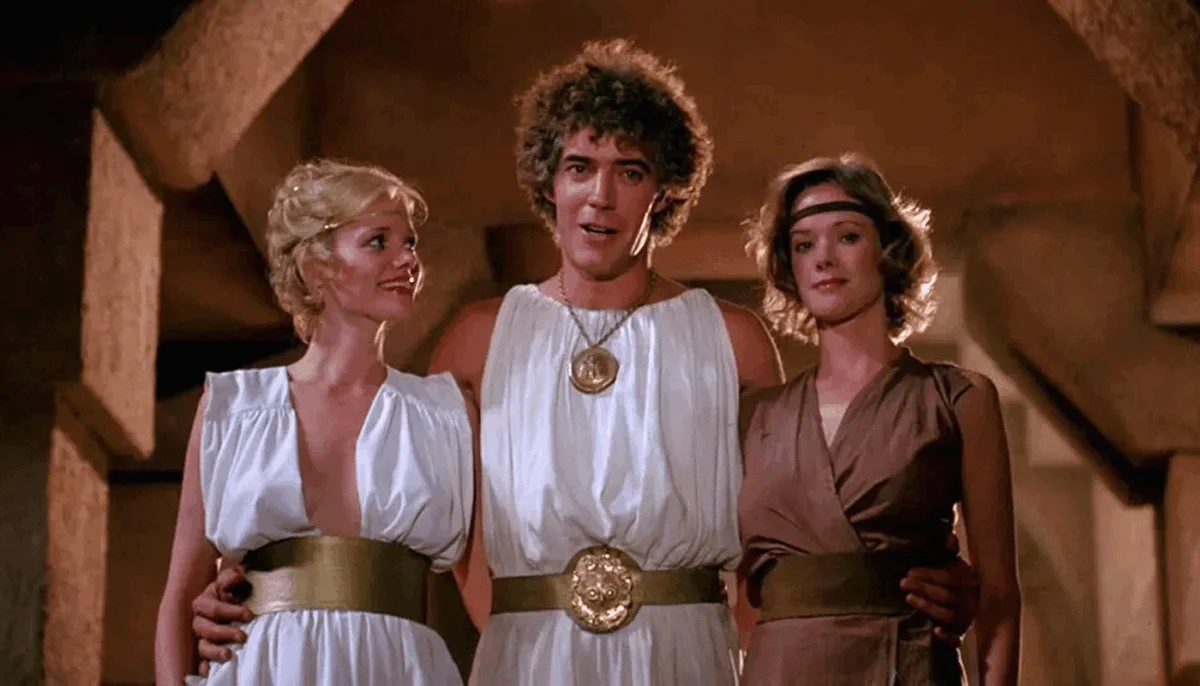
The 1980s carved out a unique, often peculiar, niche in the annals of fantasy cinema. Distinctly less polished and frequently more audacious than the genre offerings of later decades, these films left an indelible mark, a legacy that, while briefly obscured in the 1990s, re-emerged in the 2000s with a more refined aesthetic. Yet, it is the raw, unbridled, and sometimes utterly bizarre spirit of the 80s fantasy film that truly captivates, a spirit we explore in depth within this ongoing series. Having previously journeyed through the formidable landscapes of 1981’s Dragonslayer and the flawed grandeur of John Boorman’s Excalibur, our focus now shifts to a considerably more infamous entry: 1982’s Sorceress.
Produced and distributed by the legendary king of independent cinema, Roger Corman, Sorceress emerged as a clear, albeit significantly lower-budget, attempt to capitalize on the burgeoning sword-and-sorcery craze ignited by Conan the Barbarian that same year. Far from being a forgotten gem, it is a film that has largely resided in the cinematic shadows, a curiosity for those plumbing the depths of exploitation cinema. This article delves into the making, narrative, and enduring (or perhaps, enduringly questionable) impact of a movie that, for many, exemplifies the wilder, less restrained side of 1980s fantasy filmmaking.
Main Facts: A Corman Cash-In on the Barbarian Boom
Sorceress, released in 1982, represents a quintessential Roger Corman production: quick, cheap, and designed to piggyback on a popular trend. The film belongs to the "sword-and-sorcery" subgenre, which experienced a significant resurgence following the box office success of John Milius’s Conan the Barbarian, starring Arnold Schwarzenegger. Corman, ever the astute businessman with a keen eye for market trends, saw an opportunity to deliver a similar experience to eager audiences, but at a fraction of the cost.
The film’s initial draw, for many, was its striking, if somewhat lurid, poster art. A clear homage to the iconic fantasy illustrations of Boris Vallejo, it depicted a scantily clad woman, a menacing phallic snake, a vaguely racist ape-man, and a roaring winged lion – a veritable smorgasbord of exploitative fantasy tropes designed to grab attention. This artwork perfectly encapsulated the film’s intended audience and its B-movie sensibilities, promising an adventure filled with danger, sensuality, and mythical creatures.
However, beneath the enticing veneer of its promotional material lay a production fraught with challenges. Helmed by director Jack Hill, known for his work in exploitation films like Coffy and Foxy Brown, Sorceress was a Mexican-American co-production, a choice made by Corman to reduce costs significantly. This decision, as we will explore, would have profound implications for the film’s quality and, indeed, for the relationship between Hill and Corman. The film aimed to deliver epic fantasy on an ultra-low budget, a tightrope walk that often resulted in a fascinating blend of ambition and unavoidable compromise.
Chronology: A Tale of Twins, Traigon, and Terrifying Tropes
The narrative of Sorceress is a convoluted, often bewildering, journey into a world of dark magic, destiny, and questionable decision-making. The story opens with the nefarious sorcerer Traigon, a villain said to possess three lives, attempting a ritualistic sacrifice of his newborn child to the goddess Caligara. His dark plans are spectacularly thwarted by several factors: the fierce resistance of the infant’s mother, the timely intervention of the benevolent wizard Krona, and the crucial revelation that there are, in fact, twins – Mara and Mira. The risk of accidentally killing the second-born, which would spell disaster for Traigon, forces him to pause. Though he mortally wounds the mother, she manages to impale him with a spear, ending his first life. Krona, foreseeing their destiny, imbues the twin girls with magical powers and entrusts them to a humble goatherd for secret upbringing.
Two decades later, Traigon is resurrected, and the twins have matured into young women, often scantily clad, each possessing distinct abilities: Mara with powers of illusion and Mira with formidable fighting prowess. Their idyllic, if unusual, upbringing is shattered when Traigon’s soldiers murder their adoptive parents. The wizard Krona, making a final, dramatic sacrifice by immolating himself, sets the stage for the twins’ quest. They embark on a perilous journey to fulfill their destiny and vanquish Traigon, accompanied by an eclectic band of companions: Baldar, a Viking warrior; Erlick, a handsome barbarian prince; and Pando, a perpetually horny Satyr.
Their adventures are a series of bizarre and often unsettling misadventures. These include encounters with Delissia, the sultry Queen of Kshaltriya and Traigon’s ally, who promises one of the twins as a reward to Hunnu, her trained ape. The party stumbles upon exploding, psychoactive fruits, endures an attempted execution by rectal implement, and witnesses Baldar’s remarkably awkward "birds and the bees" explanation to the naive twins. Perhaps most infamously, the film explores the twins’ psychic connection through one of cinematic history’s most cringe-inducing sex scenes.
The climax of this fantastical odyssey sees Traigon attempting to orchestrate Mara’s impregnation by Erlick, a convoluted scheme to produce a child of royal blood for sacrifice. The rescue attempt by their companions leads to Baldar battling mummies in crypts, and the twins ultimately saving the day by inexplicably invoking the name “Vital” and summoning a winged lion-centaur monster from space. Traigon, in desperation, sacrifices Delissia and summons his goddess, Caligara, to combat the celestial lion. Meanwhile, Pando instigates a peasant rebellion, summoning local shepherds’ goats to aid the cause. Traigon is finally dispatched by his daughters (despite the earlier assertion of three lives, he appears to only have two). The film concludes with Erlick announcing an unconventional throuple with the twins, followed by a hearty laugh and the credits rolling, leaving audiences bewildered and perhaps a little disturbed.
Supporting Data: Production Woes and Box Office Blips
Sorceress‘s journey from concept to screen was riddled with the kind of logistical nightmares common in low-budget, international productions. The film grossed a paltry $1.3 million at the box office, a figure that barely registers in the grand scheme of cinematic releases and certainly didn’t make it a commercial success for Corman. More significantly, the experience reportedly soured the long-standing professional friendship between director Jack Hill and producer Roger Corman, a testament to the sheer difficulty of the production.
The decision to film in Mexico, rather than Hill’s preferred Italy, was a cost-saving measure initiated by Corman, who had an existing deal with a cheaper Mexican studio. This choice, however, introduced a cascade of problems. Hill himself recounted the arduous conditions, stating that while the crew "worked their hearts out," the production was plagued by more issues than any other film they had ever worked on. These ranged from technical difficulties to the surreal event of the studio lot’s film vault exploding. Such an incident paints a vivid picture of the chaotic environment in which Sorceress was brought to life.
Adding to the challenges was the casting strategy. A significant portion of the cast comprised local Mexican actors, likely chosen for their non-union status and lower pay rates. While this kept production costs down, it necessitated extensive post-production work. The entire film was subsequently redubbed by American actors, a common practice in such co-productions. However, the result in Sorceress is a pervasive "veneer of bad ADR," where dialogue often feels disconnected from the performers on screen, further detracting from the film’s already tenuous sense of realism and immersion. This technical deficiency, combined with the visible cheapness of the sets and costumes, underscored the film’s B-movie status and its struggle to overcome its budgetary limitations.
Official Responses: A Critical Analysis of Exploitation and the Male Gaze
From a critical standpoint, Sorceress is, by almost every metric, a challenging film to recommend. Its production values are consistently low, its narrative often nonsensical, and its technical execution, particularly the dubbed dialogue, frequently undermines any potential for genuine engagement. Yet, beyond these aesthetic and narrative flaws, the film is primarily remembered, and rightly criticized, for its pervasive and often gratuitous exploitation of women, epitomizing what critics refer to as the "male gaze" at its most unrefined.
The film’s opening scene sets a disturbing tone, introducing the twin protagonists, Mara and Mira, swimming nude while the Satyr Pando spies on them from the bushes. This immediate objectification establishes a pattern that permeates the entire film. Female characters are consistently presented in states of undress or in costumes that prioritize revealing their bodies over practical or thematic relevance. The "Cossack costume" worn by the twins, for instance, is described as a "Spirit Halloween version," highlighting its cheapness and its primary function as a vehicle for sexual display.
The film’s approach to violence and sexuality is equally problematic. Early on, Traigon tortures the twins’ mother with "the talons," a device that appears to be nothing more than spiky metal bird talons used to rake at her pelvis. This scene, like others, blends violence with an unsettling sexualized undertone. Erlick’s flight through orgies, while perhaps intended to signify hedonistic depravity, further contributes to the film’s atmosphere of rampant, unexamined sexuality.
However, the most egregious instance of the film’s problematic content is a particular on-camera sexual assault. This scene, described by the original reviewer as "one of the more graphic… I’ve ever encountered," pushes the film beyond mere titillation into genuinely disturbing territory. While acknowledging the existence and even the artistic potential of eroticism and soft-core pornography in cinema, the critique posits Sorceress as "bottom-of-the-barrel dirtiest-old-man worst-taste grotesquerie." The film’s depiction of women and sexuality is not merely titillating; it is exploitative, objectifying, and, in instances, genuinely abhorrent. The reviewer’s invocation of Valerie Solanas, a radical feminist writer known for her extreme anti-male views, underscores the profound discomfort and anger the film can provoke.
Towards the end of the movie, a revealing line from Traigon to his ape-man henchman Hunnu—"Filthy beast, I have no time for your disgusting desires now"—is sarcastically repurposed as a meta-commentary, suggesting it could equally be directed at Corman, Hill, and even certain segments of the audience. This highlights the film’s failure to elevate its content beyond base desires, leaving a lasting impression of crude and ethically questionable filmmaking.
Despite its overwhelmingly negative critical reception regarding its exploitative elements, Sorceress occasionally stumbles into moments of unintentional camp and absurdity that could, in another context, be considered entertaining. Traigon’s theatrical reappearance from the void, for instance, is described with "all the misguided, queer-coded menace of Rob McElhenney’s Nightman," a reference that hints at a certain theatricality that verges on the comical. The goddess Caligara’s appearance, resembling a "cheap fright-mask version of the Norse goddess Hel," contributes to the film’s low-budget charm, or lack thereof.
Other bizarre visual elements include a very confused-looking jaguar being walked through a crowd scene and the famously bizarre foam rubber suit of the winged lion-monster, who may or may not be named Vital. A particularly intriguing anecdote involves the casting of Pando the Satyr: director Jack Hill reportedly wanted horror icon Sid Haig, but Corman refused to meet Haig’s salary demands. Hill then allegedly crafted a prosthetic mask that vaguely resembled a mean caricature of the actor, a testament to both the production’s resourcefulness and its pettiness. These moments of "so-bad-it’s-good" absurdity, however, are ultimately overshadowed and rendered unpalatable by the film’s pervasive and problematic sexual content.
Implications: A Tarnished Legacy and the Echoes of Exploitation
Sorceress‘s immediate legacy was tangible yet minor. While it didn’t achieve significant commercial success, it seemingly carved out just enough of a market niche for Roger Corman to greenlight further "sleaze-and-sorcery" epics. This directly led to the production of Deathstalker (1983) and its sequel, Deathstalker II: Duel of the Titans (1987), films that continued the tradition of low-budget fantasy, gratuitous nudity, and often questionable taste. The enduring rift between Jack Hill and Roger Corman, two stalwarts of independent cinema, serves as a poignant footnote to the film’s difficult production.
More broadly, Sorceress occupies a problematic space within the larger history of 80s fantasy and exploitation cinema. Alongside other visually striking but critically divisive films like Ralph Bakshi’s Fire & Ice, it contributes to a lineage of media that, intentionally or not, provided a blueprint for some of the more "squirmiest, cringiest excesses of early 21st-century patriarchy." This includes phenomena such as "booth babes" at gaming conventions like E3 and pop culture events like Comic-Con, the persistent calls for a full season of Adult Swim’s Korgoth of Barbaria (a show celebrated for its hyper-masculine, often problematic, parody of the genre), and even the visual aesthetic and thematic concerns of films like Zack Snyder’s Sucker Punch. These examples, while varied, share a common thread of objectification and an often uncritical engagement with hyper-sexualized, violent female imagery.
The film’s existence also casts a shadow over the "otherwise delightful schlocky legacy of campy ‘80s fantasy." Many films from this era, such as those produced by Cannon Films or even cult classics like The Beastmaster, are acknowledged as "bad" cinema, often featuring women in bikinis, awkward flirting, and juvenile humor. However, these films often possess a certain charm, a naive enthusiasm, or a sense of playful absurdity that has garnered them a degree of affection from audiences over time. They are "bad" in an entertaining, often nostalgic way.
Sorceress, however, struggles to achieve this same level of endearing schlock. Its relentless focus on titillation, its graphic sexual assault scene, and its overall aura of "dirtiest-old-man" grotesquerie push it beyond the realm of charming camp into something genuinely off-putting. It is a film that, for many, gives the entire genre of 80s exploitation fantasy a "bad name," highlighting the crucial distinction between enjoyable, if flawed, B-movies and those that simply descend into uncomfortable, problematic territory.
The very title of the film, Sorceress, raises a minor but telling point of confusion: why singular, when the narrative clearly features two sorceresses? This seemingly trivial detail perhaps encapsulates the film’s often baffling narrative choices and its lack of precision in even its most basic elements. Ultimately, Sorceress serves as a stark reminder that while the 1980s fantasy genre produced many weird and wonderful creations, it also spawned cinematic endeavors that, for all their historical context, remain deeply uncomfortable and difficult to defend. It stands as a testament to the darker, more exploitative undercurrents that sometimes ran through the era’s independent filmmaking, leaving a legacy that is more cautionary tale than cult classic.
Join us next time as we shift from the chauvinistic dreck of the mystical past to the charmingly bizarre dreck of the near future, taking on Cannon Film’s American debut: 1980’s sci-fi musical curiosity, The Apple.