Pearl Harbor: The Day That Awakened a Giant and Redefined a War
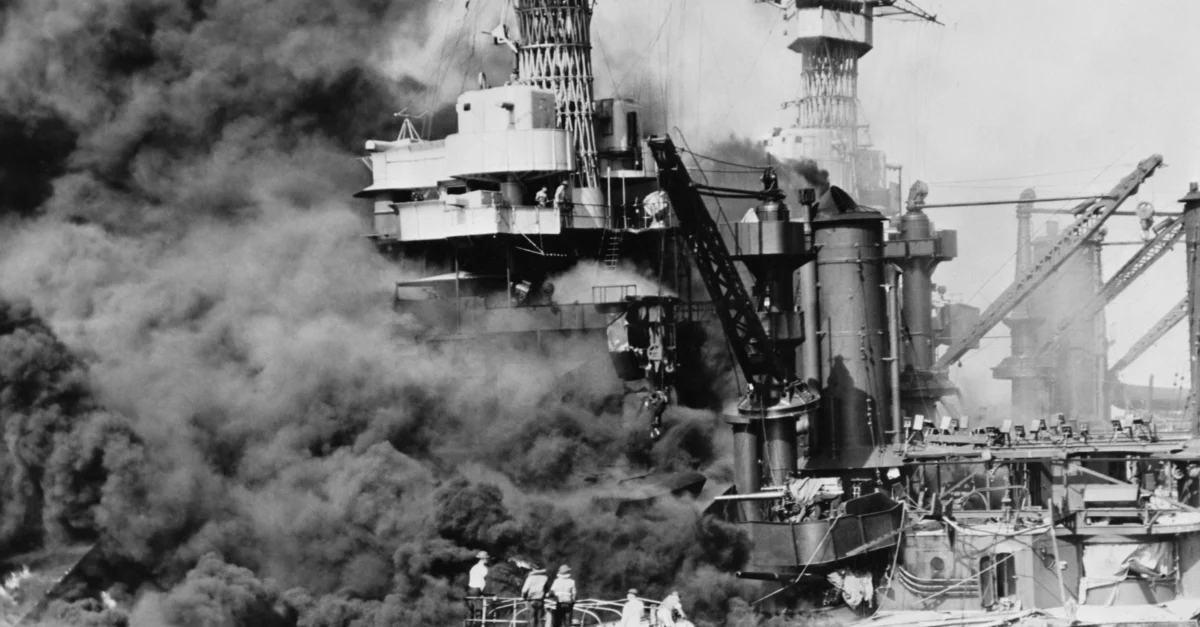
December 7, 1941, remains etched in history as "a date which will live in infamy." On that fateful Sunday morning, a surprise attack by the Imperial Japanese Navy on the unsuspecting U.S. naval base at Pearl Harbor, O’ahu, Hawaii, plunged the United States into the Second World War. The audacious assault, launched before an official declaration of war reached Washington, inflicted devastating casualties and damage, but crucially failed to cripple America’s long-term war-fighting capacity. This act of aggression, a tactical masterpiece for Japan, ultimately proved to be its greatest strategic miscalculation, galvanizing a slumbering American giant and setting the stage for a brutal conflict that would reshape the global order.
Main Facts: A Blitzkrieg from the Pacific
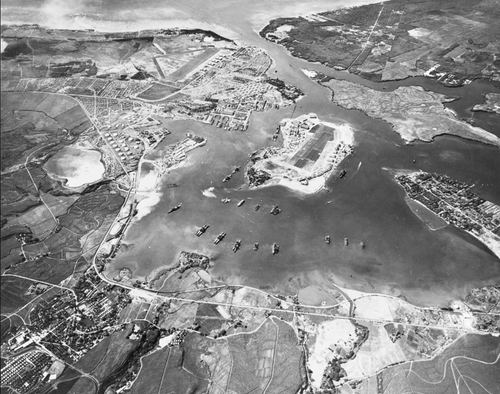
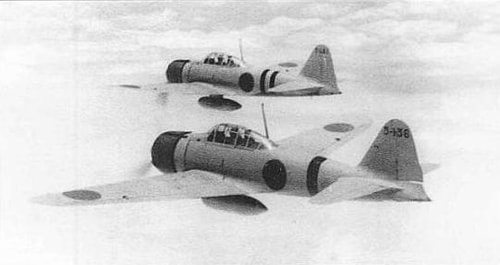
At approximately 7:55 a.m. local time, waves of Japanese torpedo planes, dive-bombers, and fighter aircraft descended upon Pearl Harbor, home to the U.S. Pacific Fleet. The meticulously planned attack, executed with chilling precision, aimed to neutralize the American fleet, thereby buying Japan critical time to consolidate its expanding empire across Southeast Asia. The initial assault caught the base entirely unprepared, leading to catastrophic losses.
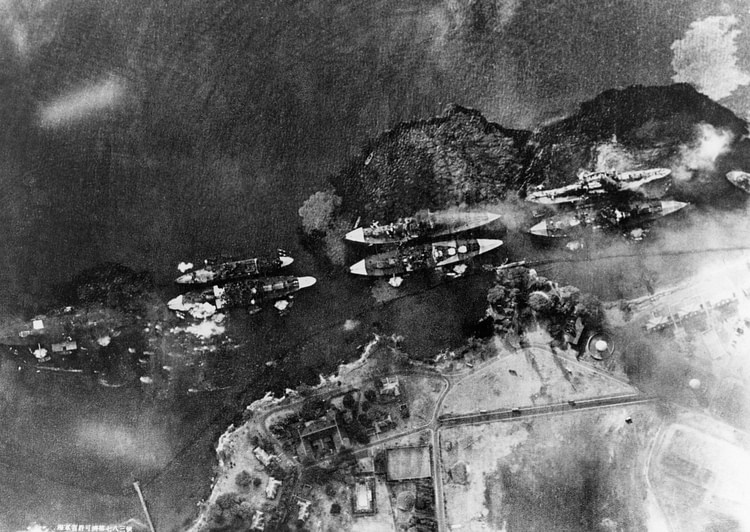
Over the course of two hours, the Japanese force, consisting of 353 aircraft launched from six aircraft carriers, wrought havoc. The assault resulted in the deaths of 2,403 American service personnel and civilians, with another 1,178 wounded. Eight U.S. Navy battleships were either sunk or severely damaged, alongside three destroyers, three cruisers, and four other vessels. A staggering 164 U.S. aircraft were destroyed, and 128 more damaged. In stark contrast, Japan lost only 29 aircraft and 64 servicemen.
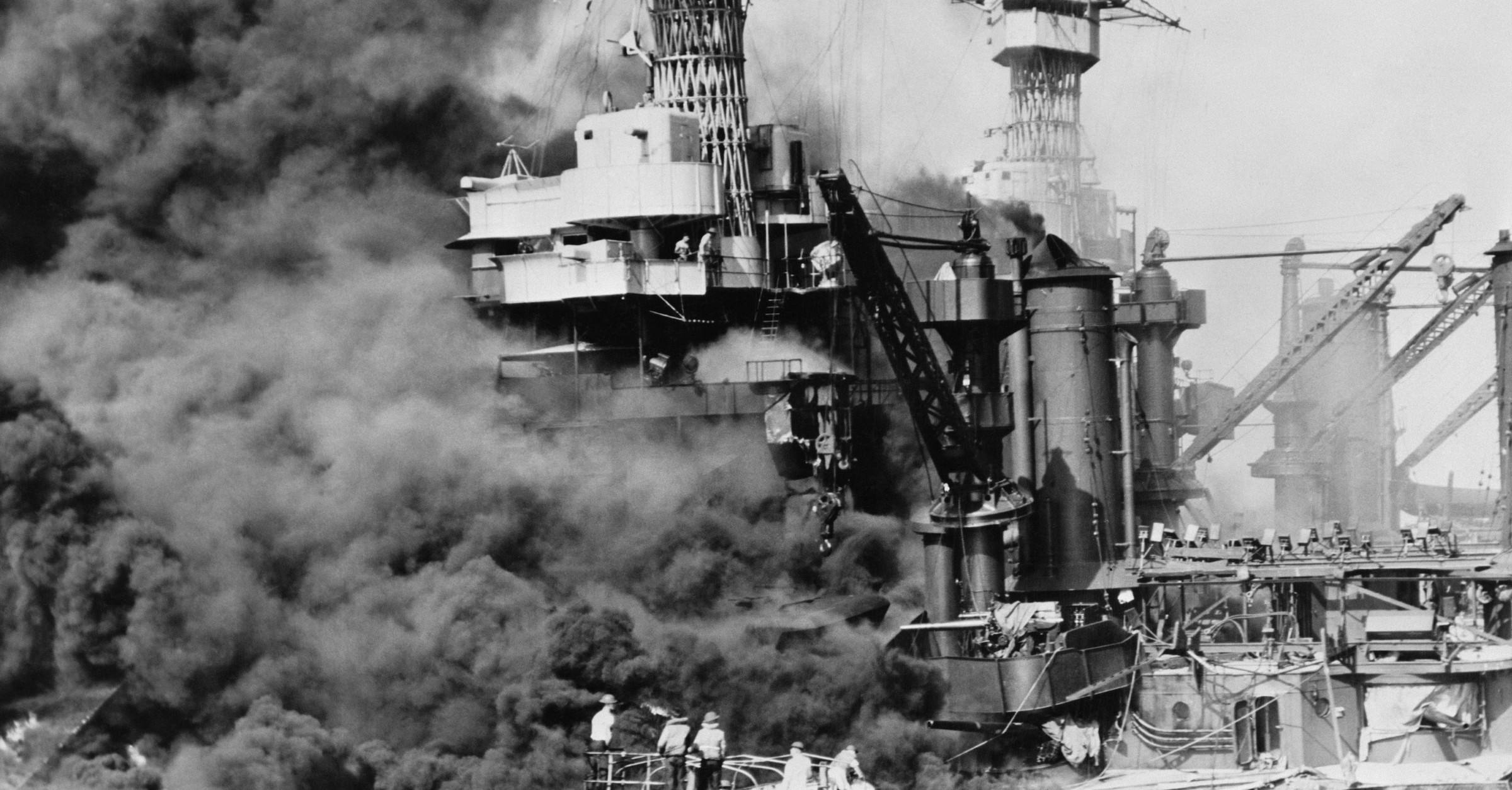
Despite the profound immediate impact, the attack carried within it the seeds of Japan’s eventual defeat. The U.S. Navy’s vital aircraft carriers – the future backbone of Pacific warfare – were providentially absent, out on maneuvers. Furthermore, crucial repair facilities, fuel depots, and submarine pens, though vulnerable, were left largely intact, a strategic oversight by the Japanese command that allowed the U.S. to rapidly recover and rebuild its naval power.
Chronology: The Road to Infamy
The attack on Pearl Harbor was not an isolated event but the culmination of years of escalating tensions and conflicting imperial ambitions between Japan and the United States.
Japan’s Imperial Ambitions and Resource Scarcity
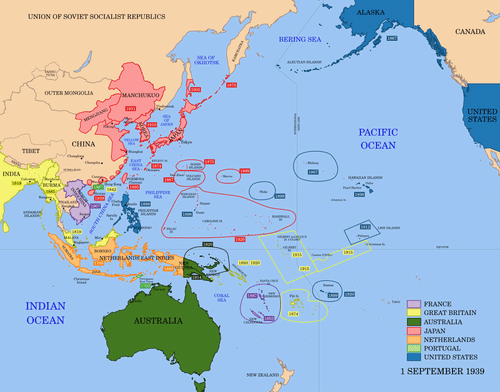
By late 1941, the Japanese Empire had aggressively expanded its dominion across Asia, occupying Manchuria, Formosa (Taiwan), Korea, large swathes of coastal China, and northern French Indo-China. This relentless expansion, driven by a philosophy of establishing a "Greater East Asia Co-Prosperity Sphere," was fueled by an insatiable demand for raw materials that Japan, a resource-poor island nation, lacked. A significant setback in 1939, when Soviet forces decisively defeated Japan at the Battle of Nomunhan (Khalkhin Gol), reinforced the Japanese Navy’s argument that future expansion should focus on the resource-rich Pacific and Southeast Asian regions.
The United States, concerned by Japan’s aggression and its perceived threat to American interests in the Pacific (particularly the Philippines), responded with a series of economic sanctions. A crippling U.S. embargo on essential resources such as oil, gasoline, iron ore, coal, copper, steel, lead, tin, rubber, and nickel was imposed. Britain and the Netherlands, controlling key oil fields in Malaya and the Dutch East Indies (modern-day Indonesia), followed suit. Japanese financial assets in U.S. banks were frozen, further strangling Japan’s ability to acquire the resources necessary to sustain its war machine. By mid-1941, Japan’s military government felt it had no choice but to seize these vital resources through conquest.
Diplomatic Impasse and Strategic Planning
Despite ongoing diplomatic negotiations, the positions of the U.S. and Japan were irreconcilable. The U.S. demanded Japan’s withdrawal from China and an end to its aggressive expansion, while Japan viewed these demands as an infringement on its sovereign right to establish regional hegemony. In April 1941, Japan signed a Soviet-Japanese non-aggression pact, securing its northern flank and allowing it to concentrate forces southward. The subsequent attack on southern Indo-China in July 1941 further intensified American resolve.
Recognizing that continued expansion, particularly into the oil-rich British Malaya and Dutch East Indies, would inevitably provoke war with the Western powers, the Japanese government made the fateful decision on December 1, 1941, to declare war on the United States, Britain, and the Netherlands. The plan, masterminded by Admiral Yamamoto Isoroku, Commander-in-Chief of the Combined Fleet, was audacious: a surprise preemptive strike on the U.S. Pacific Fleet at Pearl Harbor. Yamamoto understood that Japan could not out-produce the vastly superior American industrial economy in a prolonged war. His strategy was to deliver a devastating blow that would cripple the U.S. Navy for six months to a year, forcing Washington to negotiate a favorable peace and allowing Japan to solidify its gains.
The Covert Approach and Intelligence Failures
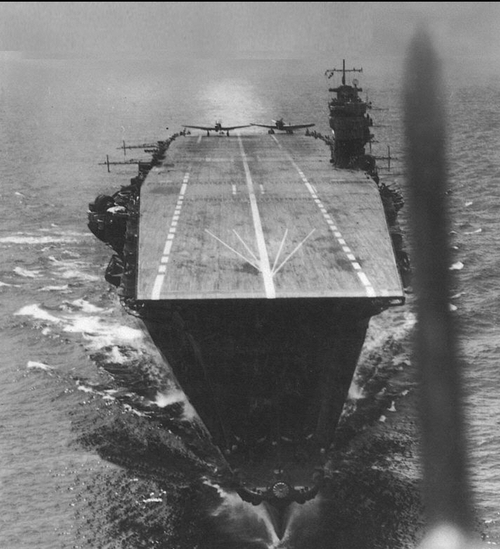
The Japanese attack force, commanded by Vice-Admiral Chuichi Nagumo, comprised six aircraft carriers (Akagi, Kaga, Soryu, Hiryu, Shokaku, and Zuikaku), two battleships, two heavy cruisers, one light cruiser, and a protective escort of nine destroyers, eight fuel tankers, and three submarines, along with several support vessels. This powerful armada departed its bases in mid-November, maintaining strict radio silence and avoiding conventional shipping lanes to ensure maximum surprise. Orders were given to board or sink any vessel encountered that might compromise their mission.
On the American side, a confluence of factors led to a catastrophic lack of preparedness. U.S. military intelligence, through its "Magic" program, had been intercepting and deciphering Japanese coded messages for some time. These intercepts revealed Japanese intentions for a major operation, and some even mentioned Pearl Harbor, notably a communication to the Japanese consul in Honolulu requesting detailed ship positions within the harbor. However, critical intelligence was either misinterpreted, dismissed, or failed to reach the relevant commanders in Hawaii. Rear-Admiral Husband E. Kimmel, commander of the Pacific Fleet, and Lt-General Walter Short, the island’s army commander, were primarily focused on the Philippines as the most likely target for Japanese aggression, a reasonable assumption given its proximity to Japanese bases in Formosa.
Furthermore, the U.S. military was unaware of Japan’s newly developed shallow-water torpedoes, leading to the erroneous belief that Pearl Harbor, with its relatively shallow waters, was immune to aerial torpedo attacks. Consequently, no anti-torpedo nets were installed. Reconnaissance efforts were insufficient; while Kimmel dispatched planes, he lacked the resources to cover all approaches, and the Japanese force approached from the less-expected northern direction.
The Attack Unfolds: December 7, 1941
On Sunday, December 7, at 6:00 a.m., with the Japanese fleet still 275 miles (450 km) north of Hawaii, the first wave of aircraft launched. Japanese diplomats in Washington were instructed to deliver a formal declaration of war at 1 p.m. EST (7:30 a.m. Hawaii time), but delays in translation meant the declaration was delivered after the attack had already begun.
- 3:45 a.m.: A U.S. destroyer patrolling the approach to Pearl Harbor spots and sinks a Japanese midget submarine. The report, however, is not immediately elevated to senior command.
- 6:45 – 7:00 a.m.: U.S. radar units detect a large formation of aircraft approaching from the north. The report is dismissed by a duty officer who believes it to be a flight of expected U.S. B-17 bombers.
- 7:55 a.m.: The first Japanese low-level torpedo planes and dive-bombers strike. Chaos erupts. The base’s anti-aircraft defenses are severely hampered: ammunition is scarce, aircraft are bunched together on airfields (to guard against sabotage, ironically making them easy targets), and many naval officers are ashore. Captain Mitsuo Fuchida, leading the first wave, transmits the triumphant signal "Tora, Tora, Tora" (Tiger, Tiger, Tiger) back to Nagumo, signifying that complete surprise had been achieved.
- 8:25 a.m.: Japanese high-altitude bombers join the assault.
- 8:55 a.m. – 9:15 a.m.: The second, larger attack wave strikes. This time, U.S. defenses are somewhat more organized, with a handful of fighters scrambling and anti-aircraft guns engaging. However, visibility is poor due to the smoke from burning ships.
- 9:45 a.m.: The attack concludes. Vice-Admiral Nagumo makes the controversial decision not to launch a planned third wave, fearing a counterattack from the missing U.S. aircraft carriers.
Supporting Data: The Cost of Surprise
The damage inflicted on the U.S. Pacific Fleet was immediate and horrifying:
- Battleships:
- USS Arizona: Hit by an armor-piercing bomb, its forward magazines exploded, sinking the ship in minutes and killing 1,177 crew members. It remains a memorial today.
- USS Oklahoma: Capsized after being hit by multiple torpedoes, trapping over 400 sailors inside. 429 lives were lost.
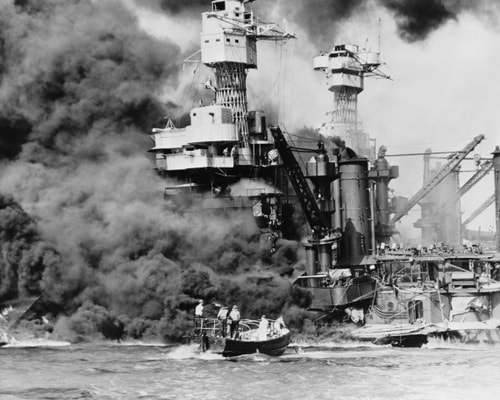
- USS West Virginia: Sunk after at least seven torpedo and two bomb hits.
- USS California: Sunk after two torpedo and two bomb hits.
- USS Nevada: Heavily damaged but attempted to escape the harbor, drawing intense Japanese fire. It was intentionally beached to prevent sinking in the channel.
- USS Tennessee: Heavily damaged by two bombs.
- USS Maryland: Damaged by two bombs.
- USS Pennsylvania: Damaged in dry dock.
- Other Ships: Three destroyers (USS Cassin, Downes, Shaw) and three cruisers (USS Helena, Raleigh, Honolulu) were sunk or badly damaged.
- Aircraft: 164 U.S. aircraft were destroyed, and 128 damaged, mostly on the ground, making them easy targets for Japanese fighters and bombers.
- Casualties: 2,403 Americans killed (2,008 Navy, 109 Marines, 218 Army, 68 civilians) and 1,178 wounded.
- Japanese Losses: A mere 29 aircraft (9 fighters, 15 dive-bombers, 5 torpedo planes) and 64 servicemen killed. Five midget submarines were also lost.
The Japanese carrier group returned to Japan intact on December 23, having achieved a resounding tactical victory. Yet, the strategic picture was far less favorable for Tokyo. The two critical U.S. aircraft carriers, USS Enterprise and USS Lexington, were at sea on maneuvers, alongside the heavy cruisers. The USS Hornet and USS Yorktown were in the Atlantic. This meant the U.S. Navy’s future offensive power remained untouched. Furthermore, the base’s crucial infrastructure—its massive fuel depots (holding 4.5 million barrels), ammunition stocks, repair shops, dry docks, and submarine pens—had miraculously survived. These facilities would prove instrumental in the rapid salvage and repair efforts, allowing all but three of the lost or damaged battleships to eventually return to active service.
Official Responses: A Nation Awakened
The news of the attack sent shockwaves across the United States. President Franklin D. Roosevelt, upon learning of the assault, immediately recognized its gravity.
Roosevelt’s "Day of Infamy" Speech
On December 8, 1941, President Roosevelt addressed a joint session of Congress, delivering one of the most iconic speeches in American history: "Yesterday, December 7, 1941—a date which will live in infamy—the United States of America was suddenly and deliberately attacked by naval and air forces of the Empire of Japan." His powerful words galvanized a shocked and grieving nation. Within hours, Congress declared war on Japan with only one dissenting vote. Four days later, on December 11, Germany and Italy, Japan’s Axis allies, declared war on the United States, officially bringing America into the global conflict.
Investigations and Accountability
In the immediate aftermath, six official investigations and one congressional inquiry were launched to determine how such a devastating surprise attack could have occurred. The intense public and political pressure led to Rear-Admiral Kimmel and Lt-General Short being relieved of their commands and effectively scapegoated for the disaster. While they were later posthumously exonerated, the initial findings highlighted a complex web of inter-service rivalries, communication failures, and an overwhelming focus on perceived threats elsewhere. Crucially, no credible evidence ever emerged to support theories that U.S. officials deliberately allowed the attack to happen to force America into the war, nor that British intelligence had foreknowledge. The truth was simpler, yet more unsettling: the Japanese attack had been so audacious, so unprecedented in its scale and execution, that it simply defied contemporary military imagination.
Implications: The Dawn of a New Era
The attack on Pearl Harbor irrevocably altered the course of World War II and global history.
The Pacific War: From Setback to Retribution
For Japan, Pearl Harbor was a brilliant tactical success but a profound strategic blunder. It achieved the immediate goal of crippling the U.S. battleship fleet, allowing Japan to seize vast territories across Southeast Asia and the Pacific in 1942, establishing an empire stretching from Manchuria to the Dutch East Indies and from Burma to the Marshall Islands. However, Yamamoto’s hope of a swift, negotiated peace was shattered. The "sneak attack" infuriated the American public and unified a previously isolationist nation in a furious resolve for total war.
The U.S., with its untouched aircraft carriers and immense industrial capacity, rapidly transitioned to a war footing. The devastating blow at Pearl Harbor inadvertently accelerated the shift in naval doctrine from battleship dominance to carrier warfare, a change that would prove decisive in the Pacific. Within six months, the U.S. Navy dealt Japan a crushing defeat at the Battle of Midway, a turning point that effectively halted Japanese expansion and began the long, bloody "island-hopping" campaign.
A Global Conflict and a New World Order
Pearl Harbor’s true significance lies in its role as the catalyst for America’s full-scale entry into World War II. This brought the immense economic and military might of the United States to bear against the Axis powers, fundamentally altering the balance of power. The war in the Pacific would be brutal, characterized by fierce battles and unprecedented atrocities.
The "revenge" sought by the U.S. ultimately culminated in the dropping of two atomic bombs on Hiroshima and Nagasaki in August 1945, leading to Japan’s unconditional surrender and the end of the war. Pearl Harbor thus became the symbolic starting point for a conflict that would usher in the nuclear age, establish the United States as a global superpower, and lay the groundwork for the post-war international order. The memory of December 7, 1941, continues to serve as a powerful reminder of the profound consequences of surprise attack and the enduring impact of strategic decisions on the course of human events.