
Anu: The Architect of the Cosmos in Ancient Mesopotamia
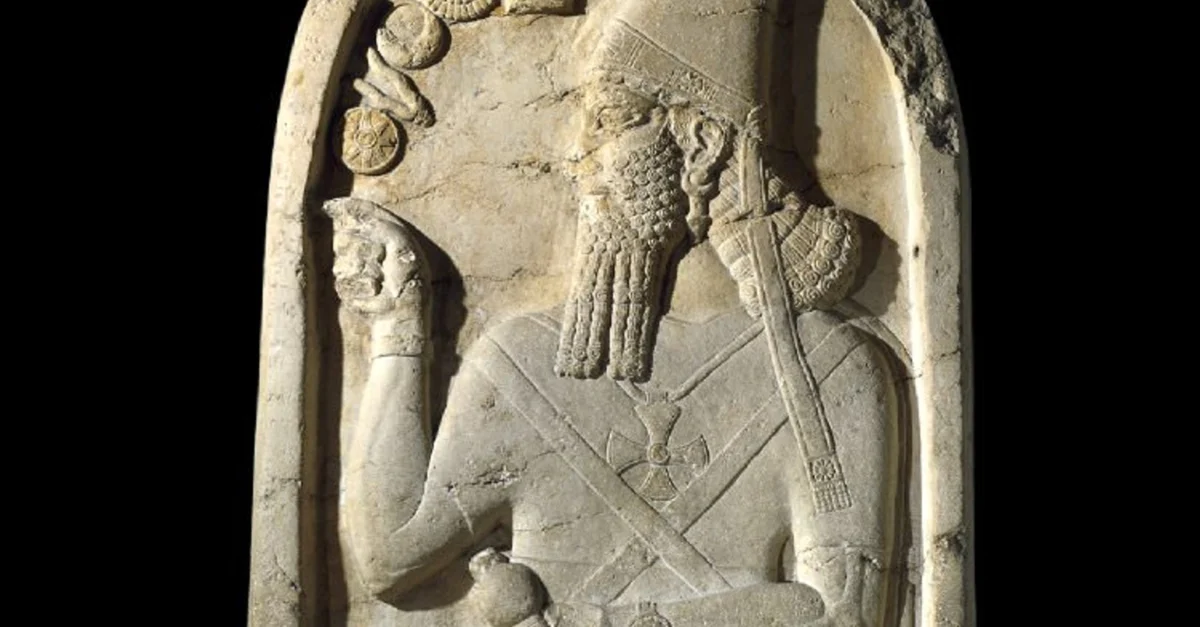
Mesopotamia, a cradle of civilization, gave birth to a pantheon of deities whose stories shaped the understanding of the universe. Among them, Anu, the primordial sky god, stands as a foundational figure, revered as the ultimate source of divine authority and cosmic order. From his origins as a Sumerian sky deity named An to his elevation as the venerable "Father of the Gods" in Akkadian and Babylonian traditions, Anu embodied the celestial realm, his influence pervading the heavens and Earth, even as he ascended to an increasingly remote position.
Main Facts: The Sovereign of the Skies
Anu (Sumerian: An), meaning "sky" or "heaven," is one of the earliest and most significant deities in the Mesopotamian pantheon. He is initially referenced in Sumerian texts during the Early Dynastic period (circa 2900-2350/2334 BCE) as the personification of the heavens. Over time, particularly with the rise of the Akkadian Empire around 2375 BCE, he was adopted as Anu, the all-powerful, becoming the supreme ruler of the heavens and the progenitor of many gods.
Anu’s lineage places him as the son of Anshar (heaven) and Kishar (earth), who themselves were the offspring of the primordial cosmic waters, Apsu (freshwater) and Tiamat (saltwater). This makes him a second-generation deity, yet one who quickly assumed ultimate authority. His primary consort is Antu (also known as Uras, goddess of the earth), and he is also sometimes identified as the husband of his sister Ki (earth), with whom he fathered Enlil, the wind god and later a prominent successor.
Iconographically, Anu is most often represented not by a human or animal form, but by a crown or a horned crown placed upon a throne, symbolizing his undisputed status as the "King of the Gods." This abstract representation underscores his transcendent nature and his role as the ultimate arbiter of divine law and cosmic destiny. While he rarely takes center stage in active mythological narratives, his presence as a background authority figure is constant, his decisions and judgments forming the bedrock of the divine and mortal worlds. He is the ultimate power behind the shifting dynamics of the pantheon, a silent, benevolent, yet formidable force maintaining the natural order.
Chronology: Evolution of a Divine Sovereign
The journey of Anu from a revered sky deity to the distant, supreme architect of existence reflects the evolving theological and political landscapes of ancient Mesopotamia.
Early Sumerian Origins (circa 2900-2350 BCE)
Anu’s earliest iterations trace back to the Sumerian civilization, where he was known as An. As a sky god, he was a fundamental element of the cosmos, representing the celestial dome itself. His presence marked the earliest attempts by humanity to personify and understand the vastness above. The Sumerian city of Uruk, later to become a significant cult center for Anu, already held him in high regard during this period, often alongside Inanna (Ishtar), the goddess of love, war, and fertility, who was sometimes considered his daughter or granddaughter.
Akkadian Adoption and Imperial Patronage (circa 2375-2150 BCE)
With the rise of the Akkadian Empire under Sargon the Great (reign 2334-2279 BCE), An was adopted and assimilated into the Akkadian pantheon as Anu. This period marked a significant elevation of his status. Sargon strategically invoked Anu and Inanna in his royal inscriptions, seeking divine legitimacy for his conquests and the establishment of the vast Akkadian Empire. By aligning himself with Anu, Sargon presented his rule as divinely ordained, positioning the sky god as a cosmic guarantor of imperial authority and order. This integration into imperial ideology cemented Anu’s role as a supreme, unifying deity across diverse Mesopotamian city-states.
Babylonian and Assyrian Hegemony (circa 2000-612 BCE)
As power shifted to Babylon and later Assyria, Anu’s role continued to evolve, though his direct active involvement in myths became less frequent. During the Old Babylonian period, Anu formed a crucial triad with Enlil (god of wind, air, earth, and storms) and Enki/Ea (god of wisdom, crafts, water, and creation), governing the heavens, atmosphere, and earth/underworld, respectively. This triad represented the core cosmic forces. Anu was also listed among the Seven Divine Powers, alongside Enki, Enlil, Inanna, Nanna (moon god), Ninhursag (mother goddess), and Utu-Shamash (sun god), signifying his enduring importance.
However, a notable development was the gradual passing of his active leadership role. Initially, his son Enlil assumed the mantle of "King of the Gods," reflecting a theological shift where a more active, intervening deity became central to daily worship. Later, in Babylonian theology, Marduk, son of Enki, ascended to supremacy, particularly after his triumph over Tiamat in the Enuma Elish. In the Assyrian Empire, Assur, the national god, similarly absorbed many of Anu’s supreme attributes. Yet, these successions were often framed not as usurpations but as elevations blessed and sanctioned by Anu himself, maintaining his ultimate, overarching authority.

Hellenistic Period and Decline (circa 330-141 BCE)
Even as direct worship shifted to more active deities, Anu’s veneration persisted, particularly in Uruk. His grand temple-ziggurat in Uruk remained operational from around 2000 BCE until approximately 150 BCE, serving not only as a religious center but also as an astronomical observatory and library. This longevity underscores his deep-rooted significance. The eventual decline of his direct cult, like many other Mesopotamian gods, came with the fall of empires (such as the Assyrian Empire in 612 BCE) and the rise of new religious paradigms, notably Zoroastrianism, which became more widespread after the Parthians took control of the region around 141 BCE. Despite this, his conceptual influence, particularly his role as a remote, ultimate divine source, continued to resonate in various forms.
Supporting Data: The Cosmic Architect and His Realm
Anu’s profound influence on Mesopotamian cosmology and theology is evident in his family, his iconography, and his pivotal, albeit often subtle, roles in key myths.
Family and the Divine Order
Anu’s family tree is integral to understanding the Mesopotamian divine hierarchy. Born from Anshar and Kishar, who emerged from the primordial chaos of Apsu and Tiamat, Anu represents a generation that brought order out of primeval waters. His consort, Antu (or Uras), signifies the connection between the highest heaven and the fertile earth, creating a complete cosmic pairing.
Their progeny includes the Annunaki, a formidable group of deities often associated with the earth and the underworld, serving as judges of the dead and arbiters of fate. Another significant child is Nisaba, the Sumerian goddess of writing and accounts, highlighting Anu’s connection to knowledge, order, and the recording of destiny. His son Enlil, born either from Antu or his sister Ki, ultimately inherited much of Anu’s executive power, becoming the "Lord of the Wind" and a dominant force in the pantheon, responsible for the atmosphere and the earth. This familial structure illustrates a cosmic framework where divine power is both inherited and distributed, yet ultimately originates from Anu.
Iconography: The Crown on the Throne
Unlike many Mesopotamian gods who were depicted anthropomorphically, Anu’s most common representation was symbolic: a crown, often horned to denote divinity, placed upon a throne. This abstract imagery speaks volumes about his nature. It signifies his supreme kingship, his absolute authority, and his transcended, perhaps unknowable, form. The throne itself represents stability, power, and the seat of judgment. This non-figural representation reinforces his remoteness and his position as the ultimate, unapproachable divine power, whose presence is felt through his decrees and the cosmic order he established, rather than through direct interaction.
Anu in the Great Myths: Subtle but Pivotal Roles
While not an active hero, Anu’s interventions or even his failures are critical turning points in several foundational Mesopotamian myths.
Anu in the Enuma Elish: The Catalyst for Change
The Babylonian epic of creation, the Enuma Elish (circa 1200 BCE, though based on much older traditions), recounts the birth of the gods and the creation of the world. In this epic, Anu emerges from the lineage of the primordial deities Apsu and Tiamat, through Anshar and Kishar. The initial conflict arises when Apsu, annoyed by the noise of the younger gods, plans to destroy them. Enki thwarts Apsu, but this enrages Tiamat, who then raises an army of monsters to avenge her husband.
Faced with Tiamat’s formidable wrath, the younger gods are repeatedly defeated. It is at this critical juncture that Anu steps forward, volunteering to confront Tiamat diplomatically. The gods express great confidence in his ability to resolve the conflict peacefully, reflecting his esteemed status. However, when Anu faces Tiamat, he is unexpectedly "cowed" by her power and returns to the assembly, reporting his failure. This seemingly minor setback is, in fact, a crucial turning point. Anu’s inability to resolve the conflict through diplomacy forces the younger gods to confront a new reality. Their old methods and assumptions about divine power prove inadequate. This shift in perception opens the door for Marduk, Enki’s son, to offer himself as their champion. Marduk, by defeating Tiamat and establishing a new cosmic order, rises to become the king of the gods. Anu’s "failure" thus acts as a catalyst, ushering in a new paradigm of divine leadership and demonstrating that even the highest authority must sometimes yield for evolution to occur.
Anu in the Myth of Adapa: Compassion and the Human Condition
The Myth of Adapa is a poignant narrative exploring the boundaries between divine and human existence, wisdom, and mortality. Adapa, the first man, created by Enki, is endowed with profound wisdom but denied immortality. When Adapa, in a fit of rage, breaks the wings of the South Wind, he is summoned to Anu’s celestial court to explain his actions.
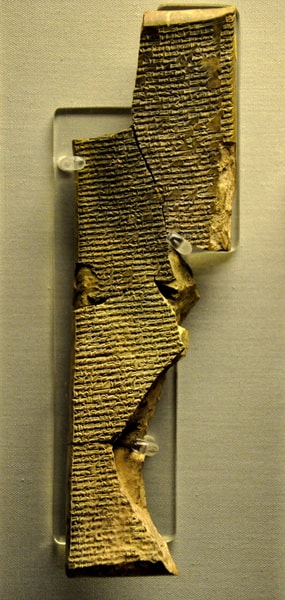
Enki, fearing Anu’s potential wrath, provides Adapa with specific, misleading instructions: he must refuse any food or drink offered by Anu, as it will be the "food of death" and "water of death." However, Anu, impressed by Adapa’s wisdom, honesty, and perhaps his audacity, offers him the "Food of Life" and "Water of Life," intending to grant him immortality. Anu’s benevolence and compassion shine through here; he cannot comprehend why Enki would create such a wise being only to condemn him to mortality.
Adapa, following Enki’s deceitful advice, refuses the divine gifts. Anu is perplexed and asks why. The damaged tablets suggest that Adapa reveals Enki’s instructions, leading to Anu’s anger and a potential punishment for Enki. This myth highlights Anu’s compassionate nature and his willingness to transcend the established order for a worthy individual. It also underscores the tragic consequences of misunderstanding and divine manipulation, reinforcing the theme of human mortality as a divinely imposed, yet sometimes questioned, condition. The parallel with the biblical Fall of Man, where humanity is denied eternal life to prevent them from becoming like gods, is striking and suggests a shared ancient Near Eastern concern with the limits of human aspiration.
The Uruk Temple-Ziggurat and Hymnic Praise
The longevity of Anu’s cult at Uruk, marked by its impressive temple-ziggurat complex, speaks volumes about his enduring veneration. This architectural marvel, active for nearly two millennia, served as a crucial hub for astronomical observation, linking Anu, the god of the heavens, directly to the study of the cosmos. It also housed a significant library, connecting him to knowledge and the maintenance of records.
A hymn to Anu from an early period provides direct insight into how he was perceived:
"O Prince of the gods, whose utterance ruleth over the obedient company of the gods; Lord of the horned crown, which is marvellously splendid; thou travellest hither and thither on the raging storm; thou standest in the royal chamber to be admired as a king.
At thy word the gods cast themselves on the ground in a body like a reed on the stream; they command blows like the wind and causes food and drink to thrive; at the word the angry gods turn back to their habitations.
May all the gods of heaven and earth appear before thee with gifts and offerings; may the kings of the countries bring to thee heavy tribute; may men stand before thee daily with sacrifices, prayers, and adorations.
To Uruk, thy city, do thou show abundant favor; O great god Anu, avenge thy city in hostile lands." (Wallis Budge, 106-107)
This hymn powerfully depicts Anu as the ultimate sovereign, whose word commands the entire pantheon. It emphasizes his royal splendor, his control over natural phenomena (the raging storm), and his supreme authority over both gods and mortals. The invocation for kings and men to bring tribute and prayers directly to him, and for him to favor and avenge Uruk, demonstrates that despite his increasing remoteness, he was still seen as an active protector and a recipient of direct worship in his primary cult center.
Official Responses: Interpreting the Remote God
Scholarly interpretations of Anu’s role shed light on the complex dynamics of Mesopotamian theology and the human conceptualization of ultimate power. Stephen Bertman aptly describes Anu as the "august and revered ‘chairman of the board’ of the Mesopotamian pantheon." This analogy perfectly encapsulates his position: a supreme, foundational authority figure who presides over, rather than actively governs, the day-to-day affairs.
The Paradox of Divine Remoteness
Anu’s gradual withdrawal into the highest heavens, becoming more remote from humanity and even other gods, is a fascinating theological development. This phenomenon, often termed deus otiosus (inactive god) or divine withdrawal, is seen in various ancient religions. It suggests that as a civilization matures, the ultimate creator or first god might be perceived as having set the universe in motion and established its laws, after which more active, intervening deities take over the management of earthly affairs. Anu’s benevolence, however, is believed to have infused the other gods, meaning his influence continued through their actions, even if he remained distant.
Political and Theological Adaptations
The consistent veneration of Anu, even as other gods like Enlil, Marduk, and Assur gained prominence, highlights his fundamental importance. Each succeeding dominant power in Mesopotamia (Sumerian, Akkadian, Babylonian, Assyrian) adapted Anu’s role to legitimize its own rule. Sargon’s invocation of Anu (and Inanna) for his imperial expansion is a prime example of this political co-option. Similarly, the elevation of Marduk in Babylon or Assur in Assyria was often presented as a divine mandate from Anu, ensuring continuity and stability in the divine hierarchy despite shifting political hegemonies. Anu thus served as a constant, underlying source of authority, allowing for dynamic changes in the pantheon’s executive leadership without undermining the cosmic order.
The Meh: Laws of the Universe
Anu was also inextricably linked to the meh, the divine decrees or cosmic laws that governed the universe and human society. These meh encompassed everything from the arts and crafts to social institutions, ethical principles, and the very nature of divinity. As the supreme source of authority, Anu was believed to have established and maintained these fundamental principles, ensuring the proper functioning of creation. His role as a dispenser of justice and controller of these laws further solidified his position as the ultimate, albeit remote, cosmic lawmaker.
Implications: Anu’s Enduring Legacy
Anu’s legacy extends far beyond the direct worship he received in ancient Mesopotamia. His story offers profound insights into the evolution of religious thought, the human quest for understanding the divine, and the intricate relationship between theology and political power.
A Blueprint for Divine Authority
Anu’s conceptualization as a supreme, often remote, sky god who establishes the cosmic order provided a blueprint for later monotheistic and polytheistic traditions. His role as the "chairman of the board," the ultimate source from whom all other divine power flows, illustrates a sophisticated theological understanding of hierarchy and ultimate causality. This idea of a foundational, benevolent, yet distant deity resonates through various religious systems.
Reflecting Societal Change
The shifts in Anu’s portrayal—from an active sky god to a remote patriarch, and the subsequent rise of Enlil, Marduk, and Assur—mirror the sociopolitical changes and power shifts in Mesopotamia itself. The elevation of a city’s patron deity (like Marduk for Babylon or Assur for Assyria) to a supreme position, sanctioned by Anu, reflects the political ascendancy of those cities and their rulers. This demonstrates how religious narratives are often intertwined with and adapt to historical realities.
Cultural and Religious Continuity
Despite the eventual decline of direct worship, Anu’s influence persisted. His temple in Uruk continued to function for centuries, showcasing the deep cultural memory and veneration associated with him. Even when Zoroastrianism gained prominence, introducing a dualistic cosmic vision, the underlying concept of a supreme, ordering force, though reinterpreted, carried echoes of Anu’s ancient role. The parallels between the Myth of Adapa and the biblical Genesis story of the Fall of Man highlight the cross-cultural exchange of ideas and the enduring human concerns about mortality, divine wisdom, and the boundaries of human aspiration.
In conclusion, Anu, the sky god of ancient Mesopotamia, was more than just a deity; he was a fundamental pillar of cosmic order, a symbol of ultimate authority, and a reflection of humanity’s evolving understanding of the divine. His journey from an active sky deity to a remote, yet ever-present, architect of the universe underscores his profound and lasting impact on the religious and cultural landscape of the ancient world.




Leave a Comment