Bridging Worlds: The Evolution of West African Masquerade at the Museum of Fine Arts St. Petersburg
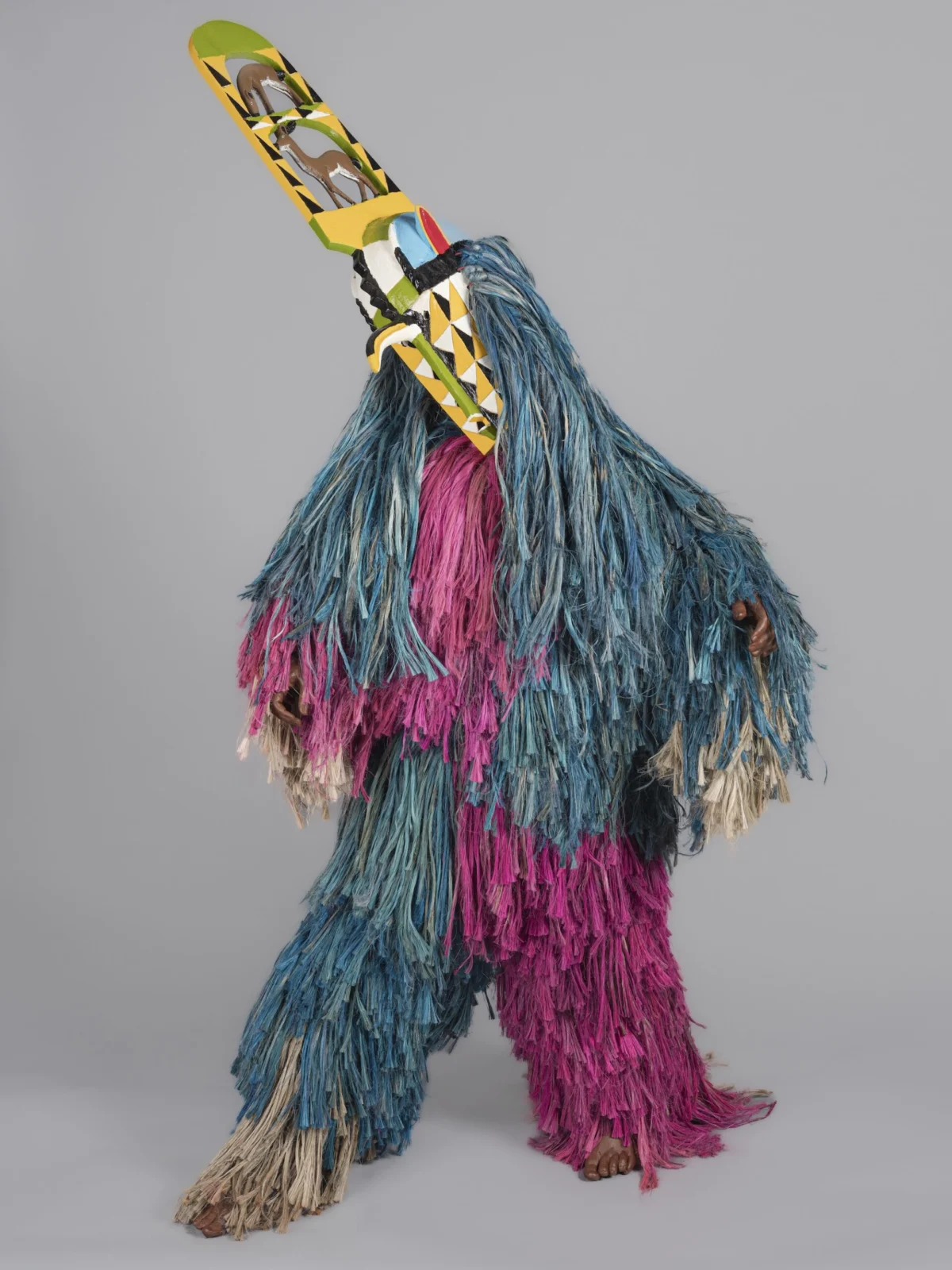
The rhythmic pulse of the drum, the rustle of dyed raffia, and the shimmering of thousands of hand-stitched beads are coming to the Gulf Coast of Florida. This August, the Museum of Fine Arts St. Petersburg (MFA) will unveil New African Masquerades: Artistic Innovations and Collaborations, a landmark exhibition that challenges Western perceptions of African art as a static relic of the past. Instead, the exhibition presents masquerade as a living, breathing, and fiercely contemporary medium.
Across West Africa, indigenous communities have for millennia utilized masquerade—a complex synthesis of dance, music, sculpture, and textile—to mark rites of passage, seasonal harvests, and sacred holidays. These traditions serve as a metaphysical bridge, facilitating a vital link between the terrestrial realm of humans and the ethereal world of spirits and ancestors. The upcoming exhibition at MFA St. Petersburg highlights the work of four contemporary masters who are pushing these ancient traditions into the 21st century, blending time-honored techniques with modern materials and global pop-culture iconography.
Main Facts: A Convergence of Tradition and Modernity
New African Masquerades is not merely a display of objects; it is an exploration of "total art." The exhibition, which opens on August 15 and runs through January 3, 2027, features full-body ensembles, meticulously carved masks, and immersive multimedia components. Organized by the New Orleans Museum of Art (NOMA) in partnership with the Musée des Civilisations noires in Dakar, Senegal, the show represents a significant international collaboration aimed at contextualizing African performance art for a global audience.

The exhibition spotlights four pivotal artists from across the West African sub-continent:
- Chief Ekpenyong Bassey Nsa (Nigeria): A master of the Efik traditions, known for his intricate use of raffia and leather.
- David Sanou (Burkina Faso): Representing the studio of the late André Sanou, his work features bold, geometric "Kimi" masks.
- Sheku “Goldenfinger” Fofanah (Sierra Leone): A practitioner of the vibrant Ordehlay urban masquerades, famous for his "Fairy" and "Mami Wata" ensembles.
- Hervé Youmbi (Cameroon): An artist who provocatively blends Bamiléké ritual requirements with global commercial symbols, such as his famous beaded "Scream" masks.
Beyond the physical costumes, the exhibition utilizes documentary photography and high-definition video to show these ensembles in their intended environment: the parade, the ceremony, and the village square.
Chronology: From Ancient Roots to Contemporary Canvases
The history of masquerade in West Africa is as old as the civilizations themselves. Archaeological evidence suggests that masked customs have been central to social and spiritual life for thousands of years. Historically, these masks were not "art" in the Western sense of being objects for silent contemplation; they were functional tools used by secret societies and community leaders to enforce laws, heal the sick, or communicate with the divine.

In the pre-colonial and colonial eras, masquerades adapted to the arrival of new materials—beads from Europe, textiles from India, and pigments from global trade routes. However, the late 20th and early 21st centuries have seen a radical acceleration in this evolution.
2015–2023: The Rise of the Global Mask
During this period, artist Hervé Youmbi began his "Visage de masques" series. This project was revolutionary because it required the masks to be "validated" by traditional leaders in Cameroon before they could be shown in galleries. His "Tso Scream Mask," featured in the MFA exhibition, was created during this window, bridging the gap between 2015 and 2023.
2022: A Year of Commission and Creation
Many of the flagship pieces in the exhibition, including Chief Ekpenyong Bassey Nsa’s "Afia Awan" and Sheku Fofanah’s "Fairy Masquerade Ensemble," were completed in 2022. This year marked a concerted effort by international curators to commission life-size, authentic ensembles that reflect the current state of the art form.

2026–2027: The St. Petersburg Residency
Following its development and initial showings in partnership with Dakar and New Orleans, the exhibition arrives in St. Petersburg on August 15, 2026. It serves as a centerpiece for the museum’s winter programming, concluding in early 2027.
Supporting Data: The Artistry and Materials of the Masquerade
The technical complexity of the works in New African Masquerades is staggering. Unlike Western sculpture, which often prioritizes a single medium like stone or bronze, West African masquerade is inherently multi-media.
The Materiality of the Ensembles
- Hervé Youmbi’s Beadwork: His "Tso Scream Mask" utilizes wood, pigment, and fiber, but it is defined by the application of thousands of tiny beads, velvet fabric, and horsehair. The use of the "Scream" visage—taken from the American horror franchise—serves as a commentary on the "horror" of the colonial gaze and the commercialization of African aesthetics.
- David Sanou’s Geometric Abstraction: The "Kimi" masks from Burkina Faso are carved from wood and painted with high-contrast pigments. These are often paired with costumes made from thick, hand-dyed fibers that create a bulky, otherworldly silhouette during performance.
- Chief Nsa’s Traditional Textures: The "Afia Awan" ensemble from Nigeria relies heavily on polyester fabric and natural raffia. The white raffia ruffles and leather accents represent a specific social status and spiritual purity within Efik culture.
- Sheku Fofanah’s Urban Sparkle: Fofanah’s "Fairy" masks utilize sequins, glue, and wood. This reflects the Ordehlay tradition of Sierra Leone, which is more urban and festive, often incorporating materials scavenged or purchased in modern city markets.
The Collaborative Process
A unique data point of this exhibition is its focus on "collaborative practice." In many West African contexts, an artist does not work in isolation. A mask carver (like David Sanou) may work with a weaver, who works with a dancer, who works with a musician (the griot). The exhibition documentation highlights these networks, showing how a single masquerade ensemble is the product of an entire community’s creative labor.

Official Responses: Curatorial and Institutional Vision
The Museum of Fine Arts St. Petersburg has emphasized that this exhibition is a step toward a more nuanced representation of global cultures. In an official statement, the museum noted:
“Across many West African cultures, masquerade encompasses a broad range of artistic, social, spiritual, and civic traditions. Encompassing sculpture, textiles, performance, music, movement, and community participation, these performance traditions continuously adapt to contemporary life.”
The partnership with the Musée des Civilisations noires in Dakar is particularly significant. It represents a "decolonial" approach to curation, ensuring that the interpretation of these objects is rooted in African scholarship and lived experience rather than purely Western art historical frameworks.

Curators from the New Orleans Museum of Art, who helped organize the show, have pointed out that masquerade is not a "dying tradition" but a thriving industry. The artists featured are not just craftsmen; they are celebrities within their own regions, commissioned for major civic events and private ceremonies alike. By bringing these works to Florida, the organizers aim to show that the "new" in New African Masquerades refers to the ongoing innovation of a practice that has always been dynamic.
Implications: Challenging the "Ethnographic" Gaze
The arrival of New African Masquerades in a prominent American fine arts museum has several long-term implications for the art world and cultural preservation.
1. Redefining "Contemporary Art"
For decades, major museums categorized African masks as "ethnographic objects"—artifacts of a "primitive" past. This exhibition shatters that label. By featuring living artists who incorporate references to Hollywood movies and modern textiles, the MFA St. Petersburg is asserting that these masks are as "contemporary" as any oil painting or digital installation. It forces the viewer to acknowledge that tradition and innovation are not opposites, but partners.

2. Cultural Preservation Through Performance
The inclusion of video and immersive multimedia is a vital shift. A mask sitting on a pedestal is "dead" in the context of its original culture. By showing the masks in motion—worn by dancers who are possessed by spirits or entertaining a crowd—the exhibition preserves the intangible heritage of the masquerade. It suggests that the "art" is not the object itself, but the event the object facilitates.
3. The Global Art Market and Intellectual Property
Artists like Hervé Youmbi are using their work to question the global art market. When Youmbi puts a "Scream" mask on a ritual object, he is commenting on how Western pop culture colonizes global imaginations. Simultaneously, by selling these works to museums like NOMA and MFA St. Pete, these artists are claiming their place in the global economy, ensuring that the financial and cultural capital of these traditions remains, in part, with the creators.
As New African Masquerades prepares to open its doors, it invites the public into a "reverie" where the past and future collide. It is a celebration of resilience, showing that despite the pressures of globalization and modernization, West African communities continue to mask, continue to dance, and continue to innovate. For the residents of St. Petersburg and visitors to the MFA, the exhibition offers a rare opportunity to witness the evolution of one of humanity’s oldest and most vibrant artistic expressions.