The "Cozy" Revolution: Trash Goblin Surpasses Funding Goals as Spilt Milk Studios Enters Final 24 Hours of Kickstarter
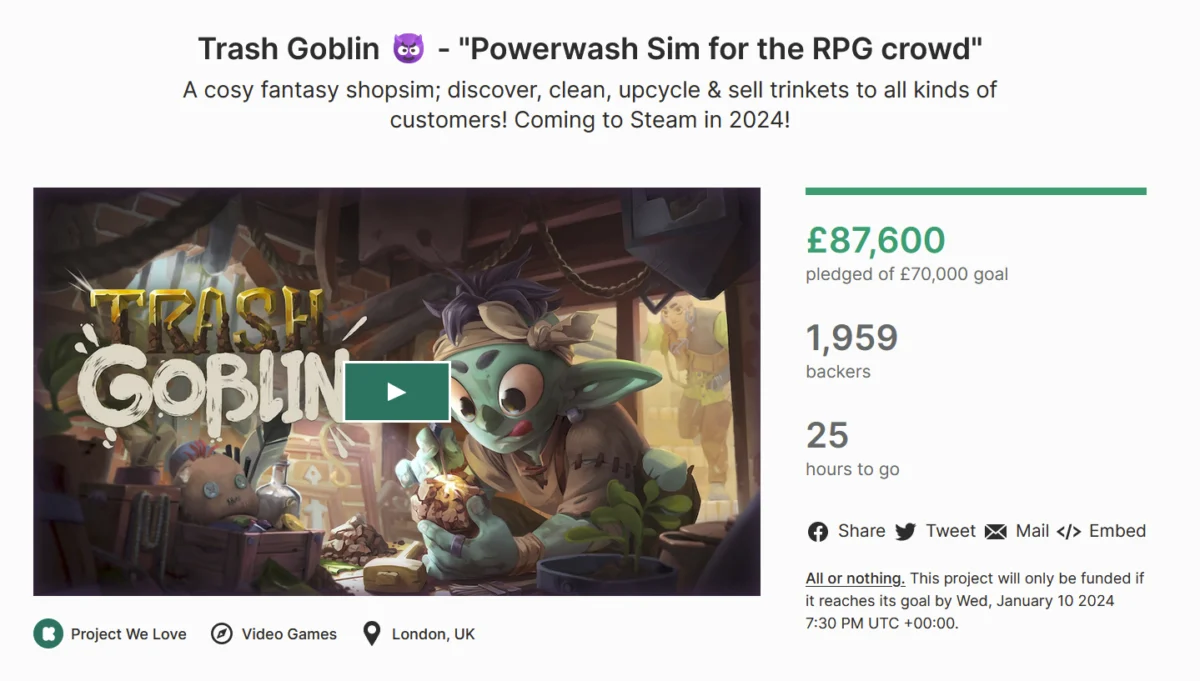
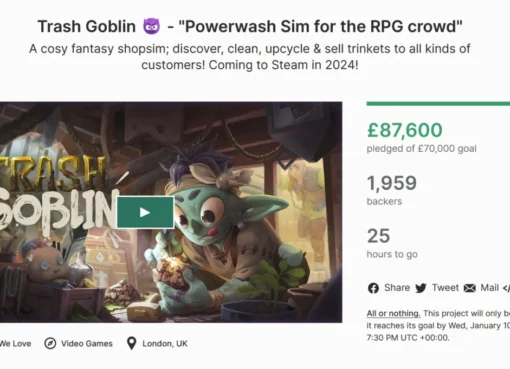
LONDON – In a significant milestone for the burgeoning "cozy gaming" sector, Spilt Milk Studios has announced that its latest project, Trash Goblin, has officially surpassed its primary funding goal on Kickstarter. As of January 9, 2024, the campaign stands at 124% funded with less than 24 hours remaining on the clock. The studio, bolstered by a strategic shift in its executive leadership, is now making a final push to cross the "magic" £100,000 threshold, a move that would unlock further development potential for what is being described as "Powerwash Simulator for the RPG crowd."
The success of Trash Goblin serves as a bellwether for the indie development landscape, highlighting the continued viability of community-driven funding for niche, high-concept titles that prioritize relaxing gameplay loops over traditional high-stakes combat.
Main Facts: A New Contender in the Whimsical Restoration Genre
Trash Goblin is a stylized, "cozy" shopkeeping and restoration game where players take on the role of a goblin tasked with uncovering, cleaning, and repairing discarded trinkets to sell to a diverse cast of fantasy characters. The game’s core mechanics revolve around the tactile satisfaction of cleaning—a trend that has seen explosive growth in the gaming industry over the last three years.
Key Campaign Metrics:
- Current Funding Status: 124% of the initial goal.
- Time Remaining: Under 24 hours.
- Strategic Goal: Reaching the £100,000 milestone to secure additional features and long-term stability.
- Platform Presence: Simultaneous drive for Steam wishlists to bolster the game’s algorithmic visibility ahead of its full launch.
The campaign’s success is inextricably linked to the involvement of Nicholas Lovell, the founder of Gamesbrief and a renowned expert on the business of games. Lovell, who recently transitioned from a non-executive to an executive role at Spilt Milk Studios, has been a vocal advocate for "The Curve"—a business philosophy that emphasizes the importance of super-fans and tiered monetization, which is reflected in the structure of the Trash Goblin Kickstarter.
Chronology: From Concept to Crowdfunding Success
The journey of Trash Goblin from a studio concept to a funded reality has been a calculated progression, timed to capitalize on shifting market sentiments.
Phase 1: Conceptualization and Prototyping (2023)
Spilt Milk Studios, a veteran UK-based indie outfit, identified a gap in the market for a fantasy-themed restoration simulator. Drawing inspiration from the "satisfying" genre (exemplified by titles like Unpacking and Powerwash Simulator), the team developed the "Trash Goblin" persona—a character that subverts traditional RPG tropes by focusing on the value of discarded items rather than the pursuit of legendary loot.
Phase 2: Strategic Leadership Shift
Late in 2023, Nicholas Lovell stepped up his involvement with the studio. Despite managing the lingering effects of long COVID, which necessitated a part-time executive schedule, Lovell’s move signaled a more aggressive pursuit of self-publishing strategies. His expertise in digital economics provided the studio with a roadmap for navigating the increasingly crowded indie marketplace.
Phase 3: The Kickstarter Launch (December 2023)
The campaign launched in the final weeks of 2023. Unlike many campaigns that struggle during the holiday season, Trash Goblin maintained steady momentum by engaging with the "cozy gaming" community on TikTok, Discord, and X (formerly Twitter).
Phase 4: The New Year Surge (January 2024)
The campaign reached its 100% funding milestone shortly after the New Year. The post-holiday period often sees a "resolution-driven" spike in consumer interest for relaxing, low-stress media, which Trash Goblin successfully tapped into. As of January 9, the campaign reached 124%, setting the stage for a high-stakes final 24 hours.
Supporting Data: The Rise of the "Satisfying" Gameplay Loop
The success of Trash Goblin is supported by broader industry data regarding the "cozy" and "simulation" genres.
- The "Powerwash" Effect: Powerwash Simulator, a primary inspiration for the Trash Goblin cleaning mechanics, surpassed 12 million players across all platforms by mid-2023. This demonstrated that "chore-based" gameplay, when gamified correctly, has massive mainstream appeal.
- The Indie Crowdfunding Landscape: While Kickstarter saw a dip in total gaming revenue in 2022, 2023 and early 2024 have shown a resurgence in "mid-tier" successes—games seeking between £50,000 and £150,000. These projects often succeed by fostering deep connections with a specific subculture rather than aiming for broad, generic appeal.
- Steam Wishlist Correlation: Industry analysts often cite a 10:1 or 15:1 ratio of wishlists to first-week sales. By integrating a Steam wishlist drive into their Kickstarter campaign, Spilt Milk Studios is effectively "double-dipping" on marketing efforts, ensuring that the momentum from the crowdfunding campaign carries over to the retail launch.
Official Responses: Insights from the Executive Team
Nicholas Lovell, in his capacity as an executive at Spilt Milk Studios, expressed both relief and ambition regarding the campaign’s trajectory. Writing on his industry-leading blog Gamesbrief, Lovell highlighted the personal and professional stakes involved.

"I’m so excited that the Kickstarter I’m part of has funded," Lovell stated. "I’ve recently stepped up from a non-executive role at Spilt Milk to an executive one. I’m still part-time, but I’m much more involved. The biggest thing I’m involved in is Trash Goblin."
Lovell’s commentary underscores a pivotal moment for the studio. By moving from an advisory role to a hands-on executive position, he is applying his theoretical frameworks—documented in his books like The Curve and How to Publish a Game—to a real-world project. His public acknowledgement of his struggle with long COVID also sheds light on the modern indie development environment, where flexible, remote-first work cultures allow industry veterans to contribute meaningfully despite health challenges.
The studio’s broader messaging has focused on the "magic" of the £100,000 goal. This figure is often cited by indie developers as a "safety ceiling" that allows for the hiring of additional polish-focused artists or the implementation of console porting—factors that can elevate a game from a "cult hit" to a commercial powerhouse.
Implications: What This Means for the Future of Indie Publishing
The success of the Trash Goblin campaign carries several implications for the wider video game industry and the future of Spilt Milk Studios.
1. The Validation of the "Cozy RPG" Subgenre
Trash Goblin proves that the RPG audience is not monolithic. There is a significant demographic that desires the aesthetic and world-building of high fantasy (goblins, magic, trinkets) without the stress of combat or "save the world" narratives. This "low-stakes fantasy" niche is likely to see increased investment from other indie developers in the coming years.
2. Strategic "Veteran" Involvement
Lovell’s transition from consultant to executive represents a growing trend of "business-first" veterans taking active roles in creative studios. This hybrid approach—combining creative development with sophisticated monetization and community-building strategies—is becoming essential as the "indiepocalypse" (the saturation of the Steam store) makes it harder for good games to find an audience.
3. The Power of Direct-to-Consumer Funding
By bypassing traditional publishers, Spilt Milk Studios retains 100% of its IP and a larger share of the revenue. However, this places the burden of marketing and community management entirely on the studio. The 124% funding status suggests that the studio has successfully built a "minimum viable community" that can sustain the project through its remaining development cycle.
4. A Template for Post-COVID Development
Nicholas Lovell’s involvement serves as a high-profile example of how the industry can accommodate talent with chronic health issues. As the industry grapples with the long-term effects of the pandemic, the success of a project led by a part-time executive may encourage other studios to adopt more inclusive and flexible leadership structures.
Conclusion: The Final Countdown
As the clock ticks down on the Trash Goblin Kickstarter, the focus shifts from "will it fund?" to "how far can it go?" With the primary goal secured, the final hours will determine the scope of the game’s ambition. For Spilt Milk Studios, the journey of the Trash Goblin is just beginning, but the data suggests that in the world of indie gaming, one person’s trash is indeed another studio’s treasure.
For those interested in supporting the project or tracking its final hours, the campaign remains active on Kickstarter until January 10, 2024. Steam wishlisting is also encouraged to support the game’s upcoming release.