Michael A. Stackpole’s Chain Story Project Continues to Weave an Epic Tapestry of Sword & Sorcery
A groundbreaking collaborative fiction initiative, championed by legendary author Michael A. Stackpole, is redefining the landscape of Sword & Sorcery (S&S) storytelling. Known as the "Chain Story" project, this innovative venture has rapidly expanded since its inception, fostering a vibrant community of writers contributing interconnected tales within a shared, dynamic universe. In August 2025, the project, focusing exclusively on the classic S&S genre, was officially hailed as a significant development in collaborative fiction. Now, in mid-2026, it continues its relentless march forward, recently celebrating the release of its latest five episodes (24-28), showcasing a diverse array of talent and narrative ingenuity.
The Chain Story project stands as a testament to the power of collective imagination, offering readers a continuous stream of new adventures and authors a unique platform for creative exploration. Its contagious model sees new entries published every few weeks, each building upon or expanding the lore established by previous tales, creating an ever-evolving narrative tapestry. This collaborative framework not only provides a fresh reading experience but also cultivates a dynamic ecosystem for both established and emerging voices in fantasy literature.
Main Facts: The Latest Chapters in a Growing Saga
The "Chain Story" project, a collaborative literary endeavor led by acclaimed author Michael A. Stackpole, has reached a significant milestone with the release of its latest five episodes, numbered 24 through 28. These recent additions, published between May and June 2026, further enrich the sprawling Sword & Sorcery universe that has been captivating readers since the project’s formal announcement in August 2025. This initiative distinguishes itself by creating a "chained" sequence of stories, where each contribution connects to its predecessors, forging a cohesive yet expansive narrative.
The latest quintet of stories exemplifies the project’s commitment to diverse storytelling within the S&S genre, featuring contributions from a mix of celebrated authors and promising new talents.
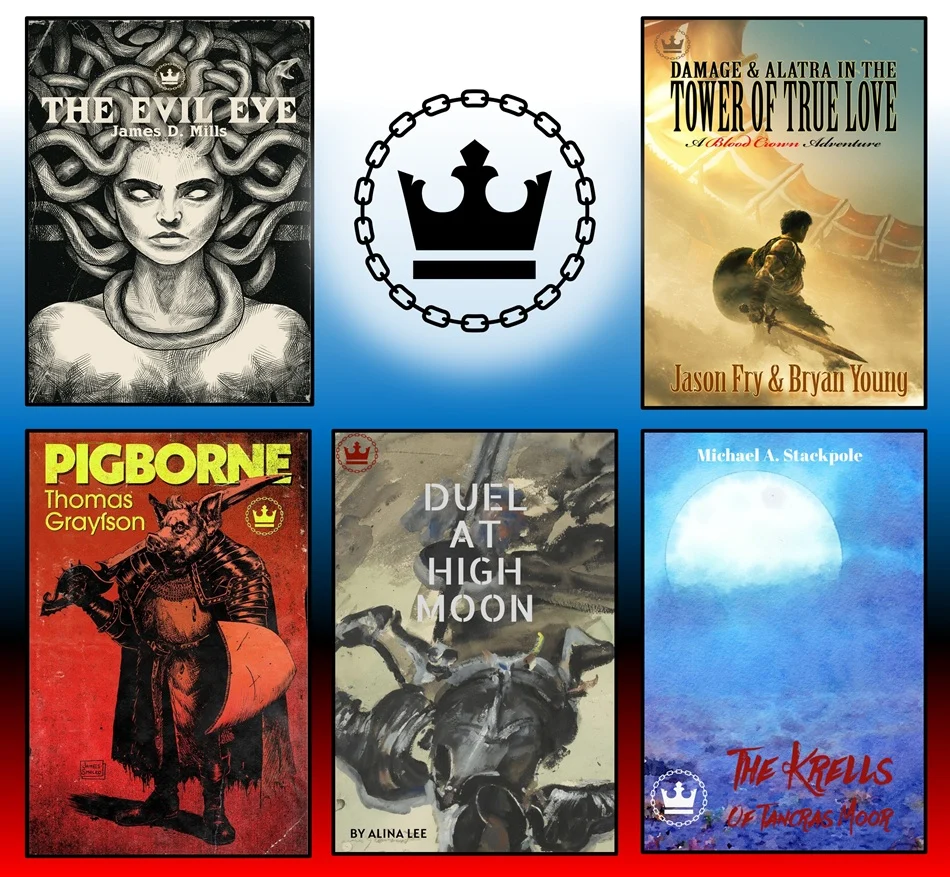
Episode 28: "Damage And Alatra In The Tower of True Love" by Jason Fry, Bryan Young, and Luke Chlimenko (Published June 24th, 2026)
This collaborative effort brings together Jason Fry, known for his work on Star Wars The Last Jedi novelization, and Bryan Young, author of BattleTech: Ghosts of Timkovichi. They operate within a universe originally conceived by blockbuster LitRPG author Luke Chlimenko. The story introduces Damage and Alatra, a gladiator pair bound by a mystical constraint that keeps them within four paces of each other. Their latest assignment takes them to the mysterious Tower of True Love, a supposed respite from the gladiatorial pits, which quickly proves to be a cursed locale demanding a series of mystical tests for survival. This episode not only weaves into the broader Chain Story narrative, particularly with an intriguing tie to the enigmatic Tarru-Syn, but also serves as a sneak peek into Fry and Young’s upcoming collaborative sword and sorcery world. Its blend of LitRPG elements with traditional S&S adventure showcases the project’s willingness to explore genre boundaries.
Episode 27: "The Krells of Tancras Moor" by Michael Stackpole (Published June 10th, 2026)
From the project’s champion himself, Michael Stackpole, comes a tale steeped in classic S&S themes: revenge and the pursuit of redemption. The story follows Black Morgan of Aldare, whose life was shattered by deception and guile, leading to the destruction of everything he held dear. The only failing of his enemies was allowing him to live, and now Morgan stalks them, driven by an unyielding intent to bring an end to their evil. Stackpole’s contribution grounds the project in the genre’s core tenets, delivering a powerful narrative of vengeance and dark justice.
Episode 26: "The Evil Eye" by James D. Mills (Published May 27th, 2026)
James D. Mills crafts a brilliant Bronze Age narrative that explores the dangerous intertwining of wishes, evil, and their inevitable consequences. Gora Younger, the First Son of the Chieftain, returns from exile to investigate a demonic presence plaguing his Great Cave village. This entity has claimed the tribe’s best warriors and inflicted a strange petrifying malady upon the Chieftain. Venturing into uncharted depths with a healer from a mysterious city, Gora must confront a curse that has long shackled his people and, more profoundly, his own soul. Mills’s story offers a rich, atmospheric dive into ancient mythologies and personal torment.
Episode 25: "Pigborne" by Thomas Grayfson (Published May 27th, 2026)
Thomas Grayfson delivers a grimdark animal fantasy, described as being in the spirit of Redwall, yet brutal in its execution. Captain Malion, a warrior of porcine origin, leads a coterie of compatriots into the perilous Nexus Dimension. Their mission: to destroy an ensorcelled sapphire, the very artifact of Tarru-Syn, which has reduced his animal kingdom of Genlina to feral instinct. As his mission unravels and his comrades undergo irreversible transformations, Malion faces agonizing choices about what he is willing to sacrifice to reclaim his world. "Pigborne" introduces a unique blend of animal fantasy and dark, epic stakes, demonstrating the project’s capacity for creative innovation.
Episode 24: "Duel at High Moon" by Alina Lee (Published May 13th, 2026)
This marks the second adventure for Rowan Grim, the mystical wanderer in the Badlands, a locale that certainly lives up to its name in this tale. Rowan, her fearful hunger momentarily sated, seeks simple comforts in Galant’s Gultch: a hot meal, a warm bath, deep sleep, and perhaps a dream. However, sinister forces within the town perceive her as more than a weary traveler, intending her to sate their own hunger. Under the ominous Scarlet Moon, the truth of their intentions is revealed, drawing Rowan into another perilous confrontation. Alina Lee continues to build the compelling narrative of Rowan Grim, deepening the mystery and danger surrounding her character.
These five entries collectively demonstrate the Chain Story project’s breadth, from interdimensional quests and ancient curses to personal vendettas and grim animal sagas, all firmly rooted in the Sword & Sorcery tradition.
Chronology: Forging a Path Through the Nexus
The Chain Story project, spearheaded by Michael A. Stackpole, officially launched its second, Sword & Sorcery-focused iteration in August 2025, though its first stories began appearing in July of that year. Since then, it has maintained an impressive pace, releasing new interconnected narratives every few weeks, creating a sprawling saga that now encompasses 28 distinct episodes. This consistent output highlights the project’s dynamic nature and the dedication of its growing roster of contributors.
The journey began in early July 2025 with two foundational entries:
- Entry 1 (July 3, 2025): "Blade of the Storm Witch" by Robert E. Vardeman. This inaugural tale introduced Lady Rennata, transformed into a formidable storm witch by a magical blade, driven by vengeance for her murdered pirate husband.
- Entry 2 (July 3, 2025): "Death Grip" by Michael Stackpole. Stackpole’s first contribution to this project plunged readers into a murder mystery involving powerful magic, with Neryon and Magistrate-Martial Logan racing against a dangerous killer.
The subsequent months saw a rapid expansion of the narrative universe:
- Entry 3 (July 16, 2025): "Forest of the Fallen Colossus" by Bryan Young. This introduced Laila and Zaki, siblings burdened with a mysterious artifact and pursued through a fae-haunted wood.
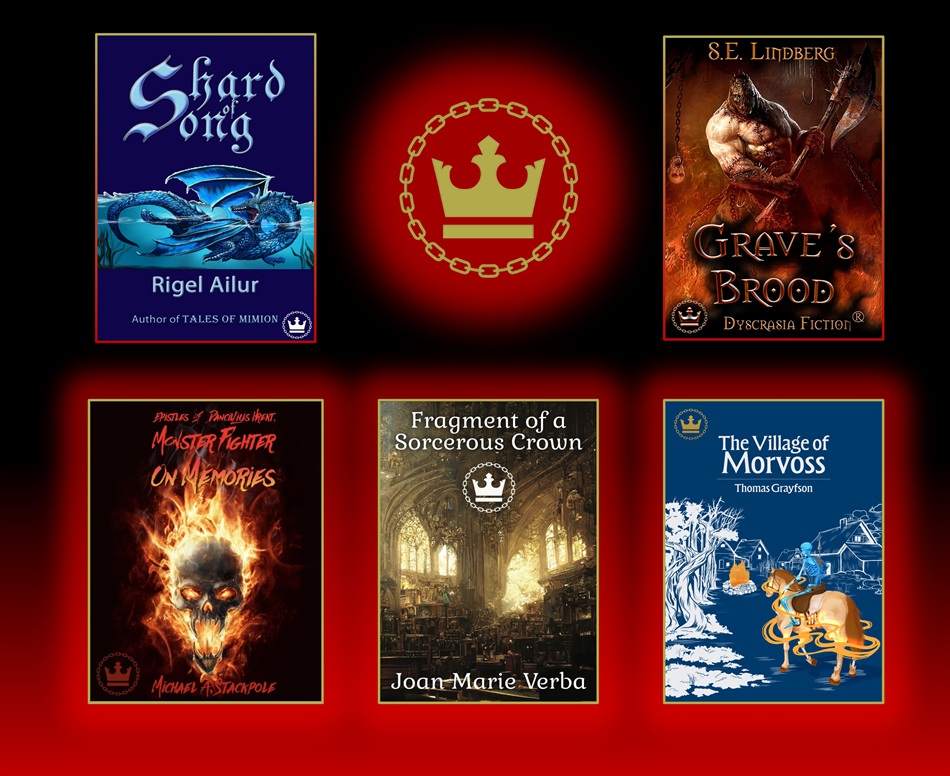
- Entry 4 (July 28, 2025): "Shard of Song" by Rigel Ailur. Wizards desperately sought a relic to counter a magical-musical attack threatening dragons.
- Entry 5 (August 13, 2025): "Grave’s Brood" by S.E. Lindberg. Doktor Grave’s experiments lead Brood to confront a bloody plague and question his allegiances.
- Entry 6 (August 27, 2025): "Fragment of a Sorcerous Crown" by Joan Marie Verba. Sorcerer Serena investigated a dangerous magical artifact and its connection to a carnivorous plant, drawing from the Chronicles of the Library of Sorcery.
- Entry 7 (September 10, 2025): "The Village of Morvoss" by Thomas Grayfson. This marked the tormented knight Kavion’s first appearance, navigating a mysterious village haunted by fractured memories.
- Entry 8 (September 24, 2025): "On Memories" by Michael Stackpole. Introduced Dancillius Hrekt, a new monster fighter facing deadly peer rivalry.
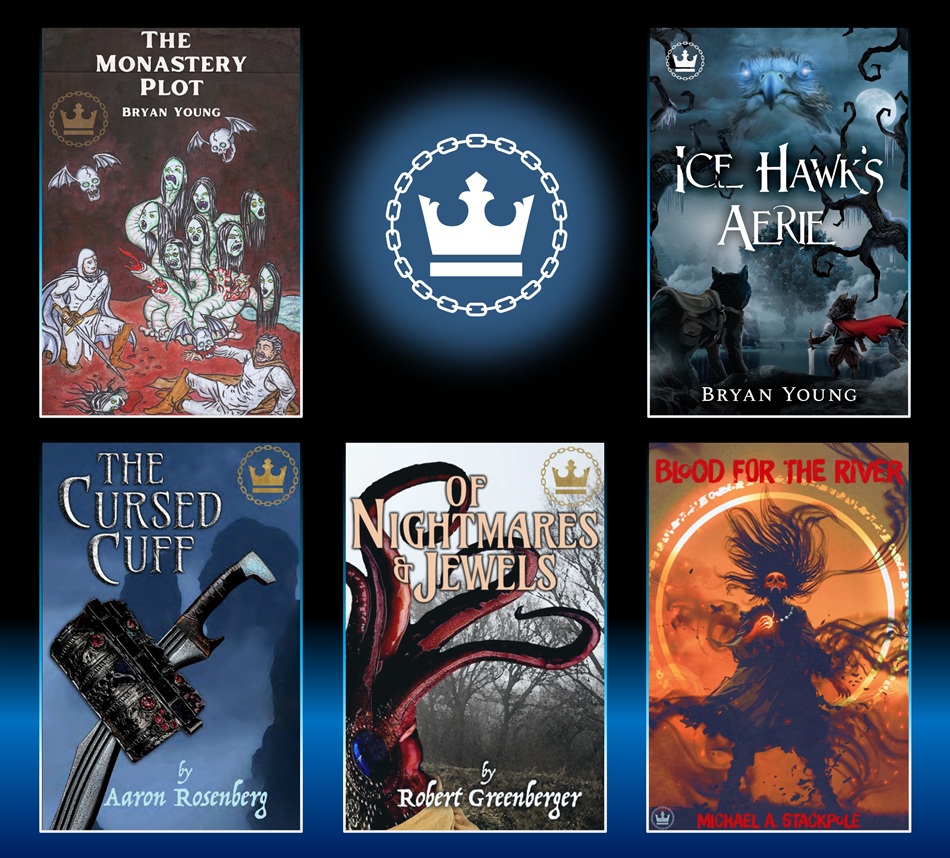
- Entry 9 (October 1, 2025): "The Monastery Plot" by Bryan Young. Shield Maiden Sister Agatha and Brother Dominguez investigated twin murders that led them into the earth’s bowels to face a foe connected to Tarru-Syn.
- Entry 10 (October 14, 2025): "The Cursed Cuff" by Aaron Rosenberg. Birr Blackjaw and companions faced an undead army and a cult leader with a hellish pet.
- Entry 11 (October 14, 2025): "Of Nightmares & Jewels" by Robert Greenberger. Jareth the mage and swordswoman Talin encountered an ancient evil awakening in a tiny town.
- Entry 12 (November 12, 2025): "Blood for the River" by Michael Stackpole. Kellach and Serinna, chased by cultists, found salvation and danger with a fire mage.
- Entry 13 (November 26, 2025): "Ice Hawk’s Aerie" by Bryan Young. Pip Strongpaw, the last of the Great Catriders, wielded Feathersbane against a sorcerous menace threatening Riveroak.
- Entry 14 (December 10, 2025): "Blight" by Katherine Monasterio. Forest Ranger Hazel Boncliff, a Green Speaker, investigated a strange blight affecting the king’s hunting grounds.
- Entry 15 (December 24, 2025): "In The Land of the Giants" by Bryan Young. A samurai’s duty to hunt a creature unfolds as the world burns.
- Entry 16 (December 31, 2025): "Demonfire: A Tale of Shintaro Oba" by C. L. Werner. A forbidden ritual grants a demon unimaginable power.
- Entry 17 (January 14, 2026): "Terror Above Icehenge" by Malcolm T. North. Pip embarked on a perilous journey through the Chaos Realm to reach a mysterious individual.
- Entry 18 (January 19, 2026): "The Sapphire and the Sorceress" by Bryan Young. Pip searched for a powerful sorceress to help him on his way, far from home.
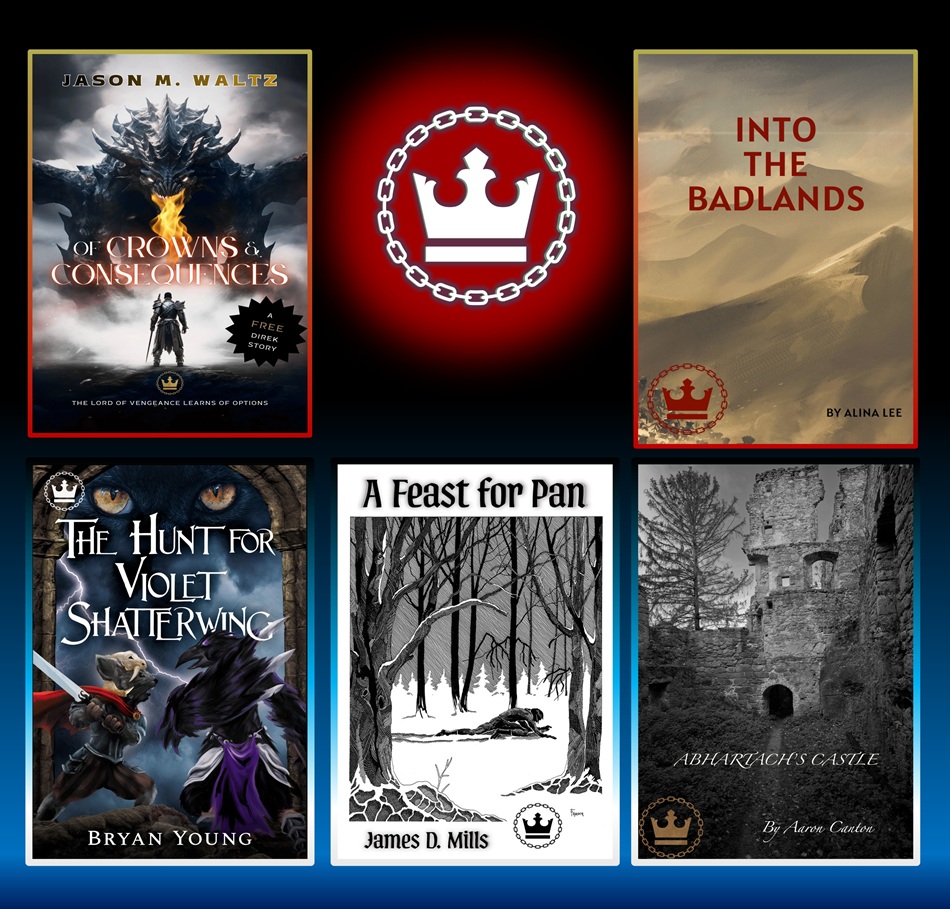
- Entry 19 (January 28, 2026): "Of Crowns & Consequences" by Jason M. Waltz. Direk, wielder of the magickal sword Retribution, encountered a newly awakened power that challenged his reality.
- Entry 20 (February 9, 2026): "The Hunt For Violet Shatterwing" by Bryan Young. Pip, accompanied by the fox bard Ashley, raced to Nightfall Forest to confront the leader of a crow cult.
- Entry 21 (February 25, 2026): "Into The Badlands" by Alina Lee. Rowan Grim willingly embraced the challenges of a dangerous world, drawn by what lies out there.
- Entry 22 (March 11, 2026): "Abhartach’s Castle" by Aaron Canton. Student witches sought a powerful artifact, encountering a dangerous former friend.
- Entry 23 (March 25, 2026): "A Feast For Pan" by James D. Mills. Hromgir and Arvid of Clan Sparrow, on the run, unearthed otherworldly horrors in a strange cave in the frozen wastes.
The consistent cadence of releases underscores the project’s momentum, demonstrating its ability to sustain a long-term, multi-author narrative. This chronological progression reveals how individual stories contribute to a larger, evolving mythology, with characters, artifacts, and locations reappearing or influencing subsequent tales.
Supporting Data: The Mechanics and Impact of Collaborative S&S
The Chain Story project is more than just a collection of tales; it’s a dynamic model for collaborative fiction that holds significant implications for the Sword & Sorcery genre and publishing at large. The success of this venture hinges on several key elements: its unique structural design, the caliber and diversity of its contributors, and its effective utilization of digital platforms.
The "Chained" Mechanism:
While the initial article left the specifics of "Each is:" blank, the very nature of a "chain story" implies a structured collaborative process. Typically, authors are given a prompt, often the ending of the previous story or a specific world element, and tasked with continuing the narrative or exploring a new facet of the shared universe. This "contagious set of connected stories" likely involves:
- Shared Lore and World-building: A foundational set of rules, locations, and historical elements that all authors must respect, ensuring consistency across diverse voices. The recurring mention of "Tarru-Syn" as a mysterious, powerful entity or artifact across multiple stories (Episodes 9, 25, 28) suggests a central mythological anchor.
- Character Continuity or Crossover: While not every story features the same protagonist, characters like Rowan Grim (Episodes 21, 24) and Pip (Episodes 13, 17, 18, 20) demonstrate that characters can reappear, either as main figures or in cameo roles, enriching the narrative web.
- Thematic Resonance: The focus on classic Sword & Sorcery themes – desperate quests, ancient evils, personal vengeance, magical artifacts, and gritty heroes – provides a unifying tone despite varied plotlines.
The Significance of Sword & Sorcery:
Sword & Sorcery, characterized by its focus on individual heroes (or anti-heroes) navigating dangerous, magic-infused worlds, often with elements of grim realism and existential peril, has a rich history. Pioneers like Robert E. Howard, Fritz Leiber, and Clark Ashton Smith defined the genre, emphasizing adventure, combat, and strange sorcery over epic, world-saving narratives. The Chain Story project breathes new life into this tradition, proving its enduring appeal and adaptability. By curating a series specifically within this genre, Stackpole and his collaborators are not just telling stories; they are actively contributing to the genre’s ongoing evolution and ensuring its visibility in contemporary fiction.
Diverse and Distinguished Contributors:
The project boasts an impressive roster of authors, blending seasoned veterans with fresh voices, which contributes to its broad appeal and narrative depth:
- Michael A. Stackpole: A New York Times bestselling author known for his work in Star Wars and BattleTech universes, his leadership lends significant credibility and direction. His personal contributions (Episodes 2, 8, 12, 27) showcase his mastery of S&S.
- Jason Fry & Bryan Young: Both celebrated for their contributions to major media franchises, their involvement attracts a wider readership and brings a polished storytelling sensibility. Young, in particular, is a frequent contributor (Episodes 3, 9, 13, 15, 18, 20, 28).
- Other Notable Authors: C.L. Werner (Episode 16) is a well-known name in Warhammer fantasy, and Robert E. Vardeman (Episode 1) is a prolific author across science fiction and fantasy. Authors like James D. Mills (Episodes 23, 26), Alina Lee (Episodes 21, 24), and Thomas Grayfson (Episodes 7, 25) consistently deliver compelling narratives, establishing their own recurring contributions to the tapestry.
- Emerging Talents: The project also serves as a platform for authors like S.E. Lindberg (Episode 5), a managing editor at Black Gate, and others, providing them with exposure and the opportunity to hone their craft alongside established names.
Leveraging Digital Platforms:
The project’s distributed nature is made possible by modern digital publishing tools. Links to individual stories often direct readers to platforms like Patreon, Ko-fi, Substack, and Itch.io. This multi-platform approach offers several advantages:
- Direct Author Support: Readers can directly support individual authors, fostering a more intimate connection between creator and audience.
- Accessibility: Many stories are offered with free versions, lowering the barrier to entry for new readers and promoting discovery.
- Rapid Publication: Digital platforms allow for quicker turnaround times compared to traditional publishing, enabling the "every several weeks" release schedule.
- Global Reach: The internet removes geographical barriers, allowing authors and readers from around the world to participate.
The Chain Story project, therefore, is not merely a collection of tales but a blueprint for a sustainable, collaborative, and community-driven approach to genre fiction in the digital age.
Official Responses: Michael Stackpole’s Vision and Project Philosophy
While the provided text doesn’t include direct quotes, the framing of the project as "championed by Michael A. Stackpole" and described as a "contagious set of connected (‘chained’) stories" allows us to infer the project’s underlying philosophy and Stackpole’s vision. The initiative appears to be driven by a desire to foster a vibrant, collaborative creative environment that benefits both authors and readers within the Sword & Sorcery genre.
A Platform for Creative Synergy: Stackpole’s championing of the project suggests a belief in the power of shared storytelling. He likely envisions a space where authors can challenge themselves creatively, picking up narrative threads, developing characters, and expanding world lore in ways that a solo project might not allow. This encourages authors to think beyond their individual narratives and contribute to a larger, evolving canon. For many authors, the opportunity to contribute to a project overseen by a writer of Stackpole’s stature is an invaluable experience and a significant boost to their visibility.
Revitalizing Sword & Sorcery: The explicit focus on S&S speaks to a passion for the genre. In an era often dominated by epic fantasy, the Chain Story project provides a dedicated platform for the grittier, more personal adventures characteristic of S&S. Stackpole’s vision likely includes not just maintaining, but actively revitalizing and expanding the genre’s reach and definition, attracting new talent and readers who appreciate its unique flavor. The inclusion of grimdark animal fantasy ("Pigborne") and LitRPG influences ("Damage And Alatra") indicates a willingness to push the boundaries of traditional S&S while honoring its core spirit.
Building a Community: The regular "round up groups every several weeks" implies a structured, community-oriented approach to content creation. This isn’t just a loose collection of stories but an organized effort to coordinate contributions, ensuring a coherent flow while celebrating individual authorial voices. This fosters a sense of camaraderie among the participating writers, creating a supportive network where ideas can be exchanged and narratives can intertwine organically. For readers, it creates an ongoing engagement, a sense of being part of an unfolding epic that they can actively follow and anticipate.
Accessibility and Discovery: The provision of links to "free versions" of stories on various platforms points to a commitment to accessibility. This strategy is crucial for reader acquisition, allowing potential fans to sample the project’s offerings without immediate financial commitment. It also aids in author discovery, as readers encountering one story might be drawn to explore other works by that author or delve deeper into the broader Chain Story universe. This aligns with a vision of democratizing access to fiction and fostering a broader appreciation for the genre.
In essence, Stackpole’s leadership appears to be guiding a project that is not only a creative outlet but also a strategic initiative to invigorate the S&S genre, empower authors, and provide a continuous stream of high-quality, interconnected fantasy for readers.
Implications: A Blueprint for the Future of Collaborative Fiction
The "Chain Story" project, under Michael A. Stackpole’s guidance, carries significant implications for the future of collaborative storytelling, the Sword & Sorcery genre, and the broader publishing landscape. Its innovative model offers a compelling blueprint for how authors and readers can engage with fiction in an increasingly interconnected world.
Reshaping Collaborative Storytelling:
The project demonstrates a successful, ongoing model for large-scale, multi-author narrative construction. Unlike anthologies that are often discrete collections, the "chained" nature creates a persistent, evolving world that benefits from diverse perspectives while maintaining a sense of continuity. This approach could inspire similar initiatives in other genres, fostering new ways for creators to collaborate on shared universes without the traditional overhead of large publishing houses. It proves that a "shared world" doesn’t need to be a single, monolithic entity, but can be a dynamic, ever-branching organism.
Impact on the Sword & Sorcery Genre:
By providing a dedicated, high-profile platform for Sword & Sorcery, the project is playing a crucial role in the genre’s contemporary relevance. It introduces new readers to the gritty charm of S&S and showcases its versatility, proving it can accommodate diverse narrative styles, from grimdark animal fantasies to LitRPG-influenced adventures. This continuous influx of new content, authored by both veterans and newcomers, helps to expand the genre’s canon and ensure its vitality for future generations of readers and writers. It acts as a proving ground for new S&S authors, allowing them to build a readership within a well-curated environment.
Challenges and Opportunities:
While the project’s growth is impressive, sustaining such an expansive, collaborative effort presents inherent challenges. Maintaining narrative consistency across numerous authors, managing editorial oversight to ensure quality, and coordinating publishing schedules for a continuous flow of stories require robust organizational structures. The project’s success so far indicates that these challenges are being effectively met, potentially through a combination of clear guidelines, strong editorial leadership, and the self-organizing nature of creative communities.
However, these challenges also present opportunities. The distributed authorship model fosters resilience; the project is not dependent on a single writer’s output. It also encourages creative problem-solving as authors navigate existing lore while introducing fresh ideas. The digital-first approach means that the project can adapt quickly to reader feedback and evolving technological platforms, ensuring its continued relevance.
Community Building and Author Empowerment:
Beyond the stories themselves, the Chain Story project fosters a strong sense of community. For authors, it offers unique networking opportunities, peer support, and a chance to learn from diverse writing styles. For readers, it creates a continuous engagement with a dynamic world, often encouraging discussions and anticipation for the next installment. This direct engagement, facilitated by platforms like Patreon and Substack, empowers authors by allowing them to connect directly with their audience and potentially build sustainable careers outside traditional publishing gatekeepers.
In conclusion, Michael A. Stackpole’s Chain Story project is more than just a successful literary endeavor; it is a pioneering model for collaborative, genre-focused fiction in the digital age. Its sustained growth, diverse talent pool, and commitment to the Sword & Sorcery tradition mark it as a significant force, charting a course for innovative storytelling that promises to captivate audiences and inspire creators for years to come.