The Data-Driven Curtain Call: How Bleecker Street’s ‘Hadestown’ Shattered the Specialized Release Playbook
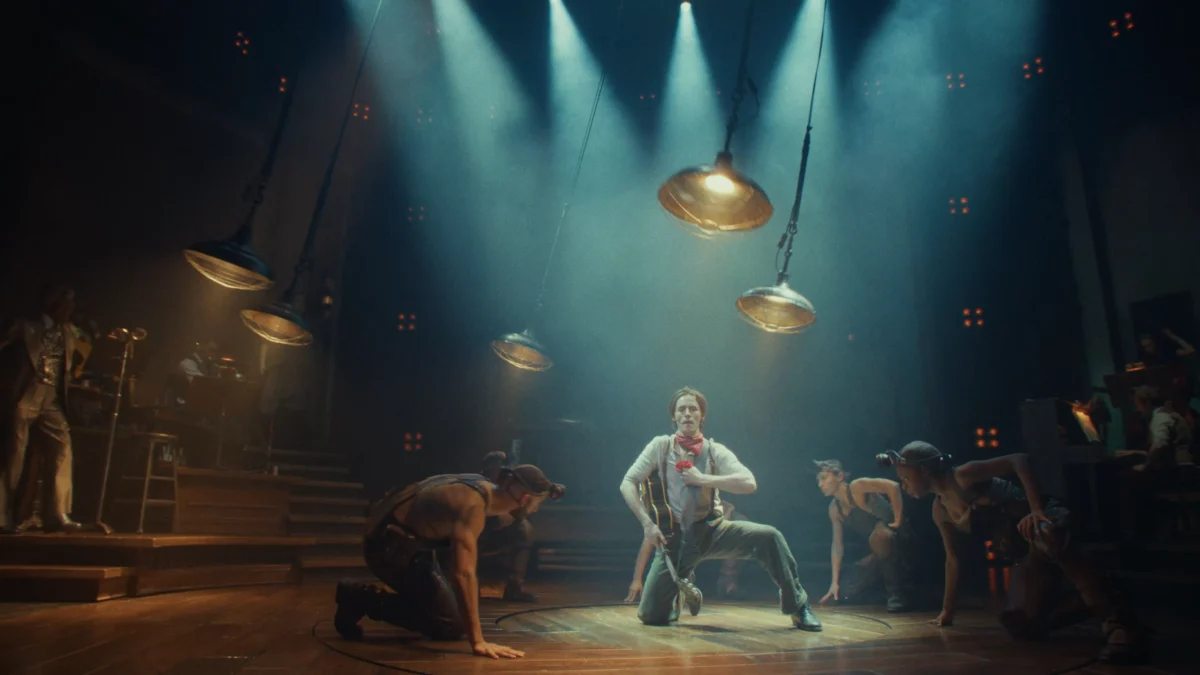
In an era where independent film distributors often find themselves trapped in a "vortex of bad news"—navigating dwindling art-house attendance and a fractured media landscape—Bleecker Street has emerged with a blueprint for survival that defies traditional industry wisdom. The domestic debut of Hadestown: The Musical, a filmed stage capture of the Tony-winning Broadway sensation, didn’t just perform well; it rewrote the company’s history books. Grossing $10.25 million in its opening weekend, the feature became the most successful domestic launch in Bleecker Street’s history.
The success of Hadestown serves as a high-profile proof of concept for Crosswalk, Bleecker Street’s event-cinema label. More importantly, it signals a philosophical shift in the C-suite. Led by CEO Kent Sanderson, the company is pivoting away from the "curatorial authority" model—where executives rely on their own sophisticated palates to pick winners—toward a data-centric, "ego-less" approach that prioritizes audience demand over executive instinct.
Main Facts: A Record-Breaking Debut
The $10.25 million opening for Hadestown: The Musical represents a watershed moment for Bleecker Street. Released through Crosswalk, the film successfully bridged the gap between the exclusive world of New York theater and the broader domestic movie-going public.
Key performance indicators from the opening weekend include:
- Domestic Gross: $10.25 million, marking a new high for the distributor.
- Top Performing Market: Orlando, Florida, which outperformed other territories by a significant margin—a data point that underscores the demand for Broadway content in regions far removed from Manhattan’s Theater District.
- The Content: A high-quality "live capture" of the musical written by Anaïs Mitchell, which continues to run on Broadway and has previously secured eight Tony Awards, including Best Musical.
This financial triumph is particularly notable because it was achieved by a distribution team that, by their own admission, does not necessarily count themselves among the "Broadway faithful." The success was not born of a passion for musical theater, but rather a cold, calculated analysis of market signals.
Chronology: From Cult Classics to Data-Driven Hits
The path to the Hadestown record was paved with both experimental successes and well-intentioned failures. To understand how Bleecker Street arrived at this strategy, one must look at the timeline of the company’s recent "event-cinema" ventures.
The ‘Waitress’ Catalyst (2023)
The seeds of the current strategy were planted by Bleecker Street’s late founder and mentor, Andrew Karpen. In 2023, the company took a calculated risk on the live-capture version of Waitress: The Musical. At the time, Kent Sanderson admitted to having little personal connection to the property. However, after witnessing the "obsessive" nature of the fan base—fans who would see the same stage show four or five times—the team realized that Broadway captures offered a built-in, high-frequency audience that traditional indie films often lacked.
The ‘Spinal Tap’ Lesson (2023)
While Waitress provided a positive signal, the 41st-anniversary re-release of the cult classic This Is Spinal Tap and its sequel, Spinal Tap II: The End Continues, provided a sobering counter-narrative. Sanderson, a lifelong fan of the franchise, spearheaded the release. Despite the film’s legendary status and the CEO’s personal enthusiasm, the domestic total reached only $3.6 million. This "well-intentioned flop" became a turning point, reinforcing the thesis that personal taste is a fallible metric for commercial success.

The K-Pop Experiment (January 2024)
Earlier this year, Bleecker Street tested its "ego-less" hypothesis with the release of Stray Kids: The dominATE Experience. Sanderson noted that he had never heard of the K-pop group before the project was proposed. By ignoring personal unfamiliarity and focusing on the massive digital footprint of the band’s "STAY" fandom, the film became Bleecker’s biggest success of the year prior to Hadestown.
Supporting Data: Fighting Confirmation Bias
The "Crosswalk Thesis" relies on a rigorous "paces" system where potential acquisitions are stripped of their artistic prestige and evaluated through raw data. Sanderson and his team utilize a multi-pronged data suite to determine if a project has legs.
1. YouGov Polling and Market Sentiment
Bleecker Street employs third-party polling to gauge awareness and intent-to-watch across diverse demographics. This helps identify "pockets" of interest that might be invisible to a New York or Los Angeles-based acquisitions team.
2. Digital Footprints vs. "False Flags"
While Spotify streams and social media engagement are vital, the team remains wary of "false flags." For Hadestown, Sanderson questioned whether high Spotify numbers indicated a desire to see a movie or simply reflected the popularity of the music as a standalone concept album. By cross-referencing these streams with Broadway’s historical grosses and the performance of national touring companies, they were able to verify that the "Hadestown" brand carried weight as a visual experience, not just an auditory one.
3. Regional Outliers
The fact that Orlando, Florida, was the top-grossing theater for Hadestown validated the "accessibility" argument. Data suggested that there is a massive, underserved population of theater lovers who are priced out of—or geographically distanced from—Broadway. The film capture acts as a democratic tool, providing the "best seat in the house" for a fraction of the price of a theater ticket.
Official Responses: Taking the Ego Out of Acquisitions
In interviews regarding the record-breaking weekend, Kent Sanderson has been remarkably candid about the need for executives to "get out of their own way."
"It is taking your ego out of it," Sanderson stated, reflecting on the shift in business philosophy. "That’s literally the thesis of this entire business… taking the taste of my acquisitions team out of it, and really just meeting the audience where they are."
This sentiment was echoed by executive producer Kevin Iwashina, who advised the producers in structuring the Hadestown deal. The focus was on creating a "win-win" for both the theatrical creators and the film distributor by treating the filmed version not as a replacement for the stage show, but as a brand-extension tool.

Sanderson further noted that while he has "come to love Hadestown" through the process of releasing it, that affection was a byproduct of the work, not the catalyst for the deal. This distinction is crucial; it suggests that the modern distributor’s job is not to be a tastemaker, but a bridge-builder.
Implications: The Future of Specialized Releasing
The success of Hadestown suggests three major implications for the future of the independent film and distribution landscape:
1. The Decline of the "Curatorial Eye"
For decades, the "eye" of the distributor was the product. If a legendary distributor picked up a film at Sundance, that endorsement alone was the marketing. Sanderson’s success suggests that in a fragmented digital age, the "eye" can be a liability. If distributors only buy what they personally like, they risk missing massive cultural movements—like K-pop or Broadway fandoms—that exist outside their social circles.
2. The Rise of "Hybrid" Distribution Models
Bleecker Street is not abandoning the traditional art-house model entirely. Sanderson remains a champion of auteur cinema, pointing to the upcoming release of Mike Leigh’s Tender Loving Care later this year. However, the company is moving toward a hybrid model: using data-driven "event cinema" (Crosswalk) to provide the financial bedrock that allows them to continue taking risks on traditional narrative films.
3. The "Creator Economy" Influence
The iterative nature of the creator economy is bleeding into film distribution. Just as YouTubers or TikTokers look at analytics to decide their next video, Bleecker Street is looking at existing fan behaviors to decide their next theatrical release. By treating a filmed musical like a "singular piece of work" but marketing it with the precision of a digital product, they have found a way to make specialized releasing profitable again.
Conclusion
The $10.25 million opening of Hadestown: The Musical is more than a box-office win; it is a signal that the independent film industry is maturing. By embracing data, acknowledging the limits of personal taste, and "taking the ego out of it," Bleecker Street has found a way to thrive in a market that has been unkind to many of its peers. As the industry looks toward 2025, the lesson of Hadestown is clear: the most successful distributors won’t be the ones telling audiences what to like, but the ones listening most closely to what they already love.