The Living Canvas: Raph Koster Unveils Massive Visual and Simulation Overhaul for Stars Reach
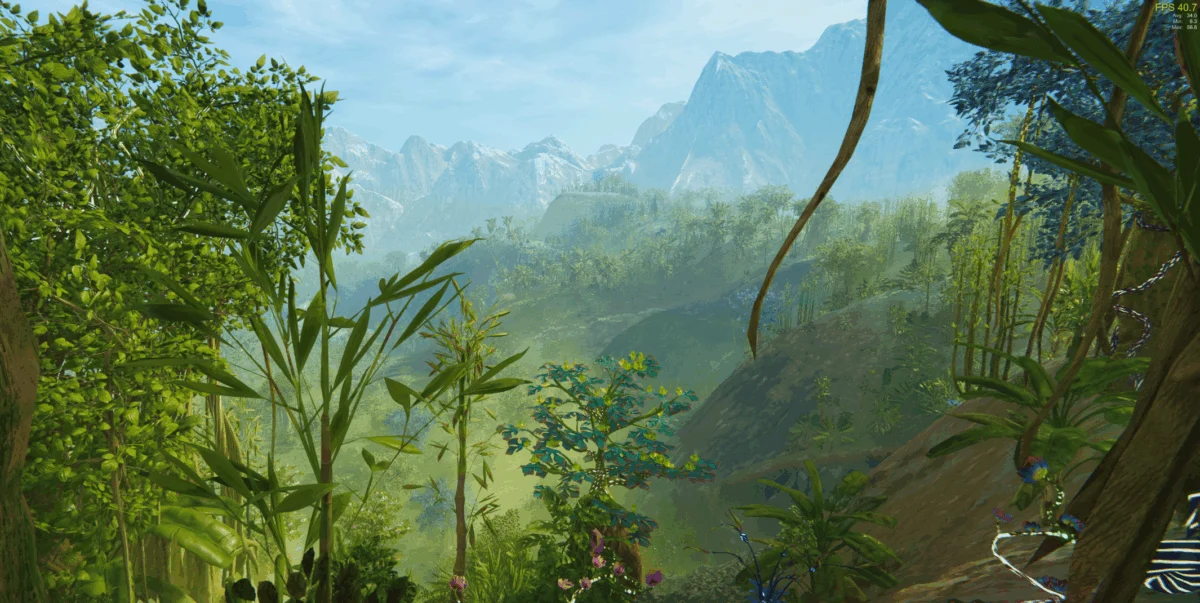
In the evolving landscape of massively multiplayer online (MMO) games, few names carry as much weight as Raph Koster. The visionary behind Ultima Online and Star Wars Galaxies has long been a proponent of "living worlds"—environments where player agency and systemic simulation take precedence over static, scripted content. His latest project, Stars Reach, has recently undergone a transformative "visual renaissance," according to a comprehensive update from the development team.
The overhaul represents more than just a fresh coat of paint; it is a fundamental restructuring of how the game’s engine handles shaders, lighting, and asset interaction. By moving toward a "stylized realism" aesthetic, Koster and his team at Playable Worlds aim to reconcile the high technical demands of a fully simulated universe with the visual fidelity expected by modern audiences.
Main Facts: A Holistic Visual Reconstruction
The recent update to Stars Reach focuses on a complete overhaul of the game’s visuals, a process that has been underway for several months. This initiative involves a multi-pronged approach to game design, starting with the basic building blocks of the digital environment.
Shaders and Flora
The development team has redone nearly every shader in the game, necessitating a retouching of every existing asset. The most significant focus has been placed on the game’s flora. With hundreds of unique plant assets, the team has implemented a system where vegetation is no longer a static background element. Instead, every plant in Stars Reach is a simulated entity that grows, responds to seasonal changes, and reacts to environmental hazards.
The "Stylized Realism" Philosophy
In a market saturated with photorealistic titles that Koster describes as "indistinguishable from one another," Stars Reach is carving out a niche through stylized realism. This aesthetic choice is both artistic and functional. It allows for a vibrant, distinct visual identity while ensuring that the game’s complex underlying simulations—such as terrain deformation and thermal dynamics—do not compromise performance.
Technical Engine Enhancements
Beyond assets, the core rendering engine has seen significant upgrades. These include:
- Improved Lighting Models: A new approach to how light interacts with surfaces.
- Volumetric Fog: Creating depth and atmospheric density in various biomes.
- Global Illumination: A pending feature that will allow for realistic light bounce, enabling the creation of truly dark, atmospheric caves and interiors.
- Performance Optimization: Despite the increased visual complexity, the team reports significant gains in framerate and general stability.
Chronology: The Evolution of a World (2021–2025)
The path to the current build of Stars Reach has been one of iterative growth. Koster shared a retrospective of the game’s visual development to illustrate how far the technology has progressed since its inception.
- 2021: The Foundation: Early builds focused on the core simulation logic. Visuals were rudimentary, serving primarily as placeholders to test the "living world" mechanics. Community feedback during this phase was often critical of the graphics, which Koster acknowledged as a necessary stage of development.
- 2022: Shader Iteration: The team began experimenting with terrain shaders, attempting to find a balance between the vast, procedurally generated landscapes and the need for detail at the player’s level.
- 2023: Biome Refinement: The introduction of more complex biological simulations allowed for more varied landscapes. The "Terrain Engine" began to show its potential, though the art style remained in flux.
- 2024: The Jungle Milestone: By late 2024, the team achieved a breakthrough in jungle environments. The density of flora increased, and the interaction between light and foliage became more sophisticated.
- 2025: The Current Overhaul: The present stage represents the culmination of years of technical debt repayment and artistic refinement. The "paperback cover" aesthetic has emerged, characterized by bold colors and dramatic vistas that evoke classic science fiction illustrations.
Supporting Data: The Mechanics of Simulation
What sets Stars Reach apart from its contemporaries is the depth of its simulation. The visual beauty is not merely a skybox; it is a real-time representation of underlying data.
Environmental Dynamics
The game does not use pre-designed biomes. Instead, biomes are derived on the fly based on three primary factors:
- Temperature: Influences the types of flora that can survive and the state of water (liquid vs. ice).
- Humidity: Determines the density of vegetation and atmospheric effects.
- Soil Composition: The game features 12 distinct soil types, each affecting plant growth and resource availability.
Destructibility and Modification
The landscape is entirely dynamic. Players have the agency to:
- Flatten Mountains: To make way for roads or settlements.
- Manipulate Matter: Cliff faces can be climbed or, with enough heat, melted into lava.
- Chemical Interactions: Pouring water on cold ground creates ice, which introduces new movement physics, such as skating.
- Biological Propagation: Trees grow from seeds that fall naturally. Forest fires can start, spread, and eventually die out, leaving behind scorched earth that must recover over time.
Official Response: Koster on "Living Worlds"
Raph Koster has been vocal about the philosophy driving these changes. In his official communications, he addressed the tension between visual quality and simulation depth.
"We are finally at a place where we do not need to compromise on the visual quality in order to deliver the simulated living world we have had working for years now," Koster stated. He emphasized that while the simulation has been functional for a long time, the "iteration takes time" to make it look as good as it feels.
Addressing the move away from photorealism, Koster noted that the team intentionally sought a look that stands out. The goal was to create a world that looks like a "paperback science fiction novel come to life," prioritizing readability and character over raw polygon counts. He also reassured players that while this update focuses on visuals, gameplay development has not stalled. Recent additions include banks, player-run shops, combat updates, and the imminent arrival of player-run governments.
Implications: A New Benchmark for Player Agency?
The implications of the Stars Reach overhaul extend beyond the game itself, potentially signaling a shift in the MMO genre.
The End of the "Theme Park" MMO?
For decades, the MMO genre has been split between "Theme Parks" (static, curated experiences) and "Sandboxes" (player-driven but often visually lacking). Stars Reach attempts to bridge this gap. By providing a world that is both visually stunning and fully modifiable, Playable Worlds is challenging the notion that high-fidelity graphics require a static environment.
Ecological Gameplay
The inclusion of 12 soil types and real-time plant propagation suggests a new layer of gameplay: ecology management. Players may find themselves acting as stewards of the land, managing forest fires, or optimizing soil for agriculture. This adds a "macro" layer to the traditional MMO experience, where the health of the planet is as important as the strength of a player’s sword.
Technical Feat of Optimization
Perhaps the most significant implication is the technical achievement of running such a complex simulation without a massive performance hit. If Stars Reach can maintain smooth framerates while simulating global illumination, volumetric fog, and thousands of growing plants across a destructible terrain, it will set a new technical benchmark for cloud-based gaming and procedural generation.
Social and Political Evolution
With the mention of player-built cities being destroyed and the upcoming "player governments," the game is moving toward a socio-political simulation. The ability to literally "move mountains" gives player governments a level of power rarely seen in gaming. A government could decide to build a massive highway system or preserve a rare forest biome, and those decisions would be reflected visually and systemically for all players to see.
Conclusion
As Stars Reach moves closer to its next major patch, the visual overhaul serves as a testament to the team’s commitment to Raph Koster’s original vision. It is a world where "everything in the landscape itself can be changed," and where the beauty of the environment is a direct result of the life flowing through it.
While the "stylized realism" may be a departure from the grit of modern AAA titles, it offers a clarity and vibrancy that fits the ambitious scope of the project. For a genre that has often struggled to innovate, Stars Reach is literally rebuilding the ground it stands on, one soil type at a time. The coming months will be crucial as the team rolls out these technical features to the broader player base, potentially proving that in the world of MMOs, you can indeed have both depth and beauty.