The Anatomy of a State-Sanctioned End: Tim Blake Nelson’s ‘The Life and Deaths of Wilson Shedd’
TORONTO — At the 2026 Toronto International Film Festival, a somber and intellectually demanding piece of cinema has emerged as one of the most discussed entries of the season. Tim Blake Nelson’s The Life and Deaths of Wilson Shedd is a haunting, non-linear examination of the American carceral system, specifically focusing on the intersection of systemic poverty, individual choice, and the cold mechanics of the death penalty.
While the film is currently seeking U.S. distribution, its premiere has already sparked a firestorm of debate regarding the morality of capital punishment and the narrative ethics of depicting "guilty" protagonists. Starring Scoot McNairy and Amanda Seyfried, the film is less a "whodunit" and more a "why-was-it-done," challenging audiences to find empathy for a man whose crimes are as undeniable as his humanity.
Main Facts: A Portrait of the Condemned
The Life and Deaths of Wilson Shedd is a prison drama that refuses to follow the traditional trajectory of the genre. Written and directed by Tim Blake Nelson—a filmmaker known for his intellectual rigor and gritty portrayals of the American South—the screenplay is inspired by unspecified true events. It maps the life of the titular character, Wilson Shedd (Scoot McNairy), an Oklahoma man whose journey begins in the depths of childhood poverty and concludes with his execution at the hands of the state.
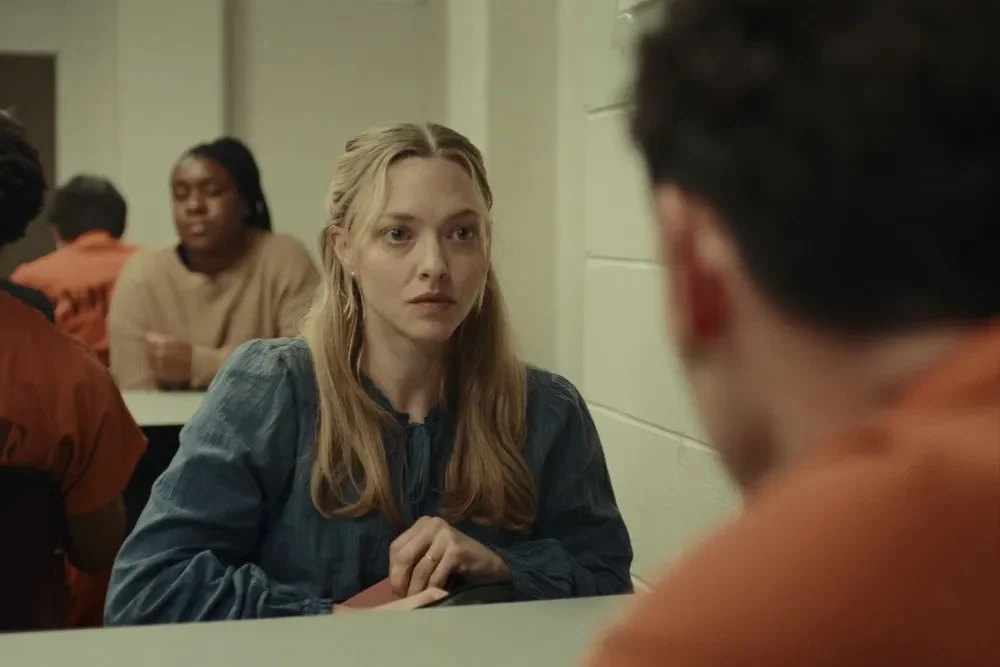
The film’s central conceit is its refusal to present Wilson as a martyr. Unlike traditional anti-death penalty films that rely on the protagonist’s innocence to garner sympathy, Nelson’s work focuses on a man who has committed monstrous acts. The film posits that people do not enter or exit the prison system in a vacuum; there is always a "helper," whether it be a corrupt guard, a civilian accomplice, or, in this case, a creative writing teacher named Karen (Amanda Seyfried) who develops a complex, arguably self-destructive bond with her student.
Key Production Details:
- Director/Writer: Tim Blake Nelson
- Lead Cast: Scoot McNairy, Amanda Seyfried, William Jackson Harper, Devyn Tyler, Wunmi Mosaku.
- Setting: Oklahoma (Maximum Security Prison and surrounding rural areas).
- Premiere: Toronto International Film Festival (TIFF) 2026.
- Cinematic Style: Non-linear narrative, shifting between Wilson’s past, his incarceration, a violent prison break, and his eventual execution.
Chronology: The Fragmented Timeline of a Life
Nelson utilizes a fractured narrative structure to "destabilize the judgment" of the audience. By jumping across decades, the film forces the viewer to reconcile the "bruised apple" of Wilson’s adult self with the "tree" from which he fell.

1. The Classroom: The Catalyst
The "A-plot" centers on the day Karen, a high school teacher fleeing an abusive marriage and struggling to fund her father’s elder care, takes a part-time job teaching fiction at Oklahoma’s largest maximum-security prison. It is here she meets Wilson. Unlike the other inmates, who view her with predatory interest, Wilson presents as a "rangy squirrel of a man" with an untapped artistic spirit. Their relationship blossoms through Emily Dickinson poems and covert love letters disguised as writing assignments. This segment explores whether Wilson’s "honesty" is a genuine spiritual awakening or a calculated manipulation for survival.
2. The Escape: The Descent
Intercut with the budding romance in the prison classroom are tense, high-stakes flashforwards. Wilson and two fellow inmates have escaped, hiding in the treacherous Oklahoma swamplands. As they evade the law, the group descends into further violence, killing those who cross their path. While the film carefully attributes the most "uncivilized" acts to Wilson’s companions, his complicity remains a looming shadow over his character.
3. The Tulsa Family: The Collateral
In a parallel narrative thread, the film follows a "picture-perfect" family in Tulsa, played by William Jackson Harper and Devyn Tyler. We see them in moments of pure domesticity—watching their children in a school musical and discussing the theological intricacies of forgiveness. This thread eventually collides with the escapees in a sequence that critics have described as "exploitative yet essential," serving as the catalyst for the audience’s eventual withdrawal of sympathy for Wilson.
4. The Final Twenty Minutes: The Execution
The film’s final act abandons the non-linear jumps for a real-time, unflinching look at the mechanics of a state execution. After 100 minutes of narrative manipulation, the film strips away the artifice to focus on the "taxpayer-funded murder" of a man who has been fully contextualized, but not necessarily excused.
Supporting Data: The Mechanics of Empathy
The film’s effectiveness hinges on the performances of its leads and the philosophical metaphors embedded in Nelson’s script.

The McNairy-Seyfried Dynamic
Scoot McNairy’s casting is a strategic move by Nelson. McNairy possesses a natural likability that makes the character’s darker turns more jarring. Opposite him, Amanda Seyfried’s Karen is portrayed not as a naive "do-gooder," but as a woman "starved for human connection." Her brother’s own incarceration and her abusive marriage provide the "invisible weight" that explains her attraction to a man like Wilson.
The "Bruised Apple" Philosophy
A central monologue in the film compares the criminal to a bruised apple. Nelson argues that while society rejects the fruit, it rarely acknowledges the gravity that caused it to fall. The film provides "supporting data" for Wilson’s life—glimpses into his formative years and his imagination—that suggest his path was paved by circumstances long before he ever committed a crime. However, the film is careful not to "tip the scales" too far, ensuring that the victims’ suffering remains a tangible part of the equation.
Official Responses: Critical Reception and Moral Debate
Critics at TIFF have awarded the film a Grade: B, noting that while the film is "defiantly humane," it is also "nakedly manipulative."
Critical Synthesis:
- On Structure: Some reviewers felt the non-linear timeline was a tool to maintain momentum in an otherwise "dour" story. The frequent detours into the lives of the Tulsa family were criticized for being a "lens to refract our understanding" of the killers, potentially using the victims’ suffering as a narrative device.
- On Themes: The film has been praised for tackling the "harder, more rewarding challenge" of attacking capital punishment through a guilty man rather than an innocent one.
- On Cast: While McNairy and Seyfried received high marks, some critics noted that Wunmi Mosaku (playing Karen’s friend) was underutilized, a casualty of the film’s complex, fragmented structure.
The film has sparked a broader conversation in the industry about the "mechanics of state murders." By focusing on the cold, procedural nature of the lethal injection in the final act, Nelson forces the audience to confront the reality of justice as an "elusive concept."
Implications: The Case Against the Ultimate Penalty
The primary implication of The Life and Deaths of Wilson Shedd is a profound indictment of capital punishment. Nelson’s film suggests that if a man’s life is a mystery—an "unknowable creature"—then for the state to end that life is to ensure that the mystery is never solved and the potential for redemption is permanently extinguished.

1. The Question of "Deserve"
The film moves the goalposts of the death penalty debate. It moves away from "Is he innocent?" to "Does he deserve to die?" Nelson’s answer seems to be that "deserve" has nothing to do with it. By showing Wilson as both a sensitive writer and a participant in a violent escape, the film argues that human nature is too complex for the binary finality of an execution.
2. Justice vs. Vengeance
The film asks whether the government should have the privilege to seal a man’s fate, or if that right belongs to the families of the victims. In showing the Tulsa family’s struggle with the concept of forgiveness, Nelson highlights that state-sanctioned death rarely provides the "closure" it promises.
3. The Future of the Film
As The Life and Deaths of Wilson Shedd seeks U.S. distribution, it is poised to become a touchstone in the ongoing American debate over the death penalty. In a political climate where capital punishment remains a polarizing issue, Nelson’s "unflinching focus" on the humanity of the guilty may prove to be the most provocative cinematic statement of the year.
Final Grade: B
“The Life and Deaths of Wilson Shedd” premiered at the 2026 Toronto International Film Festival. It is currently seeking U.S. distribution.