Hello Wizard I Have a Problem: A New Era of Absurdist Magical Mayhem in Tabletop RPGs
FOR IMMEDIATE RELEASE
London, UK – [Insert Date of Publication] – A new and distinctively chaotic force is poised to enter the tabletop roleplaying game (TRPG) landscape with the emergence of "Hello Wizard I Have a Problem." This innovative game invites players to shed the mantle of heroic competence and instead embrace the delightful disarray of powerful, yet utterly inept, spellcasters. Breaking from traditional TRPG conventions, this upcoming title promises a collaborative, laugh-out-loud experience, drawing inspiration from the likes of Monty Python, The Mighty Boosh, and What We Do in the Shadows. As its crowdfunding campaign on Kickstarter nears its conclusion, "Hello Wizard I Have a Problem" is generating significant buzz for its fresh approach to fantasy and its commitment to spontaneous, player-driven narrative.
Conceived by veteran TRPG designer Sam Armstrong and brought to life visually by illustrator Evlyn Moreau, "Hello Wizard I Have a Problem" positions players not just as participants, but as co-creators of an unfolding comedic saga. The game’s central conceit revolves around a band of sorcerers whose magical prowess is only matched by their spectacular propensity for failure. This premise underpins a unique gameplay loop where players fluidly alternate between embodying a spotlight wizard attempting a grand magical feat and collectively acting as the Game Master (GM) to determine precisely how that feat will spectacularly backfire. With an emphasis on rapid-fire scenes and a dedicated "Problem Generator" capable of conjuring over 200,000 unique disastrous prompts, the game is set to deliver an unprecedented level of improvisational hilarity and replayability.
The Core Concept: Embracing Magical Mayhem
"Hello Wizard I Have a Problem" is not merely another fantasy RPG; it is a dedicated foray into the realm of absurdist comedy, designed from the ground up to celebrate the glorious failure of grand magical ambition. At its heart, the game challenges the pervasive trope of the all-powerful, infallible wizard, instead presenting a world where immense magical energy is routinely wielded by individuals who are, for all intents and purposes, terrible at their jobs. This fundamental shift in perspective is what gives the game its distinctive flavor and promises endless comedic potential.
Wizards of Wonderful Incompetence
The player characters in "Hello Wizard I Have a Problem" are described as "powerful and incompetent spellcasters." This isn’t a contradiction but the very engine of the game’s humor. Players are encouraged to imagine their wizards as individuals capable of prodigious feats of magic – summoning cosmic entities, transmuting matter, altering reality – but who inevitably botch the execution in the most unexpected and catastrophic ways. The joy comes from the gap between intention and outcome, the sheer audacity of the spellcaster’s ambition colliding with their inherent lack of foresight, precision, or common sense.
This concept resonates deeply with audiences who appreciate humor born from relatable human flaws, even when projected onto fantastical beings. The wizards’ problems are not necessarily minor inconveniences but often world-altering catastrophes on a personal scale, leading to situations that are both dire and uproariously funny. This dynamic allows for character development that isn’t about overcoming challenges through strength, but about navigating and surviving the self-inflicted chaos, often with even more chaotic solutions.
A Nod to Absurdist Comedy Icons
The game explicitly draws inspiration from a pantheon of iconic absurdist and fantastical comedy. The mention of Monty Python immediately evokes a sense of surreal, unpredictable humor, where logic often takes a backseat to punchlines and sketches can veer wildly in unexpected directions. This influence suggests that "Hello Wizard I Have a Problem" will thrive on non-sequiturs, unexpected turns, and a general irreverence for established norms. Players can expect scenarios that defy rational explanation, where the humor is derived from the sheer oddity of the situation.
Similarly, The Mighty Boosh brings to mind a vibrant, whimsical, and often bizarre aesthetic coupled with eccentric characters and dreamlike narratives. This suggests that the magical failures in "Hello Wizard" won’t just be simple misfires but could involve surreal transformations, encounters with strange entities, or excursions into fantastical dimensions born of a botched spell. The game promises a playground for the imagination, where the weirder the outcome, the better.
Finally, the inclusion of What We Do in the Shadows points to character-driven comedy, where humor arises from the mundane struggles of extraordinary beings. The vampires in that series are powerful, ancient creatures, yet they grapple with rent, house chores, and social awkwardness. "Hello Wizard I Have a Problem" likely channels this by grounding its powerful wizards in relatable, often embarrassing, everyday predicaments, amplified by their magical blunders. The humor isn’t just in the magic going wrong, but in the wizards’ reactions to, and often denial of, their own incompetence. These influences collectively paint a picture of a game that prioritizes laughter, creative freedom, and a delightful disregard for conventional fantasy tropes.
Innovative Gameplay: Collaborative Chaos
The mechanics of "Hello Wizard I Have a Problem" are designed to foster a dynamic, shared storytelling experience that stands apart from many contemporary TRPGs. The game’s structure actively promotes collaboration, ensuring that every player is deeply invested in both the narrative’s progression and its comedic unraveling.
Shifting Roles: Player as Performer, Peers as GM
One of the most distinctive features of "Hello Wizard I Have a Problem" is its innovative approach to the Game Master role. Unlike traditional TRPGs where a single GM shoulders the responsibility of world-building, narrative pacing, and adjudicating outcomes, "Hello Wizard" employs a rotating, collective GM system. Each scene sees a single player step into the "spotlight" as their spellcaster, declaring the grand, often ludicrous, spell they intend to cast. Their objective is clear: impress their fellow sorcerers with their magical prowess.
However, the twist lies in the collective response. The remaining players, acting as a unified GM, then take on the crucial role of deciding precisely how that spell goes wrong. This collaborative adjudication ensures that every player has agency in shaping the narrative’s comedic trajectory. It moves away from the adversarial dynamic that can sometimes emerge between a GM and players, fostering instead a shared responsibility for escalating the hilarity. This system encourages creative thinking from all participants, as players must not only devise impressive spells but also invent ingenious ways for them to spectacularly fail. This shared ownership of the narrative’s comedic turns is a powerful engine for emergent storytelling, where the unpredictable becomes the norm.
The Problem Generator: A Wellspring of Woes
To facilitate the collective GMing process and ensure a continuous stream of fresh and unexpected mishaps, the game includes a robust "Problem Generator." This ingenious tool, integrated into the rulebook, is capable of generating "over 200,000" distinct prompts for disastrous magical outcomes. This vast library of potential failures is critical for several reasons:
- Infinite Replayability: With such a massive number of unique prompts, no two sessions of "Hello Wizard I Have a Problem" are likely to unfold in the same way. This guarantees that players will constantly be surprised and challenged to adapt to new, bizarre magical repercussions.
- Sparking Creativity: The Problem Generator serves as a creative catalyst, providing concrete starting points for the collective GM to build upon. Instead of staring blankly, trying to invent a unique failure on the spot, players are given a prompt that can immediately inspire a humorous scenario.
- Maintaining Tone: The prompts are likely calibrated to the game’s absurdist comedic tone, ensuring that the failures remain consistently funny and on-brand, rather than devolving into mere inconvenience or genuine tragedy.
- Accessibility: For players new to collaborative storytelling or improvisational roleplaying, the generator provides a helpful scaffold, making it easier to jump into the GM role without feeling overwhelmed by the need to invent everything from scratch.
Imagine a wizard attempting to conjure a feast, only for the Problem Generator to suggest "Your spell causes everything to become sentient, but only for five minutes." Or a teleportation spell resulting in "You successfully teleport, but only your left sock makes it to the destination." These prompts are the fuel for the game’s comedic engine, ensuring that chaos and laughter are always just a roll away.
The Art of the Humorous Misstep
The gameplay culminates in a loose "points" system, where players tally their successes (or rather, their most impressively disastrous failures) to determine who is the "most impressive wizard." This isn’t about rigid scoring but about celebrating the most creative, most entertaining, and most spectacularly botched magical endeavors. It reinforces the game’s core message: it’s not about being perfect, but about making a memorable mess. This system encourages players to lean into the absurdity, to embrace the theatricality of their wizard’s failures, and to delight in the collective storytelling that emerges from every miscast spell.
Design Philosophy and Accessibility
Sam Armstrong’s approach to "Hello Wizard I Have a Problem" is clearly rooted in a philosophy that prioritizes player enjoyment, ease of entry, and the free flow of creative ideas over complex mechanics or rigid adherence to rules. This focus makes the game highly accessible to a broad audience, from seasoned TRPG veterans looking for a refreshing change of pace to complete newcomers intimidated by more intricate systems.
Streamlined Rules for Instant Fun
The rulebook for "Hello Wizard I Have a Problem" is explicitly designed to be "very straightforward and intended to be easy for players to learn." This commitment to simplicity is a deliberate choice, reflecting a growing trend in indie TRPG design towards "rules-light" systems that minimize friction and maximize spontaneous play. Complex rule sets, extensive character sheets, and intricate combat mechanics can often be barriers to entry, particularly for casual players or those unfamiliar with the genre. By stripping away unnecessary complexity, Armstrong ensures that players can grasp the core concepts quickly and dive straight into the comedic action.
Furthermore, the "quick and easy" setup process reinforces this commitment to accessibility. Nobody wants to spend an hour reading rules and preparing character sheets when the goal is a lighthearted, improvisational experience. This design choice means that "Hello Wizard I Have a Problem" can be picked up and played almost on a whim, making it an ideal choice for impromptu game nights, convention one-shots, or as a palate cleanser between more intensive campaigns.
Tailoring the Experience with Optional Rules
While the core rules are streamlined, the rulebook will also contain "advice and optional rules players can use to augment their playthroughs." This demonstrates a thoughtful design approach that caters to both casual and more experienced players. The optional rules provide flexibility, allowing groups to customize their experience based on their preferences.
For groups who enjoy a more structured game, optional rules might introduce minor mechanical complexities or specific narrative prompts. For those who prefer pure improv, the advice might focus on techniques for collaborative storytelling and comedic timing. This layered approach ensures that the game can grow with its players, offering new dimensions without compromising its foundational simplicity. It empowers groups to tailor the chaos to their exact liking, ensuring that the game remains fresh and engaging over multiple sessions.
The Creative Minds Behind the Magic
The success of any tabletop roleplaying game hinges not only on its core concept and mechanics but also on the vision and talent of its creators. "Hello Wizard I Have a Problem" benefits from the combined expertise of a designer known for unique concepts and an artist celebrated for their distinctive visual style.
Sam Armstrong: A Legacy of Unique RPG Experiences
"Hello Wizard I Have a Problem" is the brainchild of Sam Armstrong, a tabletop RPG designer who has steadily built a reputation for crafting distinctive and often unconventional gaming experiences. His previous works hint at a design philosophy that embraces narrative flexibility, character-driven concepts, and a willingness to explore genres beyond traditional fantasy epic.
One notable prior title is All Bastard, a fantasy TRPG that flips the script on heroic narratives. In "All Bastard," players assume the roles of either "a band of bragging heroes" or the "bastards they defeated." This duality suggests an interest in exploring different perspectives and subverting expectations, a theme that clearly carries over into the incompetent wizard concept of "Hello Wizard." The emphasis on "bragging" also aligns with the idea of wizards trying to impress each other, even in failure.
Armstrong has also delved into the horror genre with Slasher, a roleplaying game that likely draws on cinematic horror tropes. This demonstrates his versatility as a designer, capable of tackling different tones and themes. His experience across these varied genres indicates a designer who isn’t afraid to experiment and push the boundaries of what a TRPG can be. This background instills confidence that "Hello Wizard I Have a Problem" is not a one-off gimmick, but a carefully considered and well-executed game born from a seasoned creative mind.

Evlyn Moreau: Visualizing the Whimsical
The visual identity of "Hello Wizard I Have a Problem" is shaped by the distinctive artwork of illustrator Evlyn Moreau. Her contributions are crucial in setting the game’s tone and bringing its fantastical, often whimsical, world to life. Moreau’s style, which can be explored on her blog, often features expressive characters, vibrant colors, and a slightly surreal quality that perfectly complements the absurdist nature of "Hello Wizard."
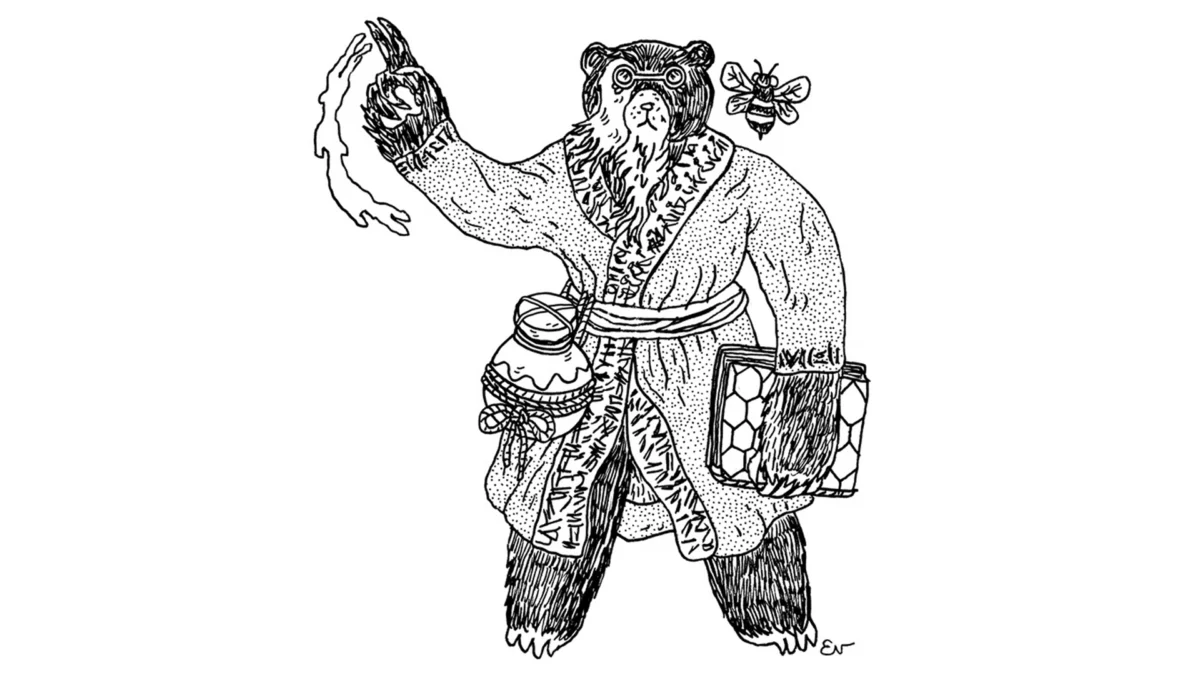
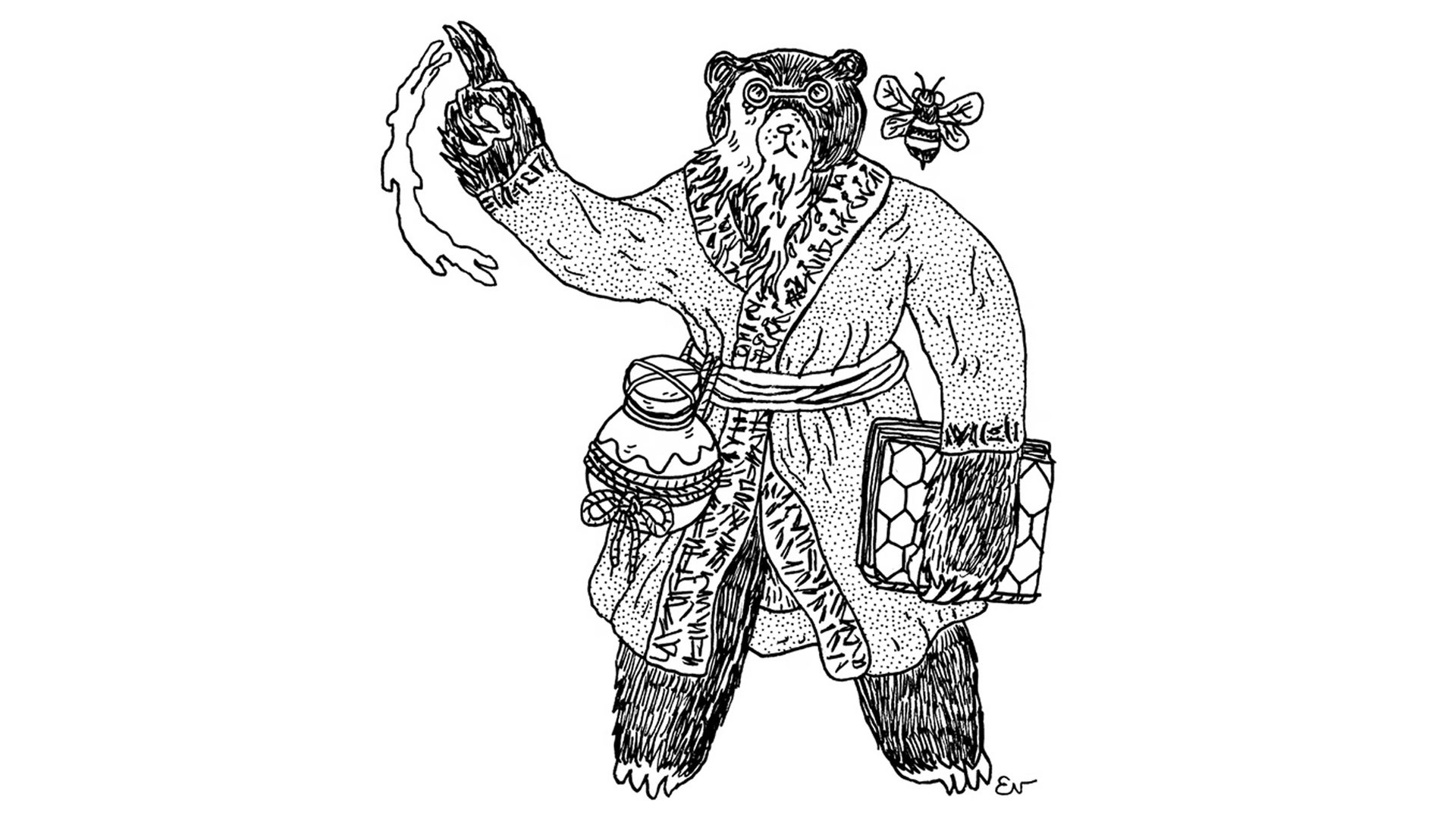
Her previous work on RPGs like Liminal High School suggests an ability to blend the mundane with the magical, creating visuals that are both relatable and fantastical. In "Hello Wizard I Have a Problem," her artwork is instrumental in conveying the humor and charm of the incompetent spellcasters. The provided images – depicting whimsical, slightly bewildered wizards amidst magical mishaps – immediately communicate the game’s lighthearted and chaotic spirit. The art isn’t just decorative; it’s an integral part of the storytelling, helping players visualize the bizarre situations their wizards find themselves in. Moreau’s unique artistic voice ensures that "Hello Wizard I Have a Problem" will not only be fun to play but also visually engaging and memorable.
The Crowdfunding Journey and Availability
The journey of "Hello Wizard I Have a Problem" from concept to reality has been significantly bolstered by a successful crowdfunding campaign on Kickstarter, a platform vital for independent game developers seeking to bring their unique visions to a wider audience.
Final Hours on Kickstarter
The crowdfunding campaign for "Hello Wizard I Have a Problem" has been active on Kickstarter, allowing backers to contribute to its development and secure early copies. The article notes that the campaign is "on Kickstarter until later this afternoon," indicating a narrow window for potential backers to join. The urgency of this deadline serves to generate immediate interest and action from the TRPG community. Successful Kickstarter campaigns not only provide the necessary funding for production and distribution but also help to build an early community of enthusiastic players, fostering engagement and anticipation for the game’s release.
Pledges and Future Prospects
The campaign offers clear and accessible pledge tiers designed to appeal to a range of backers. A pledge of £8 ($10 USD) secures a physical copy of the game, with an estimated delivery in June. This relatively low price point makes the physical edition attainable for many, encouraging broader participation. For those who prefer digital formats or are looking for a more budget-friendly option, a PDF version is available for £4 ($5 USD). These accessible tiers reflect the game’s overall philosophy of being easy to acquire and easy to play.
Beyond the Kickstarter campaign, there is a strong possibility that "Hello Wizard I Have a Problem" will be made available on Armstrong’s Itch.io page. Itch.io is a popular digital storefront for independent game developers, offering a platform for creators to distribute their work directly to players. This move would ensure the game’s continued availability after the Kickstarter concludes, reaching an even wider audience interested in indie TRPGs. The combination of physical and digital distribution channels maximizes the game’s reach and ensures that its unique brand of magical mayhem can be experienced by as many players as possible.
Broader Implications for the TRPG Community
"Hello Wizard I Have a Problem" is more than just a new game; it represents a significant contribution to the evolving landscape of tabletop roleplaying. Its design choices and thematic focus carry broader implications for how TRPGs are conceived, played, and perceived.
Redefining Fantasy Roleplaying
For decades, fantasy TRPGs have often been synonymous with epic quests, heroic deeds, and a serious tone. While there’s enduring appeal in these narratives, "Hello Wizard I Have a Problem" offers a refreshing counter-narrative. By celebrating incompetence and embracing absurdity, it expands the definition of what a fantasy RPG can be. This shift encourages other designers to explore unconventional themes and mechanics, potentially leading to a more diverse and vibrant TRPG market. It demonstrates that humor and lightheartedness can be just as engaging and impactful as high-stakes drama, opening doors for games that prioritize laughter and collaborative creativity.
A Gateway for New Players
The game’s emphasis on streamlined rules, quick setup, and collaborative storytelling positions it as an excellent "gateway game" for newcomers to tabletop roleplaying. The barrier to entry for many TRPGs can be high, with complex rulebooks and the perceived pressure of "getting it right." "Hello Wizard I Have a Problem" explicitly lowers these barriers. The collective GMing reduces the pressure on any single individual, and the focus on humorous failure removes the fear of making mistakes. This accessibility is crucial for expanding the TRPG hobby, inviting individuals who might otherwise be intimidated by more traditional, rules-heavy systems. Its improvisational nature also appeals to those with a background in theatre or sketch comedy, offering a familiar creative outlet within a new medium.
The Power of Independent Game Design
The successful crowdfunding and anticipated release of "Hello Wizard I Have a Problem" underscore the vital role of independent game designers and platforms like Kickstarter in fostering innovation within the TRPG space. Indie designers are often free from the commercial pressures and genre expectations that can constrain larger publishers, allowing them to experiment with bold new ideas and niche concepts. Sam Armstrong’s journey with this game exemplifies how a unique vision, supported by a passionate community, can bring fresh and exciting experiences to life. This continues a trend of independent games pushing the boundaries of the hobby, introducing novel mechanics, narrative structures, and thematic approaches that enrich the overall TRPG ecosystem.
Conclusion
"Hello Wizard I Have a Problem" is poised to be a delightful and impactful addition to the tabletop roleplaying game world. With its compelling premise of powerful yet incompetent wizards, its innovative collaborative GMing, and its expansive Problem Generator, it offers a truly unique and endlessly replayable experience. Drawing inspiration from the best of absurdist comedy, the game promises scenes of rapid-fire humor and spontaneous chaos, brought to life by the distinct artistic vision of Evlyn Moreau. As the Kickstarter campaign concludes, the anticipation for Sam Armstrong’s latest creation is palpable, promising to redefine expectations for fantasy TRPGs and welcome a new generation of players into the fold of magical mayhem. For anyone seeking a dose of laughter, creativity, and delightfully botched spellcasting, "Hello Wizard I Have a Problem" appears to be the perfect magical solution.