The Unseen Barrier: Why Mainstream Comics Struggle to Convert Readers in the Graphic Novel Era
The American comic book industry stands at a critical juncture, having undergone a profound transformation over the last four decades. The once-dominant "floppy" pamphlet, a staple of newsstands and spinner racks, has largely given way to the graphic novel collection as the preferred format for readership. While this shift has opened new avenues for discovery and creative expression, it has also exposed a fundamental flaw in the strategies of industry giants Marvel and DC Comics: an inability to provide a coherent, accessible reading experience that is costing them a significant share of the burgeoning book market.
The Shifting Sands of Comic Readership
For much of the 20th century, comic books thrived as an ephemeral, serialized medium, distributed through newsstands much like their pulp magazine predecessors. This model, which saw fiction sales dominated by pulp from the mid-19th century until the mid-20th century, began to crumble under the weight of television and paperback novels. By the 1970s, facing a collapsing distribution system and dwindling newsstand sales, the comic book industry found its lifeline in the creation of the direct market.
The direct market, a system of specialty comic shops that purchased books directly from distributors, was initially a savior. It allowed Marvel and DC to survive with sales figures far smaller than their golden age peaks and, crucially, provided an infrastructure for independent publishers and solo creators to distribute their work. This period fostered a renaissance in North American comic book storytelling, pushing the medium to unprecedented creative heights and exploring diverse narratives beyond the superhero archetype.
However, the direct market, while essential for survival, also inadvertently "ghettoized" comic books. No longer readily available in mainstream stores, comics became a niche interest, requiring new readers to actively seek out specialty shops. This created a barrier to casual discovery, limiting the potential for organic growth among the general public.
The Rise of the Graphic Novel and a New Market Paradigm
While traditional comic pamphlets remained largely confined to this specialty market, graphic novel collections began to break free. Packaged in book form, they could be stocked in general bookstores, libraries, and even mass-market retailers, placing them alongside other literary offerings and making them accessible to a much broader audience. This format offered a complete story arc, a more satisfying reading experience, and a perceived higher value, resonating with a generation accustomed to consuming narrative fiction in self-contained volumes.
The success of this format is undeniable. Publishers focusing on clear, accessible graphic novels have flourished, dramatically reshaping the market landscape. Scholastic Books, for instance, has emerged as a dominant force, commanding an astonishing 40% of the graphic novel market. In stark contrast, industry behemoths Marvel and DC Comics, despite their iconic characters and vast intellectual property, collectively hold less than 10% of this lucrative segment. This disparity highlights a critical failure in adapting to the new market paradigm.
Scholastic’s Model: Simplicity as a Superpower
A pivotal moment in this market shift was Scholastic’s licensing of Jeff Smith’s critically acclaimed Bone. Previously self-published through the direct market, Bone‘s success under Scholastic’s mainstream distribution network demonstrated the immense untapped potential of graphic novels presented clearly. This triumph spurred Scholastic to expand its comics publishing program, directly leading to creators like Raina Telgemeier becoming North America’s bestselling comic authors.
The reason for this success is disarmingly simple: clarity and accessibility. Imagine a new reader, intrigued by a recommendation, encountering Bone on a bookstore shelf. The path is obvious: start with Volume 1, then Volume 2, and so on, until the story concludes in Volume 9. This intuitive, sequential numbering requires no external research, no prior knowledge, and no convoluted decision-making. The same straightforward logic applies to the wildly popular manga market, where series like One Piece, despite boasting over a hundred volumes and numerous spin-offs, always guide readers to a clear starting point: Volume 1.
The Labyrinthine World of Mainstream Collections
Compare this clarity to the experience of a new reader attempting to delve into a major Marvel or DC storyline. Take, for example, Geoff Johns’ acclaimed Green Lantern: Blackest Night. An eager reader might pick up Blackest Night Saga, which collects the core miniseries. But is this the complete story? No. The narrative was originally designed to weave through multiple titles, creating a complex web of interconnected stories.
A quick online search reveals a bewildering array of related collections: Blackest Night: Green Lantern, Blackest Night: Black Lantern Corps Vol. 1 & 2, Blackest Night: Green Lantern Corps, and Blackest Night: Tales of the Corps. Which are essential? Which are supplementary? The answer is rarely clear, often depending on how "essential" a reader considers various creative contributions. Even if one attempts to focus solely on the main writer’s work, the reading order remains an impenetrable puzzle. The helpful blurbs from the original pamphlets – "The story continues in…" – are typically absent from collected editions, forcing readers to scour online forums for fan-made reading orders and then awkwardly jump between disparate volumes.
The alternative, a massive compendium like the Blackest Night 10th Anniversary Omnibus, comes with its own set of challenges: a prohibitive $150 price tag and a daunting 1700 pages, encompassing not just the main story but every single crossover comic, much of which may be irrelevant to a new reader. Even after extensive research, an "authoritative" reading order often remains elusive, leading to frustration and potential abandonment of the story altogether. The article’s author recounts spending over an hour researching Blackest Night only to conclude that the "correct" starting point might be Green Lantern by Geoff Johns Omnibus – Volume 2, itself a part of a larger, non-event-specific collection. This is not a user-friendly experience; it is a deterrent.
The "Volume 1" Paradox: Ryan North’s Fantastic Four
This problem is not confined to legacy events; it plagues contemporary releases as well. Ryan North’s Fantastic Four is cited as one of Marvel’s current best superhero comics, a series lauded for its quality and ability to engage new readers, including the author’s own daughter. Yet, even this acclaimed run falls victim to Marvel’s chaotic collection strategy.
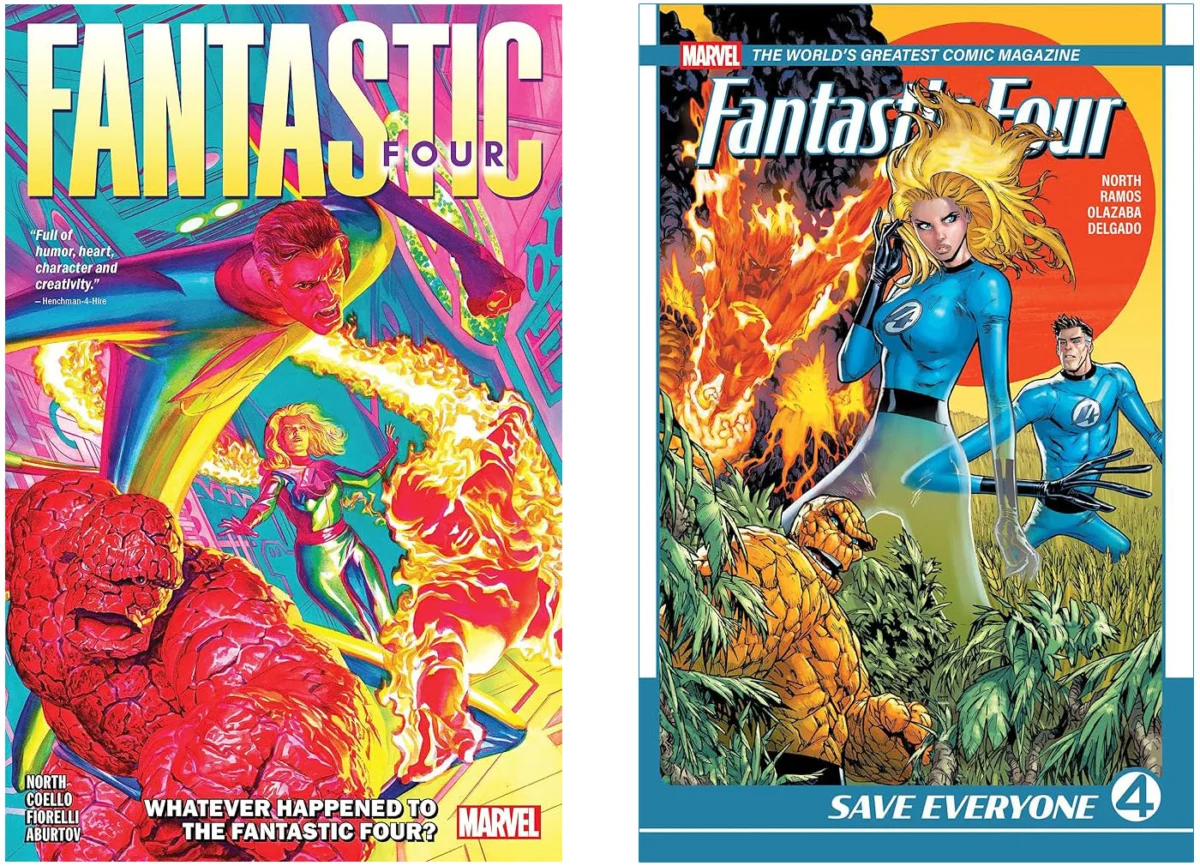
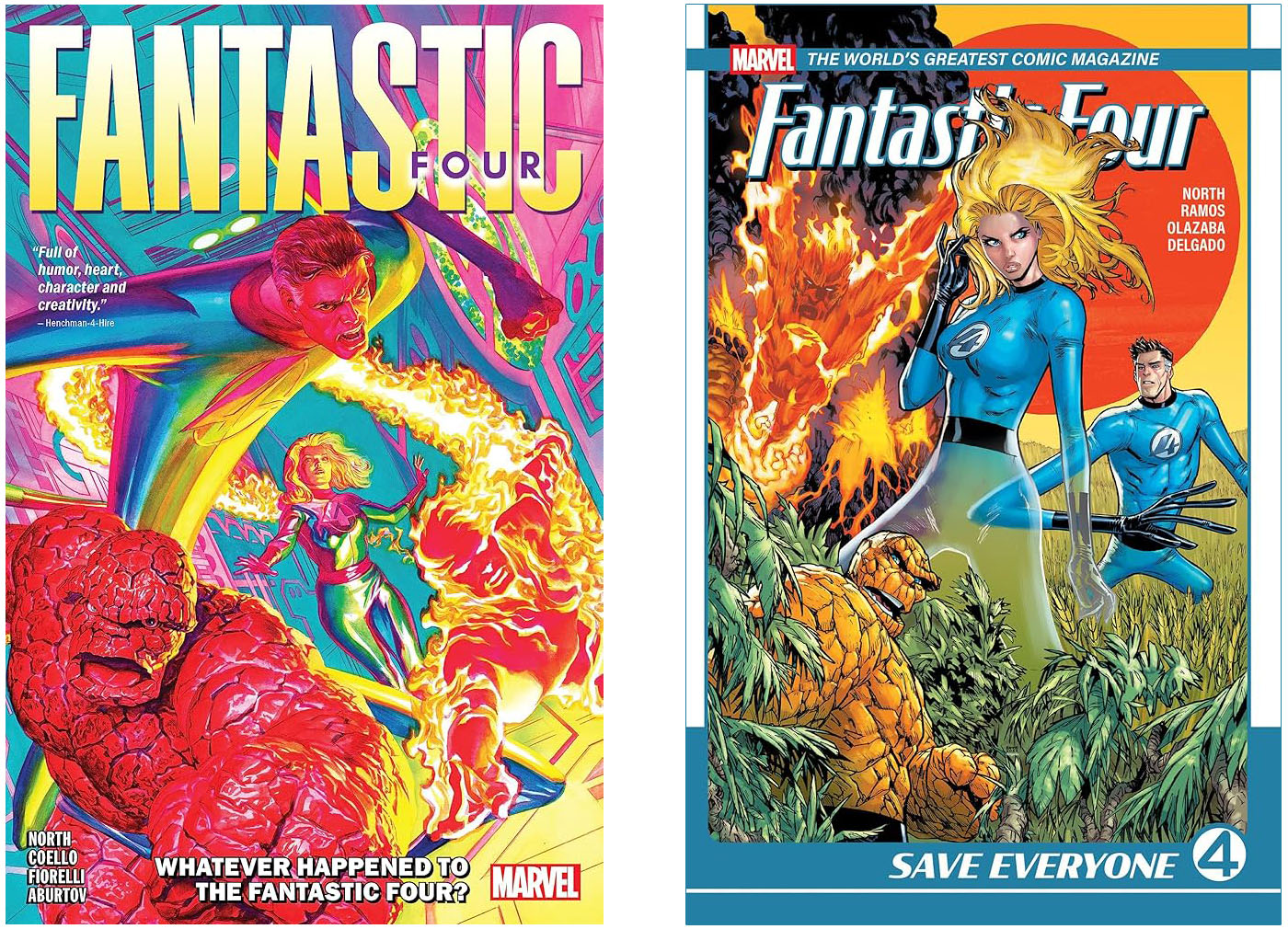
The pamphlet run itself is already complicated by Marvel’s incessant numbering reboots. But the collected editions are a masterclass in reader-unfriendliness. After publishing Fantastic Four Volumes 1-6 of North’s run, Marvel then released another Fantastic Four – Volume 1 by Ryan North. This creates an absurd dialogue for new readers:
Didi: "Hey, I’ve heard Ryan North’s Fantastic Four is great. Where should I start?"
Gogo: "You want Fantastic Four – Volume 1 by Ryan North."
Didi: "Great!"
Gogo: "But not that Fantastic Four – Volume 1 by Ryan North. You want this Fantastic Four – Volume 1 by Ryan North."
This isn’t an isolated incident. The market is saturated with multiple "Volume 1" titles for the same character, often from different eras or even different runs by the same creative team. This confusion extends beyond readers to retailers and distributors. The article notes an instance where the Amazon listing for the 2023 Fantastic Four – Vol. 1 by Ryan North incorrectly displayed the cover for the 2026 Fantastic Four – Vol. 1. Such errors lead to stocking mistakes, incorrect shipments, and ultimately, lost sales and disillusioned readers.
Even internal "reading guides" within the books themselves are problematic. One Fantastic Four Vol. 1 (the "other one") includes a guide meant to help readers follow the series, but it directs them to a completely different set of Fantastic Four graphic novels, including a different Fantastic Four Vol. 1, entirely unrelated to the volume they are holding. This level of inconsistency is baffling and actively sabotages the reader’s journey.
The problem isn’t limited to physical collections; digital comic platforms, which now account for a fifth of North American comic revenue, often replicate or even exacerbate these navigation challenges, making the morass even harder to traverse.
The Root Causes: Legacy and Pamphlet-First Mentality
Marvel and DC’s struggles stem from a combination of deeply ingrained publishing practices and the sheer weight of their history:
-
Vast Legacy Continuity: The extensive back catalog of decades of interconnected stories is a double-edged sword. While it offers a rich tapestry of narratives and some of the 20th century’s most iconic tales, it also makes a simple "start with Volume 1" approach unfeasible for the entire history of a character like Batman. Publishers don’t want new readers to wade through decades of potentially mediocre comics to reach a modern classic like Frank Miller’s Year One or Scott Snyder’s Court of Owls. However, the current strategy fails to curate clear, distinct entry points.
-
Pamphlet-Driven Storytelling: A significant portion of their content, both historical and contemporary, is still conceived and structured primarily to sell monthly pamphlets. Crossover events, while effective for driving sales of multiple titles in the direct market, become "labyrinthine puzzles" when collected, making the overarching story impenetrable. These mega-events often interrupt ongoing narratives in individual series, forcing readers to jump into unrelated stories they may not care about, fragmenting the reading experience. A classic example from 1968 illustrates this: a Doctor Doom story spanning Daredevil #37-38 and concluding in Fantastic Four #73. While Fantastic Four #73 has seen numerous reprints, the Daredevil issues have rarely been collected alongside their conclusion, and only one out of five Daredevil collections featuring the first two parts included the finale. This demonstrates a long-standing issue with collecting cohesive narratives.
-
Inconsistent Collection Strategies: The sheer variety of collection formats (omnibus, epic collections, masterworks, trade paperbacks, absolute editions) often lack a cohesive, overarching strategy, leading to further confusion. Collections are frequently rebooted, renumbered, or repackaged without clear differentiation, leaving readers bewildered about which version to buy or where to start.
A Path Forward: Solutions for Accessibility
To truly thrive in the graphic novel market, Marvel and DC must fundamentally shift their approach, prioritizing the long-term accessibility and discoverability of their collected editions over short-term pamphlet sales.
-
Unique Arc Titles: The most crucial step is to cease generic "Volume X" numbering and instead assign unique, memorable titles to story arcs. Frank Miller’s Batman: Year One would not hold its iconic status if it had simply been Batman – Volume 1 among a dozen others. While titling serialized work before completion can be challenging, authors like Charles Dickens, Alexandre Dumas, and Rumiko Takahashi have proven it possible. These unique titles should ideally be embraced on the pamphlets as well, perhaps accompanied by a consistent "legacy numbering badge" to satisfy collectors and maintain historical context.
-
Comprehensive Crossover Collections: For smaller crossovers, the full story should be included in every collection that features a part of the event. For large-scale "mega-events," a dual approach is necessary: a core narrative collection (e.g., Blackest Night: The Main Event) and a separate, comprehensive omnibus for completionists. Crucially, all collections must include clear, in-book reading guides or explicit references directing readers to other volumes if they wish to follow the full event.
-
Retroactive Story Titling: The vast backlog of Marvel and DC’s history needs curation. Instead of dry, academic labels like "Masterworks" or "Epic Collections," publishers should retroactively assign evocative, unique titles to significant story arcs. Collections like Green Lantern by Geoff Johns or Batman by Scott Snyder & Greg Capullo are a step in the right direction, but these often feel generic and creator-centric. Collaborating with original creators to find these titles where appropriate would be ideal, but even publisher-assigned titles like Spider-Man: Origins for the early Amazing Spider-Man issues would be infinitely more helpful than anonymous "Volume 1s" in generic archive lines. An archival line can exist for completionists, but it should be clearly labeled as such, distinct from mainstream reading editions.
-
Embrace the "Absolute" Model (with refinement): DC Comics’ Absolute titles have found considerable success, partly due to the high quality of the included comics, but also because of their clear, sequential numbering. If a reader hears about the greatness of Absolute Superman, they know precisely what to do: pick up Absolute Superman Vol. 1, then Vol. 2, and so on. This intuitive system is exactly what is missing from many other collections. The cautionary tale, however, lies in instances like Ultimate Spider-Man Vol. 1 (not to be confused with any of the other Ultimate Spider-Man Vol. 1s), which still requires readers to arbitrarily know when to pause their reading and jump to a different series for the story to make sense.
Implications and the Future
The current state of affairs represents a significant barrier to entry for new readers and a source of deep frustration for existing ones. It actively hinders the discoverability and long-term sales potential of otherwise excellent stories. In an era where graphic novels are increasingly embraced in schools, libraries, and mainstream bookstores, Marvel and DC are leaving millions of dollars and countless potential fans on the table.
The superhero genre, with its vast universes and multiple interpretations of iconic characters, possesses a unique advantage: an endless wellspring of stories. But this advantage can only be leveraged if these stories are presented in an accessible, understandable manner. By continuing to package them in a confusing, inconsistent way, Marvel and DC are effectively wrapping their most valuable assets in brown paper and randomly shuffling them, making them nearly impossible for the average consumer to find, enjoy, or recommend.
The solution is not to abandon pamphlets or continuity, but to shift the primary focus to the collected edition as the definitive, accessible product. This requires a strategic overhaul of how stories are conceived, titled, and collected, ensuring a user experience that is intuitive, inviting, and respectful of the reader’s time and money. Only then can these industry giants truly capitalize on the graphic novel boom and secure their place in the broader literary landscape for decades to come. The industry’s future, and the continued relevance of its most beloved characters, depends on it.