
Frostpunk’s Frozen Grip Extends to Tabletop with "Side Quest: Frostpunk" – A New Escape Room Challenge
FOR IMMEDIATE RELEASE
[City, State] – [Date] – The brutally unforgiving world of Frostpunk, renowned for its harrowing survival challenges and stark moral dilemmas, is set to expand its tabletop presence with the upcoming release of Side Quest: Frostpunk. This new "escape-room-in-a-box" experience promises a more streamlined yet equally thematic encounter with the post-apocalyptic ice age, inviting players to confront the harsh realities of survival from a fresh perspective. Scheduled for release at Gen Con this August, the game aims to offer a concentrated dose of the Frostpunk ethos, blending puzzle-solving with critical resource management within a tight timeframe.
Main Facts: A Chilling New Chapter in Tabletop Survival
Side Quest: Frostpunk represents the latest evolution of the critically acclaimed video game IP into the analog realm. Developed by Board&Dice and Lockme, with design expertise from Jakub Caban and Bartosz Idzikowski, this standalone puzzle game invites one to four players to embark on a perilous scouting mission beyond the frozen confines of their city. Unlike its predecessor, Frostpunk: The Board Game, which mirrored the video game’s sprawling complexity, Side Quest: Frostpunk distills the essence of survival into a focused, timed challenge.
The game centres on a party of scouts tasked with a crucial objective: locate and restore an abandoned generator within a mere six days – which translates to approximately 60 to 90 minutes of real-time gameplay. This tight deadline immediately establishes the familiar sense of urgency synonymous with the Frostpunk universe. Players will face a constant battle against the elements, managing vital resources such as temperature, steam cores, and food, all while deciphering intricate puzzles that demand both keen perception and creative problem-solving.
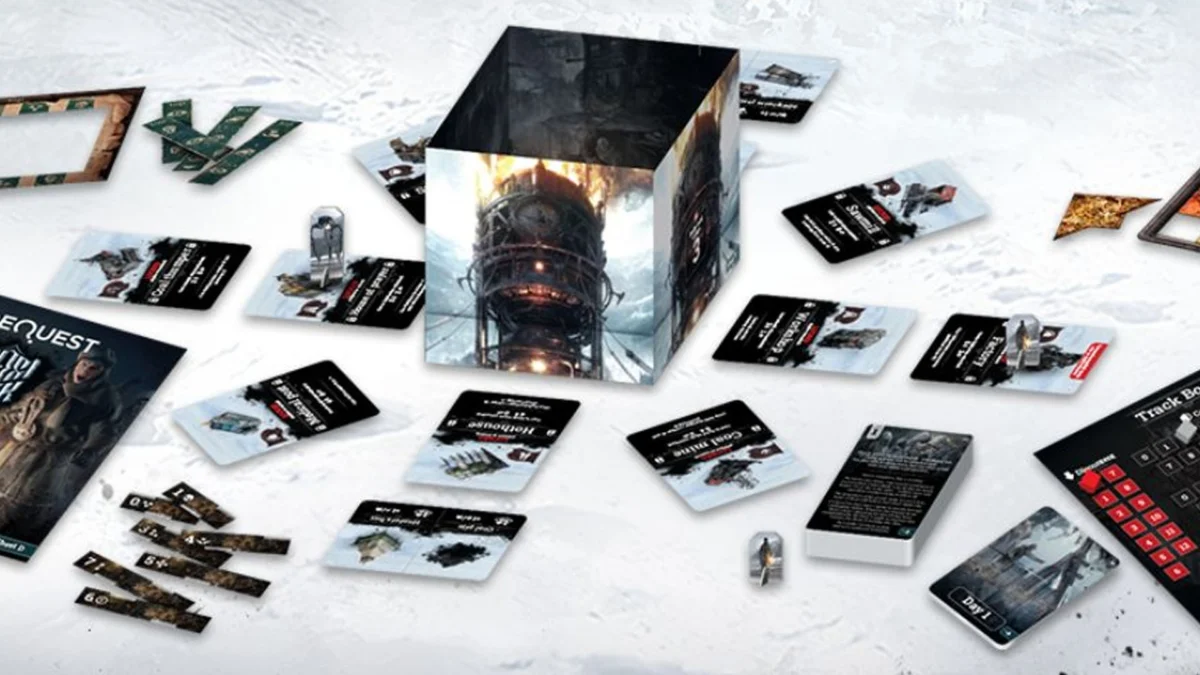
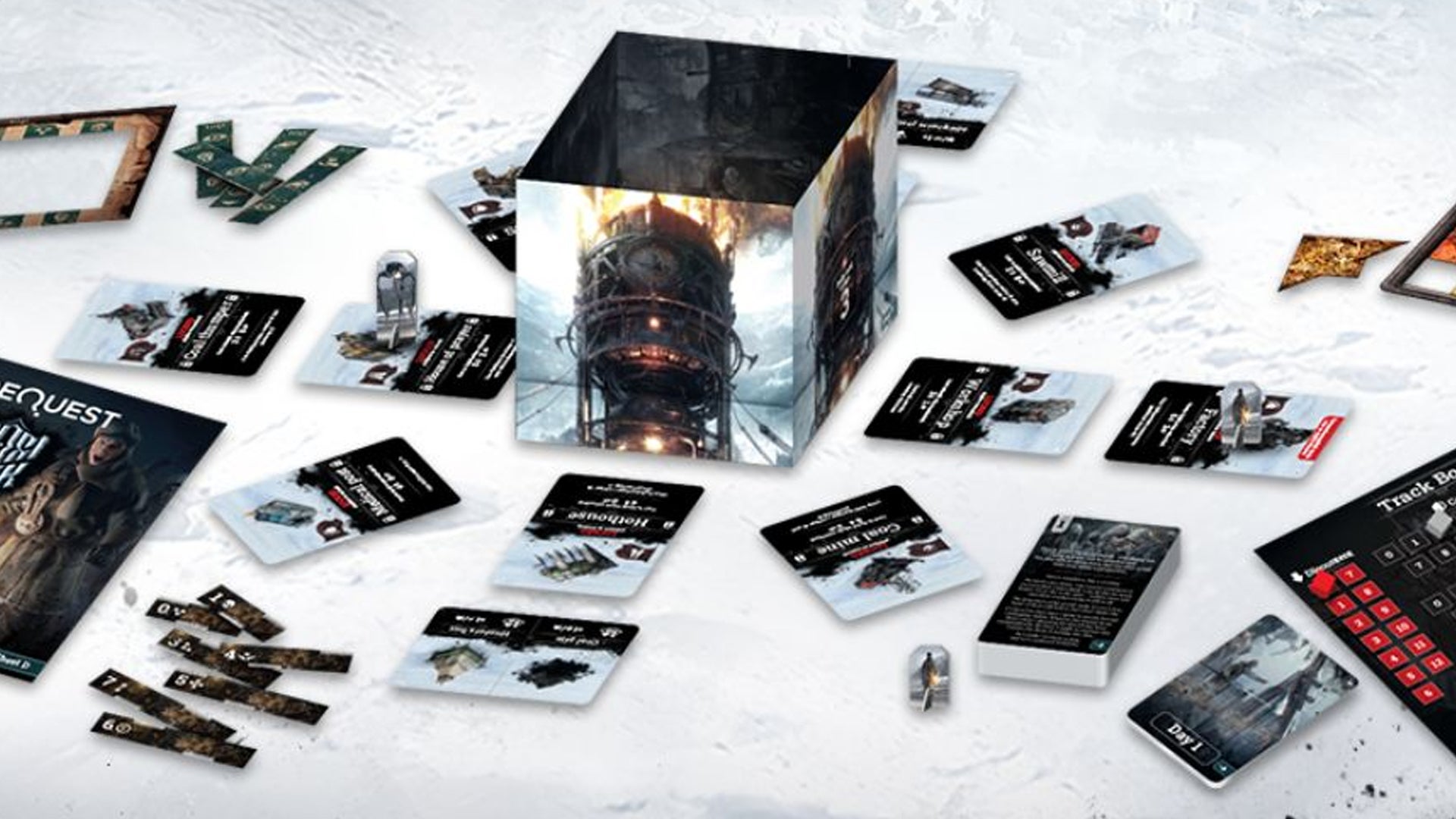
Visuals released thus far indicate a design that cleverly incorporates the IP’s iconic imagery. Game cards are arranged to form the familiar central generator, surrounded by a ring of other cards, suggesting an interactive layout that directly influences gameplay. Despite its thematic depth, the publishers rate its complexity at a modest two out of four, indicating a deliberate effort to make this adaptation more accessible to a broader audience, including those new to the Frostpunk world or escape room games.
The choice of designers, Jakub Caban and Bartosz Idzikowski, is a testament to the game’s narrative and puzzle-driven ambition. Known for their work on the Escape Tales series and previous Side Quest titles like those based on Nemesis and 7th Sea, their pedigree in crafting immersive, story-rich puzzle experiences positions them perfectly to translate Frostpunk‘s grim atmosphere and decision-making into an engaging tabletop format. This release at Gen Con in August means players will be able to dive into its frozen challenge even as the summer sun shines outside, offering a stark contrast to the game’s icy premise.
Chronology: From Digital Despair to Tangible Trials
The journey of Frostpunk from a digital phenomenon to a multifaceted tabletop franchise is a compelling narrative in itself, illustrating the enduring appeal of its unique blend of survival, strategy, and moral quandaries.
The Genesis of Despair: Frostpunk Video Game (2018)
The story begins in 2018 with the release of Frostpunk, a city-building survival video game developed by 11 Bit Studios. Set in an alternate late 19th century where a volcanic winter has plunged the Earth into a new ice age, humanity’s last hope rests in steam-powered cities built around massive heat generators. Players assume the role of the city’s leader, responsible for managing resources, constructing infrastructure, and making agonizing ethical decisions to ensure the survival of their populace. The game quickly garnered critical acclaim for its innovative gameplay, challenging difficulty, and profound exploration of human nature under extreme duress. Decisions often involved sacrificing individual liberties or well-being for the greater good, such as implementing child labour or draconian laws, leaving players wrestling with the moral implications of their choices. This brutal, unforgiving experience cemented Frostpunk‘s reputation as a thought-provoking masterpiece.
The Weight of the World: Frostpunk: The Board Game (2020 Kickstarter, 2022 Release)
Recognizing the immense potential for a physical adaptation, 11 Bit Studios partnered with Glass Cannon Unplugged (later acquired by Board&Dice) to bring Frostpunk to the tabletop. Frostpunk: The Board Game launched on Kickstarter in 2020, becoming a massive success, and was subsequently released to backers and retail in 2022. This adaptation faithfully translated the video game’s complex moral dilemmas, resource management, and city-building mechanics into a sprawling board game experience. Known for its intricate rulebook, significant table presence, and challenging gameplay, it captured the essence of its digital counterpart, offering a deep, immersive, and often gruelling experience for board game enthusiasts. Its sheer physical presence, with a box size often joked about as being large enough to "rent in London for £2,000 a month," underscored the depth and scope of the adaptation. It was a testament to how faithfully the designers embraced the core difficulty and narrative weight of the original.
The Rise of the "Side Quest" Series
In parallel, the tabletop industry has seen a surge in popularity for "escape-room-in-a-box" games, offering narrative-driven puzzle experiences that can be enjoyed at home. Publishers Board&Dice and Lockme have been prominent players in this space with their Side Quest series. This series distinguishes itself by taking established intellectual properties – often from other successful board games or RPGs – and reimagining them as focused, one-shot puzzle adventures. Previous successful iterations, such as Side Quest: Nemesis and Side Quest: 7th Sea, demonstrated the viability of translating complex game worlds into accessible, narrative-rich puzzle challenges, proving that a condensed format could still deliver thematic resonance and engaging gameplay.
A New Perspective: Announcement of Side Quest: Frostpunk
It is within this evolving landscape that Side Quest: Frostpunk emerges. The announcement of this new adaptation signals a deliberate pivot towards a more concise and puzzle-centric interpretation of the Frostpunk universe. Instead of managing an entire city, players are thrust into the shoes of a small scouting party, focusing on a specific, urgent mission. This shift allows for a different kind of engagement, emphasizing problem-solving and immediate tactical decisions over long-term strategic planning. The game was quietly teased and officially announced for a summer 2024 release, with its debut slated for Gen Con, one of the largest tabletop gaming conventions in the world, ensuring a high-profile launch for this intriguing new chapter. This chronological progression highlights a strategic diversification of the Frostpunk brand, reaching new audiences while offering existing fans novel ways to interact with their beloved, albeit bleak, world.
Supporting Data: Anatomy of a Frozen Puzzle
To fully appreciate Side Quest: Frostpunk, it is crucial to delve into the foundational elements that define the Frostpunk universe, the mechanics of escape room games, and the design philosophy of its creators.
The Bleak Canvas: The Frostpunk Universe
The enduring appeal of Frostpunk lies not just in its challenging gameplay but in its meticulously crafted lore and atmosphere. The Great Frost, an apocalyptic event plunging the world into perpetual winter, serves as the backdrop for humanity’s desperate struggle. Cities huddle around colossal steam generators, the last bastions of warmth and civilization. The aesthetic is one of gritty steampunk industrialism, where survival is paramount, and every resource is precious. This world is defined by scarcity, extreme temperatures, and the constant threat of societal collapse due to starvation, illness, or civil unrest. The moral choices presented are rarely clear-cut, often forcing players to choose between two evils, embodying the philosophy of "the end justifies the means" in the most chilling ways. This rich, thematic tapestry provides an ideal, albeit bleak, setting for a narrative-driven puzzle game where every decision could mean the difference between life and frozen death.
The Mechanics of the "Escape Room in a Box"
"Escape-room-in-a-box" games are designed to replicate the immersive, puzzle-solving experience of physical escape rooms within a portable format. Typically, they involve a series of interconnected puzzles, often presented through cards, booklets, or physical components, that players must solve to progress through a narrative or achieve a specific objective within a time limit. Puzzle types vary widely, encompassing:
- Perception puzzles: Requiring keen observation of images, symbols, or text.
- Logic puzzles: Demanding deductive reasoning and pattern recognition.
- Cipher and code breaking: Decrypting hidden messages.
- Spatial reasoning: Arranging components or understanding layouts.
- Creative problem-solving: Thinking outside the box to combine clues or use items in unexpected ways.
The time restriction is a hallmark, injecting urgency and pressure, much like the constant threat of death in Frostpunk. While many are single-play experiences, their appeal lies in the narrative immersion and the satisfaction of collaborative problem-solving. For Side Quest: Frostpunk, this format is particularly apt, as the core Frostpunk experience is about urgent problem-solving under dire circumstances.
Design Philosophy: Jakub Caban and Bartosz Idzikowski
The choice of designers for Side Quest: Frostpunk is highly strategic. Jakub Caban and Bartosz Idzikowski are renowned in the tabletop community for their work on the Escape Tales series, which includes popular titles like Escape Tales: The Awakening and Escape Tales: Low Memory. These games are celebrated for their intricate storylines, challenging yet fair puzzles, and the way they integrate player choices into branching narratives. Their Side Quest adaptations of Nemesis and 7th Sea further demonstrate their skill in distilling the essence of complex IPs into digestible, puzzle-focused experiences while retaining thematic integrity. Their design philosophy often involves:
- Narrative Integration: Puzzles are not just abstract challenges but are deeply woven into the game’s story, advancing the plot and deepening player immersion.
- Layered Complexity: While accessible, their puzzles often have multiple layers, rewarding careful observation and lateral thinking.
- Thematic Cohesion: Ensuring that the game mechanics and challenges always reinforce the setting and tone of the source material.
For Frostpunk, this means players can expect puzzles that feel organically tied to the struggle for survival, perhaps involving deciphering schematics for the generator, calculating fuel efficiency, or interpreting distress signals in the frozen wasteland.
Visuals and Components: Glimpses of a Frozen Wasteland
While specifics remain under wraps to preserve the puzzle experience, images of Side Quest: Frostpunk offer tantalizing clues. The arrangement of cards to form the city’s central generator surrounded by a ring of other cards strongly suggests an evolving game state or a modular puzzle system. This could represent the generator’s various components that need repair, or the different areas of the wasteland the scouts are exploring. The ring of cards might indicate different locations, resources to collect, or threats to overcome. The explicit mention of managing temperature, steam cores, and food implies that these resources will likely be tracked on specific cards or boards, their depletion or gain tied directly to puzzle solutions or narrative events. The aesthetic, as seen in the artwork, remains faithful to Frostpunk‘s grim, industrial, and snow-laden visual identity, ensuring a strong connection to the source material.
Complexity Scale: Balancing Accessibility and Thematic Depth
The publisher’s rating of "two out of four" on the complexity scale is a critical piece of information. It positions Side Quest: Frostpunk as more challenging than a casual party game but significantly less daunting than its board game predecessor or other heavy strategy games. This mid-range complexity suggests that while the puzzles will require genuine thought and effort, they won’t demand hours of rulebook study or deep strategic planning. This balance is crucial for an escape room game, which thrives on immediate engagement and a relatively quick resolution. It implies that the thematic depth of Frostpunk will be conveyed through compelling narrative and impactful choices, rather than through an overwhelming array of mechanics, making it an attractive entry point for those curious about the Frostpunk universe without committing to a full-fledged city-management simulation.
Official Responses: Unveiling the Intentions
While Board&Dice and Lockme have, understandably, maintained a degree of secrecy surrounding the specific puzzles of Side Quest: Frostpunk – a standard practice for escape room games where discovery is part of the core appeal – their broader intentions for the game can be inferred from their history and the nature of the Frostpunk IP.
From the Publishers (Board&Dice and Lockme): A Strategic Adaptation
Though explicit quotes are scarce, the decision to adapt Frostpunk into the Side Quest format speaks volumes. The publishers likely aimed to:
- Expand the Frostpunk Audience: "We believe that the Frostpunk universe, with its compelling narrative and intense atmosphere, deserves to be experienced by as many players as possible," a hypothetical statement from a publisher representative might read. "While Frostpunk: The Board Game caters to a dedicated strategy audience, Side Quest: Frostpunk offers a more accessible, puzzle-driven entry point that captures the core essence of survival and moral choice in a compact, engaging format."
- Offer a Unique Play Experience: "Our goal with Side Quest: Frostpunk was to distil the harrowing intensity of the original into a focused, one-to-one-and-a-half-hour adventure," they might explain. "Players will feel the pressure of the clock, the scarcity of resources, and the weight of their decisions, all while solving clever puzzles that immerse them directly into a scout’s perilous journey. It’s a different flavour of Frostpunk, but no less impactful."
- Leverage Designer Expertise: The partnership with Jakub Caban and Bartosz Idzikowski underscores a commitment to quality puzzle design. "Working with Jakub and Bartosz ensures that the puzzles are not only challenging but also deeply integrated into the Frostpunk narrative," a publisher might note. "Their track record with the Escape Tales series and other Side Quest titles proves they can craft a truly memorable and thematic puzzle experience."
From the Designers (Jakub Caban and Bartosz Idzikowski): Crafting Thematic Puzzles
The designers, given their background, would likely emphasize the challenge and satisfaction of translating Frostpunk‘s unique themes into puzzle mechanics:
- Integrating Core Frostpunk Themes: "Adapting Frostpunk was an exciting challenge," Caban might comment. "How do you convey the constant struggle against cold, hunger, and societal breakdown through puzzles? We focused on mechanics that force players to make difficult trade-offs and prioritize, much like in the original game. Every puzzle isn’t just a mental exercise; it’s a fight for survival."
- The Narrative Arc: Idzikowski could add, "The scout mission provides a fantastic narrative framework. It’s about exploration, immediate danger, and the desperate hope of finding a solution. We’ve woven an intriguing storyline around the puzzles, ensuring that players feel like they are truly discovering secrets and making critical decisions that shape their fate."
- Balancing Challenge and Fun: "Our aim was to create a game that feels like Frostpunk – tough, relentless, but ultimately rewarding," Caban might conclude. "The 2/4 complexity rating means it’s accessible, but don’t mistake that for easy. Players will need all their wits and creativity to brave the frozen wasteland and bring that generator back online."
From 11 Bit Studios (IP Creators): Endorsing the Expansion
While 11 Bit Studios is primarily the IP holder and not directly involved in the development of Side Quest: Frostpunk, their licensing of the property to Board&Dice and Lockme signifies their confidence in the adaptation. They would likely view this as a positive expansion of the Frostpunk universe:
- Broadening IP Engagement: "It’s always exciting to see our worlds brought to life in new and innovative ways," a spokesperson from 11 Bit Studios might offer. "Side Quest: Frostpunk offers a fresh perspective on the challenges our citizens face, providing a concise yet intense experience that complements both the video game and the larger board game. It’s another excellent avenue for players to immerse themselves in the grim beauty of Frostpunk."
- Maintaining Thematic Integrity: "We trust the creative teams at Board&Dice and Lockme to uphold the thematic integrity and challenging spirit of Frostpunk," they could add. "The escape room format, with its inherent urgency and problem-solving focus, is a natural fit for our narrative of desperate survival."
These hypothetical responses reflect the strategic considerations and creative ambitions behind bringing Frostpunk to this new tabletop format, emphasizing accessibility, thematic fidelity, and a unique gameplay experience.
Implications: The Future of Frost and Puzzles
The introduction of Side Quest: Frostpunk carries significant implications, not only for the Frostpunk franchise but also for the broader landscape of intellectual property adaptations within the tabletop gaming industry.
Diversifying the Frostpunk Franchise
This new escape room game represents a strategic diversification for the Frostpunk IP. Initially a niche but highly acclaimed PC game, its move to a complex board game broadened its appeal to dedicated tabletop strategists. Now, Side Quest: Frostpunk targets a different segment: those who enjoy narrative-driven puzzles, escape room experiences, or shorter, more focused gameplay sessions. This expansion allows the franchise to:
- Attract New Players: Individuals intimidated by the video game’s difficulty or the board game’s extensive rules might find the 60-90 minute, 2/4 complexity escape room a perfect entry point into the Frostpunk universe. It offers a taste of the grim atmosphere and challenging decisions without the significant time investment.
- Offer Complementary Experiences: For existing fans, it provides a novel way to engage with the lore. Instead of managing an entire city, they experience the gritty reality of a scout on a crucial mission, adding another layer to their understanding of the Frostpunk world. It’s a side quest, literally, that enriches the main narrative.
- Maintain Relevance: By continually adapting and evolving, the Frostpunk IP remains fresh and relevant in the gaming community, preventing stagnation and ensuring continued interest in its unique themes.
The Evolving Landscape of IP Adaptations
Side Quest: Frostpunk is a prime example of a growing trend in tabletop gaming: the creative adaptation of video game (and other media) IPs into diverse analog formats. Beyond traditional board games, we are seeing more RPGs, card games, and now, escape room games leveraging established universes. This trend implies:
- Flexibility of Formats: Publishers are recognizing that not every IP needs to become a sprawling, heavy Eurogame. Lighter, more focused formats like escape rooms or card games can effectively capture the essence of an IP for different player preferences and time commitments.
- Focus on Narrative and Theme: The success of Side Quest games highlights the importance of strong narrative and thematic integration. Players want to feel like they are in the Frostpunk world, not just solving abstract puzzles.
- Collaborative Innovation: The partnership between an IP holder (11 Bit Studios), a board game publisher (Board&Dice), and a puzzle game specialist (Lockme) demonstrates the collaborative innovation driving this trend, bringing together diverse expertise to create unique experiences.
Accessibility vs. Thematic Dilution
The decision to make Side Quest: Frostpunk comparatively "breezy" in terms of gameplay complexity raises an interesting question about accessibility versus thematic dilution. Frostpunk is famous for its brutal difficulty and unrelenting grimness. Can a shorter, lighter puzzle game truly capture that essence?
- Maintaining the Core Message: The designers’ focus on resource management (temperature, food, steam cores) and the six-day time limit are crucial in retaining the Frostpunk feel of desperate urgency. The moral dilemmas, while perhaps less grand in scope than city-wide policies, will likely manifest in smaller, immediate choices during the scout mission.
- The Power of Narrative: The strength of the Side Quest series lies in its narrative immersion. By crafting a compelling storyline for the scout mission, the game can still convey the bleakness and difficult choices of the Frostpunk world, even if the mechanics are simplified. The "intriguing storyline" promised will be vital here.
- A Different Kind of Challenge: Instead of macro-level strategic challenge, Side Quest: Frostpunk offers a micro-level, immediate intellectual challenge. It’s about solving the problem directly in front of you with limited resources and time, which is a very Frostpunk experience in itself.
Market Reception and Player Experience
The reception of Side Quest: Frostpunk will be a key indicator of its success.
- Hardcore Frostpunk Fans: Will appreciate another way to engage with the lore, especially if the puzzles are clever and the narrative compelling. They might see it as a fun, quick thematic diversion.
- Escape Room Enthusiasts: Will likely be drawn to the proven design team and the promise of a well-crafted puzzle experience. The Frostpunk theme could be an added bonus, offering a unique setting.
- Casual Gamers: Could find this a low-barrier-to-entry way to experience the Frostpunk world, potentially leading them to explore the video game or the full board game.
Ultimately, Side Quest: Frostpunk represents a calculated evolution for a beloved IP. By embracing the strengths of the escape room genre – narrative focus, urgent puzzle-solving, and a contained experience – it promises to offer a unique and chilling addition to the tabletop gaming landscape. As players gather at Gen Con, or in the comfort of their homes this summer, they will face a new kind of frozen puzzle, where survival depends not on the might of a city, but on the ingenuity and resolve of a few brave scouts. Whether they make it back to the warmth of their generator, however, remains entirely up to them.



Leave a Comment