Star Trek: Strange New Worlds Boldly Goes into the Abyss of Horror with ‘The Griffin Incident’
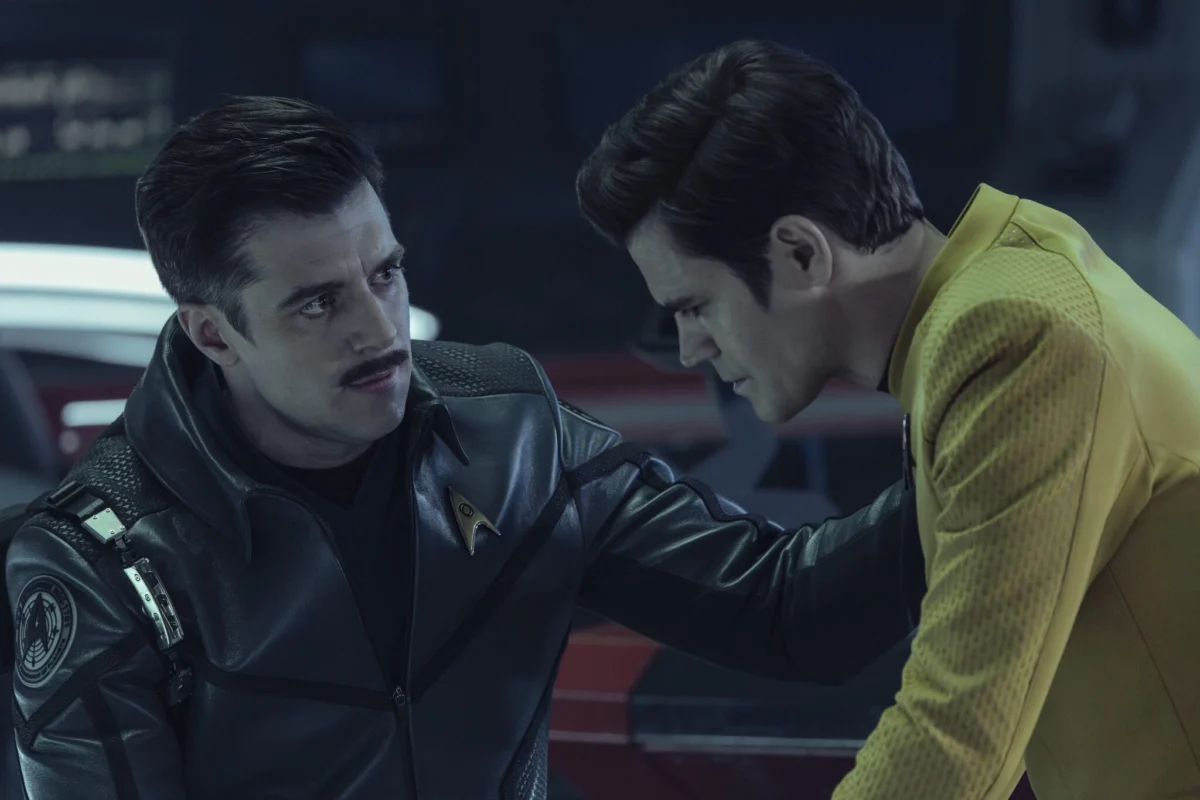
Star Trek, a franchise synonymous with optimistic exploration, scientific discovery, and humanity’s bright future, has always maintained a peculiar and often uncomfortable relationship with the horror genre. While its core tenets champion logic, reason, and overcoming the unknown through understanding, horror frequently thrives on the inexplicable, the irrational, and the psychological torment of characters. This inherent tension has led to a bizarre, and not always successful, history of attempts to infuse terror into the Utopian vision of Starfleet.
Now, Star Trek: Strange New Worlds (SNW), a series lauded for its episodic versatility and willingness to experiment with diverse genres, has once again plunged into the unsettling depths of fear with its latest offering, "The Griffin Incident." This marks the show’s third foray into horror, following the divisive "All Those Who Wander" and the more effective "Shuttle to Kenfori," and it proves to be a chilling, character-driven exploration of personal demons, pushing the boundaries of what a Star Trek horror episode can achieve, even while sidestepping one of the franchise’s most enduring conventions: the scientific explanation.
A Troubled History: Star Trek’s Past Encounters with Horror
The road to successful Star Trek horror is paved with noble intentions and mixed results. From the earliest days of the franchise, creators have grappled with the challenge of generating genuine fear within a framework built on hope and reason.
The Original Series (TOS), despite its often campy tone, made early stabs at the macabre. "Catspaw," an episode from the second season, is frequently cited as a bewildering attempt at gothic horror. Featuring aliens masquerading as witches and castles, it leaned heavily into supernatural tropes without fully committing to the psychological dread or visceral scares necessary for effective horror. Its motivations remain "passing understanding," as the original article notes, leaving viewers with more bewilderment than genuine fright.
Star Trek: The Next Generation (TNG), with its more sophisticated storytelling, delivered several notable, if flawed, horror-adjacent episodes:
- "Conspiracy" (Season 1) presented a grotesque body horror narrative involving parasitic aliens infiltrating Starfleet Command. While visually unsettling, its execution often felt more shocking than truly scary, lacking the sustained tension required to truly burrow under the skin.
- "Schisms" (Season 6) delved into psychological horror, with crew members experiencing strange abductions, sensory deprivation, and memory manipulation by extradimensional entities. It aimed for a creeping dread but sometimes felt too sterile, sacrificing emotional impact for intellectual mystery.
- "Sub Rosa" (Season 7) is perhaps TNG’s most ridiculed attempt at horror. A romantic ghost story involving Dr. Crusher and an ethereal lover, it veered into the ridiculous, earning widespread criticism for its campiness and stark departure from the show’s established tone and scientific principles.
- "Genesis" (Season 7), another late-series episode, featured a bizarre de-evolution plotline, leading to crew members transforming into primitive forms. While intended to be horrifying body horror, it quickly became absurd, failing to elicit genuine terror.
Star Trek: Deep Space Nine (DS9), often darker and more morally ambiguous, had a natural affinity for grittier themes. "Empok Nor" (Season 5) saw a salvage team encountering a derelict Cardassian station, evoking clear Alien-esque vibes. Garak’s psychological breakdown and the trapped, violent Cardassian soldier provided moments of tension, but the episode struggled to maintain a consistent horror atmosphere, ultimately feeling more like a suspenseful action piece than true horror.
Star Trek: Voyager also took its turn, with mixed results. "The Haunting of Deck Twelve" (Season 6) promised a ghost story in space but famously delivered "no haunting and no scenes on deck 12," a testament to its narrative misdirection. More significantly, "Sacred Ground" (Season 3) proved to be a controversial episode due to its embrace of a supernatural explanation for a mysterious phenomenon, actively "pissing off" some viewers who expected a scientific resolution. This precedent is crucial for understanding "The Griffin Incident’s" own narrative choices.
Finally, Star Trek: Enterprise saw both hits and misses in its attempts. "Impulse" (Season 3) stands out as a genuinely effective zombie-esque horror episode, where a stranded ship full of infected Vulcans provided visceral, unsettling scares. Conversely, "Strange New World" (Season 1) failed to capture the same dread, its execution falling flat.

Strange New Worlds’ Prior Ventures into Fear
Strange New Worlds arrived with a promise of returning to episodic storytelling and genre experimentation, and horror was firmly on its agenda. The first season’s "All Those Who Wander" was a visceral, Gorn-centric horror experience, focusing on the terrifying, predatory nature of the species. While praised for its creature design and tension, some felt it veered too far into generic action-horror, becoming a "truly dreadful" low point for some viewers due to its relentless brutality.
Season three’s "Shuttle to Kenfori" offered a more nuanced take on terror, blending psychological tension with a creeping sense of dread. It proved to be a more successful attempt, demonstrating SNW’s growing comfort with the genre. These earlier efforts set the stage for "The Griffin Incident," which pushes the psychological horror further than ever before.
"The Griffin Incident": A Deep Dive into Psychological Terror
"The Griffin Incident" immediately establishes a chilling atmosphere, harkening back to classic Star Trek animated adventures like Larry Niven’s "The Slaver Weapon" with its focus on a small landing party. The episode centers on three key characters – Spock, La’an Noonien-Singh, and a pre-Enterprise James T. Kirk – returning from a "Future Leaders of Starfleet" conference. Their journey home is interrupted by a distress call, leading them to the U.S.S. Griffin, a Starfleet vessel that has been missing for years without a trace.
The initial mystery deepens upon boarding. The Griffin is found adrift, seemingly without power, yet inexplicably maintains artificial gravity and a breathable atmosphere. This immediate violation of known physics sets a disquieting tone, signaling that something profoundly unnatural is at play. This is just the beginning of the "weirdness" that unfolds, as the trio soon discover they are not alone, nor are they safe from the ship’s insidious influence.
Unlike "The Slaver Weapon," the wider Enterprise cast does appear, but the narrative lens remains tightly focused on the psychological torment of Spock, La’an, and Kirk. The Griffin‘s unknown force preys on their deepest, most personal fears, manifesting as intense, hyper-realistic hallucinations designed to break their resolve and turn them against each other.
Unveiling Inner Demons: Character Journeys
"The Griffin Incident" excels by using the horror elements not as mere jump scares, but as a crucible for profound character development, forcing each protagonist to confront their innermost anxieties.
La’an Noonien-Singh: The Augment’s Burden
La’an’s storyline is particularly harrowing, building directly from previous episodes. Her augment genes, a source of both strength and profound insecurity, are central to her torment. Last week’s "Valles Marineris" revealed her hand was broken punching a raptor, yet she felt no pain – a chilling indicator of her altering body chemistry. Dr. M’Benga’s half-joking query about whether she planned "to enslave humanity" and her non-committal response underscored her internal conflict. On the Griffin, these fears are amplified. She experiences visions where her augment abilities spiral out of control, leading her to nearly fatally stab Kirk in a terrifying climax, a stark manifestation of her fear of becoming the monster she, as a descendant of Khan, is constantly battling against.
Beyond her genetic anxieties, La’an, as Chief of Security, grapples with the universal fear of helplessness. She discovers the Griffin‘s security chief’s logs, detailing the crew’s descent into madness and self-harm, with nothing that could be done to stop it. This resonates deeply with La’an’s professional duty to protect her crew, mirroring her own growing inability to maintain control in the face of the Griffin‘s malevolent influence. The complete lack of any remains of the original crew only adds to her overwhelming sense of dread and failure.

Spock: The Logic of Fear
Spock’s psychological ordeal on the Griffin is a masterclass in exploiting his internal struggle between his Vulcan logic and burgeoning human emotions. His hallucination takes the form of T’Pring, his fiancée, but twisted into a cruel mirror of his deepest anxieties about their relationship and his identity.
What makes this particular hallucination so effective is its initial verisimilitude. The hallucinatory T’Pring acts precisely as the real T’Pring would if unexpectedly transported to the Griffin, creating just enough doubt in Spock’s mind to make him question reality. This manipulation reaches its peak when the fake T’Pring straps Spock to a biobed and, in a truly shocking and visceral moment, clips the points off his ears. This act is not just physical mutilation; it’s a symbolic assault on his Vulcan identity, forcing him to confront the very essence of who he is and the path he is on.
Strange New Worlds has meticulously charted Ethan Peck’s younger Spock’s journey, from his more emotionally expressive demeanor in "The Cage" to the stoic, logic-driven officer seen in TOS. The hallucinatory T’Pring’s declaration that Spock should simply "cut the tapers off his ears and be done with it" serves as a brutal "bucket of metaphorical ice water," a pivotal moment that could either solidify his commitment to Vulcan logic or, paradoxically, drive him further into an exploration of his human half as a rejection of such an extreme, emotionally manipulative demand.
James T. Kirk: The Weight of Legacy and Family
While Paul Wesley’s recurring appearances as James T. Kirk have drawn some humorous, meta-commentary (like the delightful fake novel cover titled Star Trek: Why Are You Always on My Ship?), "The Griffin Incident" solidifies his character’s emotional depth. Wesley’s portrayal, often channeling William Shatner’s early, more easygoing Kirk, takes a poignant turn as the Griffin‘s influence forces him to confront his complicated personal life.
One of SNW’s greatest strengths has been its ability to weave together disparate threads of Kirk’s canonical backstory into a more coherent and emotionally resonant narrative than previously afforded by 1960s television and intermittent films. "The Griffin Incident" powerfully addresses two key relationships:
- Brother Sam Kirk: In TOS, Kirk’s brother, Sam, and his family were largely footnotes, appearing briefly in "What Are Little Girls Made Of?" and then being summarily killed in "Operation: Annihilate!" with seemingly minimal emotional impact on Captain Kirk. SNW recontextualizes this. The hallucinatory conversation between Jim and Sam about the struggles of balancing a Starfleet career with family life is genuinely "lovely" and heart-wrenching. Sam’s admission, "I don’t," when asked how he manages a family, is a poignant moment that adds immense weight to Jim’s own future choices and the tragic inevitability of Sam’s death. The irony of learning at the episode’s conclusion that the real Sam Kirk is on leave visiting his family underscores the cruel deception of the hallucination.
- Carol Marcus and David: "Subspace Rhapsody" (Season 2) established that Kirk was seeing Carol Marcus and she was pregnant with their son, David, characters introduced in Star Trek II: The Wrath of Khan. This relationship, while central to Khan, largely faded from subsequent films. "The Griffin Incident" reveals Kirk and Carol have broken up, and Kirk is struggling, and failing, to be a consistent part of David’s life. He misses a planned rendezvous with them due to the Griffin detour, adding a layer of regret and foreshadowing the complex, often distant, relationship he will have with his son. This adds significant emotional gravitas to Kirk’s character, making his future sacrifices and isolated command feel more deeply earned.
The Deceptive Rescue: A Collective Nightmare
One of the episode’s high points occurs when the trio believes Enterprise has received their distress call. A landing party beams over, including Captain Pike, Number One, Ortegas, Uhura, and Sam Kirk. This brief respite, however, is another layer of the Griffin‘s insidious deception.
Subtle cues hint at the unreality: Uhura reacts with an "uncharacteristic lack of understanding" to an accidental transporter mishap involving La’an and Ortegas. Later, Pike and Number One join the hallucination of T’Pring in trying to mutilate Spock, a horrifying betrayal that shatters the illusion. The sequence masterfully builds hope only to brutally yank it away, emphasizing the characters’ profound isolation and the unrelenting nature of the psychological assault. The reveal that the real Sam Kirk is safely on leave further cements the emotional gut-punch of the fabricated reunion.
The Unexplained Horror: A Deliberate Choice
Perhaps the most significant, and potentially controversial, narrative choice in "The Griffin Incident" is the deliberate lack of any scientific explanation for the phenomena aboard the derelict ship. The episode never reveals what happened to the Griffin‘s original crew, nor does it provide a cause for the psychological torment inflicted on the landing party.

The Argument for No Explanation
On one hand, this choice is entirely justifiable within the horror genre. Horror often thrives on the unknown, the incomprehensible, and the existential dread of facing something that defies rational understanding. By refusing to provide a neat scientific bow, the episode forces the audience, much like the characters, to confront the terror of the inexplicable. This amplifies the psychological impact, focusing the narrative squarely on the internal struggles of the protagonists rather than an external threat that can be analyzed and defeated. In this regard, "The Griffin Incident" leans into the traditions of cosmic horror or psychological thrillers, where the true monster is often the fear within.
The Argument Against No Explanation
However, this decision inevitably "rankles a bit" for some traditional Star Trek fans. The franchise’s very foundation is built on scientific exploration and the belief that even the most "far-out phenomenon" can ultimately be understood through logic and inquiry. Previous instances, such as Voyager‘s "Sacred Ground," where a phenomenon was attributed to "faith" without scientific basis, actively alienated parts of the audience. For many, a Star Trek story without a scientific explanation feels like a "sense of betrayal" or "copping out" on the part of the script, credited to Robbie Thompson, an executive producer with a background in shows like Supernatural – a series known for its embrace of the unexplained and supernatural.
The "Fig Leaf": Division 12/14
The episode attempts to bridge this gap with a narrative "fig leaf": the U.S.S. Griffin is designated for transport to "Division 12," the Federation’s equivalent of Area 51, a repository for inexplicable phenomena. Pike mentions to M’Benga that he has previously sent six items to D12; four eventually found rational explanations, but two remain unsolved. This detail, reminiscent of "Division 14" from Star Trek: Lower Decks, serves to acknowledge the lingering mystery without needing to solve it within the episode. It offers a canonical justification for the unknown, suggesting that some things, even for Starfleet, simply remain beyond current comprehension. While a "decent fig leaf," it doesn’t entirely assuage the desire for scientific resolution inherent to the Star Trek brand.
Conclusion: A Bold, If Unconventional, Success
Despite the lingering debate surrounding its narrative choices, "The Griffin Incident" stands as an undeniably "effective horror piece." It is a bold statement from Star Trek: Strange New Worlds, demonstrating the show’s willingness to push genre boundaries and explore the darker, more introspective corners of its characters’ psyches.
The episode’s success lies not in its ability to deliver cheap scares or gruesome visuals, but in its profound psychological impact. It leverages the unique fears and established backstories of La’an, Spock, and Kirk to craft a deeply personal and unsettling experience. By forcing these iconic characters to confront their deepest insecurities – La’an’s augment identity, Spock’s emotional suppression, and Kirk’s complicated family legacy – "The Griffin Incident" enriches their arcs and adds new layers of complexity to their already legendary personas.
Ultimately, "The Griffin Incident" is a testament to Strange New Worlds‘ commitment to dynamic, character-driven storytelling. While it may challenge some viewers’ expectations of what Star Trek should be, it undeniably delivers a powerful and memorable episode that effectively merges the franchise’s spirit of exploration with the chilling introspection of psychological horror, proving that sometimes, the scariest frontiers are those within ourselves.